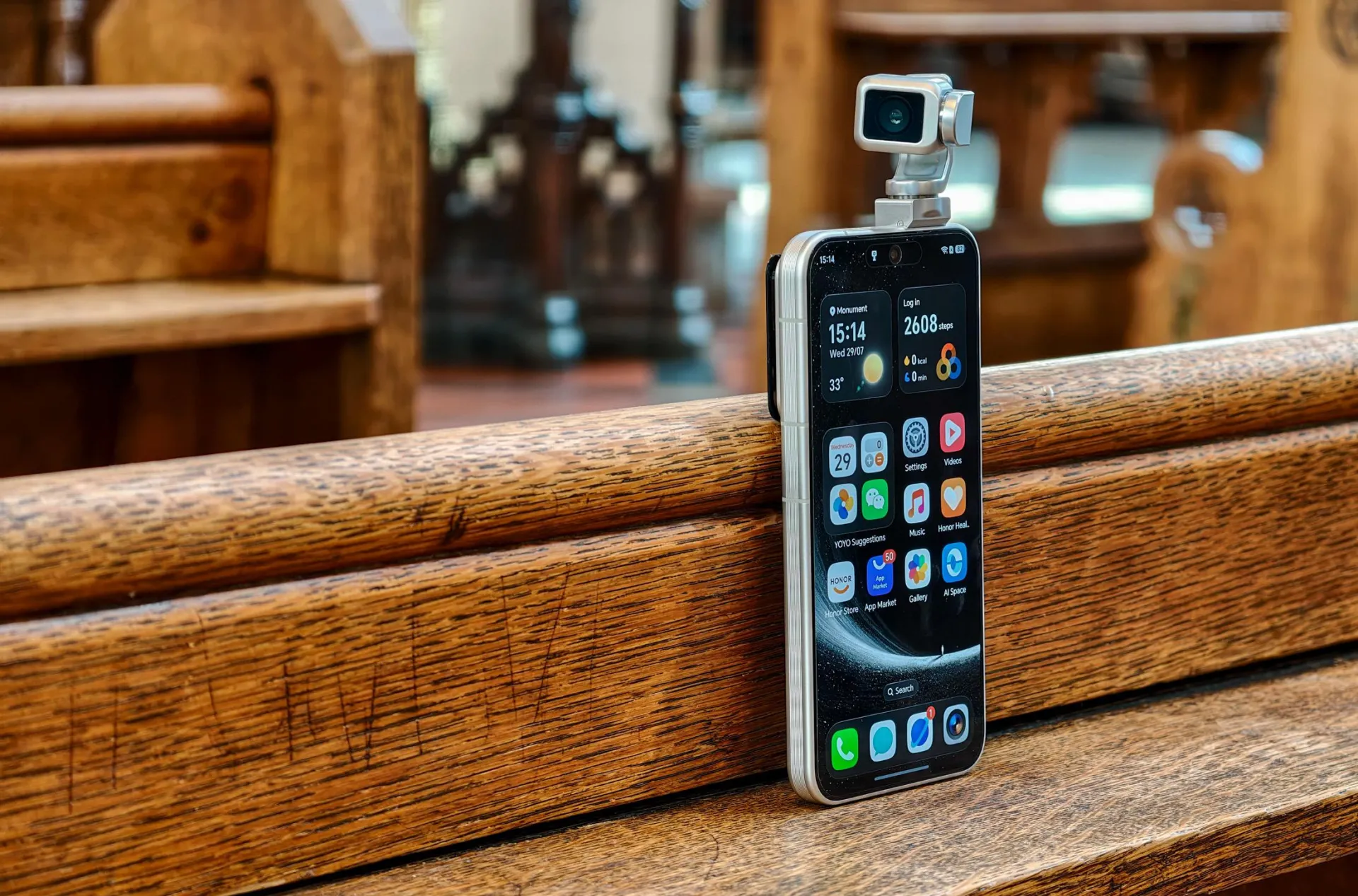
Honor Robot Phone has introduced a distinctive approach to smartphone design with its new China-exclusive device, aiming to bring more movement and character to a category that has become increasingly familiar. Instead of focusing only on conventional camera upgrades, the phone integrates a robotic gimbal directly into its camera module, allowing the camera system to physically move and adjust its position.
The device has attracted considerable attention because of its unusual design and the possibilities offered by its moving camera hardware. Honor had previously showcased the concept at CES in Las Vegas in January, where the prototype offered an early glimpse of the company’s approach to smartphone photography and artificial intelligence.
The commercial debut of the Honor Robot Phone in China marks an important step beyond the concept stage. While Honor has not positioned the device as a conventional mass-market smartphone, its design highlights how manufacturers are experimenting with mechanical components and AI to create new smartphone experiences.

Table of Contents
Honor Robot Phone Brings Movement to Smartphone Cameras
For years, smartphone manufacturers have primarily improved cameras through larger sensors, additional lenses, computational photography and increasingly sophisticated image-processing algorithms. The Honor Robot Phone takes a different route by making the camera itself physically mobile.
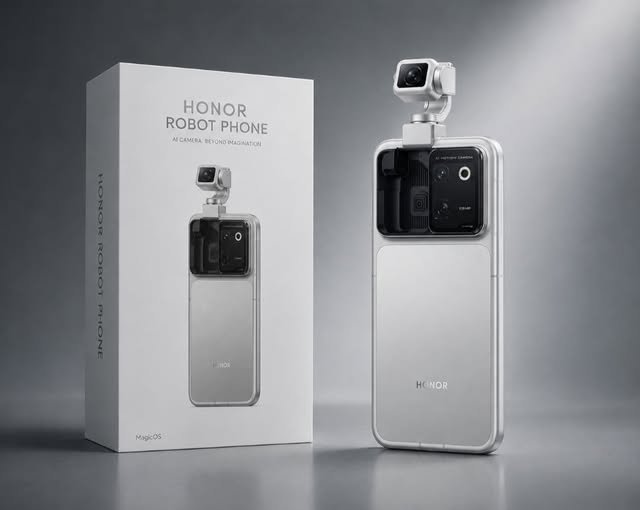
The most distinctive element is the robotic gimbal built into the camera module. Instead of keeping the primary camera system completely fixed, the mechanism allows the camera to move and adjust its position.
This concept could provide advantages for photography and video recording. A moving camera can potentially help maintain a subject within the frame, adjust composition and create more dynamic shooting possibilities.
The technology also gives the phone a visual identity that is immediately different from conventional smartphones. In a market where many devices feature similar rectangular designs and multi-camera arrangements, a moving camera system creates a feature that is both functional and visually distinctive.
From CES Prototype to China Launch
Honor first attracted international attention to the concept earlier this year when it demonstrated a prototype at CES in Las Vegas.
The Consumer Electronics Show is one of the world’s largest technology events and frequently serves as a platform for manufacturers to demonstrate experimental products and emerging technologies. Honor’s robotic camera concept stood out because it introduced physical movement into a category where most innovation has become software-driven.
At the time, the device was still presented as a concept, leaving questions about whether Honor would eventually turn the idea into a commercially available product.
The company’s decision to launch the Honor Robot Phone in China indicates that Honor believes there is enough interest in the concept to move beyond the demonstration stage.
The China-exclusive positioning also allows the company to test the technology and consumer response in a controlled market before potentially considering wider availability.
Why the Robotic Gimbal Matters
The robotic gimbal is more than a visual gimmick. Its significance comes from the possibility of combining mechanical movement with software and artificial intelligence.
Traditional smartphone cameras are fixed in position. Even devices with advanced stabilisation systems generally move the lens or sensor by very small amounts to compensate for hand movement. Honor’s approach takes the concept further by making the camera module itself an active component of the phone’s shooting experience.
A robotic camera could potentially track subjects more naturally, particularly during video recording. Instead of relying entirely on digital cropping to keep a person centred, physical camera movement can provide another method of maintaining framing.
This could be particularly useful for users recording themselves, capturing moving subjects or shooting videos without constantly adjusting the phone manually.
The system could also create new photography modes that would not be possible with a conventional fixed camera module.
AI Could Become a Major Part of the Experience
The Robot Phone arrives at a time when artificial intelligence has become one of the biggest themes in the smartphone industry.
Major smartphone manufacturers are increasingly using AI for photography, translation, search, writing assistance, image editing and other everyday functions. Honor has also been exploring AI-based smartphone experiences across its product portfolio.
The combination of AI and a movable camera could potentially create a more automated photography experience.
For example, software could determine where the subject is located and instruct the robotic mechanism to adjust the camera accordingly. Instead of simply recognising a person digitally, the phone could physically reposition the camera to maintain an optimal composition.
This creates an interesting relationship between hardware and software. AI determines what the user wants to capture, while the mechanical camera system physically responds.
Such functionality could eventually make smartphones feel more interactive rather than simply acting as passive devices.
A Different Approach to Smartphone Innovation
The smartphone industry has matured considerably over the past decade.
Flagship phones now routinely offer high-resolution displays, powerful processors, multiple cameras, fast charging, sophisticated image processing and premium materials. As these technologies have become standard across the industry, manufacturers have increasingly struggled to introduce features that feel genuinely different.
This has led to a perception that smartphone innovation has become incremental.
New models may offer better cameras, slightly faster processors, brighter displays or improved battery life, but their fundamental designs often remain similar.
Honor’s Robot Phone challenges that pattern by introducing a mechanical element that changes the way users interact with the camera.
The device does not simply add another specification to a familiar smartphone. Instead, it changes the physical behaviour of one of the phone’s most important components.
That makes the Honor Robot Phone particularly interesting even beyond its technical specifications.
Design Could Become a Key Differentiator
The smartphone market is extremely competitive, and design has become an important way for manufacturers to differentiate their products.
Foldable smartphones were one of the biggest examples of this trend. By changing the physical form of the device, manufacturers created a new category rather than simply improving existing specifications.
Honor’s robotic camera concept follows a similar philosophy, although on a smaller scale.
A camera that moves can make the smartphone feel more like a device with a physical mechanism rather than a static slab of glass and metal.
The visual effect could also become part of the phone’s identity. When the camera moves or adjusts itself, users can immediately see the technology working.
This type of physical interaction could be particularly appealing at a time when many smartphone innovations happen invisibly through software.
Challenges Behind a Moving Camera System
Despite its appeal, a robotic camera also presents engineering challenges.
A conventional smartphone has relatively few moving components, which helps manufacturers maintain reliability. Adding a motorised gimbal introduces additional mechanical parts that must operate consistently while remaining compact enough to fit inside a thin handset.
Durability will therefore be an important consideration.
Smartphones are routinely exposed to drops, vibration, dust and everyday handling. A camera mechanism that physically extends or moves could potentially require more sophisticated protection than a conventional fixed camera.
The engineering challenge becomes even greater when manufacturers need to balance mechanical durability with weight, thickness and battery capacity.
Honor will therefore need to demonstrate that the robotic system can provide meaningful benefits without creating significant compromises in reliability or everyday usability.
Could the Honor Robot Phone Change Smartphone Cameras?
The success of the Honor Robot Phone will depend largely on how useful the robotic camera proves to be in everyday situations.
If the system can reliably track subjects, improve framing and produce better video without requiring constant user intervention, it could represent a meaningful development in smartphone photography.
However, if the mechanism primarily serves as a novelty, consumers may be less willing to accept the additional complexity.
This is an important distinction between concept technology and commercially useful innovation.
Many experimental smartphone features have generated attention but failed to become mainstream because consumers ultimately prioritise reliability, battery life, camera quality, software support and overall value.
Honor’s challenge will be to show that the Honor Robot Phone’s unusual camera system contributes to the overall experience rather than simply making the device look different.
China-Exclusive Launch Limits Immediate Global Availability
At present, the Honor Robot Phone has been introduced as a China-exclusive device.
That means international consumers will not necessarily have immediate access to the technology. However, a China launch does not prevent the concept from influencing future Honor products or smartphone development more broadly.
China is one of the world’s most competitive smartphone markets, with manufacturers regularly experimenting with new designs, camera technologies and form factors.
A successful response to the Honor Robot Phone could encourage Honor to develop the concept further or potentially introduce similar technology in future devices.
The company’s decision to launch the product commercially also gives it an opportunity to gather real-world feedback rather than relying solely on demonstrations.
The Bigger Picture for Smartphone Design
The Honor Robot Phone arrives at an interesting point in the evolution of smartphones.
Consumers have become accustomed to yearly upgrades, but the differences between generations can sometimes feel relatively small. At the same time, manufacturers are looking for new ways to justify premium pricing and encourage customers to upgrade.
Hardware innovations that fundamentally change how a smartphone works could become increasingly important.
Honor’s approach suggests that the next wave of smartphone innovation may not come exclusively from faster chips or higher-resolution cameras. Instead, it could involve a combination of mechanical hardware, artificial intelligence and more interactive designs.
The robotic gimbal is a particularly interesting example because it connects all three areas.
What Makes the Honor Robot Phone Special?
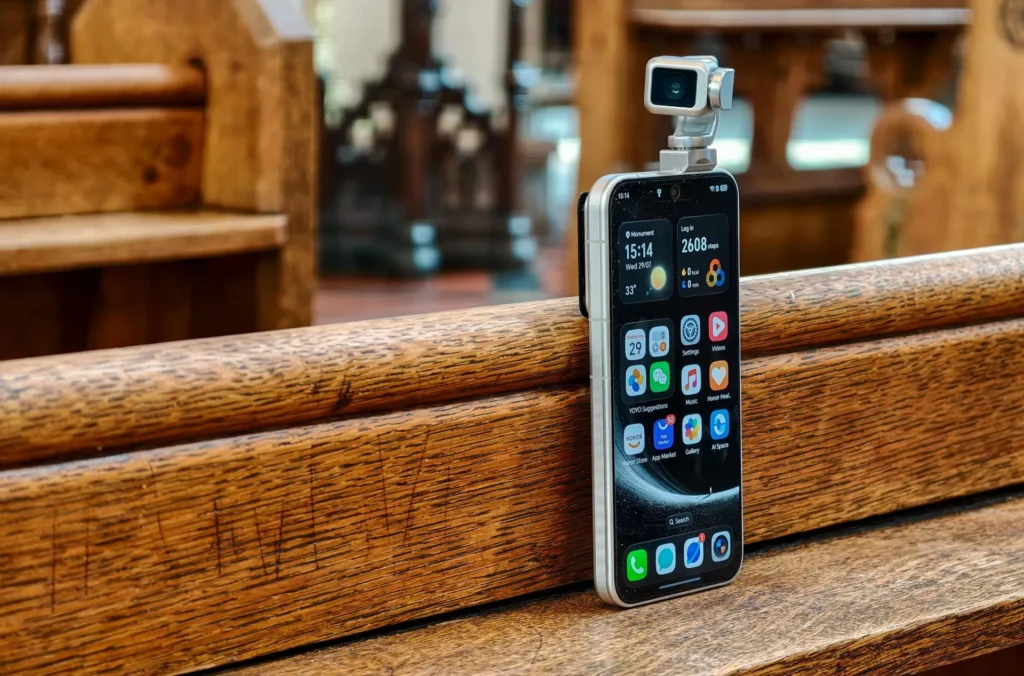
The defining feature of the Honor Robot Phone is undoubtedly its robotic camera gimbal. By allowing the camera to physically move, Honor is exploring possibilities that conventional fixed-camera smartphones cannot easily replicate.
The device also represents the transition of an experimental concept from CES into a commercially launched product in China.
Its importance extends beyond the handset itself. The Honor Robot Phone demonstrates that smartphone manufacturers are still willing to take significant design risks in an industry where product categories have become increasingly mature.
Whether the concept becomes a mainstream trend remains to be seen. Much will depend on reliability, practical usefulness, pricing and consumer response.
For now, however, the Honor Robot Phone has achieved something increasingly difficult in the smartphone industry: it has made people curious about what a phone can physically do.
As artificial intelligence continues to transform smartphone software, Honor’s experiment with a moving camera suggests that future devices could also become more dynamic on the hardware side. If the technology proves successful, the Honor Robot Phone could serve as an early example of a new generation of smartphones that combine intelligent software with responsive mechanical hardware.