Hariyali Teej, one of the most significant festivals observed during the monsoon season, will be celebrated in 2026 on Saturday, August 15. The festival falls on the Shukla Paksha Tritiya (third lunar day of the bright fortnight) of the Shravan month and is dedicated to the divine union of Lord Shiva and Goddess Parvati. It is especially celebrated across North India, with women observing vrat, worshipping Shiva-Parvati, applying mehndi, wearing traditional green attire and enjoying swings and Teej songs.
According to the Panchang calculation for 2026, the Tritiya Tithi begins at 6:46 PM on August 14 and ends at 5:28 PM on August 15. Because the relevant tithi prevails on August 15, that is the day on which Hariyali Teej will be observed.
Table of Contents
Hariyali Teej 2026 Date
Hariyali Teej 2026: Saturday, August 15, 2026
Tritiya Tithi begins: 6:46 PM, August 14, 2026
Tritiya Tithi ends: 5:28 PM, August 15, 2026
The exact timing of rituals can vary according to the location because Hindu Panchang calculations take local sunrise and geographical factors into account. Devotees should therefore check the Panchang applicable to their city before beginning important rituals.
Hariyali Teej is also known as Shravani Teej or Chhoti Teej in several traditions. It should not be confused with Hartalika Teej, which is observed later in the year during Bhadrapada. In 2026, Hartalika Teej falls in September.
What Is the Significance of Hariyali Teej?
Hariyali Teej celebrates the sacred relationship between Lord Shiva and Goddess Parvati. According to Hindu tradition, the festival is associated with Parvati’s devotion and her union with Shiva. The occasion is therefore regarded as a celebration of love, devotion, marital harmony and spiritual commitment.
The Government of India’s Utsav portal describes Hariyali Teej as a festival celebrating the union of Shiva and Parvati and highlighting a wife’s devotion to her husband.
The festival also has a strong connection with the monsoon. During Shravan, landscapes across much of northern India become green because of the rains. This greenery gives the festival its name—Hariyali, meaning greenery.
For many families, the festival is not limited to religious rituals. It is also a social and cultural celebration involving relatives, traditional food, mehndi, songs, swings and festive clothing.
Why Is Hariyali Teej Associated With Goddess Parvati?
Goddess Parvati occupies a central place in Hariyali Teej traditions because she is regarded as the devoted consort of Lord Shiva.
Traditional accounts emphasise Parvati’s determination and devotion in seeking Shiva as her husband. Her story is understood by devotees as an example of faith, patience and spiritual dedication.
As a result, women observing the festival traditionally worship Goddess Parvati along with Lord Shiva and pray for happiness, harmony and well-being in married life. Unmarried women may also participate in the worship and seek blessings according to their family traditions.
It is important to remember that customs can differ considerably between regions and families. There is no single ritual format followed by every community.
Hariyali Teej 2026 Puja Muhurat
The most important point for devotees is that puja timings are location-specific. Panchang calculations can differ between cities because sunrise and other astronomical factors vary.
For New Delhi and other locations, devotees should consult a local Panchang for the precise auspicious period rather than applying a timing calculated for another city.
The 2026 Panchang confirms the festival date and the beginning and ending times of Tritiya Tithi.
When planning the puja, devotees generally prefer to perform the main worship during an auspicious daytime period while the festival tithi is active.
Hariyali Teej Puja Vidhi
The exact puja vidhi can differ according to regional customs, but a traditional observance generally follows a sequence such as this:
1. Take a Morning Bath
Devotees traditionally begin the day by taking a bath and wearing clean or festive clothes.
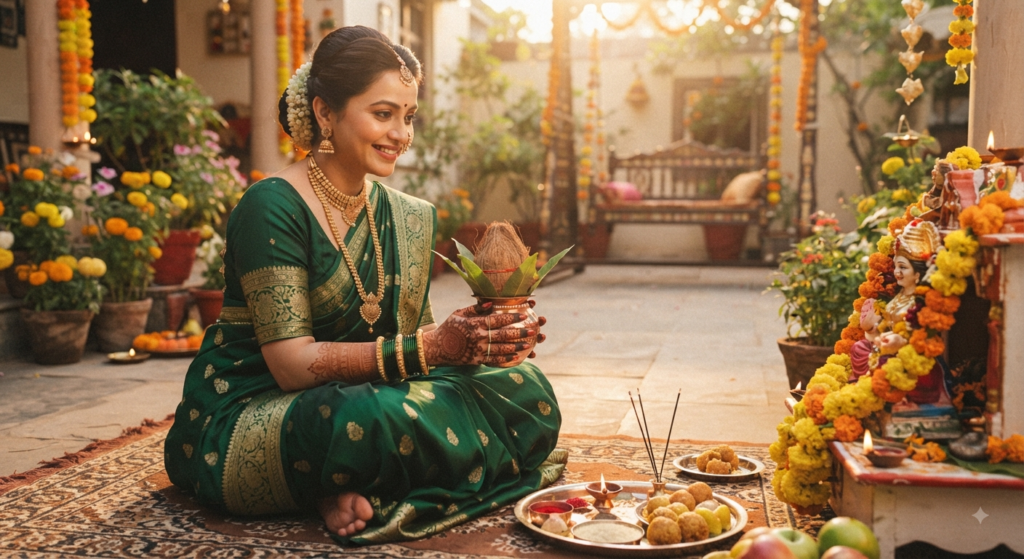
Many women choose green clothes because green represents the greenery of the monsoon season and is strongly associated with Hariyali Teej.
2. Prepare the Puja Area
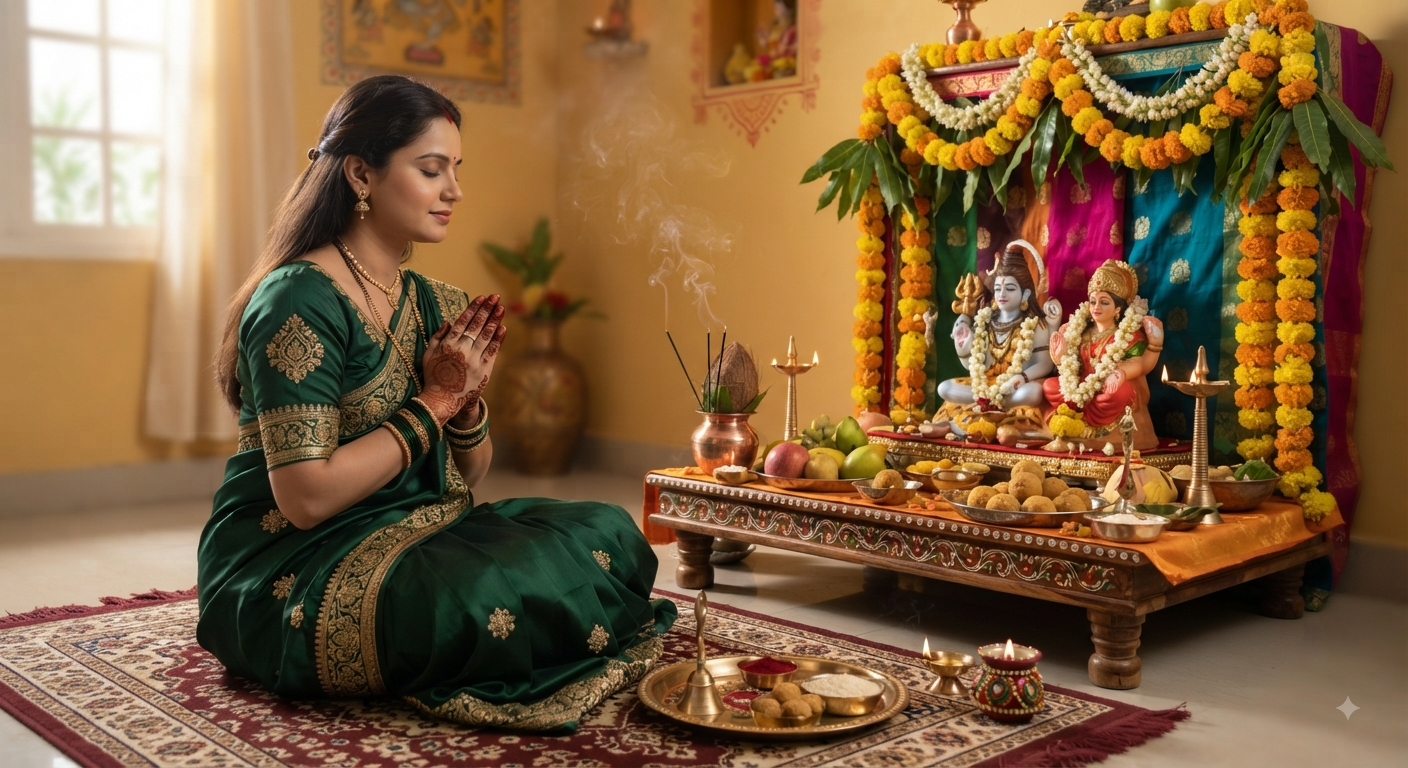
A clean space can be prepared for worship. Images or idols of Lord Shiva and Goddess Parvati are placed in the designated area.
The worship space is decorated with flowers and other traditional items according to family practice.
3. Worship Shiva and Parvati
Devotees offer flowers, fruits and other customary puja materials to Shiva and Parvati.
Prayers are offered with devotion, with particular emphasis on marital happiness, family well-being and peace.
4. Offer Traditional Items
Depending on local tradition, women may offer or use items such as mehndi, bangles, flowers, sweets and festive clothing as part of the celebration.
In several regions, married daughters also receive Sindhara, a traditional gift from their parents. It may include sweets such as ghevar, mehndi, bangles and other festive items.
5. Listen to Teej Katha
Many devotees listen to or read the traditional Teej-related religious stories during the observance.
The purpose is not simply to complete a ritual but to remember the devotion associated with Goddess Parvati and the spiritual meaning of the festival.
6. Perform Aarti
The puja is traditionally concluded with prayers and aarti dedicated to Shiva and Parvati.
Families may follow their own customary prayers and methods.
Hariyali Teej Vrat Rules
Fasting is an important part of Hariyali Teej for many devotees, particularly married women. However, fasting practices vary by region, family and individual circumstances.
Some devotees observe a strict fast, while others follow a less restrictive vrat.
Common traditional practices may include:
- Beginning the vrat after taking a morning bath.
- Taking a sankalp, or religious resolve, before starting the observance.
- Worshipping Lord Shiva and Goddess Parvati.
- Avoiding foods that are not permitted according to one’s family tradition.
- Spending time in prayer and devotional activities.
- Listening to the Teej vrat katha.
- Completing the observance according to one’s traditional practice.
People who cannot safely fast should not feel compelled to follow a strict fasting practice. Religious observances can be adapted according to personal circumstances, and health should not be neglected.
Green Clothes, Mehndi and Bangles: Why Are They Important?
One of the most recognisable features of Hariyali Teej is the sight of women dressed in green sarees, suits and other traditional outfits.
Green has a special connection with the festival because Hariyali Teej occurs during the monsoon, when nature becomes lush and green.
Mehndi and bangles are also closely associated with the celebration. Women may gather with family and friends, apply mehndi, exchange festive gifts and participate in traditional songs.
These customs give the festival a strong cultural identity beyond its religious significance.
The Tradition of Swings During Hariyali Teej
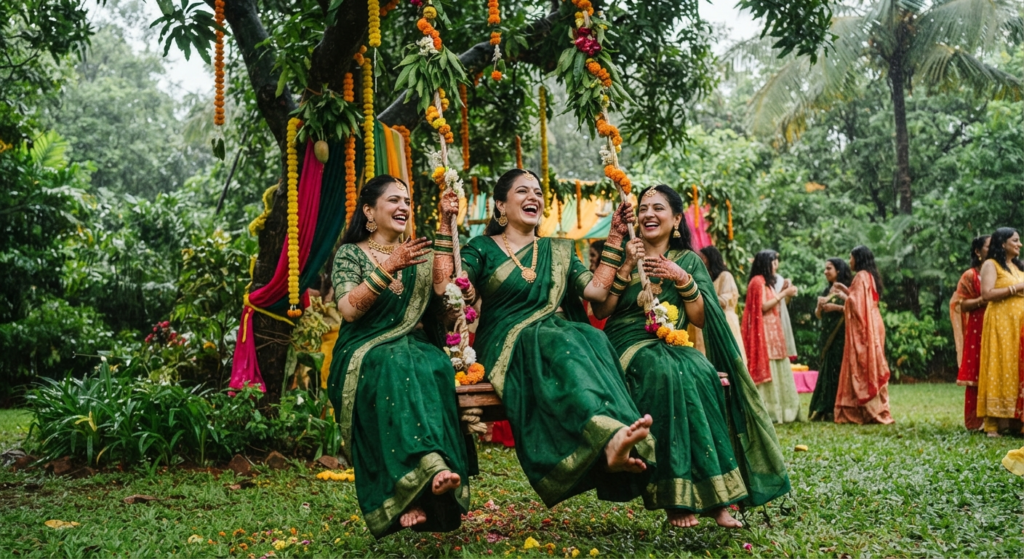
Swings are another iconic part of Hariyali Teej celebrations.
In many North Indian communities, swings are decorated and placed in gardens or courtyards. Women and girls gather to enjoy them while singing traditional Teej songs.
The practice is particularly connected with the monsoon atmosphere. The combination of rainfall, greenery, music and swings creates the distinctive festive mood associated with Teej.
The celebration therefore brings together religion, nature and community life.
What Is Sindhara on Hariyali Teej?
Sindhara is an important tradition in several communities.
Traditionally, parents send gifts to their married daughter and her family around Hariyali Teej. These gifts can include sweets, ghevar, mehndi, bangles and other festive items.
Because of this custom, Hariyali Teej is also known as Sindhara Teej in some traditions.
The tradition represents affection between parents and their married daughter and adds an important family dimension to the festival.
Hariyali Teej and Other Teej Festivals
Hariyali Teej is one of the three major Teej festivals associated with the monsoon and subsequent months.
The three commonly recognised Teej observances are:
- Hariyali Teej
- Kajari Teej
- Hartalika Teej
Hariyali Teej falls during Shravan, while Kajari Teej follows later and Hartalika Teej is observed during Bhadrapada.
These festivals are sometimes confused because all three involve Goddess Parvati and have strong associations with women, fasting and marital well-being. However, their dates, stories and regional traditions are different.
Where Is Hariyali Teej Celebrated?
Hariyali Teej is particularly popular in Rajasthan, Uttar Pradesh, Madhya Pradesh, Bihar and Jharkhand, although celebrations are also held in other parts of India.
The style of celebration changes from one region to another.
In Rajasthan, for example, Teej celebrations are known for their colourful cultural atmosphere. In other North Indian communities, family gatherings, mehndi, swings, devotional songs and traditional foods may form the centre of the celebration.
This regional diversity is one of the reasons Teej remains such an important cultural festival.
Hariyali Teej 2026: Important Things to Remember
For those preparing for Hariyali Teej 2026, the key details are:
Festival: Hariyali Teej
Date: Saturday, August 15, 2026
Tithi: Shravan Shukla Tritiya
Tritiya begins: 6:46 PM on August 14
Tritiya ends: 5:28 PM on August 15
Main deities: Lord Shiva and Goddess Parvati
Major themes: Devotion, marital harmony, family, monsoon greenery and cultural celebration
Because muhurat calculations can vary by location, the exact puja timing should be checked according to the local Panchang.

The Spiritual Meaning Behind the Celebration
Beyond clothes, mehndi, swings and festive food, Hariyali Teej carries a deeper spiritual message.
At its heart, the festival celebrates devotion and the sacred bond between Shiva and Parvati. For devotees, Parvati’s association with determination and devotion provides an important spiritual example.
The festival also creates an opportunity for families to come together. Married daughters may return to their parental homes, parents send Sindhara gifts, and women celebrate together through prayer and cultural traditions.
Thus, Hariyali Teej 2026 connects several aspects of Indian life—faith, family, nature and community—within one festival.
Hariyali Teej 2026 will be celebrated on Saturday, August 15, with the festival falling on the Shravan Shukla Tritiya. The Tritiya Tithi begins at 6:46 PM on August 14 and ends at 5:28 PM on August 15, according to the cited Panchang calculation.
Dedicated primarily to Lord Shiva and Goddess Parvati, the festival represents devotion, love, marital harmony and spiritual commitment. It is also a vibrant celebration of the monsoon, reflected in green clothing, mehndi, bangles, swings, songs and family gatherings.
While fasting and puja are central to many observances, the exact vrat rules, puja vidhi and muhurat can vary by region and family tradition. Devotees should therefore follow their customary practices and consult the Panchang for their location when determining precise timings.
More than a festival of rituals, Hariyali Teej remains a celebration of faith, relationships, nature and the enduring cultural traditions of India.