

For millions of salaried employees across India, filing an Income Tax Return (ITR) and understanding TDS rules is an important annual responsibility. Most employees depend on their salary slips, Form 16, and tax deducted at source (TDS) details while completing their tax filing process. However, a common concern arises when an employer deducts TDS from an employee’s salary but fails to deposit the amount with the Income Tax Department.
In such situations, employees often receive tax notices because the deducted tax does not appear in their Form 26AS or Annual Information Statement (AIS). Many taxpayers worry that they may have to pay the same tax amount again despite the fact that the money was already deducted from their salary.
A recent decision by the Income Tax Appellate Tribunal (ITAT) has provided major relief to employees facing such situations. The tribunal clarified that if an employer has deducted TDS from an employee’s salary but failed to deposit it with the government, the employee cannot be held responsible for the employer’s mistake.
Table of Contents
The ruling reinforces the protection available to salaried taxpayers under Section 205 of the Income Tax Act, 1961, which prevents tax recovery from employees when tax has already been deducted from their income.
Why TDS Deduction and Deposit Is Important
TDS, or Tax Deducted at Source, is a system under which employers deduct a certain amount of tax from an employee’s salary before paying the remaining amount.
The deducted tax is supposed to be deposited by the employer with the Income Tax Department within the prescribed deadline. Once deposited, the amount reflects in the employee’s tax records, including:
- Form 26AS
- Annual Information Statement (AIS)
- Income Tax Return filing records
Employees use these details while claiming credit for the tax already paid on their behalf.
However, problems arise when companies deduct the tax but fail to deposit it. In such cases, the employee may not see the TDS credit in official records, leading to confusion and possible tax demands.
Employee Should Not Suffer Due to Employer’s Mistake
According to tax experts, the responsibility of depositing deducted TDS lies entirely with the employer.
Once the company deducts tax from an employee’s salary, it becomes the employer’s legal obligation to transfer that amount to the government account.
If the employer fails to do so, the employee should not be forced to pay the tax again.
The ITAT has emphasized that an employee cannot be punished for a default committed by the employer. The employee has already suffered a deduction from their salary, and asking them to pay the same amount again would create an unfair financial burden.
This principle is especially important for salaried individuals who have limited control over their employer’s compliance with tax regulations.
ITAT Decision in Byju’s TDS Case
The recent ITAT ruling came in a case related to education technology company Byju’s.
According to reports, the company had deducted approximately ₹1.49 crore as TDS from the salary of an employee but allegedly failed to deposit the amount with the Income Tax Department.
The issue reportedly affected thousands of employees, as TDS deducted from salaries was not reflected in their tax credit records.
Due to the missing TDS entries in Form 26AS, employees faced difficulties while filing their Income Tax Returns.
In one such case, when the employee claimed TDS credit while filing the ITR, the Central Processing Centre (CPC) did not allow the benefit because the tax amount was not appearing in official records.
As a result, an additional tax demand was raised against the employee.
The matter eventually reached the Income Tax Appellate Tribunal, which ruled in favour of the employee.
What Did the ITAT Say?
The tribunal clearly stated that if the employer has deducted TDS from the employee’s salary, then the employee cannot be asked to pay tax again merely because the employer failed to deposit the deducted amount.
The ITAT observed that the responsibility of depositing TDS belongs to the deductor, which in salary cases is the employer.
The tribunal maintained that:
- The employee cannot control whether the employer deposits TDS.
- The employee should not face financial loss due to employer negligence.
- Recovery of the same tax amount from the employee would not be justified.
The decision provides important protection to salaried taxpayers who may otherwise face unnecessary disputes with the tax department.
Understanding Section 205 of the Income Tax Act
Section 205 of the Income Tax Act provides protection to taxpayers in cases where tax has already been deducted from their income.
According to this provision, when tax has been deducted from an employee’s salary, the employee cannot be asked to pay that same tax amount again.
The purpose of this section is to ensure that taxpayers do not suffer because of failure or negligence on the part of the person responsible for depositing the tax.
Tax experts explain that the law recognizes that employees generally have no role in the employer’s TDS compliance process.
Therefore, once the employee can prove that tax was deducted from their salary, they have legal protection against double taxation.
CBDT Guidelines Also Protect Employees
Apart from Section 205, the Central Board of Direct Taxes (CBDT) has also issued instructions regarding such situations.
According to tax experts, CBDT guidelines state that when TDS has been deducted but not deposited by the employer, tax recovery action should not be taken against the employee.
The objective behind these instructions is to ensure fairness in the tax system.
The government expects employers to comply with TDS rules and take responsibility for any failure in depositing deducted tax.
What Should Employees Do If TDS Is Missing in Form 26AS?
Employees should not panic if their TDS does not appear in Form 26AS despite deductions being shown in salary documents.
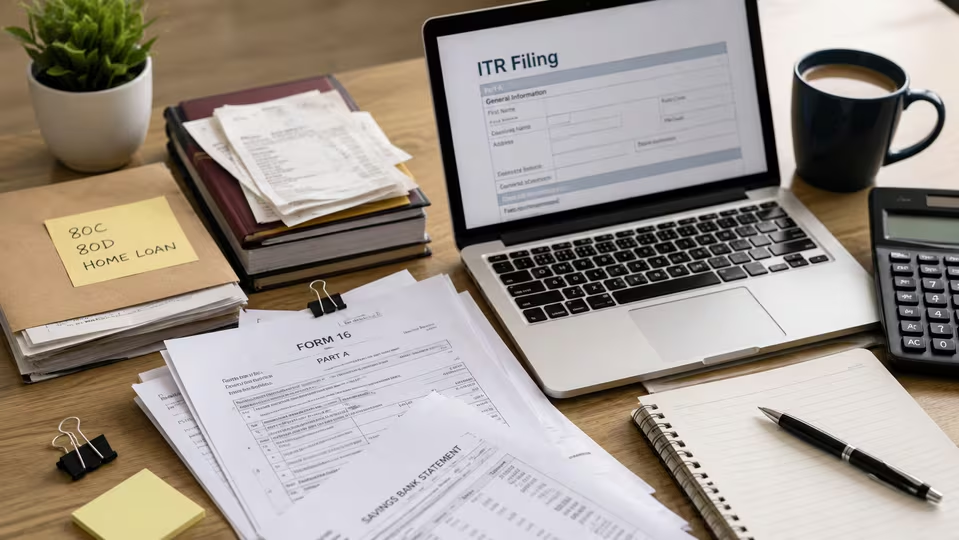
Tax experts advise employees to maintain proper records and verify all documents before filing their Income Tax Return.
Important documents include:
1. Salary Slip
Salary slips provide proof that TDS was deducted from the employee’s monthly salary.
Employees should carefully check whether the deducted tax amount is mentioned correctly.
2. Form 16
Form 16 issued by the employer is one of the most important documents for salaried taxpayers.
It contains details of:
- Salary income
- TDS deducted
- Tax calculations
- Employer details
If Form 16 clearly mentions TDS deduction, it can serve as supporting evidence.
3. Form 26AS and AIS Verification
Before filing an ITR, employees should compare:
- Salary slip details
- Form 16 information
- Form 26AS records
- AIS details
This helps identify discrepancies early.
Keep Bank Statements and Tax Records Safely
Tax experts also recommend keeping bank statements for the entire financial year.
These records can help establish:
- Salary received
- TDS deduction
- Employer payments
- Tax-related transactions
If the Income Tax Department raises any query in the future, these documents can support the employee’s claim.
Proper record keeping is especially important in cases where employer compliance becomes questionable.
Why This Decision Matters for Salaried Employees
The ITAT ruling is significant because thousands of employees depend on employers for accurate TDS compliance.
A salaried employee generally cannot verify whether the deducted amount has actually been transferred to the government.
Therefore, holding employees responsible for employer mistakes could create unnecessary financial hardship.
The ruling strengthens taxpayer confidence by confirming that employees will not be penalized for failures beyond their control.
It also reminds companies about their responsibility to follow tax regulations properly.
Employers Must Ensure Timely TDS Compliance
While the ruling protects employees, it also highlights the importance of employer accountability.
Companies deducting TDS from salaries must ensure:
- Timely deposit of deducted tax
- Accurate reporting
- Correct issuance of Form 16
- Proper filing of TDS returns
Failure to comply with these responsibilities can lead to penalties, interest, and legal consequences for employers.

Tax Experts’ Advice for Employees
Experts suggest that employees should remain careful while filing their ITR and not blindly depend on one document.
Before submitting the return, taxpayers should:
- Check Form 16 carefully
- Match TDS details with Form 26AS
- Preserve salary records
- Maintain bank statements
- Seek professional advice if discrepancies arise
Being aware of tax rules can help employees protect their rights and avoid unnecessary disputes.
The recent ITAT decision has brought major relief to salaried employees whose companies deduct TDS but fail to deposit it with the Income Tax Department.
The tribunal has made it clear that employees cannot be forced to pay tax twice for the same income when the employer has already deducted tax from their salary.
Protected under Section 205 of the Income Tax Act, employees have the right to claim that the tax burden should not fall on them due to employer negligence.
However, employees should remain alert while filing their ITRs. Checking salary slips, Form 16, Form 26AS, and maintaining proper financial records can help avoid complications.
The ruling serves as an important reminder that while employees must comply with tax filing responsibilities, companies must also fulfil their legal duty of depositing deducted taxes on time.