Batwara 1947, the much-awaited period drama starring Sunny Deol, Preity Zinta and Shabana Azmi, has finally reached theatres, and early audience reactions suggest that the film is leaving a strong emotional impression. Directed by Rajkumar Santoshi and produced by Aamir Khan, the film revisits one of the most painful chapters in the subcontinent’s history—the Partition of India in 1947. Early reviews have particularly praised Sunny Deol’s performance, while Preity Zinta and Shabana Azmi have also attracted attention for their emotionally grounded portrayals.
The film released on August 14, 2026, ahead of the Independence Day weekend. Its timing gives the historical drama additional significance, as the story examines not only political upheaval but also the human cost of Partition, including displacement, uncertainty, family bonds and the struggle to preserve humanity during a deeply divided period.
Table of Contents
Batwara 1947 Review: Does the Film Live Up to the Hype?
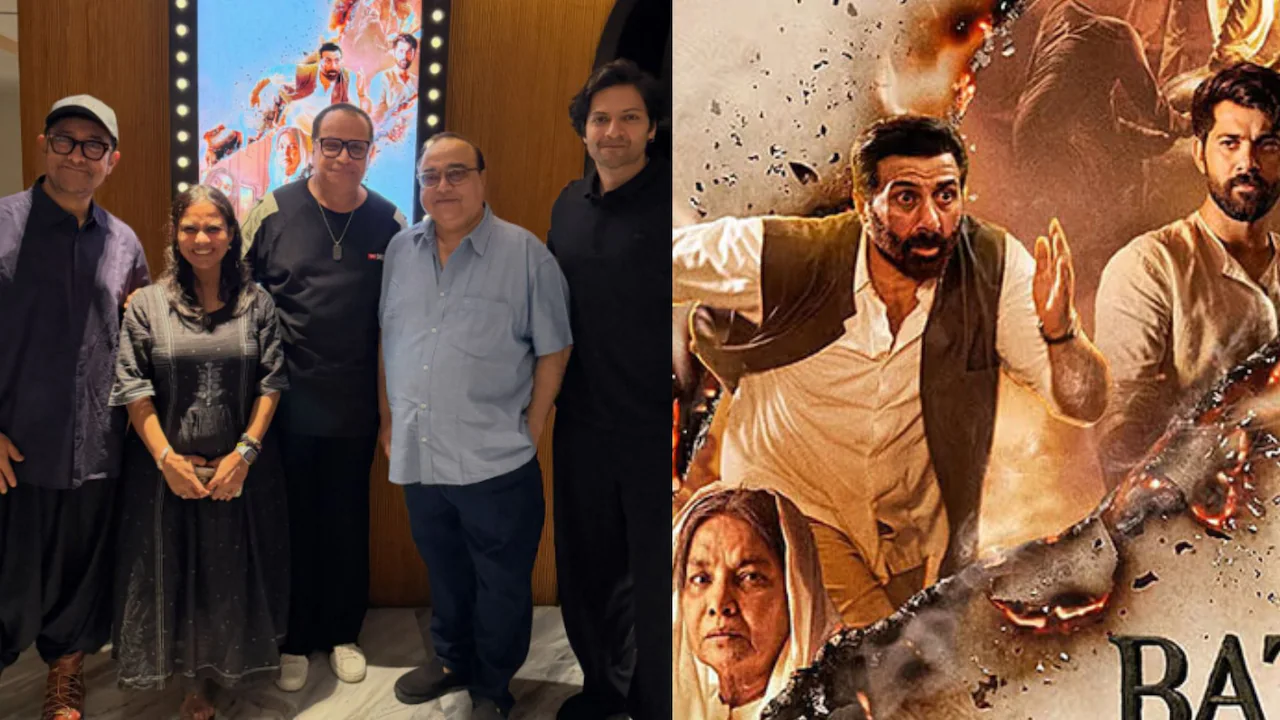
The first reactions emerging around Batwara 1947 are largely positive. Early reviewers have described the film as emotionally moving and sensitive, with particular praise for its performances and treatment of the human side of Partition. Producer Ramesh Taurani has also praised the film and its message ahead of its theatrical release.
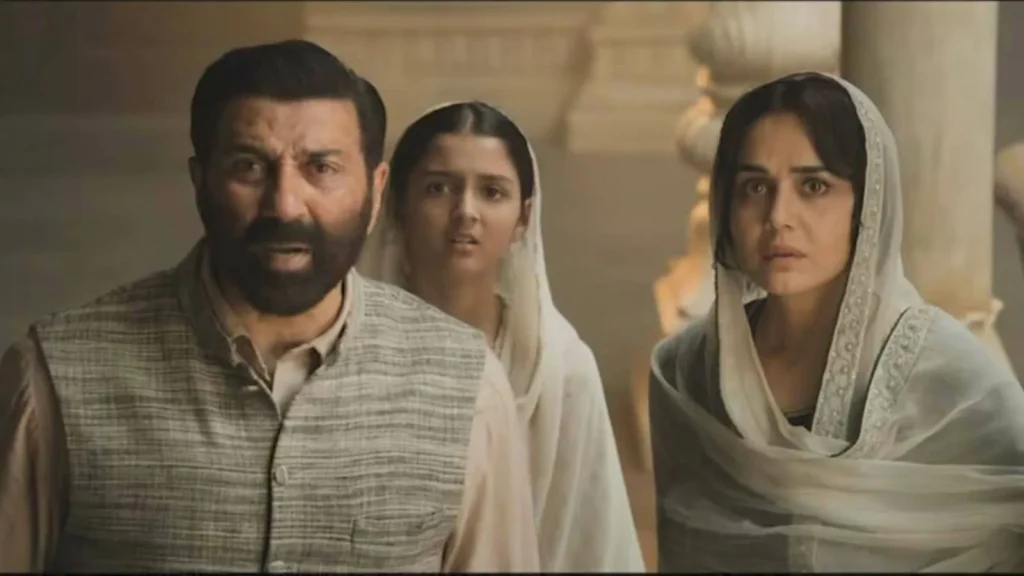
Rather than presenting Partition simply as a historical event, the film attempts to bring the audience closer to the people who had to live through its consequences. That focus becomes important because historical dramas can sometimes become overwhelmed by large political events. Batwara 1947, according to early reactions, appears more interested in showing how those events affected ordinary lives.
The emotional dimension is one of the film’s strongest talking points so far.
Sunny Deol Delivers a Powerful Performance
Sunny Deol plays Sikander Mirza, a central character in the story. Early reviews have highlighted his performance as one of the film’s major strengths.
Deol has previously appeared in films connected with the Partition era, most notably the Gadar franchise. However, he has emphasised that his character in Batwara 1947 is different from Tara Singh. The actor has spoken about the emotional weight of portraying people caught in the confusion and disbelief surrounding Partition.
That distinction is important. While audiences may naturally associate Deol with patriotic and Partition-themed cinema, Batwara 1947 appears to offer him a more restrained dramatic space.
His character is not simply positioned as an action-oriented hero. Instead, the story places him within a complicated social and family environment where decisions have emotional consequences.
This allows Deol to explore another side of his screen presence.
Preity Zinta Makes a Significant Return
Another major attraction of Batwara 1947 is the return of Preity Zinta to mainstream Hindi cinema.
Zinta stars opposite Sunny Deol as Hameeda Mirza, bringing the pair back together on screen after their earlier collaborations. Their reunion has generated considerable interest among Bollywood audiences. Recent promotional coverage has also highlighted the actors’ longstanding camaraderie and nostalgia surrounding their previous work together.
In the new film, however, their relationship exists within the much more challenging circumstances of Partition.
The story gives their characters a family setting, allowing the film to explore how ordinary relationships are tested when society around them is undergoing dramatic change.
Early reactions have described Zinta as a welcome and engaging presence in the film.
For audiences who remember the Sunny Deol-Preity Zinta pairing from earlier films, their reunion is likely to be one of the movie’s emotional draws.
Shabana Azmi Adds Emotional Depth
Veteran actress Shabana Azmi is another major strength of the cast.
She plays Mai, an elderly woman whose presence becomes important to the central conflict. The character represents the human and emotional consequences of Partition in a particularly intimate way.
Early reviews have singled out Azmi’s performance alongside those of Sunny Deol and the other cast members.
Her role adds another layer to the film because the story is not restricted to the experiences of one family. Through Mai, the narrative can explore questions of home, identity, belonging and the meaning of ownership after a massive historical upheaval.
Her performance appears to be particularly important in giving the film its emotional weight.
What Is Batwara 1947 About?
Set against the backdrop of the Partition of India in 1947, the film explores the experiences of people living through a period of extraordinary uncertainty.
The story centres on Sikander Mirza and his family. The narrative places them in a situation where personal lives become entangled with the wider consequences of Partition.
The film’s premise revolves around an elderly Hindu woman who remains in a haveli after the upheaval. Her presence creates a conflict that forces the characters to confront questions of home, displacement and communal tensions.
This setup allows the movie to examine Partition from a personal rather than purely political perspective.
Instead of focusing exclusively on political leaders or historical decisions, the narrative explores what happened to families and individuals when borders suddenly changed the meaning of home.
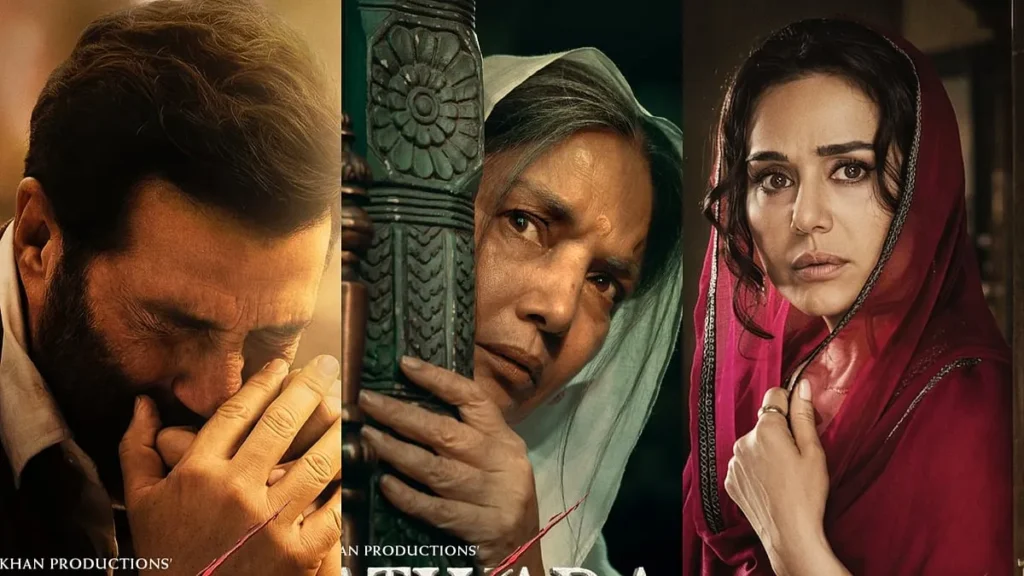
A Story About Humanity Amid Division
One of the most significant aspects of Batwara 1947 is its emphasis on humanity.
The Partition remains one of the most traumatic episodes in the history of the Indian subcontinent. Millions of people were displaced, while communities that had lived alongside one another for generations were separated by newly created borders.
A film dealing with such a subject carries the responsibility of handling the period carefully.
Early reactions indicate that Santoshi’s film attempts to focus on resilience and the human spirit rather than reducing the story to a simple political narrative. The Times of India described the early response as highlighting themes of resilience and the human spirit.
That approach could be one reason the film is connecting emotionally with early viewers.
Rajkumar Santoshi Returns With a Historical Drama
The film marks another collaboration between Sunny Deol and director Rajkumar Santoshi, a combination that has previously produced notable films.
Santoshi has chosen a particularly challenging subject this time. A Partition drama requires considerable attention to period details, characters and historical atmosphere.
The film was originally associated with the title Lahore 1947 before being renamed Batwara 1947. Current coverage identifies Santoshi as the director and Aamir Khan as producer.
The production also features a large ensemble cast, including Karan Deol and Ali Fazal, alongside Sunny Deol, Preity Zinta and Shabana Azmi.
Aamir Khan’s Production Adds to the Expectations
Aamir Khan’s involvement as producer has also contributed to the film’s anticipation.
The project brings together several established names from Hindi cinema, including Santoshi behind the camera and Deol and Zinta in leading roles.
The film’s promotional campaign has further increased interest, with the cast appearing together for interviews and promotional events. Sunny Deol, Preity Zinta and Aamir Khan recently appeared on Kaun Banega Crorepati 18, creating additional nostalgia around the project.
The combination of a historical subject, a major star cast and an Independence Day weekend release has positioned Batwara 1947 as one of the notable Hindi releases of the period.
Does the Patriotic Element Work?
The word “patriotic” can mean different things in a historical drama.
In Batwara 1947, the patriotic element appears to be closely connected to questions of humanity, belonging and the emotional meaning of a country divided by political decisions.
Rather than relying only on conventional patriotic imagery, the film’s emotional power comes from the experiences of its characters.
The film asks audiences to consider what patriotism means when people are forced to leave their homes and when relationships are tested by communal tensions.
This gives the movie an opportunity to move beyond straightforward slogans and explore the complicated emotional reality of Partition.
Early Audience Response on X
Social-media reactions have added another layer to the film’s release-day conversation.
Early X reactions have generally focused on the emotional nature of the story and performances, with Sunny Deol’s acting receiving particular appreciation. Media reports compiling early reactions have described viewers as responding emotionally to the film.
However, social-media reactions should be treated as individual audience opinions rather than a definitive measure of the film’s overall quality.
A movie’s critical reputation can evolve as more audiences watch it and full reviews emerge.
Box Office Opening: What Are the Early Signs?
The film entered its theatrical release with considerable attention, although advance bookings were described as moderate compared with some competing releases.
According to The Indian Express, Batwara 1947 had sold more than 65,000 tickets across over 8,800 shows in India in advance bookings, generating approximately ₹4.21 crore in pre-sales at the time of its August 14 morning update.
The Independence Day weekend could prove important for the film’s box-office performance, particularly if positive word-of-mouth continues.
The eventual performance, however, will depend on audience turnout throughout the weekend and the film’s reception across different regions.
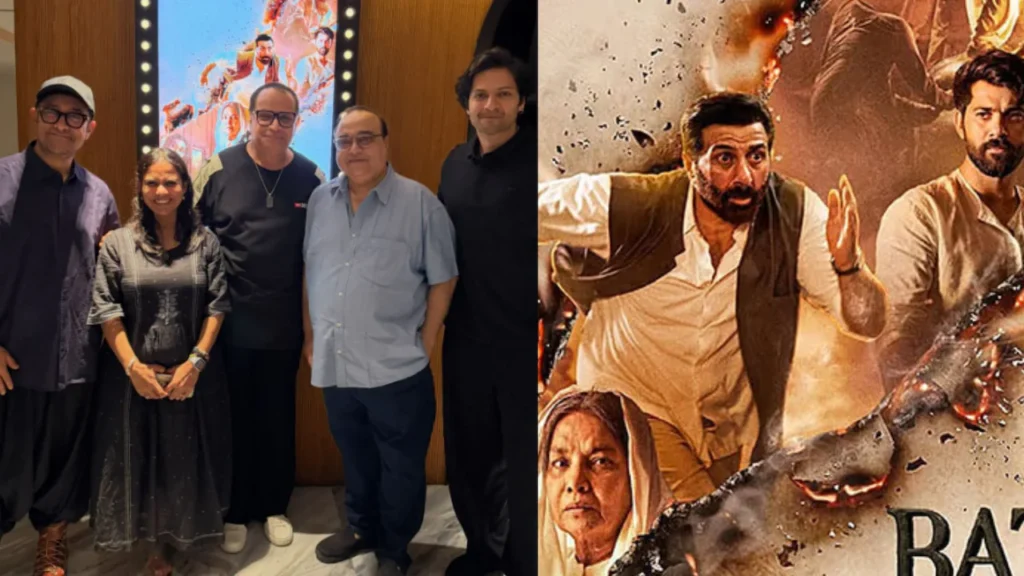
Final Verdict
Batwara 1947 arrives with an ambitious subject and a cast capable of carrying an emotionally demanding historical drama.
The early response suggests that Sunny Deol’s performance is a major highlight, while Preity Zinta’s return and Shabana Azmi’s powerful presence add considerable emotional depth.
The film’s greatest strength may be its attempt to look at Partition through the lives of individuals rather than treating the event only as a chapter in a history textbook.
Its story of families, displacement, identity and humanity gives the Independence Day release a natural emotional resonance.
At the same time, audiences should distinguish between early reactions and a final critical consensus. The film has only just reached theatres, and a broader assessment will emerge as more viewers watch it.
Early verdict: Batwara 1947 appears to be a serious, emotional and impactful Partition drama, with Sunny Deol emerging as one of its strongest elements. For viewers interested in historical cinema, powerful performances and stories about human resilience during India’s most turbulent moments, the film could offer a moving theatrical experience.