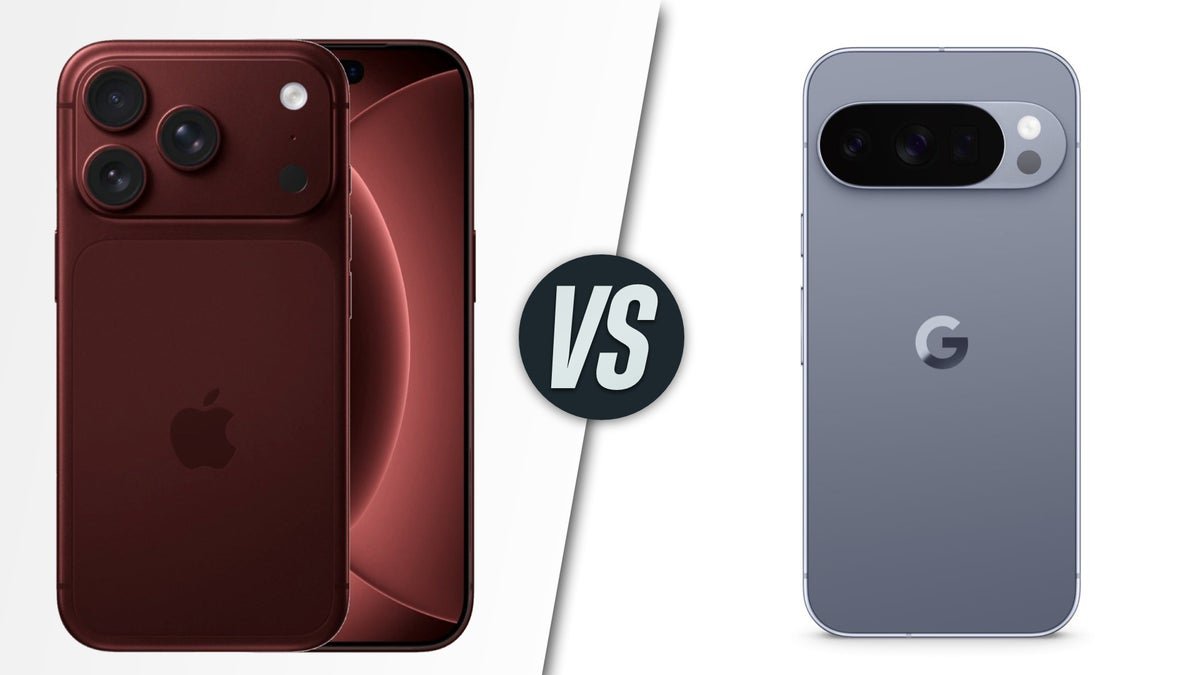
Apple’s upcoming Apple iPhone 18 and Google’s newly announced Google Pixel 11 are set to represent two very different approaches to the flagship smartphone market. From processors and cameras to software, battery technology, AI capabilities, launch timelines and pricing, these two phones are expected to offer several notable differences.
The flagship smartphone race is entering another competitive phase as Google has officially unveiled its Pixel 11 series, while Apple is preparing its next-generation Apple iPhone 18 lineup. Google introduced the Pixel 11 family at its Made by Google event on August 12, 2026, bringing the new Tensor G6 platform, enhanced cameras and deeper Gemini-powered features to its latest smartphones.
Apple, meanwhile, has not yet officially announced the standard Apple iPhone 18. Current reports suggest that Apple could change its traditional release strategy, with the Pro models arriving first in 2026 and the standard iPhone 18 potentially following in spring 2027. This means the two devices will not necessarily launch at the same time, but they are still likely to become major rivals for consumers choosing between Apple’s iOS ecosystem and Google’s Android experience.
Table of Contents
Based on current reports, leaks and officially available Google Pixel 11 information, here are seven major differences expected between the Apple iPhone 18 and Google Pixel 11.
1. Processor: Apple A20 vs Google Tensor G6
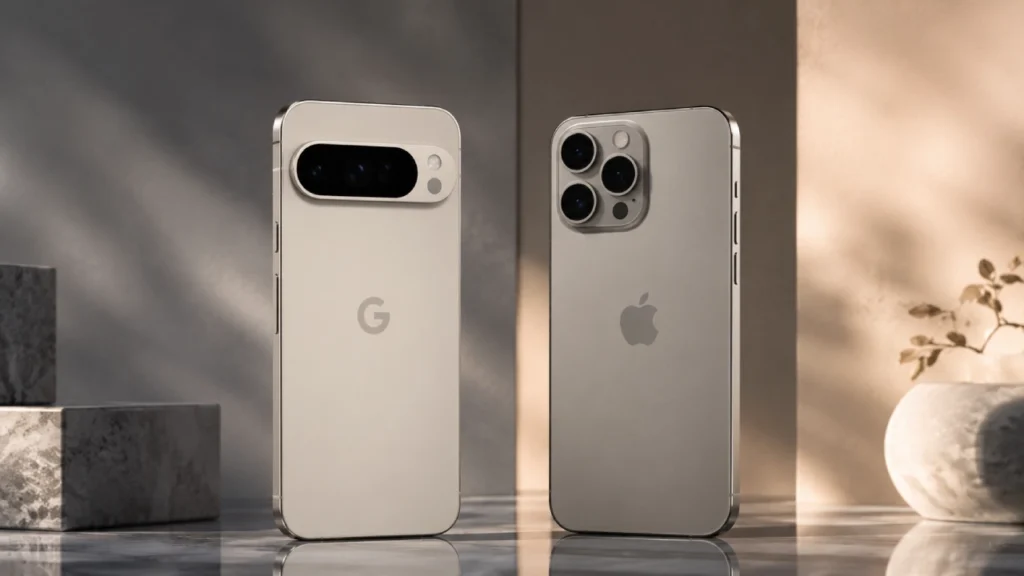
One of the biggest differences between the two smartphones is expected to be their processors.
The iPhone 18 is widely expected to use Apple’s next-generation A20 chipset, reportedly based on a more advanced 2nm manufacturing process. The processor is expected to focus on improved performance, power efficiency and on-device artificial intelligence capabilities. However, Apple has not yet officially confirmed the A20 or the complete hardware specifications of the iPhone 18.
Google’s Pixel 11, on the other hand, has officially moved to the Tensor G6 platform. Google says the new chip delivers improvements in performance and efficiency, while its upgraded processing capabilities are heavily focused on artificial intelligence and Google’s software ecosystem. Reports indicate that the Tensor G6’s TPU has received a substantial upgrade specifically for AI-related workloads.
The difference reflects the companies’ broader strategies. Apple has traditionally emphasised raw processing performance and tight hardware-software integration, while Google increasingly positions Tensor around AI features and computational photography.
Therefore, the iPhone 18 could have an advantage in conventional processing performance, while the Pixel 11’s biggest strength may lie in AI-assisted functions and Google’s machine-learning capabilities.
2. Display: Similar Size, Different Approach
Display technology is another area where the two phones could be closely matched.
Current reports suggest that the standard iPhone 18 could feature a 6.3-inch OLED display, potentially with a 120Hz ProMotion refresh rate. The exact specifications remain unconfirmed because Apple has yet to officially announce the device.
The Google Pixel 11 also features a display around the 6.3-inch mark. Current specifications and reports point toward a high-refresh-rate OLED panel, with the Pixel 11 expected to offer up to a 120Hz adaptive refresh rate. Its display technology is designed to balance smooth visuals with power efficiency.
Brightness could become another important difference. The Google Pixel 11 generation has placed considerable emphasis on brighter displays, while Apple is also expected to continue improving outdoor visibility with its next-generation iPhone displays.
If Apple retains ProMotion on the standard iPhone 18, it would represent an important change in the company’s approach to display technology. However, the final display specifications will only become certain once Apple makes an official announcement.
3. Camera Setup: Google Pixel 11 Could Offer More Versatility
The camera systems could be among the clearest hardware differences between the two phones.
According to current reports, the standard Pixel 11 is expected to feature a triple rear-camera system, potentially combining a 50-megapixel main camera, a 48-megapixel ultra-wide camera and a telephoto lens. This would give Google more flexibility for different types of photography, particularly zoom photography.
The standard iPhone 18, meanwhile, is expected to use a dual-camera setup, reportedly consisting of a 48-megapixel main camera and a 48-megapixel ultra-wide camera. A 24-megapixel front-facing camera has also been reported. These specifications remain part of the current leak cycle rather than Apple’s official confirmation.
This means the Pixel 11 could have an advantage in hardware versatility if the reported telephoto camera is included in the final model.
However, megapixel counts and the number of cameras do not tell the complete story. Apple’s image processing, video recording capabilities and integration between hardware and software have traditionally been major parts of the iPhone camera experience.
Google, meanwhile, has built a strong reputation around computational photography. Its Pixel devices use AI and machine learning to enhance photographs, portraits, low-light images and other forms of mobile photography.
Consequently, the camera battle may ultimately be less about specifications and more about the different philosophies behind Apple’s and Google’s image-processing systems.
4. Artificial Intelligence: Gemini vs Apple Intelligence
AI could become one of the most important differences between the Pixel 11 and iPhone 18.
Google has made AI one of the central selling points of the Pixel 11 series. The latest phones introduce deeper Gemini Intelligence integration along with features designed to assist with photography, translation, voice-to-text and everyday productivity. Google has also introduced new AI-powered functions such as Magic Capture and enhanced video and speech capabilities.
The Pixel 11 also brings features such as real-time media translation and upgraded voice-to-text functionality, demonstrating Google’s focus on making AI an integral part of the phone rather than simply an additional software feature.
Apple is expected to take a different approach with the iPhone 18. Reports indicate that the company may increase RAM to support more demanding AI processing and improve the capabilities of Siri and other Apple Intelligence functions. One recent report citing analyst Jeff Pu suggested that the standard iPhone 18 could have 12GB of RAM, potentially up from 8GB on the iPhone 17.
The two companies therefore appear to be competing on AI from different directions. Google is integrating Gemini deeply into Android and Pixel features, while Apple is expected to focus on Apple Intelligence, Siri and tighter integration between its own hardware and software.
5. RAM and Storage: Google Already Offers a Higher Starting Point
RAM and storage could also create a noticeable difference between the two smartphones.
The Pixel 11 officially starts with 12GB of RAM and 256GB of storage, according to current specifications reported following Google’s launch. The Pro models go even higher, but the standard Pixel 11 itself already receives a substantial memory and storage configuration.
The iPhone 18’s exact memory configuration has not been officially confirmed. However, recent reports have suggested that Apple could equip the standard model with 12GB of RAM, which would represent a significant increase compared with previous generations.
This difference is important because Apple and Google manage memory differently. Android smartphones generally require more RAM because of the way the operating system and applications manage memory, while Apple’s close integration of iOS and its chips has historically allowed iPhones to operate effectively with comparatively less RAM.
If the 12GB figure for the iPhone 18 proves accurate, Apple could be moving closer to the memory configurations now becoming standard among premium Android smartphones.
6. Battery and Charging: Different Priorities
Battery performance is another area where direct comparisons can be complicated.
The Pixel 11 is officially part of Google’s latest generation, with the company claiming improved battery performance across the lineup. Reports indicate that the standard Pixel 11 is expected to provide more than a full day’s use, while Google has also introduced faster charging improvements across the series.
For the iPhone 18, the battery capacity remains unconfirmed. Current estimates have suggested a battery of around 4,000mAh, although Apple does not normally emphasise battery capacity in the same way Android manufacturers do.
Apple’s advantage may instead come from efficiency. The combination of Apple’s custom silicon, iOS optimisation and tightly controlled hardware-software integration could help the company achieve strong battery life without necessarily using the largest battery.
Google is taking a similar approach with Tensor G6 and improved efficiency, but the Pixel series has traditionally relied heavily on software optimisation to extend battery performance.
The final charging specifications of the iPhone 18 will be important because this is an area where Android flagships have generally pushed charging speeds more aggressively.
7. Launch Timing and Price: Google Pixel 11 Arrives First
Perhaps the most obvious difference between the two devices is their launch timeline.
Google has already unveiled the Pixel 11 series. The Pixel 11 was announced at Google’s August 12, 2026 event, while the standard iPhone 18 has not yet been officially launched.
Apple may also be changing its traditional iPhone release schedule. Recent reports suggest the company could introduce the iPhone 18 Pro and iPhone 18 Pro Max in 2026, while the standard Apple iPhone 18 could be delayed until spring 2027. This remains unconfirmed by Apple.
Pricing could also differ depending on the market and final configuration. The Pixel 11 starts at $899 in the US, according to reports following Google’s launch.
The Apple iPhone 18’s official price is not known. Current estimates place the standard model in a similar premium price range, but these remain predictions rather than confirmed figures.
For Indian consumers, the final India pricing will be especially important because taxes, exchange rates and Apple’s regional pricing strategy can significantly affect the retail price.
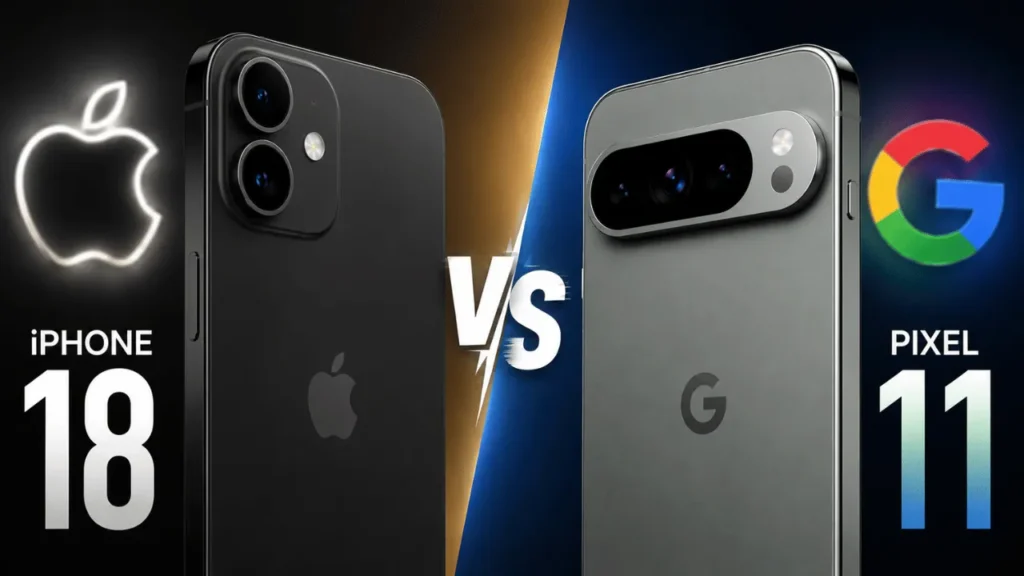
Apple iPhone 18 vs Google Pixel 11: Expected Differences at a Glance
| Feature | Apple iPhone 18 | Google Pixel 11 |
|---|---|---|
| Launch status | Not officially announced | Officially announced |
| Expected launch | Potentially 2027 for standard model | August 2026 |
| Processor | Expected A20 | Tensor G6 |
| Display | Expected around 6.3-inch OLED | Around 6.3-inch OLED |
| Refresh rate | Expected up to 120Hz | Up to 120Hz |
| Rear cameras | Expected dual camera | Expected triple camera |
| Main camera | Expected 48MP | Expected 50MP |
| Front camera | Expected 24MP | Expected 12MP |
| RAM | Reportedly up to 12GB | 12GB |
| Base storage | Expected 256GB | 256GB |
| AI platform | Apple Intelligence | Gemini Intelligence |
| Operating system | iOS | Android |
| Starting US price | Not confirmed | $899 |
Note: Apple iPhone 18 specifications shown above are based on current reports and leaks and may change before Apple’s official announcement.
Which Phone Could Be Better?
At this stage, declaring a definitive winner would be premature because the iPhone 18 has not yet been officially announced.
The Pixel 11 already has the advantage of being a real, launched product with confirmed specifications and features. Its Tensor G6 chip, 12GB RAM, 256GB base storage and extensive Gemini AI integration make it a strong option for users who prioritise Google’s software ecosystem and AI-powered smartphone features.
The Apple iPhone 18, meanwhile, could appeal more strongly to consumers who prefer iOS, Apple’s ecosystem, long-term software integration and the performance characteristics of Apple silicon. The expected A20 chip and possible 12GB RAM upgrade suggest that Apple may be preparing the standard iPhone for a more demanding AI-focused future.
Camera preferences could also influence the decision. The Google Pixel 11’s reported triple-camera arrangement could provide greater hardware flexibility, while Apple’s camera system may continue to focus heavily on image processing, video quality and ecosystem integration.

Final Verdict
The Apple iPhone 18 and Google Pixel 11 are shaping up to be two very different interpretations of a premium smartphone.
Google has already established the Pixel 11 as an AI-first flagship, with Gemini, Tensor G6 and computational photography playing central roles. Apple is expected to continue its emphasis on custom silicon, iOS integration and Apple Intelligence, while potentially giving the standard iPhone a substantial RAM upgrade.
The biggest expected differences are likely to come down to processor technology, camera hardware, AI ecosystems, RAM and storage, display implementation, battery strategy and launch timing.
For buyers who want a phone immediately, the Google Pixel 11 is already on the market. For Apple fans willing to wait, the iPhone 18 could offer a compelling alternative once it eventually arrives.
Ultimately, the comparison will become much clearer when Apple officially announces the iPhone 18 and confirms its final specifications, pricing and availability. Until then, the Google Pixel 11 has the advantage of confirmed hardware, while the Apple iPhone 18 remains one of the most closely watched upcoming smartphones in the premium mobile market.