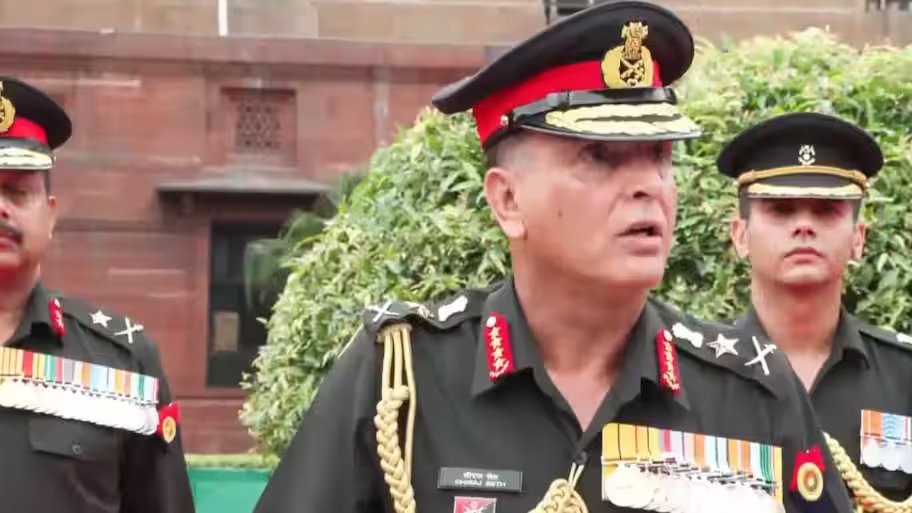
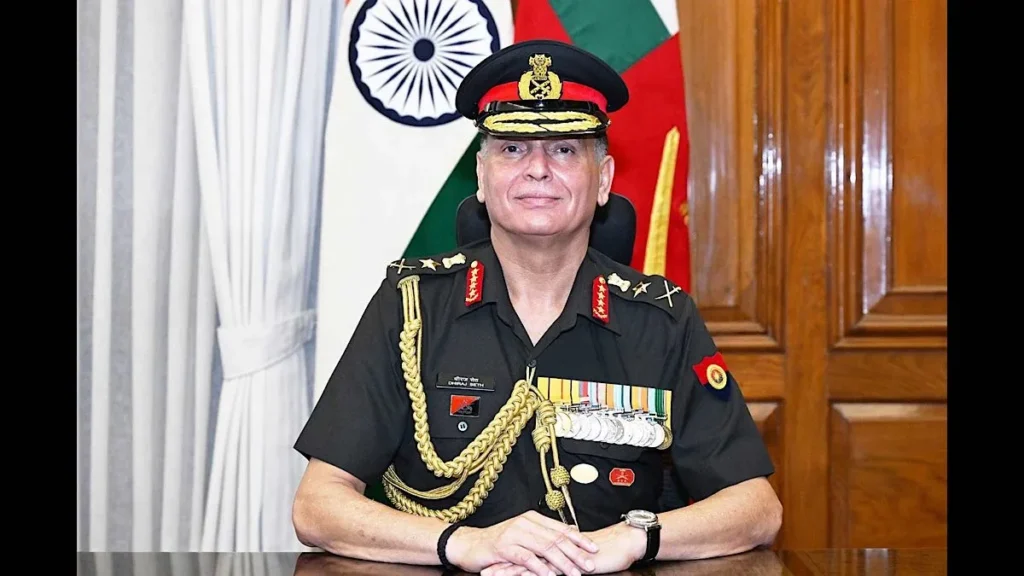
General Dhiraj Seth officially assumed charge as the 31st Army Chief , marking the beginning of a new leadership chapter for the Indian Army at a time when the country’s security environment is becoming increasingly complex. Soon after taking over, the Army Chief laid out a comprehensive vision aimed at transforming the force into a modern, technology-driven military capable of responding effectively to conventional, hybrid, and emerging threats.
Addressing senior officers at the Army Headquarters, the Army Chief described the appointment as a moment of both “pride and humility” and reaffirmed his commitment to the guiding principles of “Duty, Honour, and Nation First.” His remarks reflected a broader focus on operational preparedness, technological advancement, and organisational reforms that are expected to shape the future direction of the Indian Army.
The Army Chief introduced what he called the “VIJAY” vision, a strategic framework designed to strengthen combat capability, improve operational readiness, accelerate modernisation, and prepare the force for the rapidly changing character of warfare. Defence experts believe the announcement signals a strong emphasis on innovation and long-term capability building rather than relying solely on traditional military approaches.
Table of Contents
Army Chief Outlines Vision for Modern Warfare
The nature of military conflict has changed significantly over the past decade. While conventional warfare remains important, modern battlefields increasingly involve cyber attacks, unmanned aerial systems, artificial intelligence, space-based surveillance, electronic warfare, precision-guided weapons, and information operations.
Recognising these evolving challenges, the Army Chief stressed that the Indian Army must remain agile, technologically advanced, and prepared for every possible scenario. He said future conflicts are likely to demand faster decision-making, greater integration of advanced technologies, and enhanced coordination among the three armed services.
Military analysts note that countries across the world are investing heavily in automation, network-centric warfare, drone technology, and artificial intelligence to gain an operational advantage. India’s military modernisation has similarly accelerated in recent years, with increased emphasis on indigenous defence manufacturing and digital battlefield capabilities.
Understanding the VIJAY Vision
The newly announced VIJAY vision represents the Army Chief’s roadmap for building a force capable of addressing both present and future security challenges.
Although the Army Chief outlined the concept as a broad strategic direction, the vision is expected to focus on multiple priorities, including operational excellence, technological integration, organisational transformation, innovation, and enhanced combat preparedness.
Defence experts believe the initiative reflects a shift towards creating a more flexible and adaptive force that can respond effectively across multiple domains of warfare, including land, cyber, space, and information environments.
The vision also aligns with India’s broader defence reforms aimed at improving coordination between the Army, Navy, and Air Force while encouraging greater use of indigenous technologies developed under the government’s self-reliance initiatives.
Technology Expected to Play a Central Role
One of the strongest themes emerging from the Army Chief’s address was the importance of technology in shaping future military operations.
Modern armies increasingly depend on real-time intelligence, satellite imagery, secure communication networks, autonomous systems, advanced surveillance equipment, and data-driven battlefield management.
The Indian Army has already begun incorporating several emerging technologies, including drones for reconnaissance, artificial intelligence for decision support, improved surveillance systems along sensitive borders, and advanced communication infrastructure.
The Army Chief indicated that accelerating technological adoption will remain one of the organisation’s highest priorities.
Experts argue that future conflicts may be won not only by the size of military forces but also by the speed at which information is gathered, analysed, and converted into operational decisions.
Strengthening Combat Readiness
Combat readiness remains one of the primary responsibilities of every Army Chief. Maintaining a force capable of responding immediately to any security challenge requires continuous training, modern equipment, efficient logistics, and highly motivated personnel.
The Army Chief emphasised the importance of keeping formations prepared for both conventional military operations and emerging security threats.
India’s strategic environment demands constant vigilance because of its extensive land borders and evolving regional security dynamics. Maintaining preparedness across diverse terrain—including deserts, mountains, forests, and high-altitude regions—requires specialised training and continuous operational evaluation.
Defence specialists believe the emphasis on readiness reflects lessons learned from recent global conflicts, where military forces have had to adapt rapidly to changing battlefield conditions.
Focus on Indigenous Defence Capability
The Army Chief’s vision also complements India’s growing focus on self-reliance in defence manufacturing.
Over the past several years, India has expanded domestic production of military equipment through initiatives encouraging indigenous research, development, and manufacturing. The armed forces are increasingly inducting locally produced artillery systems, armoured vehicles, communication equipment, surveillance technologies, and unmanned platforms.
Reducing dependence on imported defence equipment not only strengthens national security but also promotes technological innovation within India’s defence industry.
Industry experts believe continued collaboration between the armed forces, defence research organisations, and private manufacturers will play an important role in achieving long-term military modernisation goals.
Leadership Built on Core Military Values
While discussing future reforms, the Army Chief also highlighted the enduring values that continue to define military service.
Describing the opportunity to lead the Indian Army as both an honour and a responsibility, he pledged to uphold the principles of “Duty, Honour, and Nation First.”
These values remain central to the functioning of the armed forces, guiding decision-making, leadership, discipline, and operational conduct across all ranks.
Military leadership experts often point out that technological superiority alone cannot ensure operational success. Strong leadership, professional ethics, disciplined training, and high morale remain equally essential components of an effective fighting force.
Responding to Emerging Security Challenges
The global security landscape has undergone significant transformation in recent years.
Conflicts increasingly involve cyber warfare, misinformation campaigns, electronic attacks, drone swarms, precision missile systems, and hybrid tactics that combine military and non-military methods.
The Army Chief acknowledged that preparing for these evolving threats requires continuous adaptation rather than relying exclusively on traditional military doctrines.
Security experts believe future armed forces must remain capable of responding simultaneously across multiple operational domains while maintaining high levels of coordination with intelligence agencies and other branches of the military.
The Indian Army has already been expanding its capabilities in areas such as counter-drone technology, electronic warfare, integrated surveillance, and advanced battlefield communication systems.
Importance of Joint Military Operations
Another key area expected to receive greater attention under the Army Chief’s leadership is enhanced jointness among India’s three armed services.
Modern military operations increasingly require seamless coordination between land, air, and naval forces. Integrated planning enables faster responses, improved intelligence sharing, and more effective use of available resources during both peacetime and conflict.
India has already initiated major defence reforms aimed at improving interoperability through integrated theatre commands and joint operational planning.
The Army Chief’s emphasis on future readiness is expected to complement these ongoing reforms by encouraging closer cooperation between all branches of the armed forces.
Preparing the Force for the Future
Military modernisation is an ongoing process rather than a one-time objective. As technology continues to evolve, armed forces around the world must regularly update their doctrine, equipment, infrastructure, and training systems.
The Army Chief’s vision reflects an understanding that future security challenges will require innovation, flexibility, and continuous learning.
With growing investments in artificial intelligence, autonomous systems, advanced surveillance, cyber capabilities, and indigenous defence production, the Indian Army is entering a period of significant transformation. The roadmap presented by the Army Chief signals a clear intent to build a technologically advanced, combat-ready force capable of protecting India’s national interests while adapting to the rapidly changing nature of modern warfare.