Street Dogs in Delhi to Get Microchips and 15-Digit IDs Under MCD’s New Monitoring Plan . The Municipal Corporation of Delhi (MCD) is preparing to introduce a technology-driven system to improve the management of Street Dogs across the national capital. Under the proposed initiative, every sterilized Street Dogs will be implanted with an ISO-certified microchip carrying a unique 15-digit identification number. The move is expected to strengthen population monitoring, improve rabies vaccination tracking, enhance sterilization records, and create a centralized digital database for every registered stray dog in Delhi.
The project reflects a significant shift from conventional record-keeping to digital animal management. Officials believe the initiative will help civic authorities accurately identify Street Dogs, reduce duplication in sterilization drives, improve coordination with animal welfare organizations, and support long-term urban animal management.
The proposal comes at a time when Delhi continues to witness concerns over the growing population of Street Dogs despite years of sterilization and vaccination campaigns.
Table of Contents
Why Delhi Is Introducing Digital Identification for Street Dogs
Managing Street Dogs in a city as large and densely populated as Delhi has always been a complex challenge.
The capital has thousands of residential colonies, unauthorized settlements, industrial areas, parks, institutional campuses, markets, and urban villages where Street Dogs are commonly found. Monitoring their numbers, vaccination history, and sterilization status has largely depended on manual records maintained by various agencies.
Officials believe digital identification can significantly improve this process.
Every microchipped Street Dogs will receive a permanent digital identity that remains with the animal throughout its life. This allows authorities to immediately access essential information whenever the dog is rescued, vaccinated, sterilized, or medically examined.
Instead of relying on temporary tags or handwritten records, officials will have access to accurate digital data that can be updated whenever necessary.
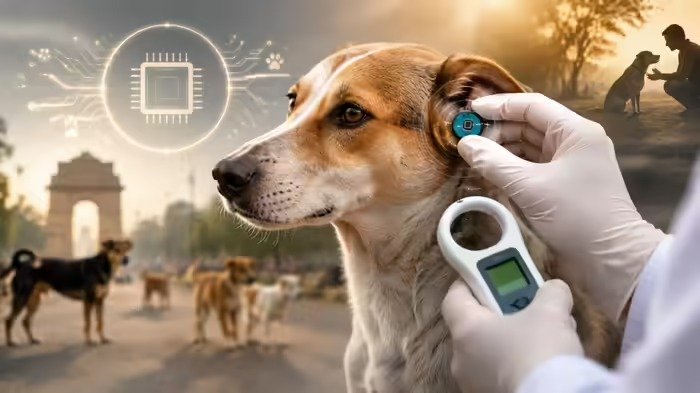
Unique 15-Digit Identification Number
One of the most important features of the proposed project is the assignment of a unique 15-digit identification number to every registered Street Dogs.
This identification number will function much like a permanent digital record.
Once implanted with a microchip, every dog can be identified using a compatible scanner. The identification system reduces confusion when dogs are captured multiple times for sterilization or vaccination campaigns.
A permanent ID also helps ensure that already sterilized Street Dogs are not unnecessarily subjected to repeat surgical procedures.
Bharatiya Pashudhan Portal to Maintain Records
The Government of India has launched the Bharatiya Pashudhan (Indian Livestock) Portal to support digital identification and record management.
According to MCD officials, the Delhi Government will function as the nodal agency for implementing the initiative, while the Animal Husbandry Department will provide authorized login credentials for maintaining and updating records.
The centralized portal will help store verified information relating to Street Dogs across Delhi.
Digital records can improve transparency while making it easier for multiple agencies to access updated information whenever required.
Four-Year Project Estimated at ₹60 Crore
Officials estimate that the complete project will continue for approximately four years.
The overall estimated expenditure is around ₹60 crore.
According to officials, implementation will begin once financial support becomes available through a government agency, private organization, or non-government institution willing to fund the initiative.
Considering the size of Delhi and its large stray animal population, authorities believe the project will require phased implementation rather than immediate citywide deployment.
Existing Sterilization Programme Continues
The MCD has already implemented large-scale sterilization programmes to manage Street Dogs.
Currently, 20 non-government organizations have been entrusted with carrying out sterilization and anti-rabies vaccination drives across different parts of Delhi.
Despite these ongoing efforts, officials acknowledge that the population of Street Dogs continues to increase.
Rapid urban growth, food availability, migration of stray animals between colonies, and breeding cycles all contribute to maintaining or increasing the overall population.
The proposed microchip project is intended to complement existing sterilization programmes rather than replace them.
Veterinary Department Leading the Initiative
The MCD’s Veterinary Department is responsible for planning and implementing the proposed digital identification programme.
At present, 13 organizations operate 20 sterilization and vaccination centres under the department’s supervision.
These centres already conduct sterilization surgeries and administer anti-rabies vaccines.
Once the microchip programme begins, implantation will become part of the standard sterilization process.
This approach minimizes additional handling because the animal is already under medical supervision during surgery.

Microchip Implantation During Sterilization
Officials have clarified that Street Dogs will not be microchipped while roaming freely on public roads.
Instead, trained teams first capture the animals using approved animal handling procedures before transporting them safely to designated sterilization centres.
After medical examination and sterilization, an ISO-certified microchip will be implanted near the dog’s ear.
Since the procedure is performed in a controlled medical environment, authorities believe it will be safer both for veterinary teams and the animals themselves.
This also ensures that every implanted microchip is properly registered in the official database.
Existing Tagging Centres
Currently, the MCD already operates tagging facilities at three locations:
- Malviya Nagar
- Timarpur
- Najafgarh
These centres provide the initial infrastructure needed for animal identification programmes.
The proposed expansion involving microchips would significantly enhance the capabilities of these existing facilities.
Officials may gradually extend similar services to additional sterilization centres as the programme expands across Delhi.
What Information Will Be Stored
Each microchip implanted in Street Dogs will contain access to an extensive digital record.
The database will include:
- Unique identification number.
- Estimated age.
- Colour.
- Physical identification marks.
- Ward or locality where the dog was captured.
- Sterilization status.
- Rabies vaccination date.
- Next vaccination schedule.
- Name of the NGO responsible for treatment and monitoring.
Having complete information available in one place enables better decision-making for future vaccination and health programmes.
Improving Rabies Vaccination Monitoring
Rabies remains one of the most important public health concerns associated with stray animal populations worldwide.
Vaccination remains the most effective strategy for controlling the disease among Street Dogs.
However, maintaining accurate vaccination records has traditionally been difficult when individual animals cannot be reliably identified.
Microchips solve this problem by linking every vaccination directly to an individual dog.
Officials can immediately determine whether an animal has already been vaccinated and when the next booster dose is due.
This improves vaccination coverage while preventing unnecessary repeat vaccinations.
Better Population Management
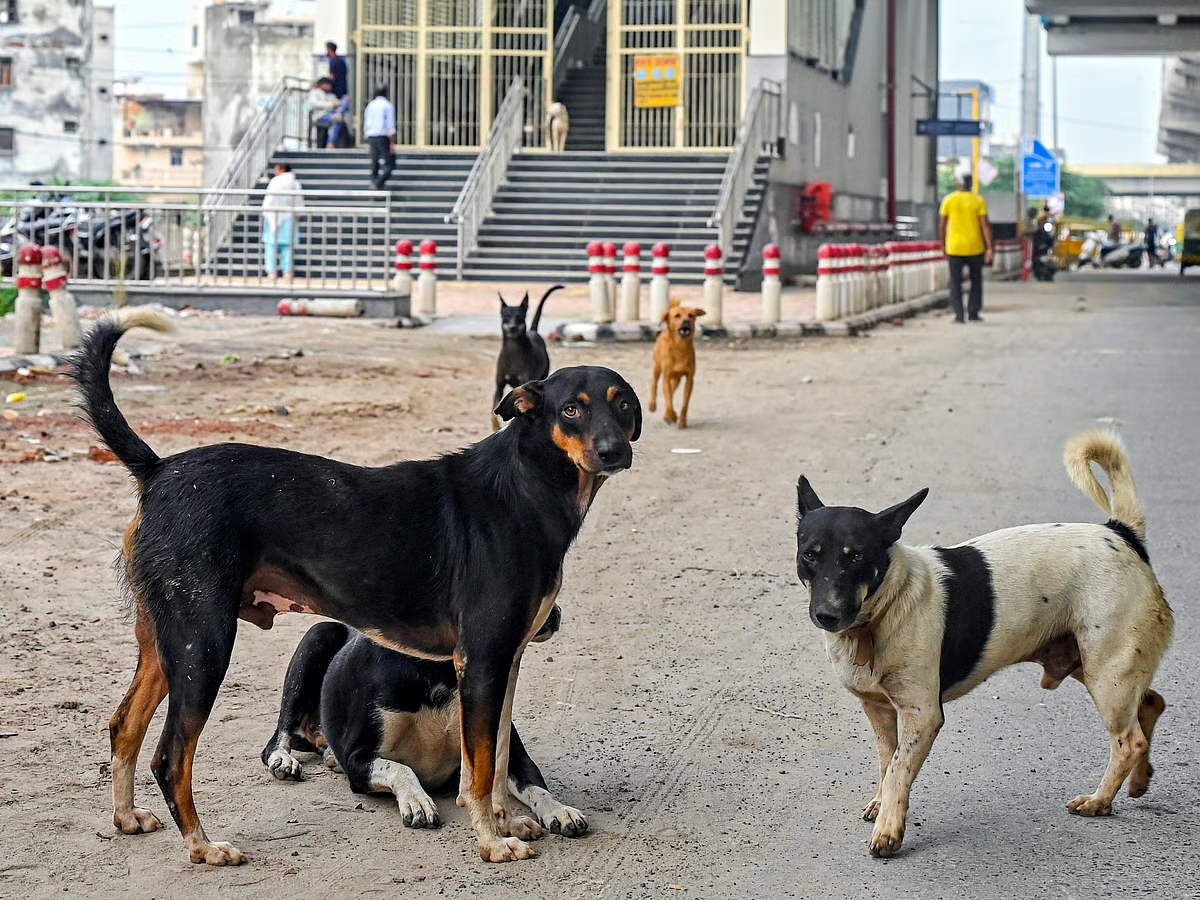
One of the biggest challenges facing urban authorities is estimating the actual population of Street Dogs.
Without reliable identification systems, counting animals accurately becomes extremely difficult.
Dogs often move between neighborhoods, resulting in duplicate counts or inconsistent population estimates.
Digital identification reduces these errors by assigning every registered dog a permanent identity.
Reliable population data helps authorities plan sterilization drives, vaccination campaigns, veterinary staffing, equipment requirements, and financial allocations more effectively.
Supporting Animal Welfare
Animal welfare organizations have long advocated scientific management rather than indiscriminate relocation of Street Dogs.
Microchip-based identification supports humane management practices because each animal’s medical history remains permanently available.
If an injured or sick dog is rescued, veterinarians can quickly determine whether it has previously undergone sterilization or vaccination.
This reduces unnecessary medical procedures while improving the quality of veterinary care.
Improved Coordination Between Agencies
Managing Street Dogs involves cooperation among multiple organizations.
These include:
- Municipal authorities.
- Veterinary departments.
- Animal welfare NGOs.
- Vaccination teams.
- Sterilization centres.
- Field rescue teams.
A centralized digital database enables all participating agencies to access consistent information.
This reduces duplication of work while improving coordination during sterilization campaigns and emergency rescue operations.
Technology Supporting Urban Animal Management
Cities across the world are increasingly adopting digital technology to improve animal management systems.
Electronic identification through microchips has become a widely accepted practice for companion animals in many countries.
Applying similar technology to Street Dogs represents an effort to modernize municipal animal management using accurate digital records.
Such systems improve accountability, simplify long-term monitoring, and help authorities evaluate the effectiveness of sterilization programmes over time.
As Delhi continues expanding, technology