
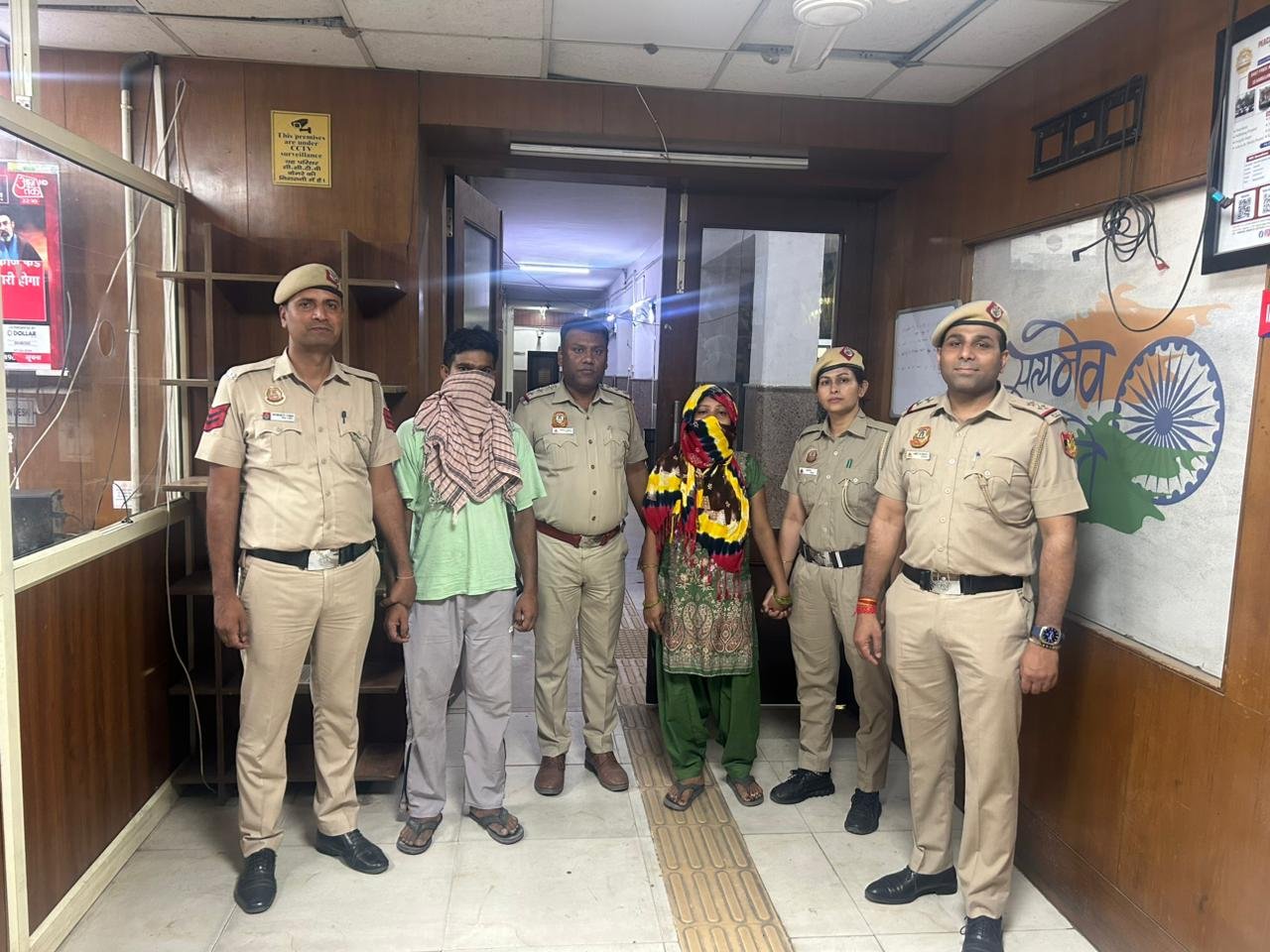
Blind Murder investigations are among the most difficult challenges faced by law enforcement agencies. With no immediate clues, no eyewitnesses, and often no confirmed identity of the victim, such cases demand extraordinary patience, scientific investigation, and relentless fieldwork. In a remarkable display of investigative excellence, Delhi Police’s West District has successfully solved a sensational Blind Murder case that had initially baffled investigators after the recovery of an unidentified decomposed body from Rama Road in West Delhi.
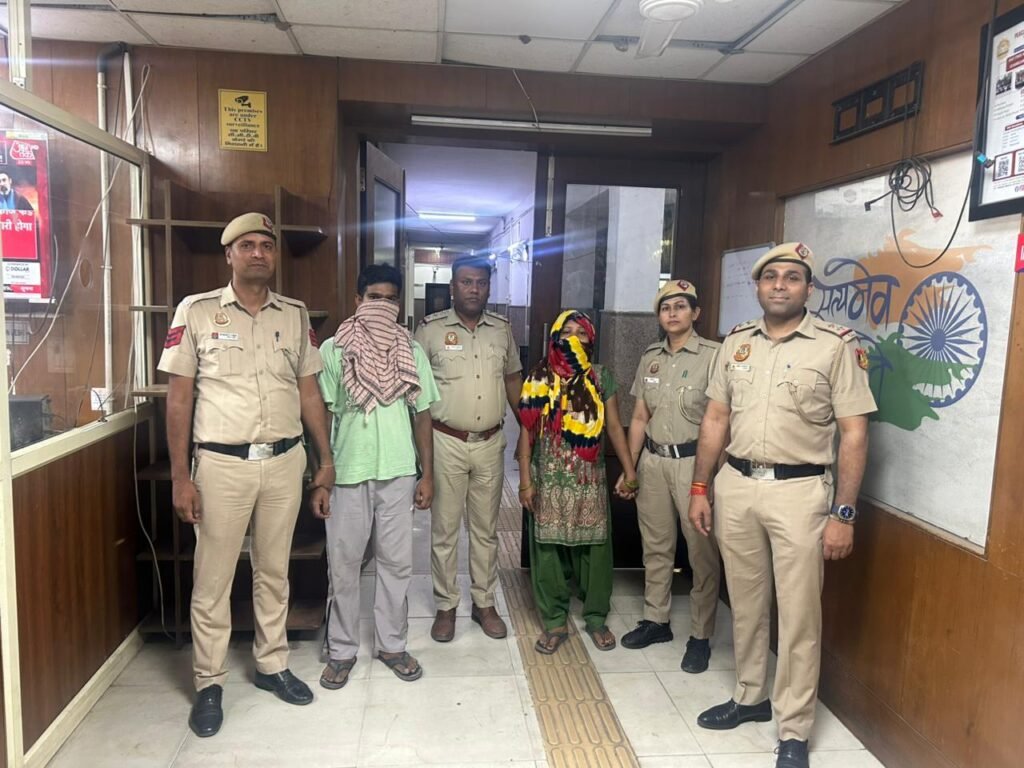
The case, which began with the discovery of a foul-smelling plastic sack outside a factory gate, eventually led investigators across multiple states and uncovered a disturbing family crime. The victim was identified as Amit Kumar, while the accused turned out to be his own brother, Gopal, and sister-in-law, Soma alias Seema. Their arrest has brought a significant breakthrough in a case that showcased the determination, professionalism, and technical expertise of Delhi Police.
Table of Contents
Mystery Begins with Recovery of Decomposed Body
The Blind Murder case came to light on April 4, 2026, when Police Station Moti Nagar received information regarding a suspicious white plastic sack lying outside a factory located at Plot No. 18, Rama Road, near Prem Nagar Fatak.
Acting swiftly, a police team reached the location and found a large plastic sack tightly secured with rope. A strong foul smell was emanating from it, immediately raising suspicions. The area was cordoned off, and forensic experts along with the District Crime Team were called to conduct a scientific examination.
When investigators opened the sack, they discovered a horrifying scene. Inside were two mattresses and two blankets wrapped around a highly decomposed male body estimated to be around 40 to 42 years old. The deceased was dressed in blue jeans and a full-sleeve shirt, while both legs had been tied using a mobile charger cable.
Due to the advanced stage of decomposition, officers could not immediately identify the victim or determine how he had died. However, the manner in which the body had been concealed clearly suggested an attempt to destroy evidence and hide the crime.
Recognizing the seriousness of the matter, police registered a case and launched a full-scale Blind Murder investigation.
Forensic Evidence Reveals a Brutal Crime
The body was shifted for post-mortem examination, which soon revealed critical evidence that transformed the investigation.
Medical experts found multiple bruises on the victim’s neck, a fractured hyoid bone, and significant blunt-force injuries to the head. According to the post-mortem report, the cause of death was determined to be asphyxia due to manual strangulation associated with blunt-force head trauma.
The findings confirmed that the victim had been Blind Murder and that the death was clearly homicidal in nature.
One important clue emerged during the examination of the body. After the removal of decomposed skin layers, investigators discovered a tattoo on the victim’s arm bearing the words “अमित-किरन.” Although seemingly small, this clue would later play a vital role in identifying the deceased and advancing the Blind Murder investigation.
The Challenge of Identifying the Victim
One of the biggest obstacles in the Blind Murder case was establishing the identity of the deceased.
Since the body was badly decomposed and no identification documents were recovered, police launched an extensive effort to trace the victim. Teams visited labour colonies, jhuggi clusters, industrial areas, and residential pockets across several parts of Delhi.
Photographs and details of the deceased were circulated among workers, local residents, and community members. More than 200 Hue and Blind Murder Cry Notices were distributed and displayed throughout Delhi and the NCR region.
Despite these efforts, no immediate breakthrough emerged. However, investigators refused to give up and continued working on multiple leads simultaneously.
Massive CCTV Analysis Becomes Turning Point
Understanding that technology could provide answers where traditional methods had failed, investigators initiated one of the most extensive CCTV examinations in the case.
More than 300 CCTV cameras installed across various locations were analyzed frame by frame. Officers spent countless hours tracking suspicious movements, vehicles, and activities that might be linked to the disposal of the body.
The painstaking effort eventually yielded results when investigators identified a suspicious e-Cart believed to have been used in transporting the body.
The driver of the vehicle, identified as Kasim, was traced and questioned. The e-Cart itself was seized for further examination.
His statement opened an entirely new direction in the Blind Murder investigation.
Labourers Lead Police to the Crime Scene
During questioning, investigators learned that two labourers had been hired to transport packed mattresses and blankets from a rented accommodation in Loni, Ghaziabad.
The labourers, identified as Jai Prakash alias Ganja and Jagdish, informed police that they had no idea they were moving a dead body. According to their statements, they had simply been hired to shift household items.
This information proved crucial.
Police immediately reached the rented premises in Indrapuri, Loni, Ghaziabad, and conducted a thorough inspection with forensic experts.
What they found significantly strengthened the Blind Murder case.
Blood-stained exhibits and other forensic evidence were recovered from the premises. The discovery strongly indicated that the Blind Murder had been committed inside the rented accommodation before the body was transported to Delhi and dumped outside the factory.
Investigators now had a crime scene, but they still needed to identify the victim and establish who was responsible.
Identity of the Deceased Finally Established
As the investigation progressed, police combined forensic evidence, witness statements, technical surveillance, and field enquiries.
After sustained efforts, investigators finally identified the deceased as Amit Kumar.
The identification marked a major breakthrough in the Blind Murder case and allowed police to shift their focus toward understanding Amit Kumar’s personal relationships, family background, and recent activities.
During this stage, investigators uncovered a shocking detail.
Evidence revealed that Gopal, the real brother of Amit Kumar, had a direct connection to the rented accommodation where forensic evidence had been discovered.
Further enquiries established that Gopal and his wife Soma alias Seema had been living as tenants at the Loni property.
Sudden Disappearance Raises Suspicion
When police contacted the landlord of the rented premises, another significant piece of information emerged.
The landlord disclosed that Gopal and Soma had abruptly vacated the accommodation shortly after the incident and had disappeared without notice.
Their sudden departure immediately raised suspicion.
Investigators began tracking the couple through every available means, including technical surveillance, call detail record analysis, IMEI tracking, and Aadhaar-based searches.
The search operation quickly expanded beyond Delhi.
Police teams conducted raids and verification exercises in multiple locations across Uttar Pradesh, Haryana, and West Bengal. Family members, relatives, friends, and associates were questioned as investigators attempted to locate the fleeing suspects.
However, the accused continuously changed locations and hideouts in an apparent effort to evade arrest.
Despite these challenges, Delhi Police maintained relentless pressure and continued developing intelligence inputs.
Extensive Manhunt Ends in Arrest
Weeks of surveillance, intelligence gathering, and technical analysis ultimately paid off.
On June 15, 2026, police received specific information regarding the whereabouts of the accused.
Acting swiftly, investigators launched an operation near the railway line in Khaddewali Jhuggi, Shiv Basti, Rama Road.
The operation resulted in the successful apprehension of both accused persons.
Gopal, aged 32, and his wife Soma alias Seema, aged 35, were taken into custody and formally arrested in connection with the Blind Murder case.
Following their arrest, both accused were produced before the court. While Soma was remanded to judicial custody, police obtained custody of Gopal for further investigation and recovery proceedings.
Example of Scientific and Professional Policing
The successful detection of this Blind Murder case highlights the increasing role of scientific policing in modern criminal investigations.
Unlike traditional investigations that often depended heavily on eyewitness testimony, contemporary policing relies on a combination of forensic science, digital evidence, surveillance technology, and technical intelligence.
In this case, every component played an important role. From forensic examination and post-mortem analysis to CCTV footage scrutiny, technical surveillance, and field intelligence, investigators used every available resource to reconstruct the crime and identify those responsible.
Equally important was the persistence shown by the investigating team. The absence of immediate leads, the unidentified condition of the victim, and the movement of suspects across different states could easily have stalled the investigation. Instead, officers continued pursuing every possible lead until the mystery was solved.
The efforts of the Moti Nagar Police Station team, operating under the supervision of senior officers of West District, demonstrate the dedication and professionalism that continue to strengthen public confidence in law enforcement agencies. Their ability to crack a complex Blind Murder case involving an unidentified body, trace the crime scene, identify the victim, and ultimately arrest the accused reflects a high standard of investigative competence and commitment to justice.
As further investigation continues into the motive behind the murder and additional evidence collection, the case already stands as a significant example of how determined police work, supported by science and technology, can solve even the most challenging Blind Murder investigations.