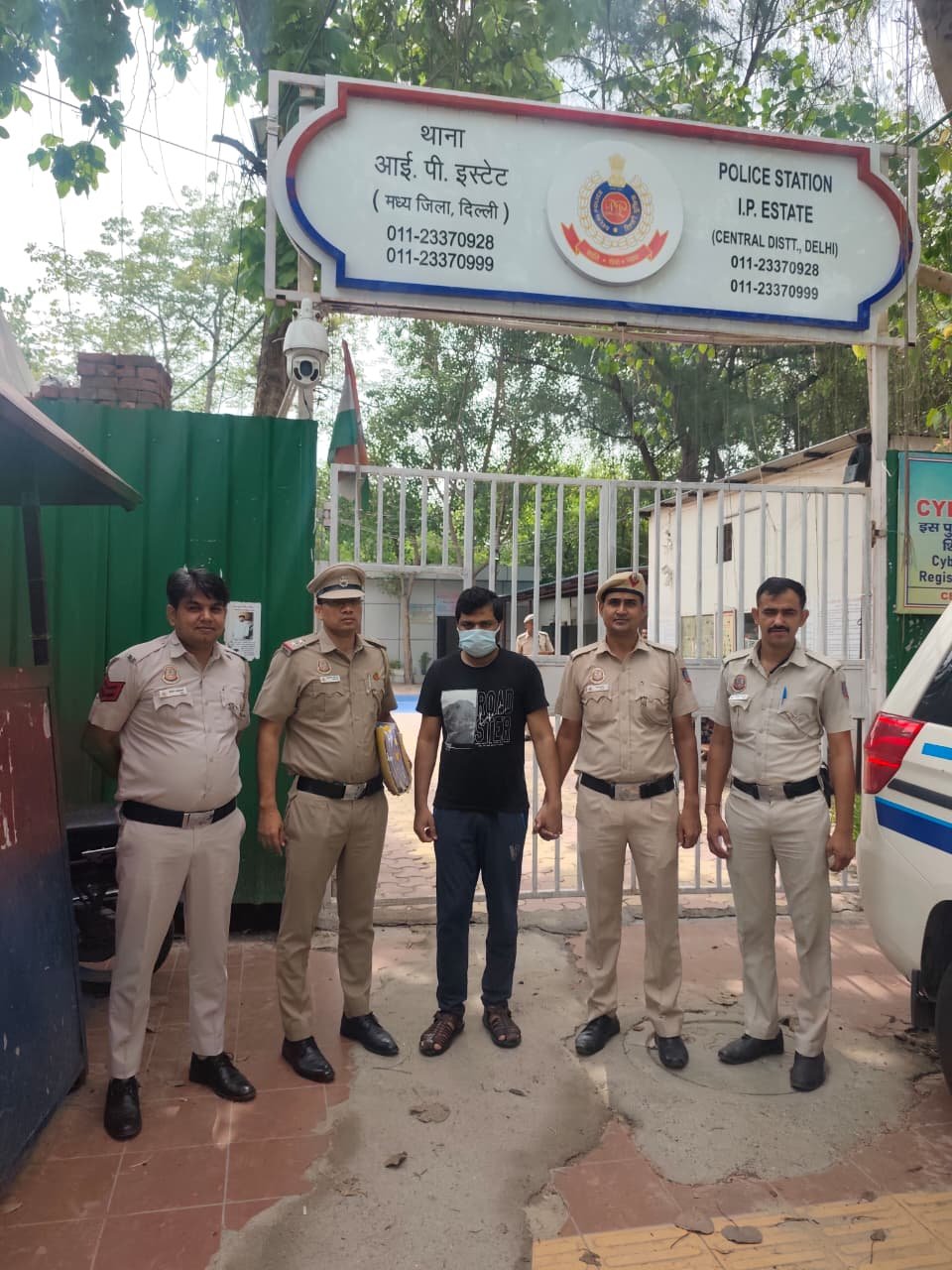
In a major breakthrough against organized Cyber Fraud, the Cyber Crime Police Station of Delhi’s Outer North District successfully apprehended a cyber fraud accused after an intense chase through the forests and hilly terrain of Jharkhand. The operation showcased the growing determination of Delhi Police in tackling sophisticated Cyber Fraud networks that operate from remote regions across India.
The accused, identified as 25-year-old Pravin Rana from Giridih district of Jharkhand, was allegedly involved in a Cyber Fraud case in which a Delhi-based victim lost ₹80,825 after downloading a malicious APK file received through WhatsApp. Police officials said the accused continuously avoided investigation despite repeated legal notices and eventually attempted to escape through jungle routes when the police team reached his hideout.
The successful operation is being seen as a major achievement for the Cyber Crime Police Station of Outer North District, especially at a time when Cyber Fraud cases involving fake APK links, phishing attacks, and digital banking theft are rapidly increasing across the country.
How the Cyber Fraud Took Place
According to Delhi Police, the case began after a victim lodged a complaint regarding unauthorized withdrawal of money from his bank account. The victim informed investigators that he had received a suspicious APK file link through WhatsApp.
Cyber Fraud experts explain that APK files are Android application packages used to install apps manually outside official app stores. Fraudsters frequently use fake APK links disguised as banking apps, reward offers, courier updates, or government notifications to trick users into downloading malware.
In this case, police said the victim unknowingly downloaded the malicious APK file, which compromised his mobile phone and exposed sensitive banking credentials. Soon after installation, ₹80,825 was fraudulently transferred from the victim’s account.
An FIR numbered 78/2025 under Section 318(4) of the Bharatiya Nyaya Sanhita (BNS) was registered at Cyber Police Station, Outer North District.
Cyber Fraud involving APK malware has emerged as one of the fastest-growing digital crimes in India. Cyber criminals often use advanced social engineering techniques to gain access to victims’ devices. Once malware is installed, fraudsters can monitor banking apps, steal OTPs, capture passwords, and remotely control smartphones.
Delhi Police Launches Technical Investigation
After the Cyber Fraud complaint was registered, Delhi Police immediately launched a detailed technical investigation. Senior officers formed a dedicated team to track the money trail and identify those involved in the fraud network.
The operation was conducted under the overall supervision of senior officers including Joint Commissioner of Police Vijay Singh, Deputy Commissioner of Police Hareshwar Swami, Additional DCP Amit Kaushik, ACP Operations Dinesh Kumar, and SHO Govind Singh.
The investigation team consisted of SI Amit, HC Raman, HC Mandeep, and HC Pawan. Officials said the team worked continuously on technical surveillance, digital evidence analysis, and field intelligence gathering.
Investigators examined bank account transactions, Call Detail Records (CDR), Subscriber Detail Records (SDR), and digital communication links associated with the Cyber Fraud operation. During analysis, police discovered that the cheated amount had been transferred to a Canara Bank account and later withdrawn through ATM transactions.
Cyber Fraud investigations today rely heavily on digital intelligence and financial tracking. Unlike conventional crimes, cyber criminals often operate across states using fake identities, mule bank accounts, and encrypted communication platforms.
Delhi Police officials said the team carefully followed the digital trail, eventually leading them to suspected hideouts in Jharkhand, a state where several organized Cyber Fraud syndicates have reportedly been active in recent years.
Repeated Raids in Remote Areas of Jharkhand
The investigation soon moved beyond Delhi as police teams travelled to remote and forest-dominated regions of Jharkhand to locate the accused.
According to officials, the accused repeatedly ignored legal notices issued through the CAIR Portal and deliberately avoided joining the investigation. Police teams conducted multiple raids at suspected locations connected to the Cyber Fraud accused.
The operation was particularly challenging because the accused was allegedly hiding in jungle-prone and hilly areas where movement becomes difficult, especially during night operations. Investigators also faced limited cooperation from local contacts and family members.
Despite these obstacles, the Cyber Crime Police Station team continued surveillance and intelligence gathering. Police sources said officers conducted night recce operations and monitored the movements of the accused using technical inputs and local intelligence.
Cyber Fraud networks operating from remote regions often rely on geography as protection. Dense forests, difficult roads, and isolated villages can make police operations risky and time-consuming. However, officials said the Delhi Police team remained focused and persistent throughout the investigation.
 Dramatic Jungle Chase Leads to Arrest
The breakthrough finally came on May 7, 2026, when police received specific intelligence regarding the location of accused Pravin Rana.
Acting on the information, the Cyber Crime Police Station team conducted another raid at the suspect’s hideout. However, as soon as the accused noticed police officials approaching, he allegedly attempted to flee through nearby forest routes and uneven hilly terrain.
What followed was a dramatic foot chase through the jungle area.
Police officials stated that SI Amit and HC Mandeep displayed exceptional courage, stamina, and determination during the pursuit. Despite the dangerous terrain and difficult conditions, both officers chased the accused for a considerable distance.
The officers ultimately managed to overpower and apprehend the accused after an intense pursuit operation deep inside the forest region.
Senior officers appreciated the bravery and commitment shown by the team. The operation highlighted not only technical expertise in Cyber Fraud investigations but also the physical risks police personnel often face while tracking cyber criminals across states.
Cyber Fraud cases are commonly viewed as digital crimes involving laptops and mobile phones, but this operation demonstrated how such investigations can also require extensive field operations and high-risk ground action.
Important Digital Evidence Recovered
Following the arrest, police recovered one mobile phone from the accused. During forensic examination of the device, investigators reportedly found two WhatsApp applications installed on the phone.
One WhatsApp account linked to mobile number 9931176315 was found associated with the fraudulent Canara Bank account used in the Cyber Fraud operation.
Officials believe the recovered digital evidence will play a critical role in exposing the larger Cyber Fraud network connected to the accused.
Cyber investigators often rely on seized mobile devices to uncover communication patterns, financial transactions, fake accounts, and links between multiple accused persons. Such evidence helps agencies identify organized gangs involved in phishing scams, banking fraud, APK malware attacks, and digital impersonation crimes.
Police officials confirmed that further analysis of the mobile phone and associated digital records is ongoing.
Growing Threat of APK-Based Cyber Fraud
Cyber security experts say APK-based Cyber Fraud has become increasingly common because many users unknowingly install applications from untrusted sources.
Fraudsters frequently disguise malware as government apps, KYC updates, courier services, electricity bill notifications, banking upgrades, or cashback rewards. Once installed, the malware silently steals sensitive information from the device.
Experts advise users to avoid downloading APK files shared through WhatsApp, SMS, Telegram, or unknown websites. Applications should only be downloaded from trusted platforms like official app stores.
The latest case once again highlights how Cyber Fraud criminals exploit lack of digital awareness among smartphone users.
According to cyber experts, India has witnessed a sharp rise in financial Cyber Fraud cases in recent years due to increasing digital banking adoption. Fake investment apps, phishing links, remote access scams, and APK malware attacks are now among the most common online threats faced by users.
Police Efforts Against Organized Cyber Fraud
The successful arrest of the accused reflects the growing capabilities of Delhi Police in dealing with modern Cyber Fraud operations.
Cyber Crime Police Stations across India are increasingly using advanced digital tools, technical surveillance, and interstate coordination to track cyber criminals. However, officials say fighting Cyber Fraud remains challenging because many gangs operate from remote regions while targeting victims nationwide.
The Outer North District Cyber Police team received appreciation for combining technical investigation with relentless fieldwork. Senior officers stated that the operation demonstrated dedication, teamwork, and commitment toward protecting citizens from Cyber Fraud.
Police officials also emphasized that public awareness remains equally important in preventing Cyber Fraud. Citizens are advised not to click suspicious links, avoid downloading unknown APK files, and immediately report suspicious online activities to cyber helplines or police authorities.
Investigators are now working to identify additional members of the Cyber Fraud network and examine whether the accused was linked to other online financial crimes across different states.
The Delhi Police operation in Jharkhand has once again shown that law enforcement agencies are prepared to go beyond city borders and face extreme conditions to crack down on organized Cyber Fraud syndicates operating across India.