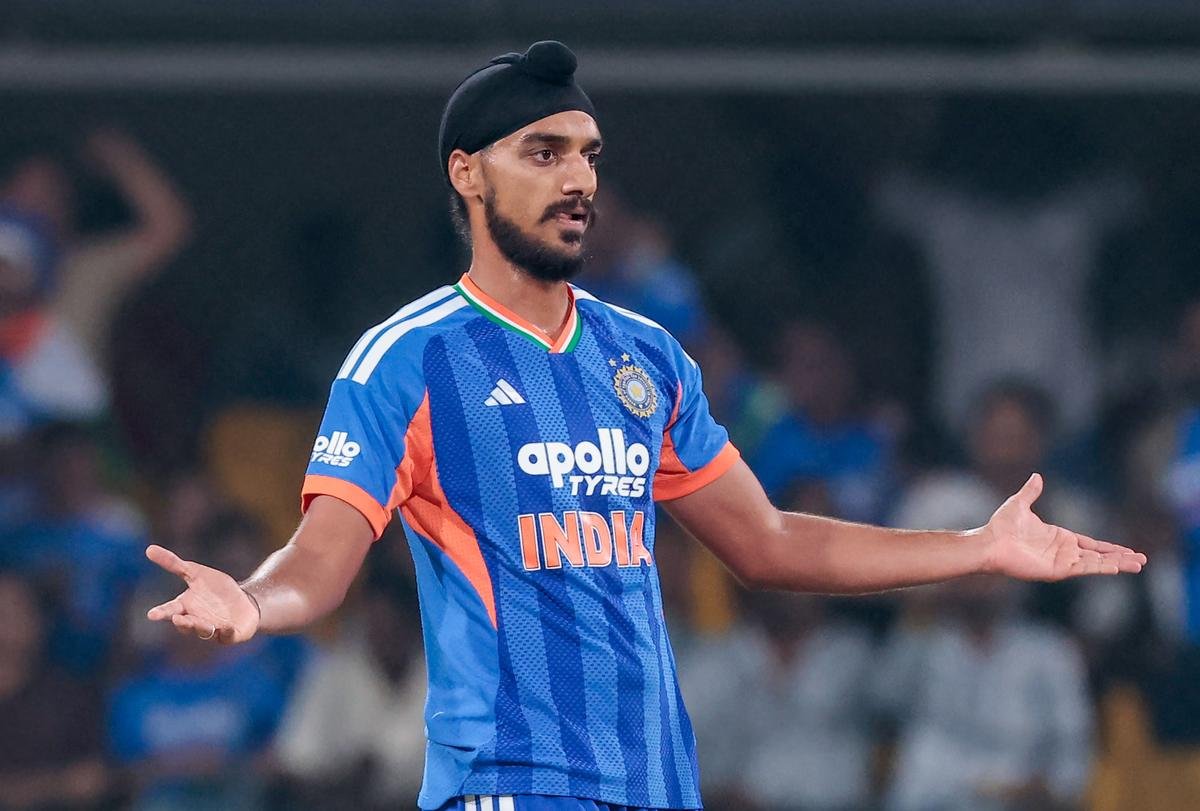
Arshdeep Singh created a new record for India in T20 International cricket after taking his tally to 38 wickets in 2026, surpassing Bhuvneshwar Kumar’s previous record of 37 wickets in a calendar year. Arshdeep Singh achieved the milestone during the second T20 International against New Zealand on Saturday, delivering an important bowling performance as the visitors recovered from an early collapse to post 180/5. India went on to win the match by chasing down 181 after recovering from 70/5. Despite India’s early breakthroughs, half-centuries from Glenn Phillips and Bevon Jacobs helped New Zealand rebuild their innings through a crucial 116-run partnership for the fourth wicket.
The contest featured two contrasting phases. India’s bowlers initially kept New Zealand under pressure with regular wickets, reducing the visitors to 41/3 during the powerplay. However, Phillips and Jacobs steadied the innings before accelerating in the final overs. Their partnership shifted the momentum and ensured New Zealand reached a competitive total despite losing three wickets early in the innings.

Table of Contents
Arshdeep Singh Breaks Bhuvneshwar Kumar’s Calendar-Year Record
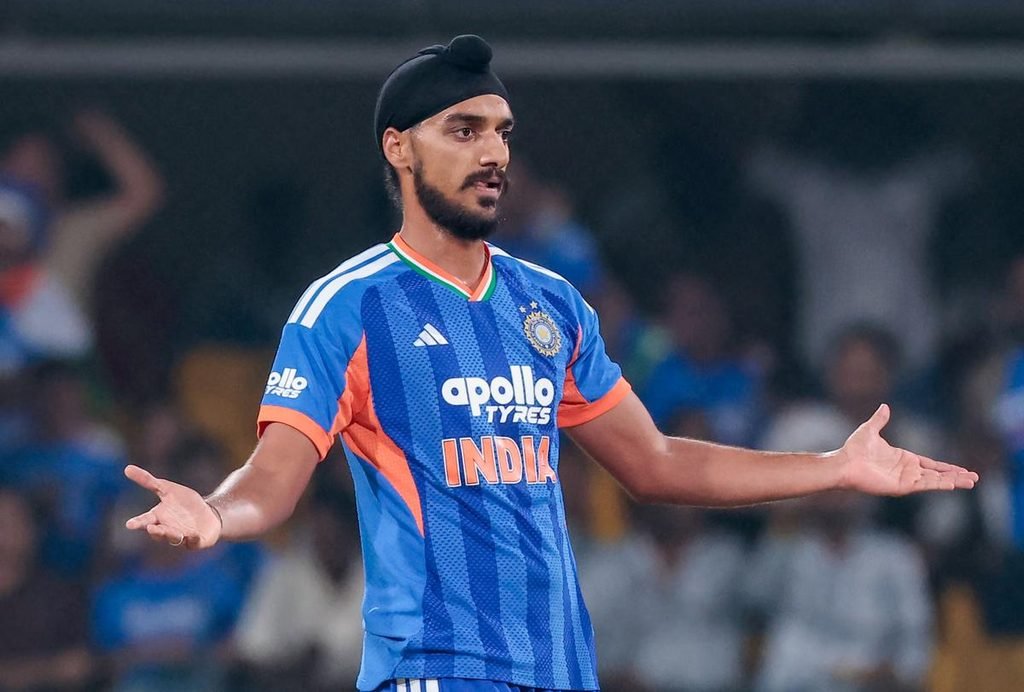
The standout individual achievement of the innings belonged to Arshdeep Singh, who became the Indian bowler with the most wickets in men’s T20 Internationals in a single calendar year. His tally reached 38 wickets in 2026, taking him past Bhuvneshwar Kumar’s previous mark of 37 wickets, recorded in 2022.
The record highlights Arshdeep Singh’s importance to India’s T20I bowling attack. His ability to strike early and deliver wickets at important moments has made him a key option in the shorter format. Left-arm fast bowlers can offer a different angle to right-handed batters, while variations in pace and length can help disrupt the rhythm of an opposition batting lineup.
Against New Zealand, Arshdeep Singh made an immediate impact by dismissing Tim Seifert for seven in the second over. The early breakthrough gave India an opportunity to put pressure on the visitors before they could settle into their innings.
He later returned to dismiss Phillips, breaking the partnership that had rescued New Zealand from their difficult start. Finishing with figures of 2/33 from four overs, Arshdeep Singh was India’s most successful bowler in terms of wickets taken.
The achievement also added another milestone to India’s recent T20I bowling history. Bhuvneshwar Kumar had previously held the record after collecting 37 wickets during 2022. By moving to 38 wickets, Arshdeep Singh established a new benchmark for an Indian bowler in a calendar year in the format.
India Strike Early to Put New Zealand Under Pressure
India began the bowling innings with an aggressive approach, looking to make early inroads into New Zealand’s batting order. The opening overs proved productive as the hosts picked up wickets and prevented the visitors from building an immediate foundation.
Arshdeep Singh provided the first major breakthrough when he dismissed Seifert for seven in the second over. The dismissal reduced New Zealand’s scoring options early and placed additional responsibility on the remaining batters.
Prince Yadav then removed Finn Allen for 16, while Bhuvneshwar Kumar dismissed Daryl Mitchell for six. The wickets left New Zealand struggling at 18/2 before the end of the third over, putting the middle order under considerable pressure.
The early strikes demonstrated India’s improved bowling performance. After New Zealand’s top order lost wickets, the visiting side needed a partnership that could stabilise the innings and prevent the scoring rate from falling too far behind.
India continued to search for further breakthroughs, but Phillips and Jacobs gradually changed the direction of the innings. Their ability to rotate the strike and select scoring opportunities helped New Zealand recover without taking unnecessary risks during the rebuilding phase.
The early pressure created by India’s bowlers was significant, but the inability to dismiss the incoming batters quickly allowed New Zealand to regain control.
Glenn Phillips Leads New Zealand’s Recovery With a Half-Century
Glenn Phillips played a central role in New Zealand’s recovery, scoring 70 runs from 43 balls. His innings combined controlled batting with attacking strokeplay, helping the visitors move away from the pressure created by India’s early wickets.
Phillips reached his half-century in just 33 balls, striking three fours and three sixes by that stage. He continued to find boundaries as the innings progressed, eventually finishing with four fours and four sixes.
His approach was particularly important after New Zealand had lost three wickets. Rather than allowing India’s bowlers to dominate the middle overs, Phillips looked for opportunities to score while maintaining a partnership with Jacobs.
The batter showed an ability to accelerate after settling at the crease. His boundary-hitting helped New Zealand increase their total during the middle overs and established a platform for a stronger finish.
For India, containing Phillips became a priority as the partnership developed. Arshdeep Singh eventually delivered the breakthrough in the 18th over, when Phillips was caught by Naman Dhir.
The dismissal ended Phillips’ innings at 70 and brought the 116-run fourth-wicket partnership to a close. It also gave India an important wicket at a stage when New Zealand were looking to maximise their scoring in the final overs.
Although the breakthrough arrived late in the innings, Arshdeep Singh’s dismissal of Phillips prevented the partnership from continuing into the closing stages and demonstrated the value of taking wickets even after a batter has established momentum.
Bevon Jacobs Complements Phillips With 58 Runs
Bevon Jacobs played an equally important role in New Zealand’s recovery, scoring 58 runs from 46 deliveries. His half-century provided stability at one end while Phillips took on a more aggressive role during key phases of the partnership.
Jacobs reached his fifty in 40 balls, hitting five fours and one six. His innings ensured New Zealand did not become overly dependent on Phillips for scoring and helped the visitors rebuild after the early collapse.
The partnership between Phillips and Jacobs was the defining phase of New Zealand’s innings. Together, they added 116 runs for the fourth wicket, transforming the situation from a precarious start into a competitive total.
The pair crossed the 100-run mark in 69 balls, showing how effectively they managed the middle overs. Their partnership combined calculated risk-taking with strike rotation, preventing India’s bowlers from maintaining the same level of pressure they had established at the start.
Jacobs’ contribution was particularly valuable because it allowed Phillips to attack without requiring both batters to take similar risks. While Phillips found boundaries at regular intervals, Jacobs maintained the partnership and kept the scoreboard moving.
The stand also underlined the importance of middle-order resilience in T20 cricket. A team that loses early wickets can still recover if its batters build partnerships and preserve wickets for the final overs.
However, Jacobs’ innings ended when he was dismissed by Nitish Kumar Reddy, leaving New Zealand at 165/5. His departure came after he had played a major role in rebuilding the innings.
India’s Bowling Figures and Performance
India’s bowling attack produced early breakthroughs, but New Zealand’s middle-order partnership limited the overall impact of those wickets. The final figures reflected a combination of effective spells and the difficulty of containing two established batters once they had settled.
Arshdeep Singh finished with 2/33 from four overs, making him India’s leading wicket-taker in the innings. His two wickets included the early dismissal of Seifert and the crucial breakthrough against Phillips.
Prince Yadav returned figures of 1/30, contributing to India’s early pressure by dismissing Allen. His spell helped restrict New Zealand during the opening overs, when the visitors were struggling to establish a stable batting order.
Bhuvneshwar Kumar took one wicket but conceded 50 runs in his four overs. His dismissal of Mitchell added to India’s early success, although New Zealand’s recovery meant the bowling attack faced a more difficult challenge as the innings progressed.
Axar Patel delivered a relatively economical spell, conceding 28 runs in four overs without taking a wicket. His control helped limit scoring opportunities during his spell, even as Phillips and Jacobs built their partnership.
Nitish Kumar Reddy claimed one wicket for 31 runs in three overs, dismissing Jacobs after the batter had reached his half-century. The wicket reduced New Zealand to 165/5 and gave India another opportunity to restrict the visitors during the closing stages.
Overall, the bowling performance was stronger at the beginning than during the middle overs. India’s early wickets created an opening, but the partnership between Phillips and Jacobs prevented the hosts from maintaining control throughout the innings.
Michael Bracewell Provides a Late Scoring Boost
New Zealand finished their innings at 180/5, with Michael Bracewell contributing a late burst of scoring. He struck a four and a six as the visitors added 23 runs during the final two overs.
The late acceleration was important because it allowed New Zealand to turn their recovery into a more substantial total. After losing wickets early, the visitors had managed to rebuild through Phillips and Jacobs before using the final overs to add further runs.
The final phase also illustrated the importance of retaining wickets for the death overs. New Zealand entered the closing stages with enough batting resources to attack, allowing Bracewell to target scoring opportunities and increase the pressure on India’s bowlers.
For India, the late runs meant that the early breakthroughs did not translate into a lower total than the visitors eventually achieved. Restricting the opposition after a major partnership remains a key challenge in T20 cricket, where even a short burst of boundaries can significantly change the final score.
What the Record Means for Arshdeep Singh
The calendar-year milestone strengthens Arshdeep Singh’s position among India’s leading T20I bowlers. Reaching 38 wickets in 2026 demonstrates his ability to contribute consistently across the format, while his performance against New Zealand showed his value in both the opening and closing phases of an innings.
Early wickets are especially important in T20 cricket because they can prevent a batting side from establishing momentum during the powerplay. Later breakthroughs can be equally valuable when a partnership threatens to take the game away from the bowling team.
In this match, Arshdeep Singh contributed at both stages by dismissing Seifert early and ending Phillips’ influential innings in the 18th over. Those wickets helped India disrupt New Zealand’s batting plans, even though the visitors eventually reached 180/5.
The record also provides a useful comparison with Bhuvneshwar Kumar’s achievement in 2022. Both bowlers have played important roles in India’s T20I attack, and the new mark reflects the changing contributions of India’s pace-bowling options across different periods.
However, individual records and team outcomes are separate measures of performance. While Arshdeep Singh achieved a historic personal milestone, India’s overall bowling effort also depended on how effectively the team managed partnerships and controlled the scoring rate.
New Zealand Recover to Post a Competitive Total
New Zealand’s innings was a story of recovery after a difficult start. The visitors lost three wickets early, but Phillips and Jacobs rebuilt the innings with a 116-run partnership that restored stability and created opportunities for a late scoring surge.
Phillips’ 70 and Jacobs’ 58 formed the foundation of the total, while Bracewell’s late contribution helped New Zealand finish at 180/5. The recovery demonstrated the importance of partnerships and the ability to adapt after losing early wickets.
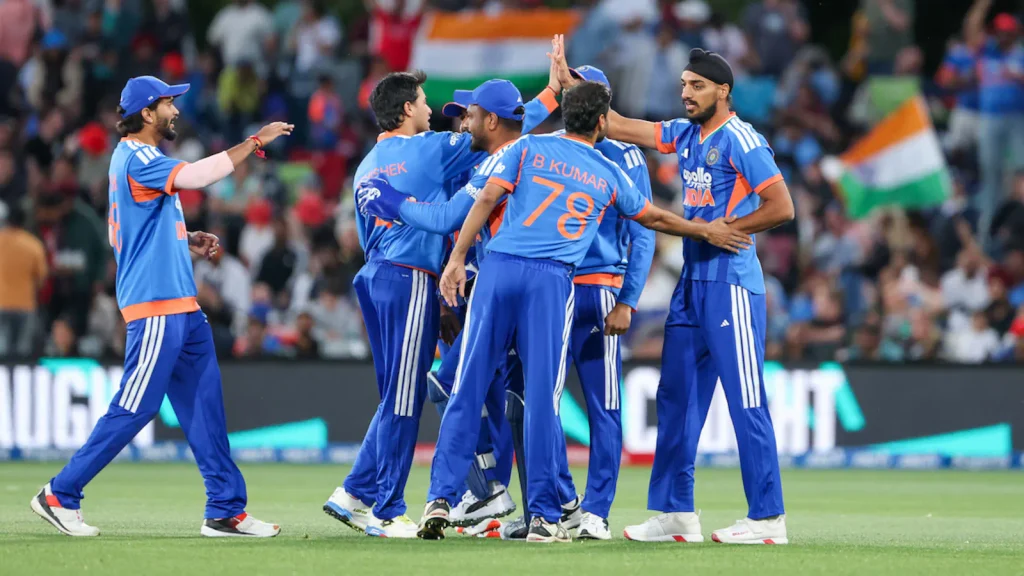
India, meanwhile, had reasons for encouragement because the bowlers made a much better start and collected wickets at regular intervals. Prince Yadav and Bhuvneshwar Kumar supported Arshdeep Singh in reducing New Zealand to 18/2, while Axar Patel kept the scoring under control during his four overs.
Nevertheless, the 116-run stand proved decisive in shaping the innings. New Zealand recovered from 41/3 to establish a platform for the final overs, preventing India from fully capitalising on their early advantage.
Arshdeep Singh’s record-breaking performance remained the standout individual achievement of the innings. His tally of 38 wickets in 2026 surpassed the previous Indian calendar-year record in men’s T20Is, while his figures of 2/33 helped India regain some control after the visitors’ middle-order recovery.
New Zealand’s total of 180/5 set up the next phase of the contest, with the match providing a reminder that early wickets alone are not always enough to restrict a T20 side. Partnerships, calculated acceleration and late runs can change the shape of an innings, even when the bowling team begins strongly.