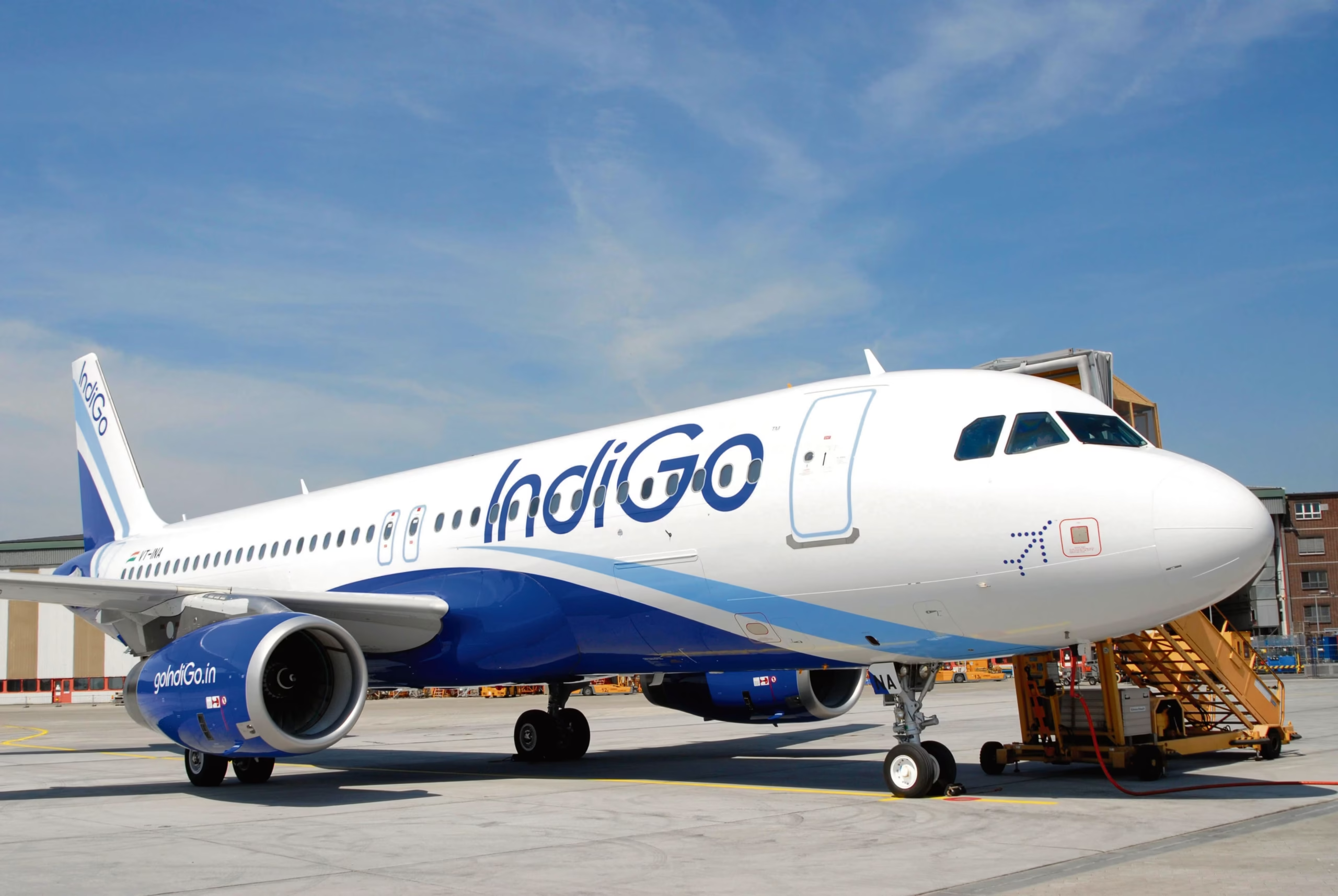
An IndiGo Flight 6E 225 operating from Navi Mumbai to Srinagar was involved in a ground incident at Srinagar International Airport on Friday morning, September 4, 2026, after the aircraft came into contact with a Visual Docking Guidance System (VDGS) pole while being positioned in its parking bay. The incident took place at approximately 9:02 am, according to airport authorities and reports based on the statement issued by the Airports Authority of India (AAI).
The aircraft, identified as VT-NOG, was being moved into Bay No. 06 after completing its flight from Navi Mumbai. Although the aircraft sustained damage to its front or nose section, all passengers and crew members were reported safe and no injuries were reported. The aircraft has been grounded for necessary maintenance and technical inspection.
The incident briefly raised concerns at the airport, but officials said airport operations continued normally. The circumstances surrounding the incident are expected to be examined under the prescribed aviation procedures.
What Happened to IndiGo Flight 6E 225?
According to information attributed to Srinagar Airport authorities, IndiGo flight 6E 225, operated by aircraft VT-NOG, arrived safely at Srinagar after flying from Navi Mumbai.
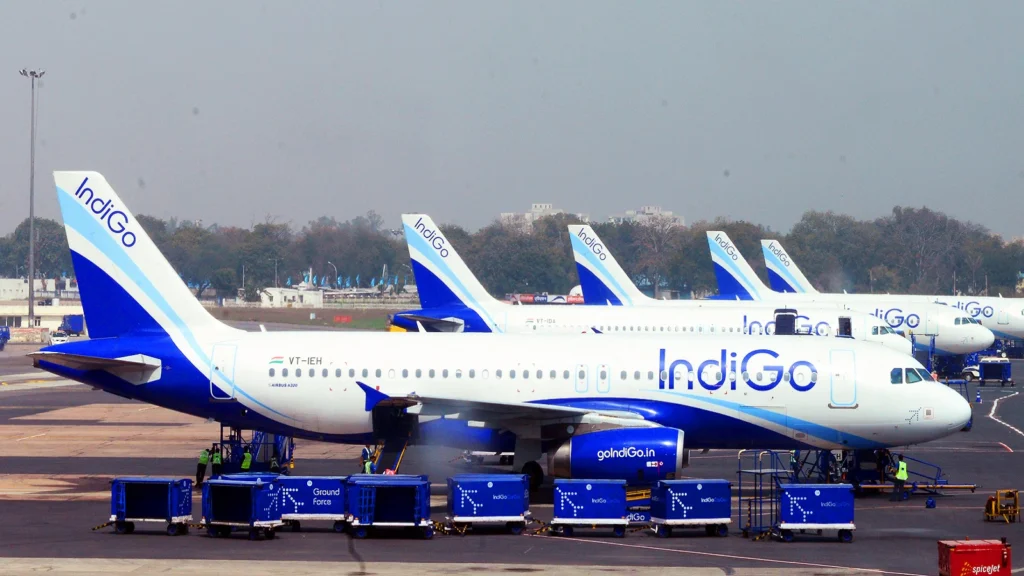 The issue occurred not during the approach or landing phase but during the subsequent parking process. As the aircraft was being positioned at Bay No. 06, it came into contact with a pole supporting the airport’s Visual Docking Guidance System, or VDGS.
The VDGS is part of airport ground infrastructure used to help pilots position an aircraft accurately while it is being guided into a parking stand. The system can incorporate visual displays and associated sensors to assist with the docking process.
The contact caused damage to the aircraft’s front nose section. Reports describe the incident as a ground mishap rather than an accident occurring during the flight itself.
All Passengers and Crew Were Safe
The most important outcome from the incident was that all passengers and crew members were safe.
Authorities reported that there were no injuries following the contact between the aircraft and the VDGS pole. Passengers were subsequently deboarded using manual aircraft stairs, according to reports citing airport information.
The absence of injuries means the incident did not develop into a passenger safety emergency, although the damage to the aircraft required the plane to be removed from service for inspection.
For passengers, the incident occurred after the flight had already completed its journey to Srinagar. The aircraft’s contact with airport infrastructure happened while it was being positioned at its assigned parking stand.
Aircraft Grounded for Inspection and Maintenance
Following the incident, the aircraft was grounded pending maintenance and technical checks.
Reports indicate that the impact caused damage to the aircraft’s nose section, prompting the decision to keep the aircraft on the ground until its condition could be properly assessed.
Grounding an aircraft following damage is a standard safety measure. Before the aircraft can return to commercial service, engineers and maintenance personnel must determine the extent of the damage, carry out any required repairs and establish that the aircraft is fit to fly.
For an airline operating a large network such as IndiGo, an aircraft being temporarily removed from service can also create operational challenges. Depending on how long inspections and repairs take, the airline may need to adjust aircraft rotations or deploy another aircraft to maintain services.
At the time of the reports, however, the focus remained on the technical inspection of the affected aircraft.
Was Brake Failure the Cause?
The incident has been described in some reports and headlines as involving brake failure. However, the latest information attributed to Srinagar Airport and AAI confirms the aircraft came into contact with a VDGS pole during the parking process but does not establish brake failure as the confirmed cause of the incident.
This distinction is important.
An investigation is required before a specific mechanical fault can be treated as the established cause. Aviation incidents are normally assessed through technical examination, operational records and other available evidence.
Therefore, while reports have referred to a possible braking problem, it is more accurate at this stage to say that the aircraft struck or came into contact with the VDGS infrastructure while parking, while the exact circumstances and cause remain subject to examination.
The AAI-related reports specifically indicate that the details and circumstances leading to the incident will be examined by the appropriate authorities according to established procedures.
What Is a VDGS Pole?
The term VDGS stands for Visual Docking Guidance System.
At airports, aircraft need to be positioned precisely within designated parking bays. A VDGS helps pilots and ground personnel by providing visual guidance as an aircraft approaches its final parking position.
The system may include a display unit and related sensors such as cameras or lasers. These components provide positional information that assists in aligning the aircraft with the stand.
Because such equipment is positioned close to the aircraft’s parking path, safe aircraft movement and careful adherence to ground procedures are essential.
In the Srinagar incident, flight 6E 225 came into contact with one of these poles while being positioned at Bay No. 06. The collision resulted in damage to the aircraft, but did not cause injuries among those onboard.
The Incident Happened After a Safe Landing
An important aspect of the Srinagar incident is that the aircraft had already landed safely before the ground mishap occurred.
Reports from airport authorities say the flight had arrived from Navi Mumbai and was being moved toward its designated bay when the contact occurred.
This means the event should not be confused with a runway accident or an emergency landing.
Instead, it falls within the category of an incident occurring during aircraft ground movement and parking.
Ground operations are a critical part of aviation safety, involving coordination among pilots, ground staff, air traffic services and airport infrastructure. Even when an aircraft is moving at low speed, contact with fixed infrastructure can result in costly damage and require detailed inspections.
Srinagar Airport Operations Continued Normally
Despite the incident involving IndiGo flight 6E 225, reports said that airport operations remained normal.
The event did not result in a wider shutdown of Srinagar International Airport. Other arriving and departing flights were able to continue operating, according to reports citing airport authorities.
This is significant because incidents involving aircraft on the ground can sometimes affect taxiways, parking stands or other airport infrastructure. In this case, the reported impact did not cause a broader disruption to airport operations.
The affected aircraft, however, remained grounded while its condition was assessed.
 What Happens After an Aircraft Ground Incident?
Whenever an aircraft suffers damage on the ground, a series of technical and operational checks may follow.
The first priority is ensuring that passengers and crew are safe and that the aircraft is stable. Once the immediate situation is controlled, maintenance teams can inspect the affected area.
In the case of 6E 225, reports indicate damage to the front nose section.
Engineers would then assess whether any aircraft systems, structural components, sensors or other equipment were affected. The scope of the inspection depends on the nature and location of the damage.
The aircraft cannot simply return to service because the incident occurred at low speed. Any damage must be evaluated according to applicable maintenance and safety requirements.
Only after the relevant checks and repairs are completed can the aircraft be cleared to resume commercial operations.
Why the Investigation Matters
Determining the exact cause of the incident is essential for aviation safety.
If an investigation identifies a technical malfunction, procedural issue or another contributing factor, the findings can be used to improve safety measures and reduce the likelihood of a similar incident.
This is why authorities typically avoid assigning a definitive cause immediately after a ground mishap.
In the Srinagar case, reports based on airport and AAI statements indicate that the details and circumstances leading to the contact will be examined by the appropriate authorities.
That means claims about brake failure should be treated as reported or suspected information unless and until an official technical assessment establishes them.
Navi Mumbai to Srinagar Route
IndiGo flight 6E 225 was operating on the Navi Mumbai-Srinagar route when the incident occurred.
The flight was carried out by aircraft VT-NOG, which subsequently became the focus of the maintenance inspection after its contact with the VDGS pole.
The route is part of the airline’s broader domestic network connecting major Indian cities with Jammu and Kashmir.
For passengers travelling on the route, the incident is likely to raise questions about possible schedule changes involving the affected aircraft. The operational impact, however, depends on the duration of the aircraft’s grounding and the airline’s fleet availability.
Passenger Safety Remained the Priority
The Srinagar incident once again highlights the importance of safety procedures during every stage of air travel.
A flight does not stop requiring careful handling the moment it touches down. Taxiing, turning into a parking stand, docking and ground servicing involve multiple coordinated steps.
The fact that all passengers and crew were safely deboarded following the incident is the most significant outcome.
At the same time, the aircraft damage demonstrates why airports and airlines maintain extensive procedures for ground movement.
Even a relatively limited contact with airport infrastructure can require an aircraft to be taken out of service until engineers establish that it remains airworthy.
No Reported Injuries, But Aircraft Damage Under Assessment
The immediate human impact of the incident was limited, with no injuries reported. The main consequence was damage to the aircraft and the resulting need for technical inspection.
The aircraft’s nose section sustained damage following the contact with the VDGS pole, according to reports.
The extent of the damage and the time required for repairs had not been established in the initial reports.
That means it would be premature to speculate about the aircraft’s future service schedule or the duration of the grounding until the technical assessment is completed.
What the Incident Means for IndiGo
IndiGo, one of India’s largest airlines, operates a large domestic and international network. An individual aircraft grounding is therefore normally handled as part of wider fleet management.
The airline can potentially adjust aircraft rotations or other operational arrangements depending on availability and the length of the inspection.
The immediate priority for the affected aircraft is safety rather than rapid return to service.
That approach is particularly important in aviation, where technical inspections following an aircraft incident are designed to identify even problems that may not be visible externally.
 A Ground Mishap, Not a Passenger-Casualty Event
The Srinagar incident has attracted attention because it involved an IndiGo passenger aircraft and airport infrastructure. However, the available information indicates that it was a ground parking incident with no injuries, rather than a major passenger accident.
The aircraft had landed safely and was in the process of being positioned at its parking stand when it came into contact with the VDGS pole.
That distinction is important when assessing the seriousness of the event.
At the same time, aircraft damage means the matter cannot simply be treated as routine. A proper technical examination is required before the aircraft can be cleared to fly again.
IndiGo flight 6E 225, operating from Navi Mumbai to Srinagar, came into contact with a Visual Docking Guidance System pole while being positioned at Bay No. 06 of Srinagar Airport at around 9:02 am on September 4, 2026. The aircraft, identified as VT-NOG, suffered damage to its front nose section and was grounded for maintenance and technical inspection.
The biggest relief is that all passengers and crew members were safe, with no injuries reported. Passengers were deboarded from the aircraft, and airport operations continued normally.
While some reports have referred to brake failure in connection with the incident, the latest airport and AAI-based information confirms the contact with the VDGS pole but does not yet establish brake failure as the definitive cause. The circumstances are to be examined by the appropriate authorities.
For now, the focus remains on the technical inspection of the affected aircraft and determining exactly what led to the parking mishap. The incident underscores a fundamental principle of aviation: even after a safe landing, ground movement and aircraft parking remain critical parts of flight safety.