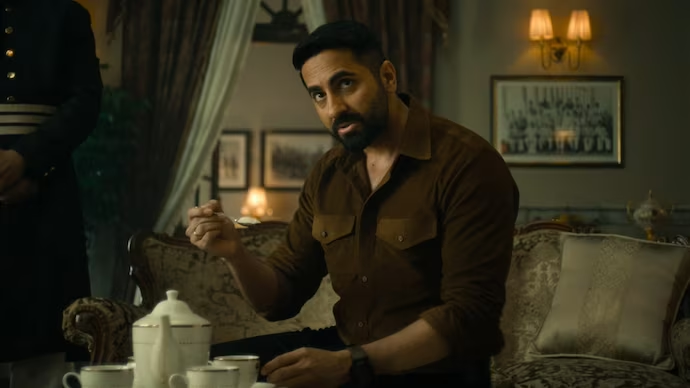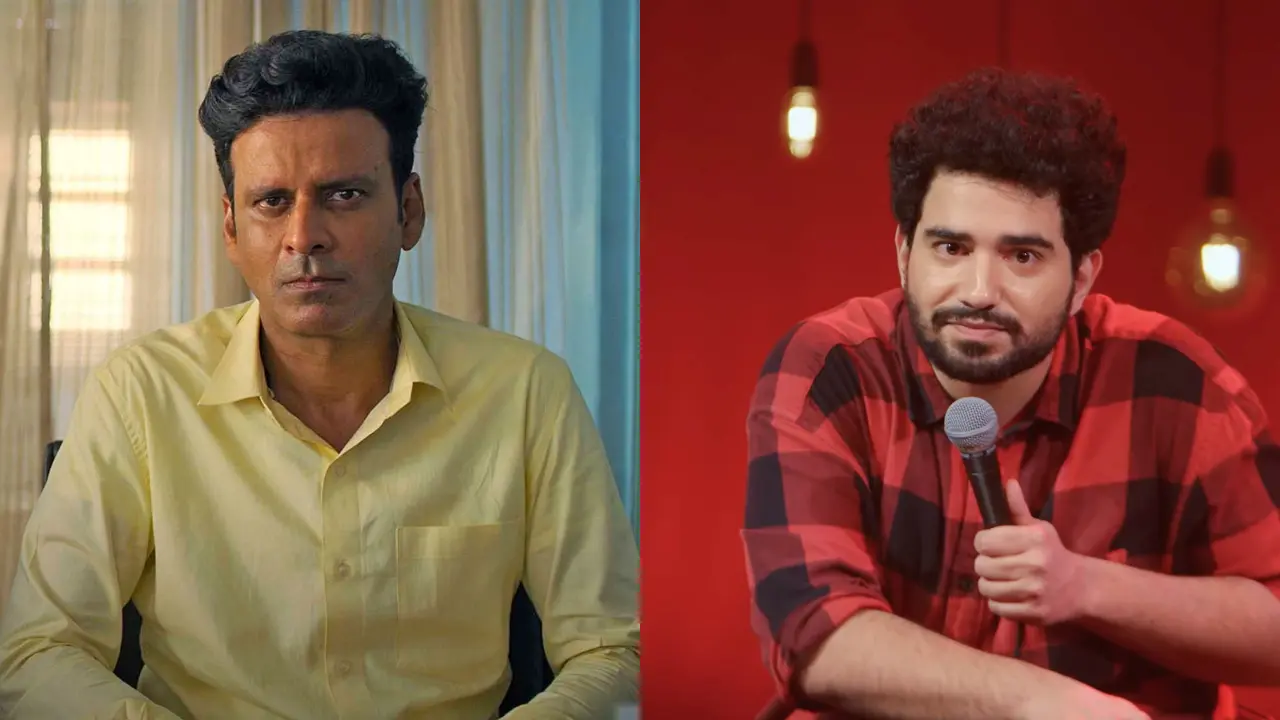
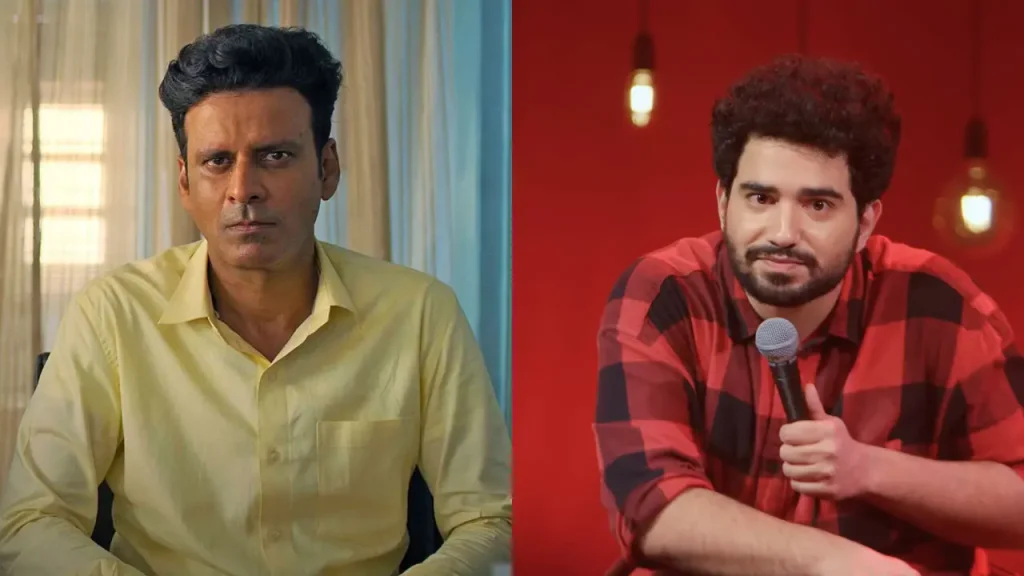
Actor Manoj Bajpayee has reacted to the controversy surrounding comedian Samay Raina’s India’s Got Latent 2, following a recent episode that sparked debate over jokes involving Bihari and Kashmiri identities. Speaking while promoting his upcoming film Last Man in Tower, Manoj Bajpayee said he does not object to humour when it is genuinely intended as harmless banter, but stressed that humour should go hand in hand with mutual respect.
His comments have added another perspective to the ongoing discussion about the boundaries of comedy, stereotypes, regional identities and the difference between light-hearted teasing and remarks that can become offensive. Manoj Bajpayee also recalled an incident from his own early years in Delhi, when he was stereotyped because of his Bihari background.
Table of Contents
Manoj Bajpayee Weighs In on the India’s Got Latent 2 Controversy
The latest controversy emerged from an episode of India’s Got Latent 2 involving Samay Raina and comedian Sharon Verma. Their exchange included jokes about their respective regional backgrounds, with references to Bihar and Kashmir. The interaction subsequently generated criticism and discussion online.
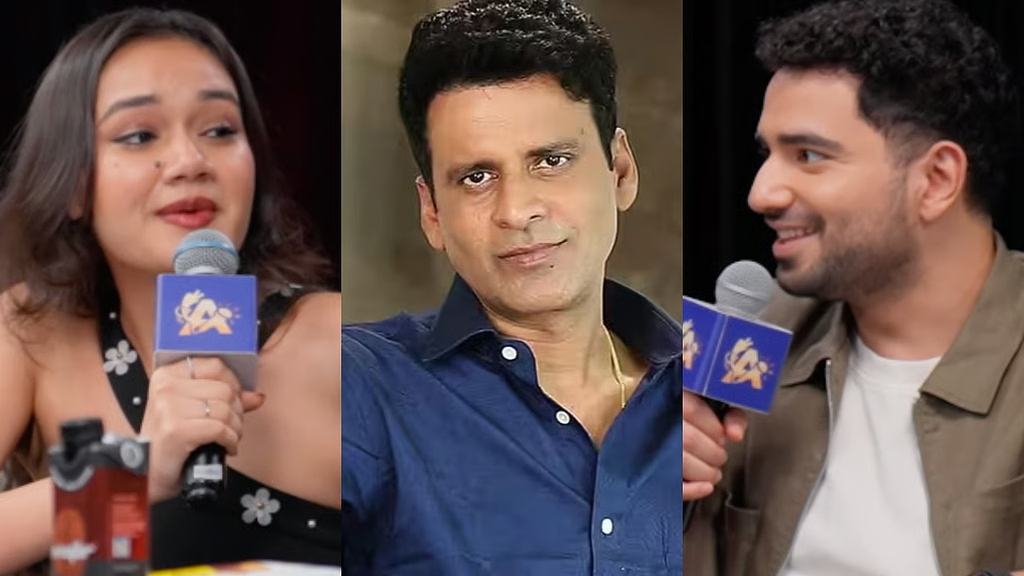
Manoj Bajpayee was asked about the controversy during an interaction with IANS while promoting Last Man in Tower. Rather than taking an entirely dismissive or confrontational position, the actor focused on the importance of context and intent in comedy.
He said that if the comments were genuinely made in jest, he personally did not have an issue with them. At the same time, he emphasised that people should maintain respect for the person they are joking with and for their background.
His response has consequently been viewed as a broader comment on how society approaches humour involving identity and regional stereotypes.
‘We Should Learn to Laugh at Ourselves’
Manoj Bajpayee’s central argument was that people should be able to laugh at themselves and share humour with others without automatically becoming offended.
He explained that humour can work when people involved are comfortable with one another and understand the context of the exchange. However, he also underlined the importance of respect.
The actor’s comments were not simply an endorsement of every joke. Instead, his remarks highlighted a distinction between mutual banter and situations in which someone’s background becomes the reason for genuine discrimination or hostility.
According to Manoj Bajpayee, humour about one’s own identity can coexist with respect for other people. He suggested that being able to laugh together while understanding personal boundaries can be part of a healthy social environment.
What Happened on Samay Raina’s Show?
The controversy followed an exchange between Samay Raina and Sharon Verma during India’s Got Latent 2. The two comedians made jokes based on their respective identities and backgrounds.
Samay Raina is a Kashmiri Pandit, while Verma is from Bihar. Their banter included references to migration, employment and stereotypes associated with their respective regions. The exchange was subsequently shared and discussed widely online.
The controversy illustrates one of the recurring debates surrounding stand-up comedy and unscripted entertainment: whether a joke should be judged primarily by its intention, its context, its target, or its potential impact.
While some viewers viewed the exchange as mutual banter between comedians, others criticised the use of regional stereotypes.
Manoj Bajpayee Recalls His Own Experience in Delhi
One of the most significant parts of Bajpayee’s response was his personal recollection of arriving in Delhi as a young man.
The actor said that he was 18 years old when he was in Delhi and was unfamiliar with the city’s bus system. He recalled attempting to board a bus from the front door because he did not yet know the local rules.
According to Manoj Bajpayee, the bus driver referred to him as a Bihari and told him to board from the back. He explained that, at the time, the driver did not actually know that he was from Bihar but appeared to use the term as a stereotype for someone unfamiliar with the city’s system.
Bajpayee said he did not take the incident personally. His recollection was used to explain how he learned to deal with stereotypes and regional humour during his early years.
The Actor Draws a Line Between Humour and Discrimination
Although Bajpayee said he was comfortable with jokes made in jest, he also identified a point where the situation changes.
He explained that there is a problem when someone’s origin or background becomes a reason for treating them or an entire community negatively.
This distinction is central to his response. His message was not that every regional stereotype should automatically be accepted. Rather, he argued that humour should be accompanied by mutual understanding and respect.
The comments therefore place responsibility on both sides of a comedic exchange: the person making the joke should understand its context, while the audience should also recognise when something is intended as harmless banter.
Why Regional Stereotypes Remain a Sensitive Issue
India has an exceptionally diverse cultural and linguistic landscape. People frequently move between states for education, employment and other opportunities.
Because of this movement, regional identity can become a frequent subject of humour, entertainment and social commentary. Stereotypes about different states and communities have existed for decades, appearing in films, television, stand-up comedy and everyday conversations.
However, such stereotypes can also become sensitive when repeated negatively or used to portray an entire community in a particular way.
The debate surrounding India’s Got Latent 2 reflects this larger social conversation. What one person may perceive as harmless teasing can be interpreted differently by another person, particularly when it involves a community’s identity.
Manoj Bajpayee’s comments attempt to place the issue within that broader context by emphasising both humour and respect.
The Importance of Context in Comedy
Comedy often depends heavily on context. A joke exchanged between two friends who understand each other’s boundaries may be received differently from the same words directed at someone who has not consented to that kind of banter.
Similarly, a comedian performing for a large audience has a different relationship with viewers than two people joking privately.
Manoj Bajpayee’s remarks highlight this complexity. His argument suggests that understanding the relationship between the people involved is important when assessing whether a joke is harmless.
At the same time, the reaction to the episode demonstrates that public entertainment can generate responses from audiences with very different experiences and perspectives.
India’s Got Latent 2 Continues to Generate Buzz
Despite the controversy, India’s Got Latent 2 continues to attract significant attention online. The show’s format, unpredictable conversations and celebrity appearances have contributed to its popularity.
Recent coverage has highlighted strong viewership for several episodes. According to a report citing Ormax Media’s mid-year findings, the show was ranked among the most-watched OTT titles in India in the first half of 2026, with 38.5 million viewers reported for the period.
Its popularity also means that individual jokes and exchanges can quickly become subjects of wider public discussion.
That dynamic has contributed to the visibility of the current controversy, with clips and reactions circulating beyond the original episode.
The Debate Over Freedom and Responsibility in Comedy
The controversy also brings attention to a broader question: how should comedy balance creative freedom with social responsibility?
Comedians often use exaggeration, satire and stereotypes to create humour. Supporters argue that comedy should be allowed to challenge social conventions and make audiences uncomfortable at times.
Critics, meanwhile, point out that repeated stereotypes can reinforce negative perceptions of communities, particularly when audiences interpret them literally rather than satirically.
Bajpayee’s position appears to occupy a middle ground. He defended the idea of laughing at oneself and participating in mutual humour, while simultaneously stressing respect for another person’s identity and background.
Manoj Bajpayee’s Perspective Comes From Personal Experience
The actor’s long career has included years of struggle before he became one of Hindi cinema’s most respected performers.
His recollection of his early days in Delhi gives his comments a personal dimension. Rather than discussing regional stereotypes only as an abstract social issue, he connected the debate to something he experienced himself.
His story also reflects a broader reality of migration within India. Young people frequently move away from their home states and encounter unfamiliar cultures, languages and social environments.
For Manoj Bajpayee, his early experience did not prevent him from embracing friendships with people from different parts of the country. He recalled being able to joke about regional differences without taking personal offence.
A Message About Mutual Respect
The most important element of Bajpayee’s response is perhaps his emphasis on mutual respect.
His comments suggest that humour does not necessarily have to disappear from conversations about identity. Instead, people should understand the difference between joking with someone and using their identity to demean them.
That distinction becomes especially important in an era when entertainment clips can quickly spread across social media without their original context.
A short clip may reach viewers who have not watched the entire conversation, making it difficult to understand the relationship between the people involved or the intention behind a particular exchange.
Manoj Bajpayee’s Upcoming Film
While addressing the controversy, Manoj Bajpayee was also promoting his upcoming film Last Man in Tower.
The film is directed by Ben Rakhi and also stars Boman Irani and Divya Dutta. It is scheduled to release on September 11, 2026.
The actor’s comments about comedy have therefore come during a period of active promotional work for his next project.
What Bajpayee’s Reaction Means for the Debate
Manoj Bajpayee’s response adds a nuanced perspective to the discussion surrounding the India’s Got Latent 2 controversy.
He has argued that people should retain the ability to laugh at themselves and enjoy mutual humour, but he has also stressed that jokes should not cross into genuine hostility toward individuals or communities.
His personal experience of being stereotyped as a young man from Bihar further explains why he approaches the issue through the lens of resilience and context.
At the same time, the controversy demonstrates that comedy involving regional identity can generate strong reactions, particularly when jokes are interpreted differently by different sections of the audience.
Ultimately, Bajpayee’s message is centred on balance: humour can bring people together, but respect should remain at the heart of the interaction.
As the debate around Samay Raina’s show continues, the actor’s comments have shifted part of the conversation away from the specific jokes and towards a larger question about how Indian society understands comedy, identity, sensitivity and mutual respect.