Odisha’s much-discussed animated feature film Mahaprabhu Jagannath has received a major boost after the Supreme Court cleared the way for its theatrical release following the conclusion of the annual Lord Jagannath Rath Yatra festivities. The development brings an end to a period of uncertainty surrounding the film, which had faced legal objections over its depiction of Lord Jagannath and concerns about religious sentiments.
The film, produced by Ele Animations Pvt. Ltd., was initially scheduled for theatrical release in July. However, an interim order of the Orissa High Court had restrained its release amid a public interest litigation challenging aspects of the film’s portrayal of Lord Jagannath. The producers subsequently approached the Supreme Court, which on July 17, 2026, permitted an all-India release on or after July 28, after the Rath Yatra festivities.
The Supreme Court later rejected applications seeking a ban on the film, reinforcing the importance of artistic expression while also recognising the sensitivity surrounding religious themes.
Table of Contents
Mahaprabhu Jagannath: A Major Step for Indian Animation
Mahaprabhu Jagannath has been positioned by its makers as a major animated theatrical feature based on the cultural and spiritual world surrounding Lord Jagannath.
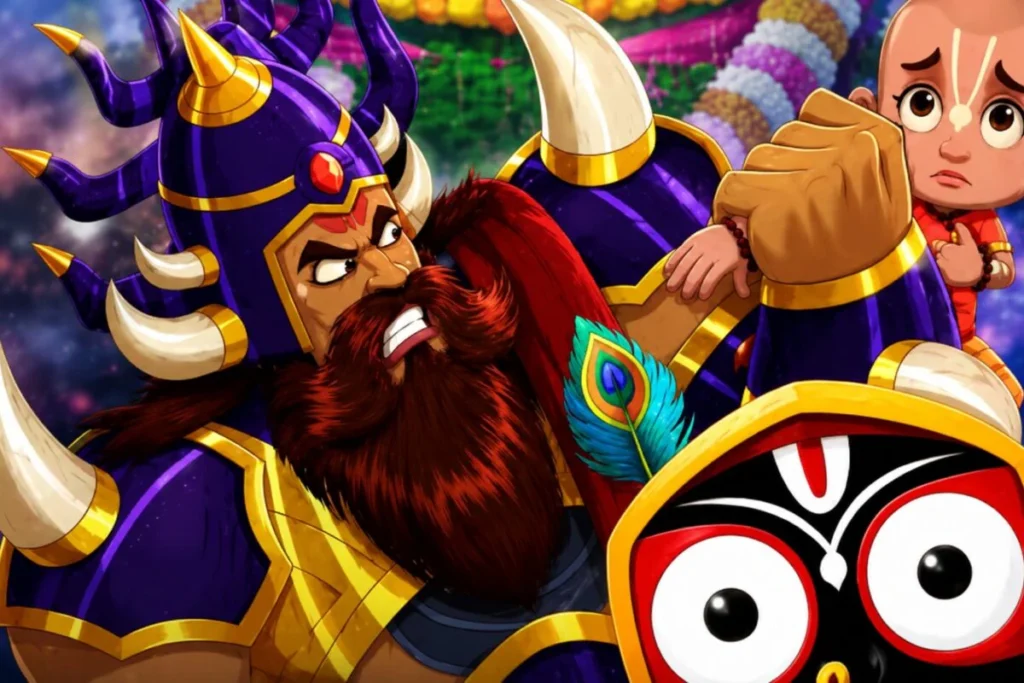
The official website describes the project as a multilingual theatrical feature that brings the universe of Lord Jagannath to the big screen through Indian animation. The film is designed to explore sacred lore, faith and values while also making the story accessible to younger audiences.
The project is particularly significant for Odisha because Lord Jagannath occupies a central place in the state’s cultural identity. The Jagannath tradition associated with Puri has a long history and attracts devotees from across India and beyond.
By presenting the subject through animation, the filmmakers are attempting to introduce this cultural and spiritual heritage to a wider audience, particularly children and families.
Why the Film Faced a Legal Challenge
The film’s journey to theatres was not straightforward.
On June 6, 2026, Ele Animations released a teaser announcing the animated film. The teaser generated objections over certain aspects of the film’s content and portrayal of Lord Jagannath. Following the controversy, the film was shown to representatives associated with the Shree Jagannath Temple Administration and the Gajapati Maharaja of Puri.
Petitioners subsequently approached the Orissa High Court, raising concerns about fictional elements in the movie. They argued that certain depictions involving Lord Jagannath’s childhood, dialogue and battle sequences were inconsistent with established religious traditions and accounts associated with texts including the Skanda Purana and Brahma Purana.
The controversy was particularly sensitive because the film’s proposed release coincided with the period of the annual Rath Yatra in Puri.
The Orissa High Court therefore temporarily restrained the film’s release, allowing the issues surrounding its content to receive further judicial consideration.
Supreme Court Permits Release After Rath Yatra
The legal situation changed on July 17 when the Supreme Court considered the producers’ challenge to the High Court order.
A bench comprising Justice B V Nagarathna and Justice R Mahadevan noted that the film had already received certification from the Central Board of Film Certification (CBFC). The court also took note of the fact that the animated movie was based on a web series that had previously been released online.
However, considering that the Rath Yatra festivities were underway, the Supreme Court permitted the film to be exhibited only after the conclusion of the festival period.
The court’s order allowed the film’s all-India release on or after July 28.
The decision effectively moved the immediate question from whether the film could be released to when it could be screened, while leaving the wider concerns surrounding its depiction to judicial consideration.
Supreme Court Later Rejects Pleas Seeking a Ban
The matter returned to the spotlight after further applications were filed seeking to prevent the film’s release.
On July 29, the Supreme Court refused to stop the film’s release and dismissed applications seeking a ban. The bench also declined to modify its earlier order that had permitted release after the Rath Yatra.
The court questioned the broader implications of restricting artistic works merely because some viewers might find their depiction of religious subjects objectionable.
According to reports, the bench observed that accepting such an approach could make it difficult to create artistic works based on Indian mythology and religious literature.
The ruling therefore became an important part of the film’s release journey, particularly because the case involved a balance between religious sensitivities and freedom of artistic expression.
CBFC Had Already Cleared the Film
Another important aspect of the legal dispute was the film’s certification.
The Supreme Court noted that the Central Board of Film Certification had already permitted the film’s exhibition after considering the relevant certification parameters.
The makers had also maintained that the project was created with devotion and respect for Lord Jagannath and his devotees.
According to the filmmakers’ statement reported by India Today, Mahaprabhu Jagannath was conceived as an extension of their animated series Jay Jagannath. They described the feature as a depiction of a devotee’s faith and devotion towards Mahaprabhu Jagannath.
The producers also said the film had received a U certificate from the CBFC in Hindi, Odia and Telugu, making it accessible to a broad family audience.
From Jay Jagannath Series to Feature Film
The feature film is connected to the earlier Jay Jagannath animated series.
This background is important because the filmmakers did not create the theatrical project entirely as a new standalone concept. The animated universe had already been introduced to audiences through the web series.
The Supreme Court specifically noted this connection during its July 17 hearing.
The transition from a web series to a theatrical feature represents an ambitious expansion of the project.
Animation also allows the filmmakers to present mythological settings, characters and stories in a visually accessible format without relying on live-action recreations.
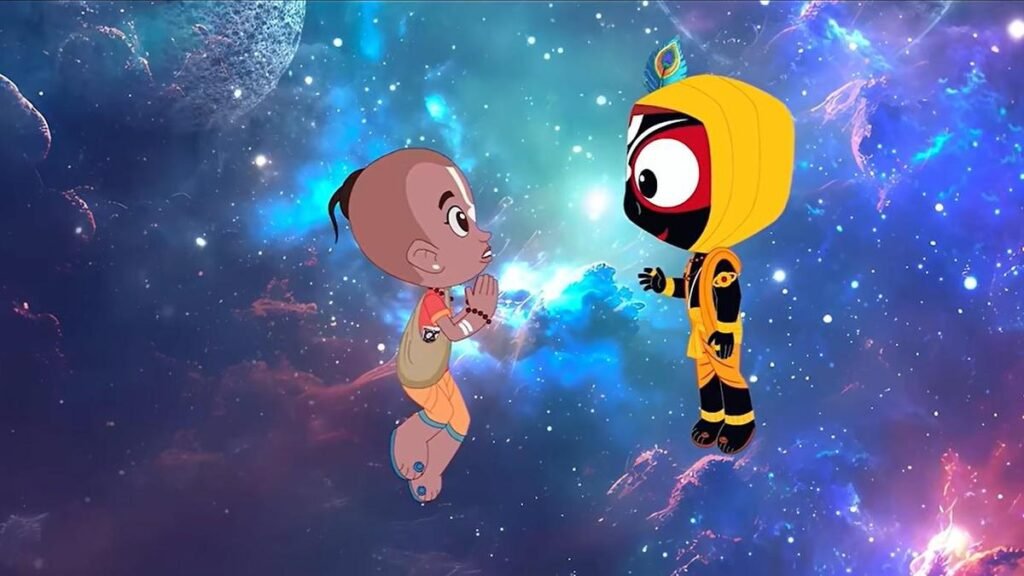
A Film Designed for Younger Audiences
One of the distinctive aspects of Mahaprabhu Jagannath is its emphasis on children and family audiences.
The film’s official description highlights sacred lore and timeless values while presenting the material in an animated format intended to engage younger viewers.
Animation has traditionally been an effective medium for introducing complex stories to children because it can combine visual storytelling with simplified narrative structures.
In the case of Mahaprabhu Jagannath, the format also provides an opportunity to introduce younger audiences to the cultural traditions associated with Lord Jagannath.
The Supreme Court, while considering the later applications against the film, also referred to animation as a form of art intended for children.
Odisha’s Cultural Connection With Mahaprabhu Jagannath
The significance of Mahaprabhu Jagannath extends beyond cinema.
Lord Jagannath is deeply associated with Odisha’s cultural and religious heritage, while the Mahaprabhu Jagannath Temple in Puri remains one of India’s most important pilgrimage destinations.
The annual Rath Yatra draws enormous crowds and has a central place in the religious calendar. This explains why the timing of the film’s release became a particularly sensitive issue.
The Supreme Court’s July 17 decision specifically took the ongoing Rath Yatra into consideration before permitting the film’s release after the festivities.
The case thus involved not only questions about cinema and certification but also the broader relationship between creative representation and deeply rooted religious traditions.
Release Timing Became a Major Issue
Mahaprabhu Jagannath was initially expected to arrive in theatres in July. However, the legal proceedings changed the release schedule.
The makers had announced an earlier release date through promotional material, but the Orissa High Court’s interim order prevented the planned theatrical release.
The Supreme Court subsequently permitted release after the Rath Yatra, providing the producers with a path towards theatrical exhibition.
The later dismissal of applications seeking to stop the film further strengthened the legal position for its release.
Artistic Freedom vs Religious Sensitivity
At the centre of the Mahaprabhu Jagannath controversy is a larger question that frequently arises when films depict religious figures: how should artistic freedom be balanced with the sentiments of devotees?
The Supreme Court’s observations highlighted the importance of allowing artistic and creative expression while considering the potential impact of controversial representations.
The court’s later refusal to ban the film indicated that objections based solely on sensitivity could not automatically become grounds for stopping a work of art.
At the same time, the earlier decision to postpone the film until after the Rath Yatra showed that the court was conscious of the potential for tension around a major religious festival.
This combination of decisions makes the case notable beyond the film itself.
What the Supreme Court Decision Means for the Film
For the Mahaprabhu Jagannath producers, the Supreme Court’s decisions provide significant relief after the uncertainty created by the High Court’s interim restraint.
A theatrical animation project involves substantial investment in production, marketing, distribution and cinema bookings. A last-minute release restriction can therefore create serious commercial complications.
Reports during the legal proceedings noted that the producers had raised concerns about financial losses resulting from the delay.
The eventual permission to release gives the project an opportunity to reach audiences after the Rath Yatra period while allowing the filmmakers to continue their promotional campaign.
Multilingual Release Broadens Its Reach
Mahaprabhu Jagannath’s multilingual certification is another important aspect of its release strategy.
The makers said the film received a U certificate in Hindi, Odia and Telugu.
This approach can help the film reach audiences beyond Odisha and the traditional Odia-speaking market.
For a story rooted in Odisha’s cultural heritage, a multilingual release can also introduce Lord Jagannath’s traditions and stories to viewers across different parts of India.
The use of animation further strengthens the film’s potential to reach family audiences.
A New Chapter for Indian Animation
Mahaprabhu Jagannath arrives at a time when Indian filmmakers are increasingly experimenting with animation as a medium for stories rooted in mythology, culture and history.
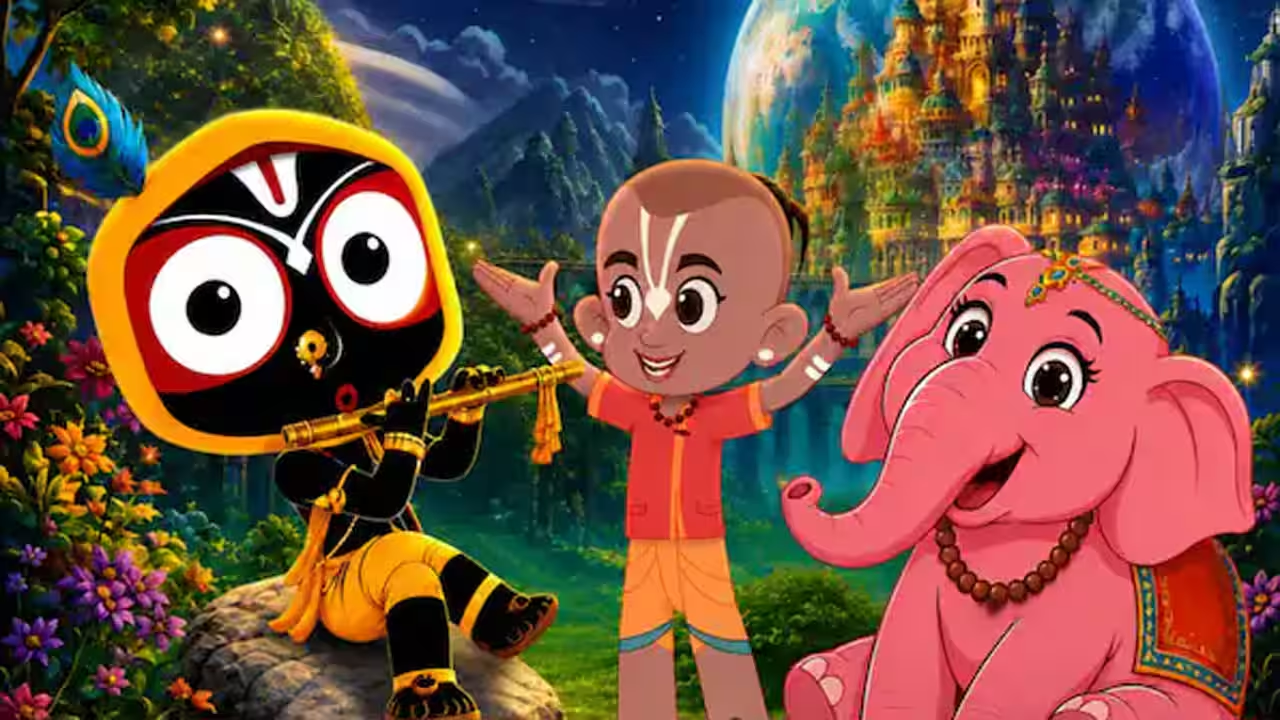
The project seeks to combine traditional subject matter with contemporary animation technology and theatrical storytelling.
The makers’ official description presents the film as a cinematic celebration of faith, epic storytelling and Indian animation.
Its reception could therefore be significant not only for the film’s producers but also for the wider Indian animation industry.
A successful theatrical run could encourage further investment in animated features based on India’s diverse cultural and mythological traditions.
Mahaprabhu Jagannath has travelled a complicated road from animation project to a film at the centre of a major legal debate.
The film faced objections over its portrayal of Lord Jagannath and was temporarily restrained by the Orissa High Court shortly before its scheduled release. The producers then approached the Supreme Court, which permitted an all-India release after the conclusion of the Rath Yatra festivities.
The Supreme Court subsequently rejected applications seeking a ban, emphasising the importance of artistic expression and declining to prevent the film’s release on the grounds raised before it.
For Odisha, the project carries an additional cultural significance because it brings the story and spiritual world associated with Mahaprabhu Jagannath into a family-oriented animated format.
With CBFC certification, multilingual versions and a theatrical presentation designed to appeal to younger audiences, the film represents an ambitious attempt to connect India’s religious heritage with modern animation.
The legal battle may have created an unexpected chapter in its journey, but the Supreme Court’s ruling has now provided greater clarity for its theatrical release. The focus can consequently return to Mahaprabhu Jagannath itself — its animation, storytelling, cultural presentation and ability to introduce a beloved Odisha tradition to audiences across India.