Poco X8 Pro, Poco X8 Pro Max and Oppo K13 Turbo Pro become more expensive in India as smartphone makers face rising component costs
Poco has joined a growing list of smartphone brands raising prices in India, with the Poco X8 Pro series and Oppo K13 Turbo Pro receiving revised prices across multiple RAM and storage configurations. The latest increases affect some of the more performance-focused smartphones available in the Indian market and come after several other brands, including Vivo, iQOO and OnePlus, also revised prices for selected models.
The Poco X8 Pro and Poco X8 Pro Max were launched in India earlier this year and currently remain available through Flipkart. Their prices have now been increased across the configurations listed on the e-commerce platform. The Oppo K13 Turbo Pro has also received a price revision compared with its original launch pricing.
The changes mean buyers considering these smartphones will now need to spend considerably more than they would have at launch. The Poco X8 Pro’s base configuration has moved from ₹32,999 to ₹39,999, while the Poco X8 Pro Max has become ₹6,000 more expensive across both of its listed configurations. The Oppo K13 Turbo Pro has also become ₹4,000 more expensive across its two configurations.
The latest price revisions come at a time when buyers are increasingly discussing repeated smartphone price increases in India’s technology market. Recent consumer discussions online also show frustration among prospective buyers who had planned purchases around earlier prices.
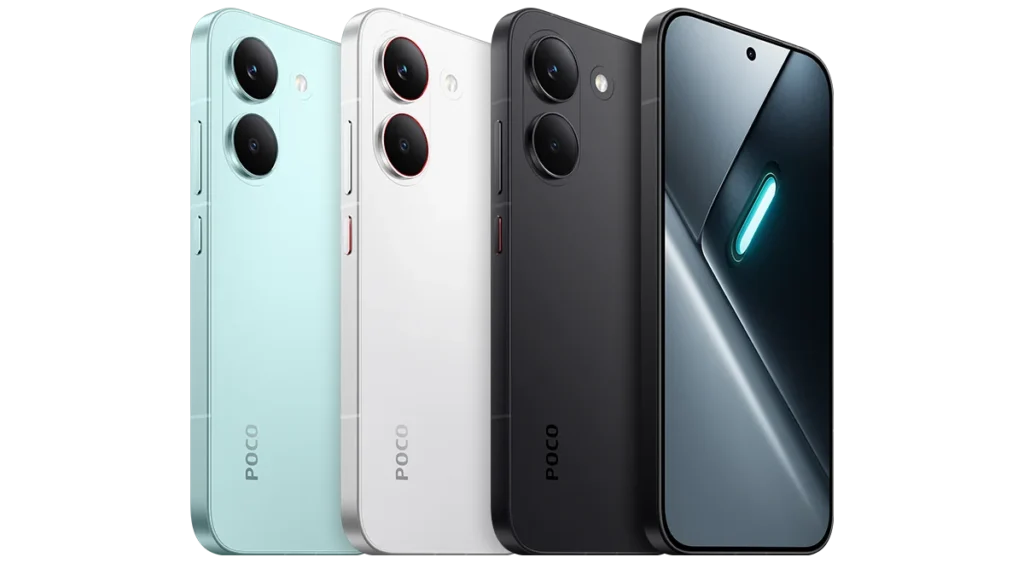
Table of Contents
Poco X8 Pro Price Increased to ₹39,999
The Poco X8 Pro has received a substantial price increase across its two listed configurations.
The base 8GB RAM and 256GB storage model is now listed at ₹39,999 on Flipkart. Its launch price in India was ₹32,999.
That represents an increase of ₹7,000 over the original launch price.
The higher 12GB RAM and 256GB storage configuration has also become more expensive. It is now priced at ₹42,999, compared with its earlier launch price of ₹35,999.
The ₹7,000 increase across both configurations means the Poco X8 Pro has moved into a significantly higher price bracket than it occupied when it was initially introduced.
For buyers who were attracted to the phone primarily because of its performance-to-price positioning, the price revision could change the overall value equation.
The Poco brand has historically competed aggressively on specifications and pricing, making a sharp price increase particularly noticeable among potential buyers.
Recent online discussions around the increase have included users expressing surprise at the revised pricing and questioning whether the phone remains as attractive as it was at its earlier price.
Poco X8 Pro Max Gets ₹6,000 Price Increase
The Poco X8 Pro Max has also received a significant revision in India.
The 12GB RAM and 256GB storage version is now available at ₹48,999 on Flipkart.
The top-end 12GB RAM and 512GB storage version is listed at ₹52,999.
At launch, the Poco X8 Pro Max was priced at ₹42,999 for the lower configuration and ₹46,999 for the top-end version.
This means both versions have become ₹6,000 more expensive compared with their launch prices.
The revised pricing puts the top-end Poco X8 Pro Max above the ₹50,000 mark, which could influence how buyers compare it with competing premium and performance-oriented smartphones.
The timing of the revision is also notable because online discussion around the phone has highlighted significant fluctuations in its effective selling price around promotional periods. Users on smartphone communities have recently reported seeing different prices around sales and after the end of promotional events.
New Poco X8 Pro Series Prices at a Glance
The latest listed prices can be summarised as follows.
The Poco X8 Pro 8GB + 256GB configuration now costs ₹39,999, compared with ₹32,999 previously.
The Poco X8 Pro 12GB + 256GB version is now priced at ₹42,999, up from ₹35,999.
The Poco X8 Pro Max 12GB + 256GB variant now costs ₹48,999, compared with its ₹42,999 launch price.
The Poco X8 Pro Max 12GB + 512GB model is now priced at ₹52,999, compared with ₹46,999 at launch.
These revised figures mean that prospective customers now have to spend between ₹39,999 and ₹52,999 depending on the model and configuration they choose.
Oppo K13 Turbo Pro Also Gets More Expensive
Poco is not the only brand affected by the latest pricing changes.
Oppo has also increased the price of its K13 Turbo Pro smartphone in India.
The 8GB RAM and 256GB storage configuration is now listed at ₹41,999 on Flipkart.
The 12GB RAM and 256GB storage configuration is now priced at ₹44,999.
The two models were originally launched in India at ₹37,999 and ₹39,999 respectively.
As a result, both configurations have become ₹4,000 more expensive.
The revised prices put the Oppo K13 Turbo Pro at a considerably higher level than its original positioning.
The change could be particularly relevant for performance-oriented smartphone buyers, as the device had attracted attention when it was priced closer to the ₹38,000-₹40,000 range. Recent consumer discussions have also focused on the impact of the new pricing on its value proposition.
Why Are Smartphone Prices Increasing?
The latest price increases are part of a wider discussion around rising smartphone component costs.
The source material identifies shortages involving memory and storage components, including DRAM and NAND chips, as one of the factors putting pressure on smartphone manufacturers.
Memory components are essential to modern smartphones because RAM affects multitasking and performance, while storage capacity determines how much data users can store on a device.
When component prices increase, manufacturers can face pressure on their margins.
Companies then have several options. They can absorb higher costs, reduce promotional discounts, alter component configurations or increase retail prices.
The current wave of price revisions suggests that at least some manufacturers are choosing to pass a portion of those additional costs on to consumers.
The Impact of DRAM and NAND Shortages
DRAM and NAND are particularly important in the smartphone industry.
DRAM is used as working memory in electronic devices, while NAND flash is widely used for internal storage.
Modern smartphones increasingly ship with larger RAM and storage capacities, particularly in the premium and performance segments.
As a result, changes in memory-component pricing can have a noticeable impact on the overall cost structure of a smartphone.
The Poco X8 Pro series and Oppo K13 Turbo Pro all offer relatively high RAM and storage configurations, making component costs especially relevant to their pricing.
The wider industry is therefore watching memory and storage supply conditions closely.
More Brands Have Revised Smartphone Prices
The latest increases from Poco and Oppo follow similar moves from other smartphone manufacturers.
The supplied information notes that Vivo, iQOO and OnePlus have also raised prices for selected smartphones recently.
This creates a broader trend rather than an isolated price adjustment involving only two brands.
As more manufacturers revise prices, consumers can face a higher baseline across different smartphone categories.
The effect is particularly noticeable in the mid-range and upper-mid-range segments, where buyers often compare specifications across several competing brands before making a purchase.
Online discussions show that smartphone users are increasingly frustrated by repeated price increases, with some consumers saying that devices they planned to purchase have moved outside their original budgets.
How the Price Hikes Could Affect Buyers
The most immediate effect of the price changes is a reduction in the value advantage associated with the affected models.
For example, the Poco X8 Pro’s base model was launched at ₹32,999 but now costs ₹39,999. A ₹7,000 difference can significantly change a buyer’s purchasing decision.
At the higher end, the Poco X8 Pro Max now crosses ₹50,000 for its 12GB + 512GB configuration.
This places the phone in a segment where consumers may begin considering alternatives from brands positioned more strongly in the premium market.
Similarly, the Oppo K13 Turbo Pro’s new ₹41,999 starting price places it in a more competitive pricing environment than its original ₹37,999 launch point.
The result is that buyers now have to evaluate not just specifications, but also the revised market position of each phone.
Sales and Discounts Could Become More Important
Even after official price increases, actual transaction prices can vary depending on discounts, bank offers, exchange benefits and promotional events.
This has become particularly relevant for Poco smartphones, where consumers often track online sales and limited-time offers.
Recent community reports indicate that effective prices for some Poco models have fluctuated considerably around sales.
This means the listed price should not always be treated as the final amount a customer will pay.
However, buyers should distinguish between a temporary discount and a permanent official price revision.
A promotional reduction may lower the effective purchase price for a limited time, while a revised official price changes the starting point from which future discounts are calculated.
What This Means for the Poco Brand
Poco has built a strong reputation in India around performance-oriented smartphones offering competitive specifications.
The X8 Pro and X8 Pro Max represent the higher end of that strategy within the X8 lineup.
The new prices could test that brand positioning.
At ₹39,999, the Poco X8 Pro faces a different competitive landscape than it did at ₹32,999.
Likewise, the Poco X8 Pro Max’s ₹48,999 starting price and ₹52,999 top configuration place it firmly in a more premium bracket.
The brand will therefore need to continue relying on performance, hardware specifications and feature differentiation to justify the revised pricing.
Oppo K13 Turbo Pro Faces a Similar Challenge
The Oppo K13 Turbo Pro faces a comparable situation.
Its ₹41,999 starting price is ₹4,000 above its launch price.
For performance-focused buyers, the phone may still remain attractive depending on its processor, display, cooling technology and other specifications.
However, the increase means buyers are likely to compare it more closely with competing performance smartphones.
The online discussions around the device show that some users still regard it as a strong performance option, while others are reconsidering its value after the price increase.
Smartphone Buyers Are Becoming More Price Sensitive
Repeated price increases can influence buyer behaviour beyond individual models.
Consumers may begin waiting for major sales, choosing older devices, buying previous-generation models or considering refurbished and second-hand alternatives.
Recent Indian smartphone-community discussions already show users talking about delaying purchases, seeking alternatives and moving towards older devices following price increases.
This could make promotional events increasingly important for smartphone companies.
Manufacturers may raise official prices while continuing to offer temporary discounts during major shopping festivals, creating different effective prices throughout the year.
What Happens Next?
The direction of smartphone prices will depend on several factors, including memory-component costs, supply conditions, currency movements, manufacturing expenses and demand.
If component costs remain elevated, additional price revisions cannot be ruled out across the broader industry.
At the same time, intense competition could limit how much manufacturers can increase prices without affecting sales volumes.
The Poco X8 Pro series and Oppo K13 Turbo Pro therefore provide a useful snapshot of the broader challenge facing smartphone brands.
Manufacturers need to protect margins while maintaining enough value to keep consumers interested.
The Poco X8 Pro, Poco X8 Pro Max and Oppo K13 Turbo Pro have all become more expensive in India compared with their launch pricing.
The Poco X8 Pro now starts at ₹39,999 for its 8GB + 256GB configuration, up from ₹32,999. Its 12GB + 256GB variant has increased to ₹42,999 from ₹35,999.
The Poco X8 Pro Max now costs ₹48,999 for the 12GB + 256GB version and ₹52,999 for the 12GB + 512GB model, representing ₹6,000 increases over their respective launch prices.
The Oppo K13 Turbo Pro now starts at ₹41,999 for 8GB + 256GB and ₹44,999 for 12GB + 256GB, with both configurations ₹4,000 more expensive than their launch prices.
The revisions come amid a broader wave of smartphone price increases in India and growing pressure from memory and storage component costs.
For buyers, the changes underline the importance of comparing current prices rather than relying on launch-day pricing. Online community reactions also show that repeated price increases are already influencing purchase decisions and causing consumers to reconsider whether specific models still offer the same value they did at launch.
As component costs and supply conditions continue to evolve, smartphone pricing is likely to remain an important factor for both manufacturers and consumers. The latest Poco and Oppo revisions suggest that the era of aggressive launch pricing followed by long periods of stable prices may be giving way to a more dynamic market in which official prices can change considerably even months after a smartphone reaches stores.