Nag Panchami, one of the important festivals associated with the worship of snakes and serpent deities in Hindu tradition, is being observed across many parts of India on August 17, 2026. The festival falls on Shukla Paksha Panchami during the month of Shravan and is traditionally associated with prayers for serpent deities and respect for the natural world.
While Nag Panchami is primarily a religious and cultural occasion, it also offers an opportunity to look at one of the most fascinating biological features of snakes: their extraordinary ability to survive long periods between meals.
Unlike humans and many mammals, snakes do not need to eat every day. Some species naturally feed only at widely separated intervals, while scientific research has shown that certain snakes can tolerate months without food, with some studies documenting survival during prolonged fasting periods.
Table of Contents
So, how does a snake manage this? The answer lies in its metabolism, body design, energy storage and ability to reduce energy expenditure when food becomes scarce.

Nag Panchami 2026: Why Snakes Are Worshipped
Nag Panchami is traditionally observed on the fifth lunar day, or Panchami, of the bright half of Shravan in many parts of India. In 2026, the festival falls on Monday, August 17, while Gujarat follows a different calendar calculation and observes Nag Pancham later, on September 1.
The festival is dedicated to serpent deities and is associated with figures such as Ananta, Vasuki, Shesha, Takshaka and Kaliya in Hindu tradition. Devotees offer prayers as part of the festival and seek blessings for their families.
The religious significance of snakes has existed for centuries, while modern biology provides a completely different but equally fascinating perspective on these reptiles.
One of the most surprising facts is that a snake’s feeding schedule can be dramatically different from that of humans.
How Long Can a Snake Go Without Eating?
There is no single number that applies to every snake.
The length of time a snake can survive without food depends on its species, age, size, health, environmental conditions, previous energy reserves and activity level.
Scientific research has documented snakes tolerating fasting periods lasting many months. A 2007 study examining ball pythons, ratsnakes and western diamondback rattlesnakes found that the animals could tolerate 168 days, or about six months, of starvation under controlled experimental conditions. The research showed that snakes reduced their energy requirements and relied heavily on stored fat.
Some scientific literature also notes that certain snake species can survive substantially longer periods without food under particular circumstances. However, this should not be interpreted as meaning that every snake can safely go without food for years. The ability varies greatly between species and individuals.
In other words, the correct answer to “How long can a snake live without eating?” is not simply “one year” or “six months.”
Some snakes can survive for months without food, but the actual duration varies considerably.
The Secret: Snakes Have Slow Metabolisms
One of the biggest reasons snakes can survive long gaps between meals is their metabolism.
Snakes are ectothermic, meaning their body temperature and metabolic activity are strongly influenced by their surroundings. They do not generate body heat in the same way mammals and birds do.
This can significantly reduce their energy requirements.
When a snake is inactive and its environmental temperature is appropriate, it can operate with relatively low energy expenditure. During periods when food is unavailable, this becomes an important survival advantage.
Research has shown that snakes can reduce their resting metabolic demands by up to around 72% during prolonged food deprivation in certain experimental conditions.
This is one of the most remarkable parts of snake biology.
Instead of constantly searching for food and burning large amounts of energy, a snake can reduce its activity and metabolic requirements and rely on energy already stored inside its body.
Snakes Store Energy Before a Food Shortage
A snake does not survive a long fasting period because it somehow stops needing energy.
Its body still requires energy to keep the heart, brain and other organs functioning.
The difference is that the animal becomes extremely economical with the energy it has.
During fasting, snakes can use stored fat as an important energy source. Research on prolonged starvation has found evidence that snakes preferentially use lipid stores while protecting critical protein reserves.
This allows the body to continue functioning even when no new calories are coming in.
Think of it like a battery.
A snake builds up an energy reserve when food is available. When food becomes difficult to find, the animal gradually uses that reserve.
The bigger and healthier the reserve, the better positioned the animal may be to survive a period of food scarcity.

Why Snakes Don’t Need Daily Meals
Another reason snakes can go long periods between meals is their feeding strategy.
Many snakes are sit-and-wait predators. Instead of constantly chasing prey, they may remain relatively inactive and wait for a suitable opportunity.
This strategy reduces unnecessary energy expenditure.
The Smithsonian’s National Zoo notes that Burmese pythons, for example, do not eat every day. After successfully catching prey, they may spend days or weeks keeping warm enough to digest the meal.
This feeding pattern makes sense for an animal that may consume a relatively large meal at once.
Rather than eating small amounts throughout the day, a snake can consume substantial prey and then spend a long period digesting and using the nutrients obtained from that meal.
Some Snakes Can Eat Huge Meals
Snake digestion is another extraordinary part of their biology.
Many snakes swallow prey whole rather than chewing it into small pieces.
This means one successful hunt can provide a substantial amount of energy.
Scientific research has found that some snakes can swallow very large prey after having gone months without eating. Their digestive systems are remarkably flexible and can adjust between fasting and feeding states.
During fasting, parts of the digestive system can reduce in size and activity, helping the animal conserve energy.
After a meal arrives, however, the digestive system can rapidly become more active again.
This ability allows snakes to switch between two very different biological states: conserving energy during famine and processing a large meal after successful hunting.
What Happens Inside a Snake During Fasting?
When food is unavailable, the snake’s body begins making adjustments.
The first major change involves energy use.
The animal becomes more economical, reducing metabolic expenditure where possible.
Stored fats then become an important source of energy. Research on fasting snakes has shown changes in fat metabolism and liver activity as the body adapts to prolonged food deprivation.
A study involving juvenile checkered garter snakes examined the effects of a 21-day fast and found measurable changes in liver and fat-tissue physiology. The fasted snakes also experienced a reduction in body mass during the study.
This demonstrates that fasting is not a magical state in which nothing happens to the animal.
The snake’s body is actively changing how it uses its available resources.
Temperature Also Matters
A snake’s metabolism is closely connected to temperature.
Because snakes are ectothermic, environmental temperature affects their physiological processes and activity.
In colder conditions, many snakes become much less active. Some species enter periods of brumation, a reptilian state comparable in some ways to hibernation.
During these periods, activity and energy requirements can fall significantly.
Research on snakes has noted that brumation can last for months depending on species, climate and other environmental factors.
This helps explain why a snake may survive a long period without eating during a season when prey is difficult to find.
However, temperature must remain within a range compatible with the species. Extremely unsuitable conditions can instead become dangerous.
Not Every Snake Can Fast for the Same Length of Time
This is one of the most important points to remember.
A large adult python and a small juvenile snake do not have the same energy reserves.
Similarly, a healthy wild snake and a sick or injured snake may respond very differently to food deprivation.
Young animals are particularly different because they are still growing and may have greater nutritional demands.
Species also differ in their natural feeding patterns.
The Smithsonian notes that green anacondas, for example, have slow metabolisms and generally need to eat only once every few weeks, although feeding frequency can vary, including with breeding females.
Burmese pythons similarly have feeding patterns that are very different from those of humans and many mammals.
Therefore, there is no universal “snake fasting record” that should be applied to every species.
Does a Snake Need Water During Fasting?
Food and water are two different biological requirements.
A snake can sometimes survive a remarkably long period without food, but that does not mean it can simply go indefinitely without water.
Water balance remains important for bodily functions.
How much water a snake obtains depends on species, environment, prey and behaviour. Some of its water requirements can also be connected to the moisture contained in prey.
Therefore, the impressive ability to survive without food should not be confused with an ability to survive indefinitely without hydration.

Why Long Fasting Is Useful in the Wild
From an evolutionary perspective, the ability to survive without regular meals is extremely useful.
Wild snakes cannot guarantee that prey will be available every day.
A snake may fail to catch prey several times before a successful hunt.
If an animal required food every day, this uncertainty would create a serious survival problem.
The ability to reduce metabolism and use stored energy gives snakes a buffer against unpredictable food supplies.
Researchers have described this as a combination of “supply-side” and “demand-side” strategies: snakes can mobilise stored resources while simultaneously reducing how much energy their bodies require.
This is one reason snakes have been able to occupy such a wide variety of environments.
The Science Behind the “Feast and Famine” Lifestyle
Snake biology can be understood as a cycle.
Food available: The snake hunts and consumes prey.
Digestion: Its metabolism rises substantially as the body processes the meal.
Nutrient storage: Energy is stored for later use.
Food becomes scarce: The snake reduces activity and metabolic demands.
Stored energy is used: Fat becomes an important fuel source.
Another successful hunt: The cycle begins again.
Scientists studying snake digestion have found that metabolism can rise dramatically after feeding. One review reports that oxygen consumption can increase roughly four- to six-fold during digestion in some snakes, reflecting the enormous physiological work involved in processing a large meal.
This contrast between extremely low energy expenditure during fasting and intense physiological activity after feeding is one of the most fascinating features of snake physiology.
Nag Panchami and the Importance of Understanding Snakes
Nag Panchami is rooted in religious tradition, but the festival can also provide an opportunity to understand snakes as important parts of ecosystems.
Snakes are predators and can influence populations of rodents, frogs, birds and other animals depending on the species and habitat.
Understanding their biology can help replace myths with scientific knowledge.
At the same time, religious traditions and wildlife conservation need not be treated as opposing ideas. Respect for snakes can coexist with responsible wildlife practices and an understanding that wild animals should be observed safely rather than handled unnecessarily.
The Surprising Answer: Snakes Are Built for Long Gaps Between Meals
The science behind snake fasting is ultimately a story of adaptation.
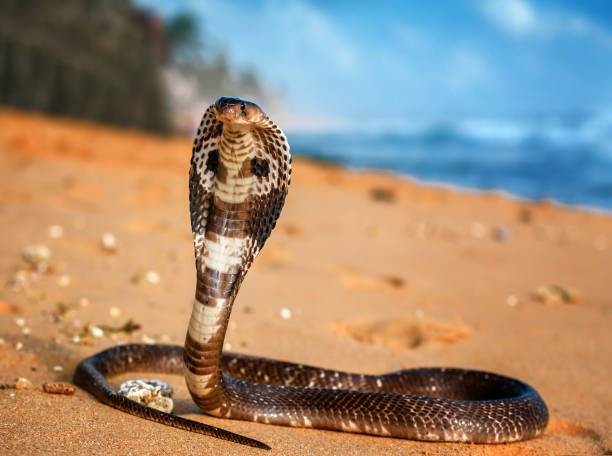
Snakes can survive extended periods without food because their bodies are designed to use energy efficiently. Their ectothermic biology, low metabolic requirements, stored fat reserves, intermittent feeding strategies and highly flexible digestive systems all contribute to this ability.
Scientific experiments have demonstrated fasting periods of around six months in several species, while research and reviews indicate that some snakes can naturally tolerate even longer periods under particular conditions.
But there is no universal answer for every snake.
The age, size, species, health, temperature and available energy reserves all matter.
As Nag Panchami 2026 is observed on August 17, the festival’s focus on serpent deities also draws attention to the extraordinary biology of real snakes.
The surprising truth is that snakes do not need regular meals in the way humans do. Some species can survive for months without food, and scientific studies have documented remarkable physiological adaptations that allow them to reduce energy use and rely on stored reserves.
Their ability to survive long gaps between meals is not simply about “going hungry.” It is an intricate biological strategy involving metabolism, fat storage, temperature regulation and digestive flexibility.
That remarkable adaptation helps explain how snakes can survive in environments where meals are unpredictable—and why these reptiles remain among the most fascinating animals studied by scientists.