The foldable smartphone market has become increasingly competitive in 2026, with Samsung and Google taking distinctly different approaches to premium foldable phones. The Samsung Galaxy Z Fold 8 focuses on a lighter, wider design, productivity and Samsung’s mature foldable ecosystem, while the Google Pixel 11 Pro Fold puts greater emphasis on a large inner display, Google’s Gemini AI features and Pixel’s camera-focused software experience.
For buyers considering a premium foldable, the choice is no longer simply about whether a phone can open into a tablet-sized screen. Factors such as display proportions, weight, durability, cameras, software, artificial intelligence, battery life and price can make a significant difference.
Table of Contents
The Galaxy Z Fold 8 starts at $1,899, while the Pixel 11 Pro Fold is priced from $1,899, putting the two devices in direct competition.
So, which one should you choose? The answer depends largely on what you expect from a foldable phone.
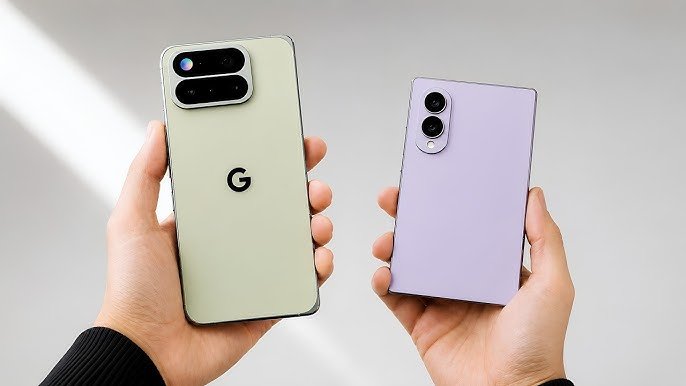
Samsung Galaxy Z Fold 8 vs Google Pixel 11 Pro Fold: At a Glance
The two smartphones share the same basic idea: a conventional-looking phone that opens into a much larger display. However, their designs are noticeably different.
The Galaxy Z Fold 8 has moved toward a shorter and wider form factor, with a 7.6-inch internal display and a 6.5-inch-class cover-screen experience. Samsung’s redesign makes the phone more approachable as both a smartphone and a small tablet.
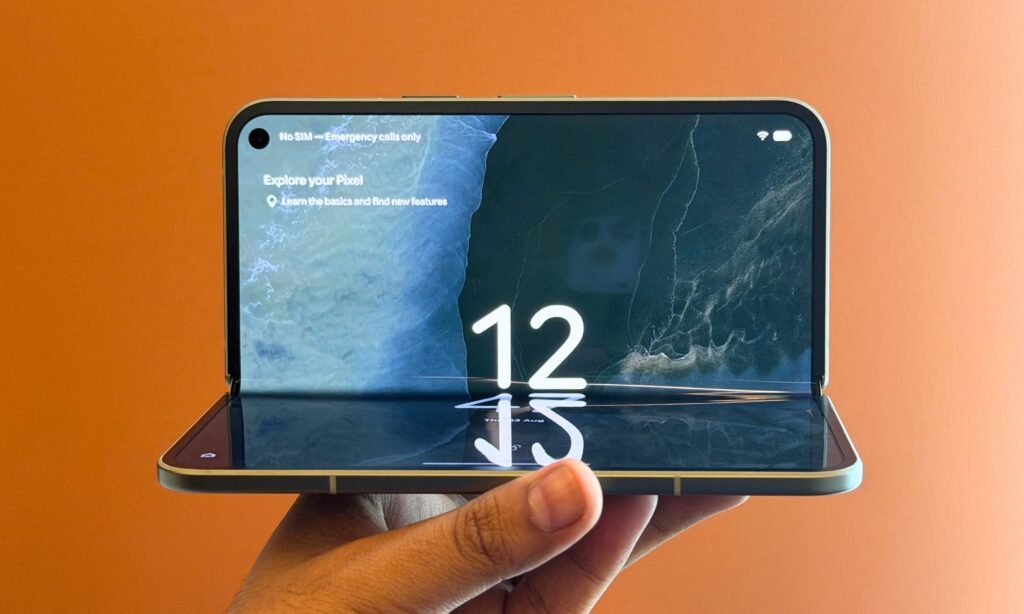
Google takes a different route with the Pixel 11 Pro Fold. It has a 6.5-inch outer display and an 8-inch inner display, giving users a particularly large workspace when the phone is unfolded.
Both run Android 17 and are positioned as premium flagship foldables, but their priorities differ.
Design and Build: Samsung Goes Wider, Google Goes Bigger
Samsung has made one of the most noticeable design changes to its Fold lineup with the Galaxy Z Fold 8.
Rather than continuing exclusively with the tall, narrow approach associated with earlier Galaxy Z Fold phones, Samsung has adopted a wider design. This makes the outer screen more useful for everyday tasks such as typing, browsing websites and watching short videos.
The Galaxy Z Fold 8 also weighs around 201 grams and measures approximately 9.7mm when folded, according to current comparison data.
Google’s Pixel 11 Pro Fold is also thinner and lighter than its predecessor, but it remains heavier than Samsung’s standard Fold 8. Reports put the Pixel at around 239 grams and 10.1mm thick when closed.
That difference may sound small on paper, but it can become noticeable when the phone is carried throughout the day.
Winner for portability: Samsung Galaxy Z Fold 8
Samsung’s lower weight and thinner folded profile give it an advantage for users who want a foldable that feels closer to a conventional smartphone.
Display: Pixel Offers a Huge Canvas
Displays are among the biggest reasons to buy a foldable, and both companies have taken different approaches.
The Galaxy Z Fold 8 has a 7.6-inch internal display with a high-refresh-rate AMOLED panel. Samsung’s foldable displays are known for their strong contrast, vibrant colours and smooth scrolling.
The Pixel 11 Pro Fold goes even larger, with an 8-inch inner OLED display. Both its internal and external displays support up to 120Hz refresh rates and can reach a reported peak brightness of up to 3,600 nits.
The larger Pixel screen can be particularly useful when running two applications simultaneously. For example, a user could keep a document open on one side while researching information on the other.
Samsung, however, has years of experience optimising Android for large foldable screens. Its software offers a broad selection of multitasking controls and productivity features.
Winner for display size: Google Pixel 11 Pro Fold
Winner for foldable software optimisation: Samsung Galaxy Z Fold 8
Performance: Two Different Android Approaches
Performance is another important consideration.
The Pixel 11 Pro Fold uses Google’s Tensor G6 processor, built using a 2nm process, and comes with 16GB of RAM. Storage options extend up to 1TB.
Google’s Tensor chips are designed not only for conventional processing but also for Google’s machine-learning and AI features.
Samsung’s Galaxy Z Fold 8 takes a more performance-oriented approach, using a flagship Qualcomm platform. Current specifications list the standard Fold 8 with 12GB RAM, alongside storage options beginning at 256GB.
For everyday activities such as social media, browsing, video streaming and productivity, both phones should provide high-end performance.
The distinction becomes more interesting with demanding games and AI workloads. Samsung’s hardware is designed to deliver strong conventional flagship performance, while Google’s Tensor platform is closely integrated with Pixel’s AI ecosystem.
Winner for conventional flagship performance: Samsung Galaxy Z Fold 8
Winner for Google AI integration: Pixel 11 Pro Fold
Camera: Google’s Software vs Samsung’s Hardware
Camera performance is one of the biggest differences between the two phones.
The Pixel 11 Pro Fold features a triple-camera system comprising a 48MP main camera, 10.5MP ultrawide camera and 10.8MP telephoto camera, according to current specifications. It also offers up to 30x Super Zoom.
Google’s biggest advantage has traditionally been computational photography. The company uses AI and image-processing algorithms to improve photographs after they are captured.
The Pixel 11 Pro Fold also introduces AI-powered photography features such as Magic Capture and Creators Suite, giving users additional tools for editing and creating content.
Samsung’s Galaxy Z Fold 8 also offers a sophisticated multi-camera system and benefits from Samsung’s long experience with flagship smartphone photography.
However, buyers should distinguish the standard Z Fold 8 from the more expensive Galaxy Z Fold 8 Ultra, which has a substantially more advanced camera setup. The Ultra should not be treated as representative of the standard Fold 8.
Winner for AI photography: Google Pixel 11 Pro Fold
Winner for overall camera flexibility: Samsung Galaxy Z Fold 8
Battery Life and Charging
Battery performance is particularly important for foldable phones because they power two displays and a range of demanding features.
The Pixel 11 Pro Fold has a 4,750mAh battery, with 30W wired charging and 25W wireless charging.
The Galaxy Z Fold 8 is listed with a 4,800mAh battery, giving Samsung a small capacity advantage.
Battery capacity does not automatically translate into longer real-world battery life. Processor efficiency, display brightness, software optimisation and network conditions all affect endurance.
Samsung’s Snapdragon-based platform and Google’s Tensor G6 both have different efficiency characteristics, so actual battery performance will depend heavily on how each user operates the device.
Winner on battery capacity: Samsung Galaxy Z Fold 8
Durability: Google Has a Major Advantage
Durability has historically been one of the biggest concerns surrounding foldable smartphones.
Google has addressed this area aggressively with the Pixel 11 Pro Fold.
The device carries an IP68 rating for dust and water resistance, while Google has also redesigned its hinge and strengthened other components. Reports describe a glass-fibre composite back, ceramic outer glass and a gearless hinge designed to improve durability.
Samsung’s Galaxy Z Fold 8 has also benefited from years of development in foldable durability, but its standard model has an IP48 rating, according to current comparisons.
This makes the Pixel particularly attractive to people who are worried about exposure to dust and water.
Winner for water and dust resistance: Google Pixel 11 Pro Fold
Software and AI Features
Software could ultimately be the deciding factor for many buyers.
Samsung’s One UI has been developed specifically around multitasking. Users can run multiple applications simultaneously, resize windows and take advantage of the large internal display.
The Galaxy Z Fold 8 is therefore particularly well suited to productivity.
Google’s Pixel 11 Pro Fold approaches the large display from an AI-first perspective.
Gemini is deeply integrated into the Pixel experience, while features such as live transcription, planning assistance and accessibility-focused AI tools expand what the phone can do.
Google has also introduced HiLight, a rear LED system that can provide visual notifications and Gemini-related feedback.
For users who regularly rely on AI assistants, Google’s approach could feel more cohesive.
Winner for productivity: Samsung Galaxy Z Fold 8
Winner for integrated AI: Google Pixel 11 Pro Fold
Price: A Close Battle
Price is unusually straightforward in this comparison because both phones begin at around the same level.
The Galaxy Z Fold 8 starts at $1,899, while the Pixel 11 Pro Fold also starts at $1,899.
That means consumers cannot simply choose the cheaper phone.
Instead, buyers need to decide what they value more.
Samsung offers a mature foldable ecosystem, lighter hardware and extensive multitasking features. Google offers a large display, strong durability credentials and an AI-focused software experience.
For Indian buyers, the final purchasing decision should also take local pricing, availability, warranty and service support into account, because US launch prices do not necessarily translate directly into Indian retail prices.
Which Foldable Is Better for Students and Productivity?
For someone who wants to use a foldable for schoolwork, research, reading documents or managing multiple applications, the Galaxy Z Fold 8 is the stronger choice.
Samsung’s multitasking tools are particularly useful when the inner screen is being used as a mini workstation.
You can have a browser window open alongside a document or messaging application, making the large display genuinely useful rather than simply larger.
The Pixel 11 Pro Fold is also capable of multitasking, but Google’s main selling point is more heavily centred around AI.
Which Foldable Is Better for Photography?
If photography and AI-powered image processing are your priorities, the Pixel 11 Pro Fold deserves serious consideration.
Google has built the Pixel brand around computational photography, and the Pixel 11 Pro Fold continues that strategy with AI-based photography tools.
Samsung remains competitive and offers a strong camera experience, but buyers looking specifically for Google’s computational photography ecosystem may prefer the Pixel.
Which One Should You Buy?
There is no single winner for everyone.
Choose the Samsung Galaxy Z Fold 8 if:
- You want a lighter and thinner foldable.
- You value multitasking and productivity.
- You prefer Samsung’s One UI ecosystem.
- You want a wider outer-screen experience.
- You prioritise conventional flagship performance.
- You already use Samsung Galaxy devices and accessories.
Choose the Google Pixel 11 Pro Fold if:
- You want the largest internal display.
- AI features are particularly important to you.
- You prioritise Pixel photography.
- You want IP68 water and dust resistance.
- You prefer Google’s Android experience.
- You want advanced Gemini integration.
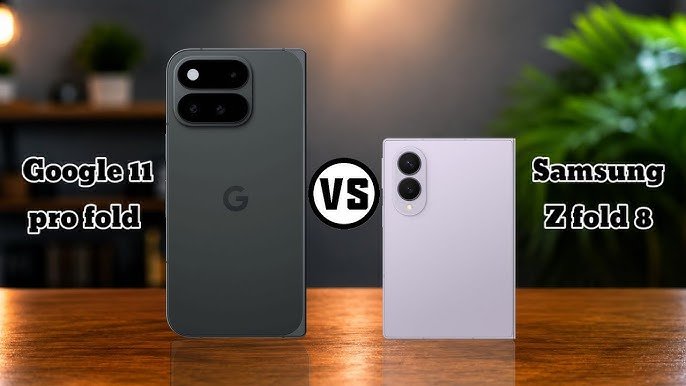
Final Verdict
The Samsung Galaxy Z Fold 8 vs Google Pixel 11 Pro Fold comparison shows that the foldable market is no longer about one company simply trying to make a phone that folds.
Samsung is concentrating on refinement, portability and productivity. The Galaxy Z Fold 8’s lighter body and wider design make it a compelling everyday foldable, while Samsung’s software remains one of its strongest advantages.
Google, meanwhile, is taking a software-and-AI-heavy approach. The Pixel 11 Pro Fold combines an 8-inch inner display, Tensor G6, 16GB RAM, strong water and dust resistance and a deep Gemini integration.
For most productivity-focused users, the Samsung Galaxy Z Fold 8 is the safer all-round choice. For photography, AI and durability, the Google Pixel 11 Pro Fold is arguably more appealing.
Ultimately, the best foldable depends on what you want your phone to become when it opens: a compact workstation or an AI-powered large-screen companion.