
Court Directs Meta and X to Remove Disputed Posts, AI-Generated Material; Raises Concerns Over Deepfakes and Platform Accountability
Nitin Gadkari has secured significant interim relief from the Bombay High Court after the court directed social media platforms Meta and X Corp to immediately remove content alleged to be defamatory towards the Union Minister in connection with the government’s E20 ethanol-blended petrol policy. The court also instructed the platforms to provide details of the individuals responsible for uploading the disputed material, marking an important development in India’s efforts to tackle online misinformation, deepfakes, and digital platform accountability.
The order came during the hearing of a civil suit filed by Gadkari, who alleged that false and misleading social media posts, including AI-generated images, videos, and other manipulated content, wrongly linked him and members of his family to alleged financial gains arising from the E20 ethanol blending programme.
According to Gadkari’s legal representatives, the disputed material not only damaged his personal reputation but also contributed to the spread of misinformation regarding a major public policy initiative aimed at increasing ethanol blending in petrol across India.
The High Court reportedly took a serious view of the matter, particularly the growing misuse of artificial intelligence and deepfake technology to circulate misleading information on social media.
Table of Contents
Court Questions Platform Mechanisms Against Deepfakes
Following the hearing, advocate Sandeep S. Ladda, representing Union Minister Nitin Gadkari, said the court examined the nature of the disputed content and questioned whether major social media platforms have adequate systems in place to respond quickly to defamatory AI-generated material targeting Nitin Gadkari.
According to Ladda, lawyers representing Meta—which operates Facebook and Instagram—and X Corp (formerly Twitter)—appeared before the court and responded to questions regarding the platforms’ existing mechanisms for handling such complaints involving Nitin Gadkari.
Ladda stated that Nitin Gadkari’s legal team explained why the posts related to the E20 ethanol blending policy were allegedly defamatory and argued that the content appeared to have been generated or manipulated using artificial intelligence against Nitin Gadkari.
The advocate said the court prima facie agreed that the material appeared defamatory and expressed concern about the absence of an effective framework to prevent the rapid circulation of deepfake-driven misinformation targeting Nitin Gadkari.
Immediate Removal Ordered
One of the most significant directions issued during the hearing was the immediate removal of all disputed content identified in the lawsuit filed by Nitin Gadkari.
According to Nitin Gadkari’s legal counsel, the court ordered Meta, X Corp, and other concerned platforms to remove not only the existing allegedly defamatory posts but also any similar content uploaded after the filing of the suit concerning Nitin Gadkari.
The High Court further instructed the platforms to identify and provide details of the individuals responsible for uploading the disputed material targeting Nitin Gadkari.
Legal experts believe this aspect of the order highlights the increasing willingness of Indian courts to seek greater accountability from digital intermediaries while balancing concerns related to online speech, misinformation, and the protection of individuals such as Nitin Gadkari.
The directions are expected to play an important role in determining how future cases involving AI-generated misinformation and manipulated digital content are handled.
Gadkari’s Lawsuit Against Social Media Platforms
The present proceedings stem from a lawsuit filed by Union Minister Nitin Gadkari before the Bombay High Court on July 27.
According to the suit, multiple social media posts, edited photographs, videos, and alleged deepfake content falsely connected Nitin Gadkari and members of his family with supposed financial benefits arising from the government’s E20 ethanol blending programme.
The lawsuit maintains that these claims are false and misleading and were circulated without factual basis.
The petition also clarified that the E20 ethanol blending policy falls under the administrative jurisdiction of the Ministry of Petroleum and Natural Gas, seeking to distinguish the policy’s implementation from the allegations made in the disputed online content involving Nitin Gadkari.
The Bombay High Court subsequently permitted Nitin Gadkari to pursue a civil suit against Meta, other digital platforms, and unidentified individuals allegedly responsible for creating and distributing the material.
Growing Concern Over AI-Generated Misinformation
The case comes at a time when artificial intelligence has dramatically increased the ability to create convincing fake videos, edited images, manipulated audio recordings, and fabricated social media posts.
Deepfake technology has emerged as one of the most significant challenges confronting governments, technology companies, courts, and regulators worldwide.
Unlike traditional misinformation, AI-generated content can closely resemble authentic material, making it increasingly difficult for ordinary users to distinguish between genuine and fabricated information.
Legal experts have repeatedly warned that such content has the potential to damage individual reputations, influence public opinion, manipulate political discourse, and undermine trust in digital platforms.
The Bombay High Court’s observations reflect broader concerns regarding the speed at which misleading AI-generated content can spread before corrective action is taken.
Social Media Accountability Under Increasing Scrutiny
The proceedings also highlight the continuing debate over the responsibilities of social media companies in moderating user-generated content.
Platforms such as Meta and X have invested heavily in automated moderation systems and reporting mechanisms. However, critics argue that these systems are not always capable of identifying sophisticated AI-generated misinformation quickly enough.
Courts and policymakers in India have increasingly questioned whether existing safeguards are sufficient to address evolving technological threats.
According to Gadkari’s legal team, the current regulatory framework allows social media platforms to be misused “casually” for damaging personal reputations without adequate preventive mechanisms.
The court reportedly sought explanations from the platforms regarding the absence of stronger safeguards to detect and remove such material promptly.
The case is therefore likely to contribute to ongoing discussions about improving digital governance and strengthening accountability mechanisms for online intermediaries.
Understanding the E20 Ethanol Blending Programme
The controversy also unfolds against the backdrop of growing public discussion surrounding India’s E20 ethanol blending initiative.
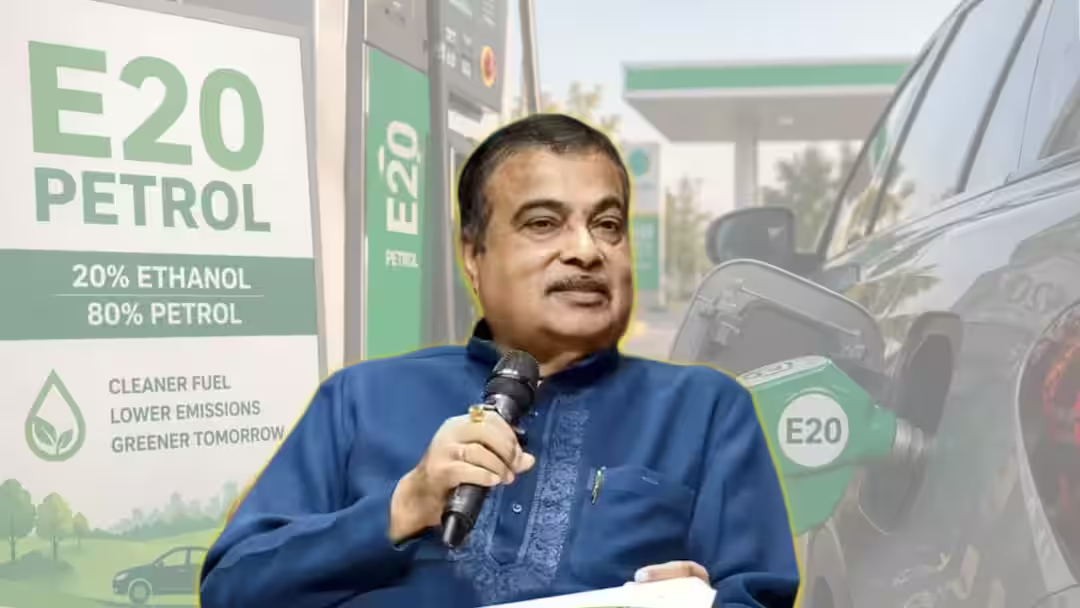
The E20 programme aims to increase the ethanol content in petrol to 20 percent as part of the government’s broader strategy to reduce dependence on imported crude oil, lower carbon emissions, improve energy security, and create additional income opportunities for farmers through increased demand for ethanol production.
The initiative forms an important component of India’s clean energy transition and long-term environmental strategy.
However, public debate has intensified in recent months following social media claims alleging that higher ethanol blends caused performance issues or mechanical damage in certain vehicles.
Automobile manufacturers, fuel suppliers, and government agencies have continued issuing technical guidance regarding vehicle compatibility, while encouraging consumers to follow manufacturer recommendations.
The lawsuit filed by Gadkari focuses specifically on allegations linking him personally to purported business benefits arising from the policy, claims that he disputes through the legal proceedings.
Legal Implications of the High Court’s Order
Although the case remains pending before the Bombay High Court, the interim directions issued during the hearing may carry broader implications for India’s digital legal framework.
The court’s willingness to direct immediate removal of allegedly defamatory AI-generated content and require disclosure of uploader information reflects increasing judicial attention toward online misinformation.
Legal observers note that courts across multiple jurisdictions are grappling with questions surrounding intermediary liability, freedom of expression, privacy, and the responsibilities of technology companies in the age of artificial intelligence.
India’s Information Technology Act and associated intermediary guidelines already require digital platforms to respond to lawful directions and remove prohibited content in specified circumstances.
As AI-generated misinformation becomes more sophisticated, similar cases are expected to influence future regulatory and judicial approaches.
Broader Debate on Deepfakes and Digital Trust
The Gadkari case illustrates a larger global challenge facing governments, technology companies, and legal systems.
Artificial intelligence has transformed content creation, but it has also enabled malicious actors to generate realistic fabricated material capable of misleading millions within minutes.
Deepfakes involving political leaders, celebrities, business executives, and private citizens have become increasingly common across social media platforms worldwide.
Experts have called for stronger verification systems, improved AI detection technologies, enhanced platform transparency, and updated legal frameworks capable of responding to emerging digital threats without undermining legitimate freedom of expression.
India has similarly intensified discussions on regulating AI-generated content, misinformation, and digital safety as internet usage continues to expand rapidly.
The Bombay High Court’s direction ordering the removal of allegedly defamatory E20-related content concerning Union Minister Nitin Gadkari represents an important development in India’s evolving approach to online misinformation and AI-generated content. By directing Meta, X Corp, and other platforms to remove disputed material and identify those responsible for uploading it, the court has underlined the growing importance of digital accountability in an era of rapidly advancing artificial intelligence.
As the civil proceedings continue, the case is expected to contribute to wider discussions on platform responsibility, intermediary obligations, deepfake regulation, and the balance between protecting individual reputations and preserving free expression online. With artificial intelligence becoming an increasingly powerful tool for both innovation and misuse, the outcome of such cases may help shape India’s future legal and regulatory response to digital misinformation.