

Nashik district in Maharashtra is battling one of the most significant monsoon emergencies of the season after continuous heavy rainfall caused rivers to overflow, reservoirs to reach critical capacity, and low-lying areas to flood. The crisis has affected urban and rural regions alike, forcing authorities to issue flood alerts, evacuate residents, suspend transport on several roads, and deploy emergency response teams across the district.
The Godavari River, often referred to as the lifeline of Nashik, witnessed a sharp rise in water levels after the Gangapur Dam received massive inflows from its catchment areas. As the reservoir crossed 95% storage capacity, officials began releasing water downstream to maintain dam safety, significantly increasing river discharge through Nashik city.
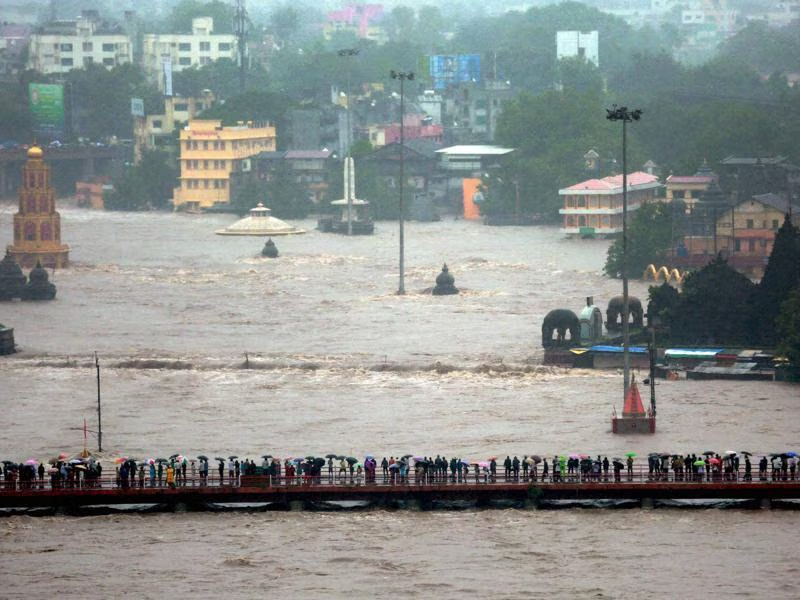
While authorities intensified rescue and relief efforts, many residents continued to ignore safety advisories, with visuals showing people crossing the submerged Ramsetu Bridge despite dangerous water currents. The incident highlighted the growing concern over public safety during extreme weather events.
Table of Contents
Why Nashik Is Flood-Prone During the Monsoon
Nashik’s geographical location makes it highly vulnerable to flooding during periods of intense rainfall. The district lies in the upper basin of the Godavari River, India’s second-longest river, which originates near Trimbakeshwar in Nashik district. The city is surrounded by several reservoirs, including Gangapur Dam, Kashyapi Dam, Darna Dam and other irrigation projects that regulate water flow across the region.
During heavy monsoon spells, rainfall in the Western Ghats and upper catchment areas rapidly increases inflows into these reservoirs. When storage levels approach capacity, controlled water releases become necessary to protect dam structures. While these releases are carefully managed, they also lead to sudden rises in downstream river levels, particularly in the Godavari flowing through Nashik city.
This combination of continuous rainfall, overflowing rivers, and dam discharge often results in flooding in low-lying settlements and along riverbanks.
Continuous Rainfall Pushes Gangapur Dam Towards Full Capacity
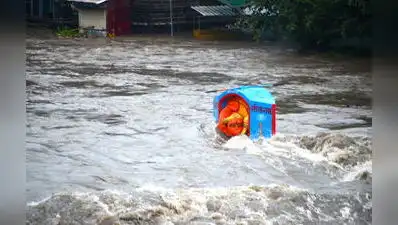
The latest spell of heavy rainfall transformed the situation rapidly. Gangapur Dam’s storage increased from approximately 74% to over 95% within a short period due to relentless rainfall in upstream catchments. As inflows continued, the Water Resources Department initiated controlled releases to create storage space for incoming water.
Initially, around 13,000 cusecs of water was released into the Godavari River. Later, water discharge near Holkar Bridge crossed 19,000 cusecs, causing river levels to rise further and increasing flood risks downstream.
Officials clarified that these releases are standard flood-management procedures designed to protect the dam and minimise larger disasters. However, residents living close to the river were advised to remain vigilant as river levels could continue fluctuating depending on rainfall intensity.
Godavari River Swells Across Nashik City
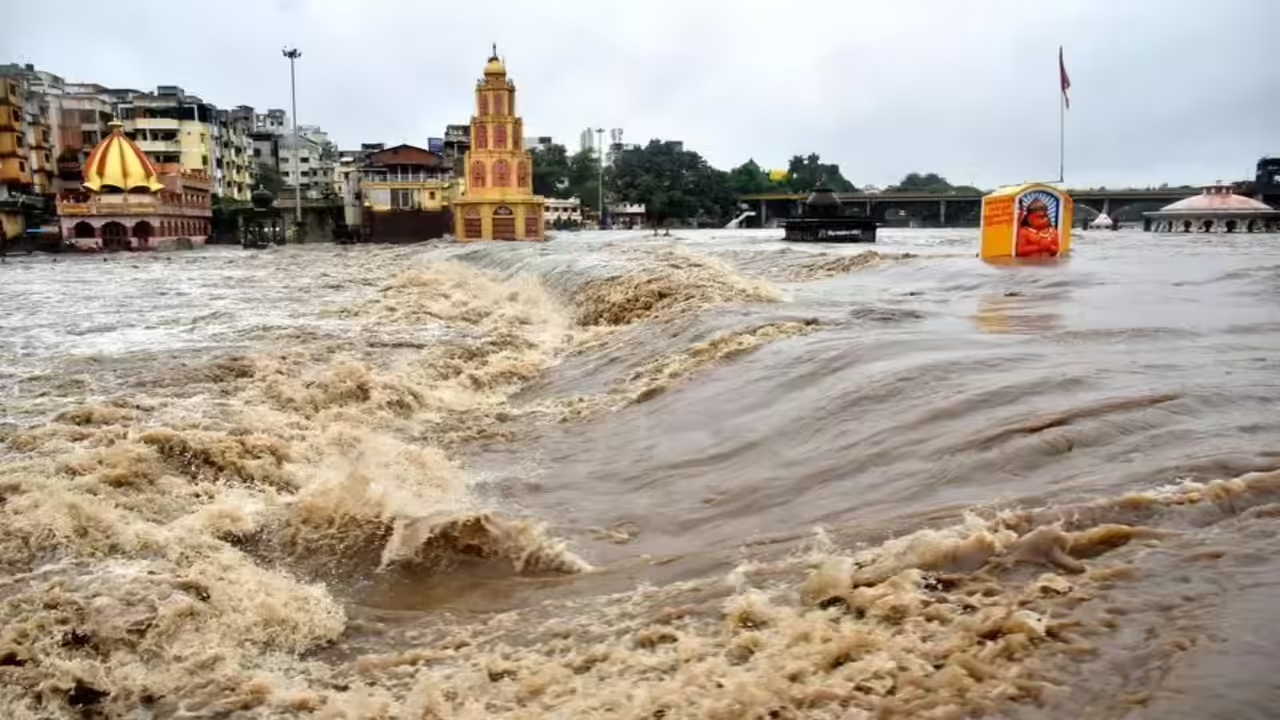
As dam releases continued, the Godavari River expanded beyond its normal channel in several stretches through Nashik city.
Popular riverfront locations witnessed rapidly rising water levels, while several ghats and low-lying areas experienced inundation. Authorities cordoned off vulnerable stretches and appealed to citizens not to gather near the river for photography or sightseeing.
Officials continuously monitored river gauges to determine whether additional evacuations would become necessary.
People Risk Their Lives on the Ramsetu Bridge
Despite repeated warnings, several individuals were seen crossing the partially submerged Ramsetu Bridge.
Videos circulating on social media showed pedestrians walking through dangerous conditions even as water continued flowing across portions of the bridge. Disaster management officials warned that floodwaters can become extremely powerful within seconds, making even experienced swimmers vulnerable.
Authorities urged residents to avoid unnecessary travel and strictly follow barricades placed around flooded crossings.
Farmer Swept Away in Surgana Taluka
The floods claimed at least one life after a 42-year-old farmer, identified as Pundalik Chava, was swept away while attempting to cross an overflowing stream in Surgana taluka.
According to officials, he was returning home from his agricultural field when rapidly flowing floodwater carried him away. Search operations were launched immediately after the incident.
The tragedy once again highlighted the dangers posed by overflowing nullahs and streams during the monsoon, particularly in rural regions where road connectivity often depends on low-level crossings.
Flood Alerts Issued Across Vulnerable Areas
Nashik District Collector Ayush Prasad issued flood alerts for several downstream regions following the rapid increase in reservoir storage.
Residents in low-lying settlements along the Godavari River were advised to:
- Stay away from riverbanks.
- Avoid crossing submerged roads and bridges.
- Cooperate with evacuation teams.
- Shift livestock and valuables to safer locations.
- Monitor official weather advisories.
Authorities emphasised that precautionary water releases would continue whenever necessary depending on rainfall and reservoir inflows.
Large-Scale Evacuation Operations Begin
Emergency evacuation operations were launched in multiple locations as floodwaters entered residential areas.
In Malegaon, approximately 75 residents from 15 families were shifted to temporary shelters after the swollen Girna River flooded nearby houses. Relief camps were equipped with food, drinking water, and essential supplies.
Meanwhile, in Igatpuri’s Pimpri Sado village, 15 residents were evacuated by volunteers and Aapda Mitra personnel after flooding from the Darna River threatened homes.
Overall, nearly 200 people were shifted to safer locations as a precaution during the latest flood situation.
Road Closures Bring Transportation to a Standstill
Floodwaters severely disrupted transportation across Nashik district.
Authorities temporarily closed 27 roads and bridges after water submerged low-level crossings, making travel unsafe.
Several villages experienced temporary isolation due to damaged approach roads, while commuters faced long diversions and delays. Engineering teams later inspected bridge structures before reopening selected routes after water levels receded.
Officials confirmed that preliminary inspections found no major structural damage on reopened roads.
Landslides Worsen the Situation
Heavy rainfall also triggered multiple landslides across Nashik’s hilly regions.
A major landslide at Kotambhi Ghat in Peth taluka blocked roads after large boulders and mud collapsed onto the highway. National Highways Authority teams were deployed to clear debris.
Another landslide occurred on the Trimbakeshwar–Jawhar Road near Ganpati Bari, forcing authorities to divert traffic. Officials noted that this was the second landslide reported at the location during the current monsoon season.
Homes Damaged and Infrastructure Affected
The prolonged downpour damaged approximately 45 houses across the district.
Several localities experienced:
- Waterlogging
- Roof damage
- Flooded residential buildings
- Agricultural losses
- Disruption of local connectivity
Damage assessment teams have begun surveys, although complete evaluation will only be possible after floodwaters fully recede.
Power Supply Disrupted Across the District
Heavy rainfall, falling trees and landslides damaged power infrastructure in several areas.
Transmission lines of 33 kV and 11 kV were affected in Ambad, Satpur, Igatpuri, Peth, Dindori and parts of Nashik city.
Repair work proved challenging because maintenance crews often had to carry equipment on foot through flooded roads with assistance from the fire brigade.
Most urban areas have since seen power restoration, while repair work continues in remote villages.
Emergency Agencies Working Round the Clock
Multiple government departments have been deployed to manage the crisis, including:
- District Disaster Management Authority
- Police Department
- Fire Brigade
- State Disaster Response teams
- Aapda Mitra volunteers
- Health Department
- MSEDCL electricity teams
Officials continue monitoring rainfall, reservoir storage and river levels around the clock to respond quickly if conditions worsen.
Impact on Agriculture and Rural Communities
The heavy rainfall has had mixed consequences for agriculture.
While reservoirs reaching near-full capacity provide long-term benefits for irrigation and drinking water supply, excessive rainfall has damaged standing crops in some low-lying farms and interrupted sowing activities in flood-affected villages. Flooded access roads have also delayed the movement of agricultural produce and essential supplies.
Monsoon Preparedness and Public Safety
Authorities have appealed to residents to avoid unnecessary travel until weather conditions improve. Disaster management officials have advised citizens to:
- Never attempt to cross flooded roads or streams.
- Stay away from rivers during dam water releases.
- Follow official weather updates instead of rumours.
- Keep emergency supplies ready in flood-prone areas.
- Contact local authorities immediately during emergencies.
Officials stressed that most flood-related casualties occur because people underestimate the force of moving water.
Although weather forecasts indicate that rainfall intensity may gradually reduce, authorities remain cautious because additional rain in the upper catchment areas could require further releases from Gangapur Dam. Reservoir levels, river discharge and vulnerable locations across Nashik district continue to be monitored closely.
The 2026 Nashik floods demonstrate how rapidly extreme monsoon conditions can evolve into a district-wide emergency. Rising reservoir levels, overflowing rivers, road closures, landslides, power disruptions and evacuations have collectively strained public infrastructure and emergency services. At the same time, the tragedy of a farmer being swept away and repeated instances of people crossing submerged bridges underscore the importance of public awareness and adherence to safety advisories.
As rescue operations continue and authorities remain on high alert, the coming days will be crucial for Nashik. With coordinated action by government agencies and responsible behaviour from citizens, the district hopes to minimise further loss of life and property while navigating one of the most challenging monsoon episodes of the year.