The Shahdara District Police have successfully solved a murder case within just three days and arrested the accused from Mumbai after an extensive search operation spanning multiple states. The swift breakthrough in the murder investigation has drawn appreciation for the dedicated efforts of the police team, which relied on intelligence gathering, field verification, and relentless pursuit despite the accused’s attempts to evade arrest.
The case came to light on June 13, 2026, when Police Station Gandhi Nagar received information regarding the murder of a woman, approximately 30 years old, at her residence in Chanderpuri, Kailash Nagar, Delhi. The incident immediately triggered a high-priority investigation, with senior officers recognizing the seriousness of the murder and mobilizing resources to identify and apprehend the culprit at the earliest.
The successful resolution of the murder case within such a short period highlights the importance of prompt police response, scientific investigation, and coordinated teamwork. While murder investigations often take weeks or even months to reach a breakthrough, the Shahdara Police managed to trace and arrest the accused in just three days despite significant challenges.
Table of Contents
Murder Investigation Begins Immediately
Upon receiving information about the murder, SHO Gandhi Nagar Inspector Dharmendra Kumar, along with the Investigating Officer and police staff, rushed to the crime scene without delay. The area was immediately secured to preserve evidence and prevent contamination.
Crime Team officials and forensic experts from the Forensic Science Laboratory conducted a detailed examination of the scene. During the inspection, investigators recovered a blood-stained knife believed to be the weapon used in the murder. The recovery of the suspected weapon provided an important starting point for the investigation and offered crucial forensic evidence that could later be linked to the accused.
Recognizing the gravity of the murder, police registered FIR No. 228/2026 under relevant provisions of the Bharatiya Nyaya Sanhita and launched a full-scale investigation. Senior officers closely monitored every stage of the case to ensure that no lead was overlooked.
Police Teams Launch Multi-Layered Investigation
Murder investigations often depend on a combination of forensic evidence, witness testimony, digital tracking, and intelligence gathering. However, this particular murder case presented several challenges from the outset.
Investigators began by recording statements from family members, neighbours, and potential witnesses. Simultaneously, teams started examining CCTV footage from nearby locations to reconstruct the victim’s final movements and identify anyone connected to the murder.
During the review of surveillance footage, investigators made a significant discovery. CCTV footage reportedly showed the deceased woman’s husband, Khalid Navi, leaving the area shortly after the incident. This immediately shifted the focus of the murder investigation toward locating him and understanding his role in the events leading up to the crime.
However, tracing the suspect proved difficult. According to police officials, the accused deliberately avoided leaving a digital footprint. He reportedly switched off communication channels and avoided activities that could reveal his location through electronic surveillance. Apart from a single CCTV appearance, investigators initially had very little information regarding his movements.
Such circumstances often complicate a murder investigation because modern policing increasingly relies on digital evidence, including mobile phone records, online transactions, and location tracking. In this case, investigators had to depend heavily on traditional policing methods.
Human Intelligence Becomes Key to Solving Murder
With limited digital clues available, police shifted their focus toward human intelligence and extensive field verification. Officers conducted detailed inquiries among relatives, acquaintances, and potential contacts associated with the accused.
Investigators discovered that the accused had connections in several locations, including Badaun in Uttar Pradesh, Hubballi in Karnataka, Mumbai in Maharashtra, and Goa. Based on these findings, multiple teams were deployed simultaneously to various states while local searches continued across Delhi.
The decision to pursue several leads at once proved crucial. Murder suspects often attempt to evade arrest by constantly changing locations, seeking shelter with relatives, or blending into unfamiliar surroundings. Police officials recognized that time was critical and moved quickly to prevent the accused from disappearing further.
The operation required close coordination between multiple law enforcement units spread across different regions of the country. Officers worked around the clock, verifying leads, gathering intelligence, and tracking possible movements of the accused.
Their persistence eventually paid off.
Crucial Lead Helps Crack the Murder Case
After three days of continuous efforts, investigators developed an important lead regarding possible communication between the accused and his brother. Police believed that the accused might seek assistance from family members while attempting to remain hidden.
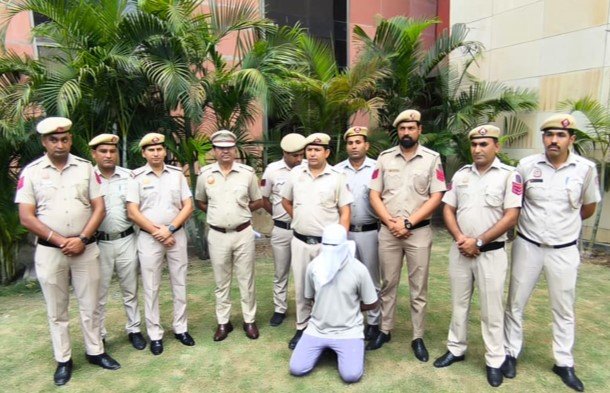
Acting on this intelligence, teams intensified their efforts and successfully traced the accused to Mumbai. According to police officials, the accused was attempting to conceal his identity when he was located and apprehended.
The arrest marked a significant breakthrough in the murder investigation and brought an end to an interstate manhunt that had stretched across several cities and states.
Police sources stated that the operation demonstrated the value of intelligence-based policing and effective teamwork. Despite the absence of strong digital evidence, investigators succeeded through careful analysis, ground-level verification, and strategic deployment of resources.
Interrogation Reveals Motive Behind Murder
Following his arrest, the accused was brought into custody and subjected to detailed interrogation.
During questioning, the accused allegedly disclosed that he had been married to the deceased for approximately fifteen years and that the couple had three children. According to investigators, he stated that marital disputes had become increasingly frequent during the past year.
Police revealed that the accused suspected his wife of maintaining a relationship with another individual. These suspicions allegedly led to repeated arguments and tension within the household.
According to the accused’s statement, a confrontation took place on June 13, 2026, while he was attempting to reconcile with his wife. During the argument, he allegedly attacked her with a knife, resulting in her death.
The alleged motive provides investigators with a clearer understanding of the circumstances surrounding the murder. Domestic disputes remain one of the most common factors examined during murder investigations involving family members or spouses.
Police officials emphasized that the motive was established through a combination of interrogation, witness statements, and evidence collected during the investigation.
Accused Attempted to Escape After Murder
After the murder, the accused allegedly fled Delhi in an effort to avoid arrest. Investigators revealed that he travelled through multiple trains without purchasing tickets and moved across various locations before eventually reaching Mumbai.
Police believe the accused was attempting to distance himself from the crime scene and avoid detection by law enforcement agencies. His plan reportedly included seeking assistance from his brother while remaining hidden from authorities.
Such attempts to evade arrest are common in serious criminal cases. However, investigators were able to reconstruct his movements through intelligence gathering and extensive field inquiries.
The successful arrest demonstrated that even when suspects attempt to travel across multiple states, coordinated policing and information sharing can significantly increase the likelihood of apprehension.
Important Recoveries Strengthen the Case
The murder investigation also led to several important recoveries that are expected to strengthen the prosecution’s case.
Police had already recovered a blood-stained knife from the crime scene, which is suspected to be the weapon used in the murder. Forensic examination of the weapon is expected to play a crucial role in establishing the sequence of events and linking physical evidence to the crime.
Additionally, investigators recovered blood-stained clothes allegedly worn by the accused during the commission of the murder. These clothes had reportedly been concealed at Panvel Railway Station in Maharashtra, approximately 50 kilometres from Mumbai.
Police also recovered the accused’s blood-stained passport during the course of the investigation. Such recoveries provide valuable evidentiary support and can help forensic experts corroborate findings obtained from the crime scene.
The ability to recover these items after the accused had travelled across several states reflects the thoroughness of the investigation and the determination of the police teams involved.
Police Team Earns Appreciation for Swift Action
The successful resolution of the murder case has earned widespread appreciation for the officers of Police Station Gandhi Nagar and Shahdara District Police. Senior officers credited the investigating team for their dedication, professionalism, and relentless pursuit of the accused.
The case was solved under the overall supervision of senior district officers, with Inspector Dharmendra Kumar, Inspector Robin Singh, SI Vikas Kumar, SI Harish Choudhary, and other members of the investigation team playing critical roles.
Their efforts demonstrate how modern policing combines forensic science, intelligence gathering, surveillance analysis, witness examination, and interstate coordination to solve serious crimes.
The murder investigation serves as an example of effective police work under challenging circumstances. Despite limited digital evidence, the investigating team successfully identified the accused, established the motive, recovered key evidence, and secured an arrest within three days.
The achievement reflects the growing capabilities of Delhi Police in handling complex murder investigations and reinforces public confidence in law enforcement’s ability to deliver justice through professional and determined investigative work.