Former India Batter Opens Up on Dhoni’s Calm Nature, Dressing-Room Culture and the Personal Routine That Helped His Own Career
MS Dhoni, former India and Chennai Super Kings captain, has been described by Ajinkya Rahane as a calm, approachable and remarkably ordinary person away from the pressures of professional cricket.
Rahane, who recently announced his retirement from international cricket, recalled his experiences with Dhoni while speaking on the Stick to Cricket podcast. According to Rahane, one of the qualities that made Dhoni’s leadership effective was his ability to create an environment where teammates could feel comfortable around him while still respecting clear personal boundaries.
Rahane revealed that Dhoni’s room was often open to teammates, with large groups of players gathering there during team stays. At the same time, there was an unwritten understanding that when Dhoni closed the door, that privacy was to be respected.
The recollection provides a glimpse into the dressing-room culture surrounding one of India’s most successful captains and helps explain how Dhoni combined accessibility with authority.
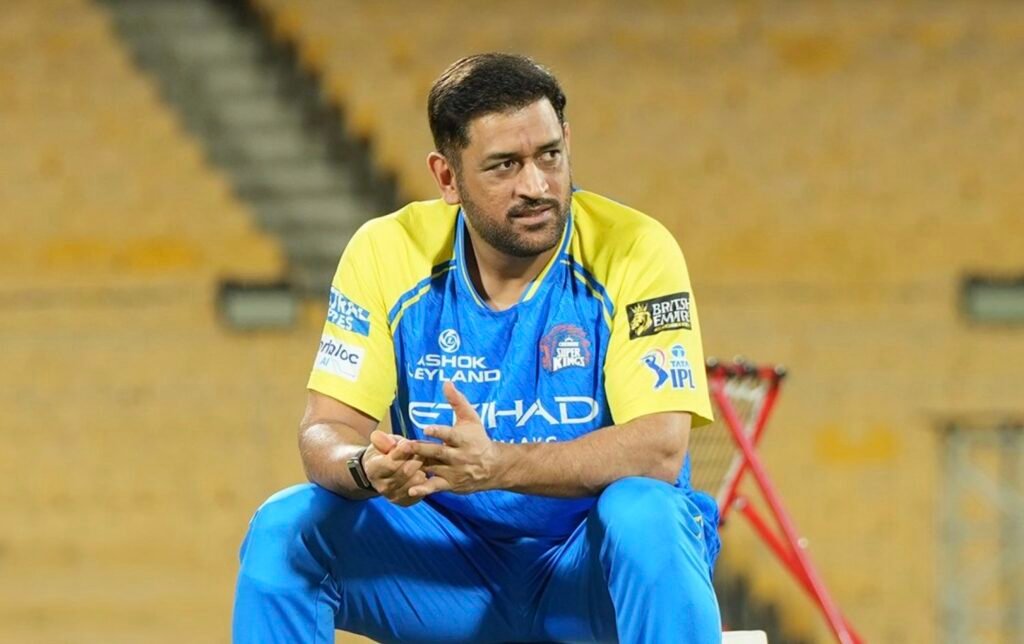
Table of Contents
Ajinkya Rahane Recalls MS Dhoni’s Calm Personality
Rahane described MS Dhoni as a calm and cool individual who, despite his enormous reputation in world cricket, behaved like a normal person away from the spotlight.
That simplicity, according to Rahane, was visible in the way MS Dhoni interacted with teammates.
Rather than maintaining a constant distance because of his position as captain, MS Dhoni allowed players to spend time with him in an informal environment. Rahane’s account suggests that this helped create a sense of comfort within the team.
The former India batter recalled that MS Dhoni’s room was frequently a gathering place for teammates. At times, the number of players would reportedly reach 10 to 15, while on some occasions almost the entire team could be there.
Yet there was also a clear boundary.
Rahane said that when MS Dhoni’s door was closed, teammates understood that they were not supposed to enter.
The contrast between an open-door approach and respect for privacy appears to have been an important part of MS Dhoni’s personality.
The “Open Door” Culture Inside Dhoni’s Room
One of the most interesting aspects of Rahane’s recollection is the picture it paints of MS Dhoni’s relationship with teammates.
A captain’s room can often become an informal meeting point during tours and tournaments. For players, particularly younger members of a squad, being able to interact with an experienced leader away from the field can help reduce the distance created by hierarchy.
Rahane’s description suggests that MS Dhoni did not necessarily need formal team meetings to establish relationships with his players.
His room could become a relaxed environment where teammates gathered, talked and spent time together.
At the same time, MS Dhoni’s closed door communicated a simple message: leadership did not mean being available every minute of the day.
That balance between accessibility and personal space can be particularly important in professional sport, where players spend extended periods travelling and living together.
Rahane Made His India Debut Under Dhoni
Rahane’s relationship with MS Dhoni goes back to the beginning of his international career.
The former batter made his India debut across all three formats during Dhoni’s captaincy. That meant Rahane had an opportunity to observe MS Dhoni not only as a senior player but also as the leader responsible for managing a changing Indian team.
Rahane later shared the dressing room with Dhoni in the IPL as well.
The two were teammates at Chennai Super Kings during the 2023 and 2024 seasons, giving Rahane another opportunity to observe Dhoni’s leadership in a franchise environment.
That experience is significant because Dhoni’s captaincy was not limited to international cricket. His leadership became closely associated with CSK, where he developed a reputation for creating a stable team environment and managing players with different personalities and roles.
Rahane’s comments therefore come from years of observing Dhoni in both international and franchise cricket.
Leadership Beyond Tactical Decisions
Dhoni’s leadership is often discussed in terms of tactical decisions, match awareness and his ability to remain composed during pressure situations.
However, Rahane’s comments highlight another aspect of leadership: the relationship between a captain and his teammates.
A captain does not only make decisions during matches. The leader also has to create an environment in which players feel trusted and comfortable enough to perform.
Rahane’s description of Dhoni’s room suggests that informal interactions were part of that process.
The relaxed environment may have helped players communicate more naturally with their captain. Instead of every interaction taking place in a formal cricketing setting, teammates could spend time together without necessarily discussing the game.
That kind of environment can contribute to team bonding and a sense of belonging.
Why Dhoni’s Simplicity Stood Out
Dhoni’s public image has often been built around his calmness.
Whether playing for India or CSK, he became widely associated with maintaining composure during high-pressure moments. Rahane’s description suggests that the same personality was visible away from the cricket field.
Despite becoming one of the most recognisable cricketers in the world, Dhoni could still interact with teammates in an ordinary and informal manner.
For younger players entering an international dressing room, that can be particularly valuable.
A relaxed senior player can make the environment less intimidating, allowing newcomers to settle into the team more quickly.
Rahane’s comments therefore offer another explanation for why Dhoni was able to maintain strong relationships with players over different generations.
Rahane Reveals His Own Social Media Routine
During the same conversation, Rahane also discussed how he managed distractions during cricket series.
The former India batter revealed that he removes social media applications from his phone when a series is underway.
Rather than following a team instruction, Rahane said the decision is his own personal method of maintaining focus.
He recalled receiving advice from England all-rounder Ben Stokes in 2017, when the two played together in the IPL.
Stokes had advised Rahane not to spend time looking at social media during a series. Rahane eventually developed the practice into his own routine.
For a professional cricketer, social media can become an additional source of pressure. Players are constantly exposed to opinions, criticism, praise and expectations from fans and the wider cricket community.
By disconnecting from those platforms, Rahane said he could concentrate more effectively on his preparation and performance.
Building a Personal Routine
Rahane also explained that maintaining a personal routine helped him remain mentally refreshed during demanding cricket schedules.
His routine included relatively simple activities such as watching shows, reading books, speaking with family and preparing his clothes for the following day.
These activities may appear ordinary, but Rahane’s comments underline the importance of maintaining a sense of normality during an intense professional schedule.
Cricket tours can involve long periods away from home, constant travel and considerable public attention. Establishing familiar routines can therefore provide players with a sense of stability.
For Rahane, disconnecting from social media was one part of that routine.
Spending time with family and preparing for the following day allowed him to create a clear separation between his professional responsibilities and personal time.
Rahane’s International Career Comes to an End
Rahane’s comments about MS Dhoni and his own routines come at an important point in his career.
The former India batter recently announced his retirement from international cricket, bringing an end to a career that spanned nearly two decades.
Rahane represented India across Test, ODI and T20I cricket and became particularly respected for his performances in Test cricket.
According to the statistics provided in the source material, Rahane played 85 Tests and scored 5,077 runs, including 12 centuries and 26 fifties.
He also represented India in 90 ODIs, accumulating 2,962 runs with three centuries and 24 fifties.
In T20 internationals, Rahane played 20 matches and scored 375 runs.
His career included several important moments for Indian cricket, including his leadership role during India’s historic Test series victory in Australia in 2020-21.
His retirement therefore closes a significant chapter in the career of a player who spent years at the highest level of international cricket.
A Career That Began Under Dhoni
There is a natural connection between Rahane’s retirement and his memories of MS Dhoni.
Rahane entered international cricket during MS Dhoni’s leadership, making his debut at a time when India had an established senior core but was also developing the next generation of players.
Over the years, Rahane experienced different leadership eras and eventually became a leader himself.
His perspective on MS Dhoni is therefore particularly valuable because it comes from someone who experienced the former captain’s influence from close range.
Rahane saw MS Dhoni as a captain during his formative international years and later as a senior teammate at CSK.
That long association gives context to his description of MS Dhoni’s personality.
From India to Chennai Super Kings
Rahane’s time with CSK also provided a different perspective on MS Dhoni.
At the franchise, MS Dhoni’s leadership had already been established over many years. CSK’s identity was closely linked to stability, experienced players and a strong team culture.
Rahane joined the franchise in 2023 and produced an impressive campaign during the season, playing an important role in CSK’s title-winning run.
His experience alongside MS Dhoni in the IPL allowed him to see how the former India captain operated in a franchise environment where the pressures and dynamics were different from international cricket.
The fact that Rahane continued to describe MS Dhoni as calm and approachable reinforces the idea that this aspect of his personality was not limited to his time with India.
The Leadership Lesson From Rahane’s Story
The most important takeaway from Rahane’s comments may be that leadership does not always require constant authority.
MS Dhoni’s approach, as described by Rahane, involved allowing teammates to feel comfortable around him while maintaining clear boundaries when necessary.
His open-door culture encouraged interaction, while the closed-door rule established personal space.
That combination can be particularly effective in a team environment.
Players need access to their leaders, but leaders also need time away from the group. Maintaining both can help prevent unnecessary tension and allow relationships to develop naturally.
MS Dhoni’s success as a captain cannot be attributed to one characteristic alone, but Rahane’s recollection adds an interesting layer to the broader understanding of his leadership style.
What Rahane’s Retirement Adds to His Reflections
Rahane’s recent retirement gives his comments an additional sense of perspective.
After spending years inside India’s dressing room and playing alongside some of the country’s biggest cricketing names, he can now reflect on the experiences that shaped his career.
His memories of Dhoni are particularly relevant because the two shared the international dressing room during different stages of their careers and later played together for CSK.
Rahane’s account does not focus on Dhoni’s trophies or tactical achievements. Instead, it focuses on everyday behaviour — who could enter his room, how teammates interacted with him and how he maintained a normal personality despite his stature.
That is precisely what makes the recollection notable.
A Different Look at MS Dhoni’s Leadership
MS Dhoni’s legacy in Indian cricket is often measured through trophies, memorable finishes and major captaincy decisions.
Ajinkya Rahane’s latest comments provide a more personal perspective.
According to Rahane, Dhoni’s ability to remain calm, approachable and ordinary around his teammates was an important part of the environment he created.
His room could accommodate a large group of players, but a closed door was respected without question.
For Rahane, meanwhile, his own career has now entered a new phase following his retirement from international cricket. His reflections on Dhoni, his approach to social media and the routines that helped him stay focused offer a glimpse into the habits and relationships that shaped his journey.
Together, those memories underline an important reality of professional cricket: successful teams are built not only through performances on the field but also through trust, communication, discipline and the everyday relationships between players.
Rahane’s recollections provide another perspective on why Dhoni’s leadership remained influential for so long — not simply because of the decisions he made during matches, but because of the environment he created around the players who shared the dressing room with him.