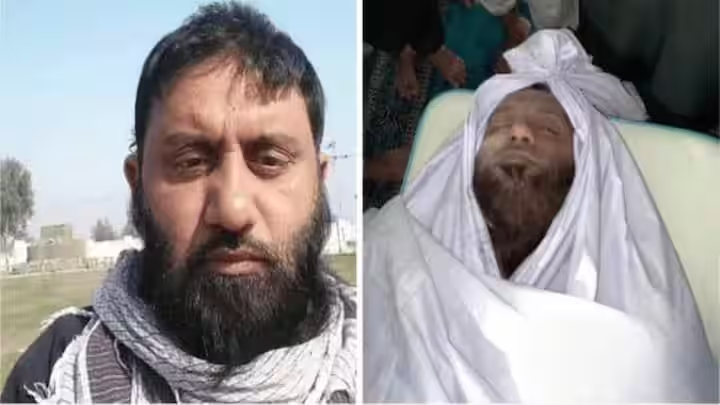
Karti Said Abdul Aziz Reportedly Collapses Outside Quba Mosque After Eating at an Unknown Location
Lashkar e Taiba (LeT) senior cadre Qari Said Abdul Aziz has reportedly died after suddenly collapsing outside a mosque in Islamabad, according to the information provided. The circumstances surrounding the death of the Lashkar-e-Taiba operative remain unclear, with no confirmed explanation for the cause of death available at the time of reporting. Reports surrounding the incident have raised questions about what may have led to the sudden death.
According to the report, Abdul Aziz had eaten at an unidentified location before travelling to Quba Mosque in Islamabad to offer prayers. He reportedly collapsed as he reached the mosque gate and subsequently died.
The reported death has drawn attention because of Abdul Aziz’s alleged position within Lashkar e Taiba and the nature of the responsibilities he was said to have handled for the organisation.

Table of Contents
Senior LeT Cadre Reportedly Dies Suddenly
According to the information available, Qari Said Abdul Aziz was associated with Lashkar e Taiba and held responsibility for a department that reportedly maintained contact with the families of LeT militants killed during encounters in Jammu and Kashmir.
His reported role involved communicating with the families of militants and providing assistance to them. Such responsibilities would place him within an organisational structure connected to the support and welfare of families associated with deceased members of the militant group.
The circumstances of his reported death, however, remain uncertain.
The report states that Abdul Aziz had eaten somewhere at an undisclosed location before travelling to the mosque. Shortly after reaching the entrance of Quba Mosque, he reportedly collapsed.
There has been no confirmed medical explanation in the supplied material regarding what caused his death. It therefore remains unclear whether the death was linked to a medical emergency, an underlying health condition or another circumstance.
Cause of Death Remains Unclear
The lack of clarity surrounding Abdul Aziz’s death has raised questions about the incident.
At present, the supplied information does not establish a definitive cause of death. No verified medical finding has been provided that would explain why he suddenly collapsed outside the mosque.
The circumstances are therefore being described as a suspected or unexplained death rather than as a confirmed assassination or poisoning.
This distinction is important because reports concerning militant figures can often generate speculation before official or independent investigations establish what actually happened.
Further information from Pakistani authorities, medical officials or other reliable sources would be required to determine the exact circumstances.
Incident Comes Amid Reports About ‘Unknown Gunmen’
The reported death comes against the backdrop of recent claims by a Lashkar e Taiba commander regarding the deaths of several members of the organisation in different Pakistani cities.
According to the material provided, a video involving LeT commander Hanif has circulated in which he claimed that more than 30 militants had been killed by what he described as “unknown gunmen” over the previous three to four years.
The claims have not been independently established in the material provided.
The commander reportedly alleged that Indian intelligence agencies were responsible for targeting members of the organisation, including individuals located in areas of Pakistan-administered Kashmir.
Such allegations represent the claims of the militant commander and should not be treated as independently verified evidence of responsibility for the reported deaths.
Claims of Killings Across Pakistani Cities
In the reported video, Hanif allegedly referred to incidents involving LeT members in several Pakistani cities.
The locations mentioned included Peshawar, Rawalpindi, Karachi, Muzaffarabad and Rawalakot.
The commander reportedly argued that the individuals targeted had been killed despite being associated with the militant organisation.
The claims have attracted attention because they suggest that senior or active members of the group may have faced security threats beyond the traditional areas associated with militant activity.
However, the available information does not establish whether the reported incidents were connected to one another or whether they have any connection with Abdul Aziz’s reported death in Islamabad.
No Confirmed Link Established Between the Incidents
The reported death of Abdul Aziz and the earlier allegations concerning “unknown gunmen” have emerged within a similar broader narrative, but there is currently no confirmed evidence in the supplied material establishing a direct connection between them.
Abdul Aziz’s reported death occurred after he allegedly collapsed at the entrance of Quba Mosque.
Meanwhile, the claims attributed to Hanif concern alleged killings of LeT members over a period of several years and across multiple locations.
Without verified investigative findings, it would be premature to conclude that the two developments are connected.
The circumstances surrounding Abdul Aziz’s death will therefore remain a key point of interest as further information emerges.
Who Was Qari Said Abdul Aziz?
The supplied material identifies Qari Said Abdul Aziz as a senior Lashkar e Taiba cadre who reportedly managed responsibilities involving families of militants killed in encounters in Jammu and Kashmir.
His alleged work involved maintaining contact with relatives and assisting families connected with deceased members of the organisation.
The nature of such responsibilities indicates that his position was reportedly linked to the organisational support structure surrounding militants and their families.
However, detailed information about his background, specific position within the group and operational activities is not provided in the supplied material.
Any additional claims about his activities would therefore require independent verification.
What Is Lashkar e Taiba?
Lashkar e Taiba, commonly abbreviated as LeT, is a Pakistan-based militant organisation that has been designated as a terrorist organisation by several governments and international authorities.
The group has been associated with militant activity focused particularly on Jammu and Kashmir and has been blamed for several major attacks.
According to the supplied material, Lashkar e Taiba was established in the late 1980s by Hafiz Muhammad Saeed and Abdullah Azzam.
The organisation has historically operated under different names and through associated structures, while its activities have attracted extensive international scrutiny.
Lashkar e Taiba has been linked to numerous militant attacks in India, including the 2008 Mumbai attacks.
The organisation’s leadership and activities have remained a major security concern for India and have also drawn attention from international counterterrorism agencies.
Why the Reported Death Is Significant
The reported death of a senior LeT cadre in Islamabad is significant primarily because of his alleged organisational position and the uncertainty surrounding the circumstances.
Islamabad is Pakistan’s capital and a heavily monitored political and administrative centre. An unexplained death involving a senior militant figure in the city can therefore attract considerable attention.
At the same time, the Lashkar e Taiba available information does not provide sufficient evidence to determine whether the death involved foul play.
The fact that Abdul Aziz reportedly collapsed suddenly outside a mosque makes the incident noteworthy, but the cause cannot be established solely from the circumstances described.
A medical examination or official investigation would be necessary to establish what happened.
Questions Remain Over the Circumstances
Several questions remain unanswered following the reported death.
It is unclear where Abdul Aziz ate before arriving at the mosque, Lashkar e Taiba what he consumed, whether he had any known medical conditions and whether he received medical assistance after collapsing.
The supplied material also does not provide details regarding an official investigation, post-mortem findings or statements from Pakistani authorities confirming the precise circumstances of the death.
These unanswered questions are likely to fuel speculation, particularly given the wider claims surrounding deaths of militant figures in Pakistan.
However, Lashkar e Taiba speculation should be distinguished from verified information until authorities or credible independent sources provide further evidence.
Broader Security Implications
The incident also comes amid continuing concerns surrounding militant networks operating in and around Pakistan.
The reported claims about “unknown gunmen” have added another layer to discussions about the security of militant leaders and cadres.
If independently established, a pattern of unexplained deaths involving senior militant figures could raise significant questions about security vulnerabilities within such organisations.
However, the available Lashkar e Taiba material does not provide enough evidence to establish such a pattern conclusively.
For now, Abdul Aziz’s reported death remains an unexplained incident, while the allegations Lashkar e Taiba surrounding other LeT members remain claims attributed to the group’s own leadership.
Investigation and Further Information Awaited
The next significant development will likely depend on whether Pakistani authorities or medical officials provide additional information about Abdul Aziz’s death.
Confirmation of the identity, circumstances and medical cause of death would be important in separating verified facts from speculation.
The reported incident has already attracted attention because of Abdul Aziz’s alleged role within Lashkar e Taiba and the wider claims concerning militant deaths in Pakistan.
For the moment, however, the cause of death remains unclear.
Any assessment of whether the incident involved natural causes, a medical emergency or deliberate action would require evidence that is not contained in the information currently available.
The reported death therefore remains a developing story, with several important questions still unanswered.