A heart attack is a medical emergency that occurs when blood flow to part of the heart becomes blocked. Recognising warning symptoms quickly can be critical because prompt treatment can reduce heart damage and improve the chances of recovery.
Although chest discomfort is the symptom most people associate with a heart attack, it is not the only possible warning sign. Symptoms can also involve the arms, back, neck, jaw or stomach, while some people experience breathlessness, sweating, nausea or dizziness.
It is also important to understand that symptoms vary from person to person. They may develop suddenly or may initially seem mild. Some people may even experience symptoms without the classic severe chest pain.
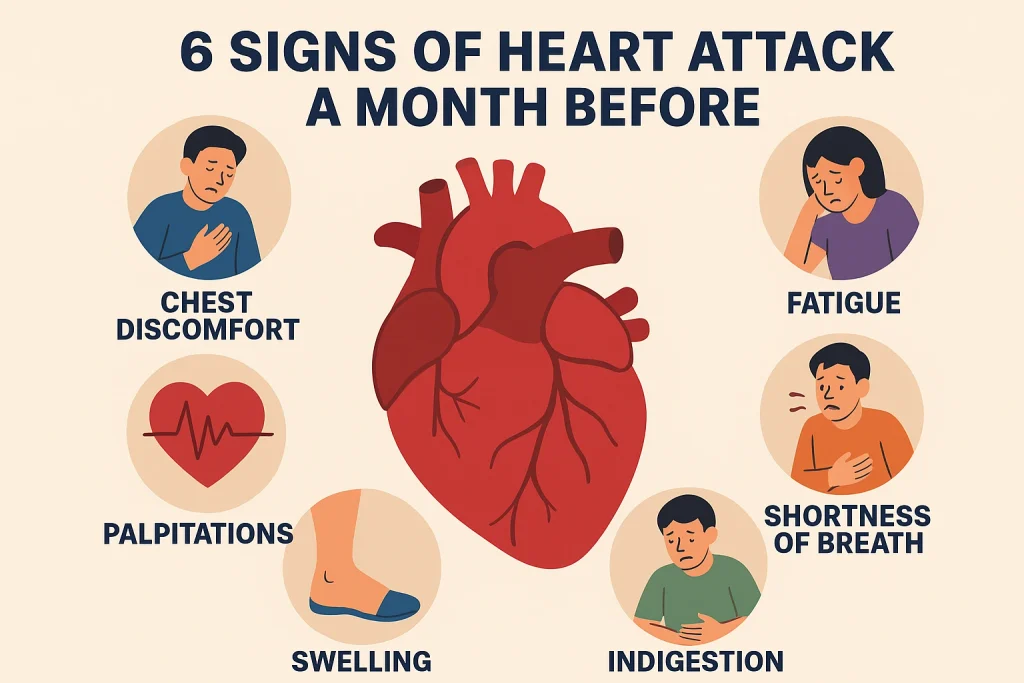
Here are six important body signals that can occur with a heart attack and should receive urgent medical attention.
Table of Contents
1. Chest Pressure, Tightness or Discomfort
One of the most recognised signs of a heart attack is discomfort in the centre of the chest.
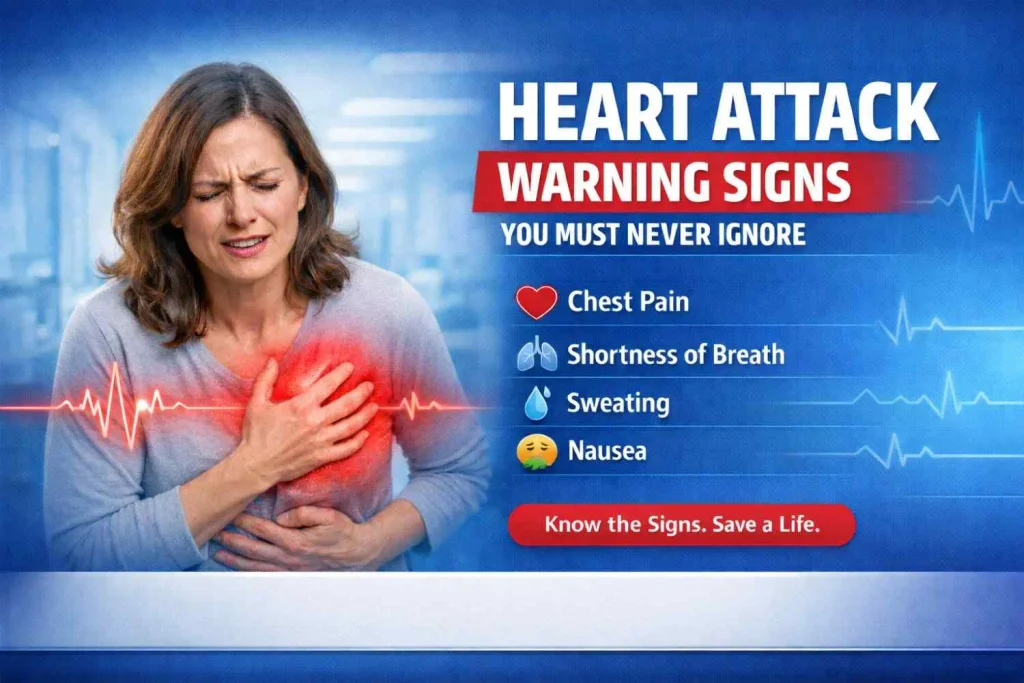
Rather than feeling like a sharp pain, the sensation may be described as pressure, squeezing, fullness, heaviness or tightness. According to the American Heart Association, the discomfort can last for several minutes or disappear and then return.
The NHS similarly describes heart-attack chest pain as potentially feeling like crushing or squeezing. It may also sometimes resemble indigestion or a burning sensation.
This is why unusual chest discomfort should not automatically be dismissed as acidity, indigestion or tiredness.
If chest pressure occurs together with other concerning symptoms, emergency medical attention should be sought immediately.
2. Pain or Discomfort Spreading to Other Parts of the Body
Another important warning signal is discomfort that extends beyond the chest.
During a heart attack, pain or discomfort can affect one or both arms and may also involve the shoulder, back, neck, jaw or stomach.
The pain does not necessarily remain concentrated in one location. Some people may notice discomfort in their back or jaw without experiencing obvious chest pain.
This can make the symptoms easier to overlook, particularly when someone assumes that jaw, shoulder or back discomfort has another explanation.
The NHS specifically notes that heart-attack symptoms can include pain spreading to the arms, neck, jaw, shoulders, stomach or back.
3. Sudden Shortness of Breath
Unexplained difficulty breathing is another significant symptom.
Shortness of breath can occur with or without chest discomfort during a heart attack.
Someone may suddenly feel unable to catch their breath or find that normal activity has unexpectedly become difficult.
Breathlessness can have many possible causes, so it does not automatically mean that a heart attack is occurring. However, sudden or unexplained breathlessness—especially when combined with chest discomfort, sweating, nausea, dizziness or pain elsewhere in the body—requires urgent attention.
The NHS lists shortness of breath among the main symptoms that can accompany a heart attack.
4. Cold Sweating
Breaking out into an unusual cold sweat can also accompany a heart attack.
Sweating may occur alongside chest discomfort, breathlessness, nausea or dizziness. The American Heart Association lists cold sweating among the other warning signs that can occur with a heart attack.
This can be different from ordinary sweating after exercise or exposure to hot weather. Unexpected sweating accompanied by other concerning symptoms should not simply be ignored.
The NHS also includes sweating among recognised heart-attack symptoms.
5. Nausea, Vomiting or Indigestion-Like Feelings
Digestive symptoms can sometimes make a heart attack difficult to recognise.
A person may experience nausea, vomiting, indigestion-like discomfort, burning in the chest or a feeling of fullness or bloating. The NHS includes nausea, vomiting and indigestion-like sensations among possible heart-attack symptoms.
Because these symptoms can resemble an ordinary stomach problem, people may delay seeking help.
However, digestive symptoms occurring together with chest pressure, breathlessness, sweating, dizziness or pain in the upper body should be treated seriously.
The American Heart Association also lists nausea among the recognised symptoms of acute coronary syndrome.
6. Dizziness, Lightheadedness or Unusual Weakness
Feeling suddenly lightheaded, dizzy or unusually weak can be another warning sign.
The American Heart Association includes lightheadedness among other possible symptoms of a heart attack.
A person may feel as though they could faint or may suddenly become extremely weak. These symptoms can have numerous causes, but when they appear alongside chest discomfort, shortness of breath, sweating or nausea, they should not be dismissed.
NHS guidance also identifies feeling lightheaded or dizzy among possible symptoms associated with heart-attack emergencies.
Symptoms May Not Look the Same for Everyone
A major misconception is that every heart attack begins with severe, unmistakable chest pain.
In reality, symptoms can vary considerably. The NHS notes that symptoms do not always feel severe, and some people can experience breathlessness, nausea or pain in the back or jaw without obvious chest pain.
The American Heart Association also highlights differences in how symptoms may present in women. Although chest pain or discomfort remains the most common symptom, women may also experience shortness of breath, nausea, unusual tiredness or weakness, anxiety, and pain involving the shoulder, back or arm.
This does not mean that symptoms can be reliably divided into “men’s” and “women’s” signs. Rather, it shows why people should be aware of the broader range of possible symptoms.
Why Early Recognition Matters
A heart attack happens when blood flow to the heart is blocked. Without adequate blood supply, the affected heart muscle can become damaged. Rapid medical treatment can reduce that damage and improve outcomes.
That is why waiting to see whether symptoms disappear can be dangerous.
Someone experiencing possible heart-attack symptoms should seek emergency medical help immediately rather than attempting to diagnose the problem at home.
Even if the symptoms eventually turn out to have another cause, urgent evaluation is safer than delaying care during a genuine cardiac emergency.
Heart Attack or Indigestion?
One reason people sometimes delay seeking help is confusion between cardiac symptoms and digestive discomfort.
A heart attack can sometimes cause burning, fullness or an indigestion-like sensation. At the same time, ordinary indigestion and heartburn can also cause chest discomfort.
Because the symptoms can overlap, it is not always possible to distinguish the causes based solely on how the sensation feels.
The American Heart Association advises taking possible heart-attack symptoms seriously, particularly when chest discomfort lasts several minutes, returns after going away, or occurs alongside breathlessness, sweating, nausea or discomfort elsewhere in the upper body.
What Should You Do If These Symptoms Appear?
If someone develops symptoms that could indicate a heart attack, the priority should be obtaining emergency medical assistance.
Do not rely on online information or attempt to determine the diagnosis yourself. Emergency medical professionals can assess the symptoms and begin appropriate care.
If symptoms are severe, sudden or involve chest pressure, difficulty breathing, faintness or pain spreading to the arm, jaw, back or neck, seek emergency help immediately.
It is particularly important not to drive yourself if you may be experiencing a heart attack. Emergency medical services can provide assessment and treatment while arranging urgent transport.
Not Every Warning Signal Means a Heart Attack
It is equally important not to assume that every episode of chest discomfort, nausea or dizziness represents a heart attack.
These symptoms can occur because of many other conditions, including digestive problems, anxiety, respiratory illnesses, muscle strain and other medical issues.
However, the overlap is precisely why potentially serious symptoms should be assessed rather than ignored.
A healthcare professional can determine whether the symptoms are cardiac or have another cause.
The Importance of Knowing the Warning Signs
Understanding the warning signs of a heart attack can help people recognise when a situation may require emergency care.
The six major signals discussed in this article are:
- Chest pressure, tightness or discomfort
- Pain or discomfort in the arm, back, neck, jaw or stomach
- Sudden shortness of breath
- Unexpected cold sweating
- Nausea, vomiting or indigestion-like discomfort
- Dizziness, lightheadedness or unusual weakness
These symptoms can occur individually or together, and their intensity can vary.
A heart attack does not always present in the dramatic way shown in movies or television. Symptoms can sometimes be subtle, develop gradually or appear in parts of the body other than the chest.
Chest pressure, pain spreading to the upper body, shortness of breath, cold sweating, nausea and dizziness are among the important warning signs recognised by major health authorities.
Recognising these signals is important, but the key message is simple: possible heart-attack symptoms should be treated as an emergency, not something to monitor at home.
If you or someone around you develops symptoms that could indicate a heart attack, seek emergency medical care immediately. Fast treatment can limit heart damage and may save a life.