

Tamil Nadu’s search for a new international airport to serve Chennai has entered a fresh phase after Chief Minister C Joseph Vijay’s government shortlisted Cheyyur in Chengalpattu district and Manellore near Gummidipoondi in Tiruvallur district as potential locations. The state has now approached the Airports Authority of India (AAI) for a pre-feasibility assessment of the two sites, bringing the proposed second airport back into active consideration after the controversial Parandur project was abandoned.
The latest development comes less than two weeks after the Vijay government formally dropped the proposed greenfield airport at Parandur, citing concerns over agricultural land, water bodies, livelihoods and the impact on local communities. The decision had ended years of planning around Parandur but also raised questions about how quickly Tamil Nadu could identify another location and move the airport project forward.
The selection of Cheyyur and Manellore marks an important shift. Rather than immediately committing to one location, the government is seeking technical assessments from the AAI before making a final decision. The two sites also represent markedly different geographical directions for Chennai’s future aviation network: Cheyyur lies south of the metropolitan region, while Manellore is in the northern part of the wider Chennai region.
Vijay Government Moves Quickly After Parandur Cancellation
The Parandur airport project had been planned as a major long-term aviation infrastructure project for Chennai. However, strong opposition from residents and farmers became one of the defining issues surrounding the proposal.
 On August 24, Vijay announced in the Tamil Nadu Assembly that the government would abandon the Parandur project. He maintained that Chennai still required a second airport because of increasing passenger traffic, industrial expansion and growing cargo requirements, but argued that the new facility should not come at the cost of large-scale disruption to agricultural communities.
The government subsequently indicated that alternative sites had already been identified and would undergo detailed technical scrutiny. The latest move to approach the AAI for a pre-feasibility study is therefore the next major step in that process.
The decision also reflects a balancing act for the new administration. On one hand, Chennai’s aviation infrastructure needs additional capacity. On the other, the experience at Parandur has demonstrated the political, environmental and social difficulties that can arise when a large airport is proposed over agricultural and inhabited areas.
Cheyyur Emerges as One of the Two Key Contenders
Cheyyur, in Chengalpattu district, is one of the two locations now under formal consideration.
The site is geographically different from Parandur and could potentially give the Chennai metropolitan region a stronger southern aviation option. According to reports based on the latest assessment process, the Cheyyur location is around 40 km from Puducherry airport and approximately 35 km from Kalpakkam, while its distance from the existing Chennai airport at Meenambakkam is close to 100 km.
However, the location is not without challenges.
One of the issues reportedly requiring detailed examination is airspace. Sources cited in recent reporting have indicated that the Cheyyur area could fall within airspace controlled by the Indian Air Force’s Tambaram establishment. If confirmed through technical studies, this could require additional coordination and approvals from the Ministry of Defence.
That makes the AAI’s pre-feasibility assessment particularly important. An airport site cannot be judged only by the availability of land. Airspace compatibility, flight paths, aviation safety, environmental conditions, road and rail connectivity and future expansion potential all have to be considered before a site can be approved.
Manellore Near Gummidipoondi Also Under Study
The second option is Manellore, near Gummidipoondi in Tiruvallur district, in northern Chennai’s wider metropolitan region.
Reports indicate that the Manellore site is around 50 km from Chennai and approximately 35 km from Sriharikota.
Its northern location could give the proposed airport a different strategic catchment area from Cheyyur. The region is also connected to important industrial and logistics corridors, making accessibility and freight potential important factors that authorities are likely to examine.
At the same time, the Manellore proposal will need detailed scrutiny on land availability, existing settlements, transport connectivity and aviation-related restrictions. The proximity of Sriharikota and other aviation and aerospace-related infrastructure also means that technical and airspace considerations will be significant.
The state is therefore not treating either site as a final choice yet. The purpose of the AAI study is to establish whether either location can realistically support a large-scale airport.
Why the AAI Pre-Feasibility Study Matters
The AAI’s assessment could determine whether Cheyyur or Manellore can move to the next stage.
A pre-feasibility study generally examines the fundamental suitability of a location before a project advances into much more detailed planning. For a major airport, this can involve assessing factors such as land characteristics, obstacles around the proposed airport, airspace requirements, approach and departure paths, connectivity, environmental constraints and the possibility of expanding the facility over the long term.
The Tamil Nadu Industrial Development Corporation has already conducted initial inspections of the two locations, according to reports. An AAI team is expected to examine the sites and subsequently prepare its assessment.
This process is significant because the Parandur experience showed the consequences of moving forward with a site that subsequently faced intense public and environmental opposition.
For the Vijay government, the challenge will be to ensure that the next site is technically viable while also avoiding the social and ecological difficulties that contributed to the cancellation of Parandur.
Why Parandur Was Dropped
The Parandur project had been conceived as a major greenfield airport capable of serving Chennai’s long-term aviation requirements. The proposed development covered thousands of acres across multiple villages and was expected to become a major infrastructure and economic hub.
However, farmers and residents strongly opposed the project, particularly because of the proposed acquisition of agricultural land and concerns about displacement.
Environmental concerns also became central to the debate. The area contained several water bodies and wetlands, with government and political statements differing over the extent of the environmental and technical challenges.
The Vijay government ultimately argued that proceeding with the project at Parandur would have placed an unacceptable burden on farmers and local residents. The Chief Minister said the alternative airport should be located where agricultural land and human settlements would be affected as little as possible.
The decision was welcomed by residents who had campaigned against the project for years. For them, abandoning Parandur represented a major victory after prolonged protests.
 The Earlier Search for Chennai’s Second Airport
Chennai’s search for a second airport is not new.
The idea has been discussed for decades as the city’s existing airport at Meenambakkam has faced growing passenger and cargo demand. Earlier proposals included locations around Sriperumbudur, while a later site-selection exercise examined several alternatives.
When the Parandur proposal was developed, Pannur, Padalam, Tiruporur and Parandur were among the locations considered. Parandur was eventually selected by the previous government after technical and administrative evaluations.
The emergence of Cheyyur and Manellore therefore represents another chapter in a search that has repeatedly been complicated by land acquisition, environmental considerations, connectivity and aviation requirements.
Recent reporting has also noted that Cheyyur and Gummidipoondi were among a larger group of locations considered during earlier stages of the airport search, although they did not become part of the final four-site shortlist at that time.
Existing Chennai Airport to Get More Capacity
The search for a second airport does not mean the government is waiting for a new facility before addressing Chennai’s immediate aviation requirements.
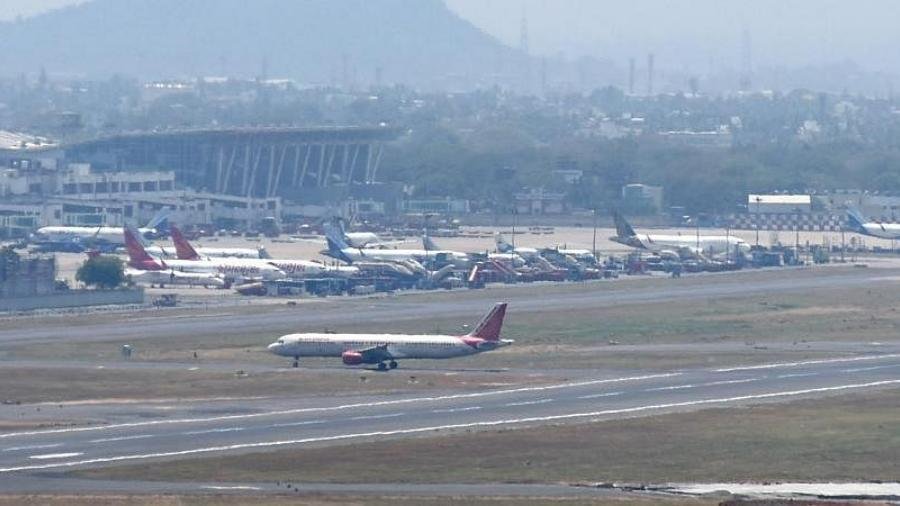
The Vijay government has also proposed expanding the existing Chennai International Airport at Meenambakkam. The Chief Minister said the airport currently handles around 30 million passengers annually and that ongoing and proposed terminal works could substantially increase its capacity.
According to the government’s announcement, the completion of the ongoing third-terminal work would raise capacity to about 35 million passengers annually, while further expansion could take the airport’s overall capacity to approximately 55 million passengers a year.
This expansion is intended to provide breathing room while the state works through the much longer process of selecting, approving and constructing a second airport.
Why Chennai Still Needs a Second Airport
The central question behind the entire debate is whether Chennai needs another airport at all. State authorities and industry representatives have consistently argued that it does.
Chennai is one of India’s major industrial and manufacturing centres, with strong automotive, electronics, technology and services sectors. Its wider metropolitan and industrial belt generates significant demand for both passenger and cargo connectivity.
A second airport could help distribute aviation traffic, improve regional connectivity and provide additional capacity for future industrial expansion.
Industry representatives have also previously argued that Chennai could require a second airport within the next five to 10 years as passenger and cargo demand increases.
The issue is therefore not simply about building another passenger terminal. The airport is expected to form part of a larger transport and economic network involving highways, railways, logistics facilities and industrial corridors.
Political Battle Over the Parandur Decision
The cancellation of Parandur has also generated a political dispute.
Former Chief Minister and DMK leader M K Stalin criticised the Vijay government’s decision, calling it a setback to Tamil Nadu’s economic ambitions. He argued that Parandur had already undergone extensive planning, land acquisition and preparatory work and warned that starting the site-selection process again could delay the airport by several years.
Other political voices similarly warned that changing the site could significantly extend the timeline because a new location would have to pass through feasibility studies, approvals, land acquisition, tendering and construction.
The Vijay government, however, has maintained that development cannot be pursued at the cost of farmers and residents and that the new location must be selected on the basis of technical feasibility and public acceptance.
A Fresh Test for Vijay’s Infrastructure Strategy
The choice between Cheyyur and Manellore will ultimately be decided by technical evidence rather than political preference.
The government faces several competing requirements. The new airport must be large enough to support Chennai’s long-term growth, but it should also have adequate transport connectivity and room for expansion. At the same time, authorities will need to minimise agricultural displacement, avoid major settlements and address environmental concerns from the beginning.
Airspace restrictions could become another decisive factor, particularly if the Cheyyur site requires coordination with defence authorities.
The Manellore option, meanwhile, will have to demonstrate that it can provide efficient access to Chennai’s population centres while supporting the city’s industrial and cargo requirements.
 What Happens Next?
The immediate next step is the AAI’s pre-feasibility study of Cheyyur and Manellore. The assessment will help determine whether either site is technically suitable for development as Chennai’s second airport.
Once the technical evaluation is completed, the state will have to decide whether to proceed with one of the two locations or continue searching if neither meets the required criteria.
A final selection would then be followed by a much longer chain of approvals, detailed planning, environmental and aviation clearances, land-related procedures and construction.
That means the latest shortlist is an important milestone, but it is not yet a final decision on where Chennai’s second airport will be built.
Chennai’s Airport Search Enters a New Chapter
For now, the answer to the question of where Chennai’s second airport will come up remains open. Cheyyur and Manellore are the two latest contenders, and the AAI’s technical assessment will be crucial in determining which, if either, can move forward.
The Parandur experience has also changed the terms of the debate. The next airport is expected to balance economic growth with environmental responsibility, aviation safety and the interests of local communities.
For Chennai, the stakes are high. The existing Meenambakkam airport can be expanded to address immediate demand, but the city’s long-term aviation requirements will require a new facility. The challenge for the Vijay government is now to find a site that can deliver that capacity without repeating the social and environmental conflicts that ultimately brought the Parandur project to an end.