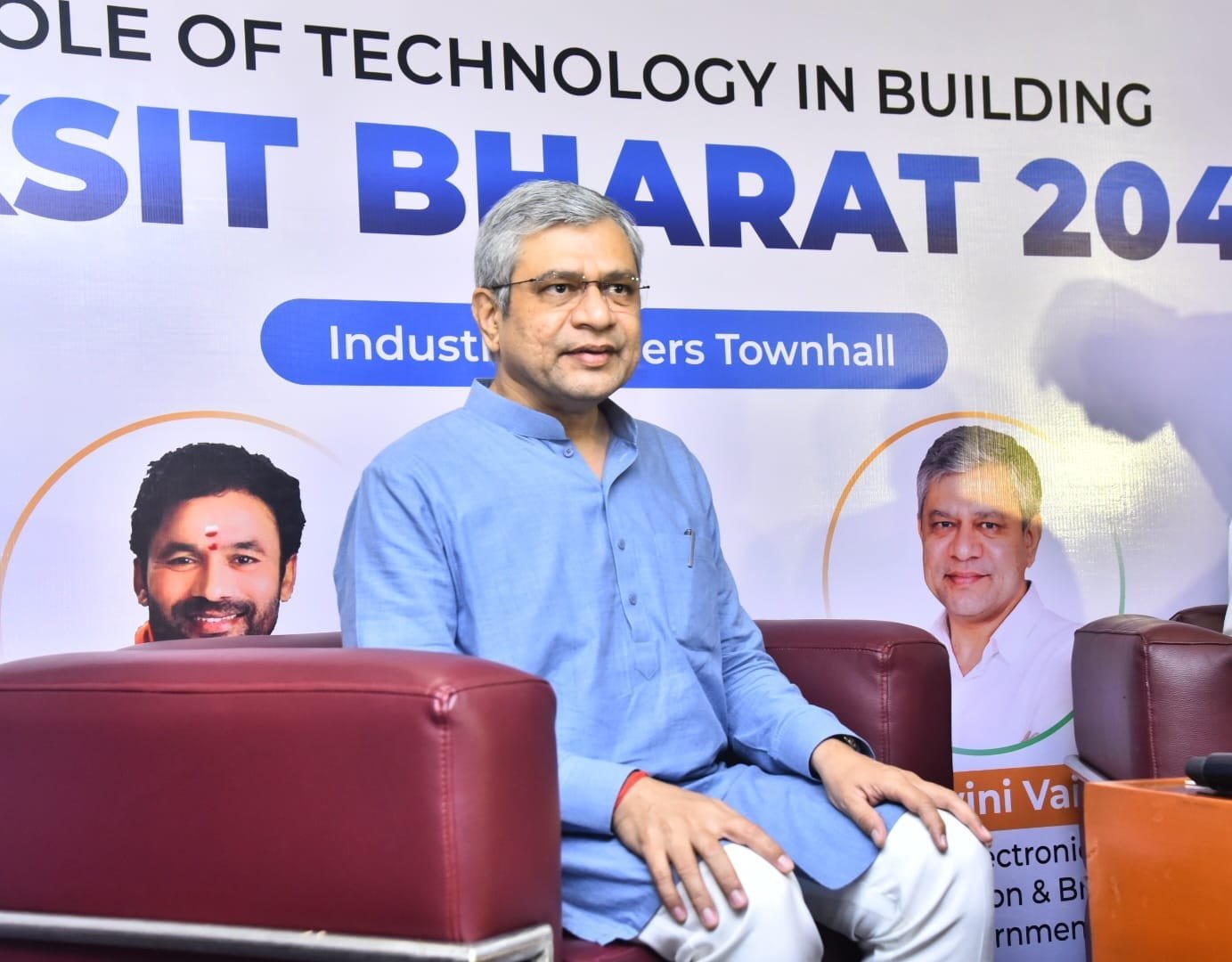
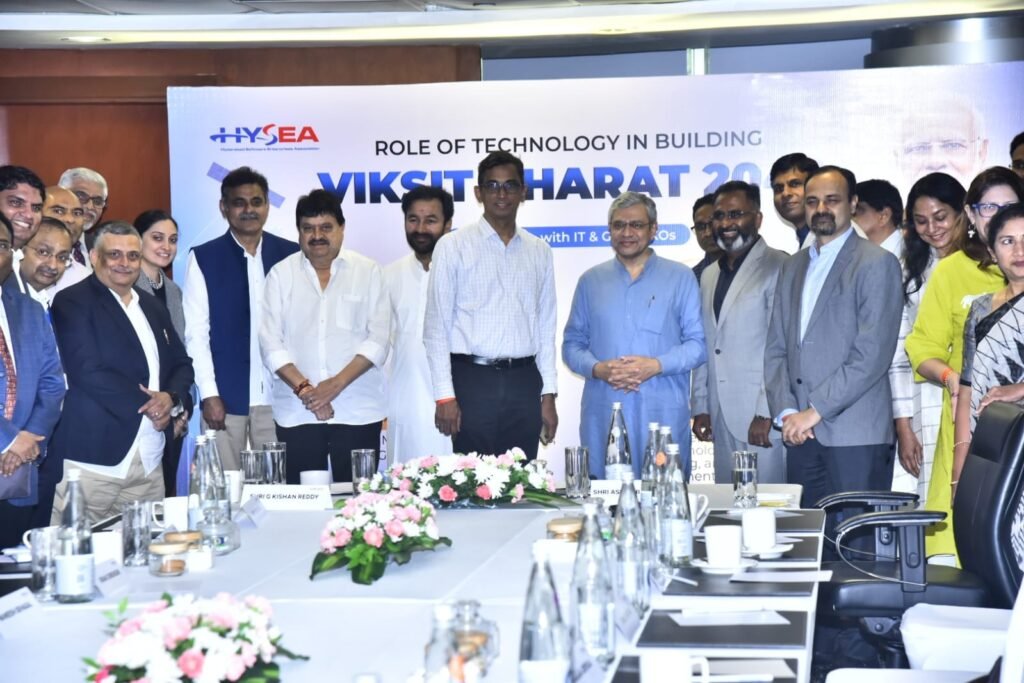
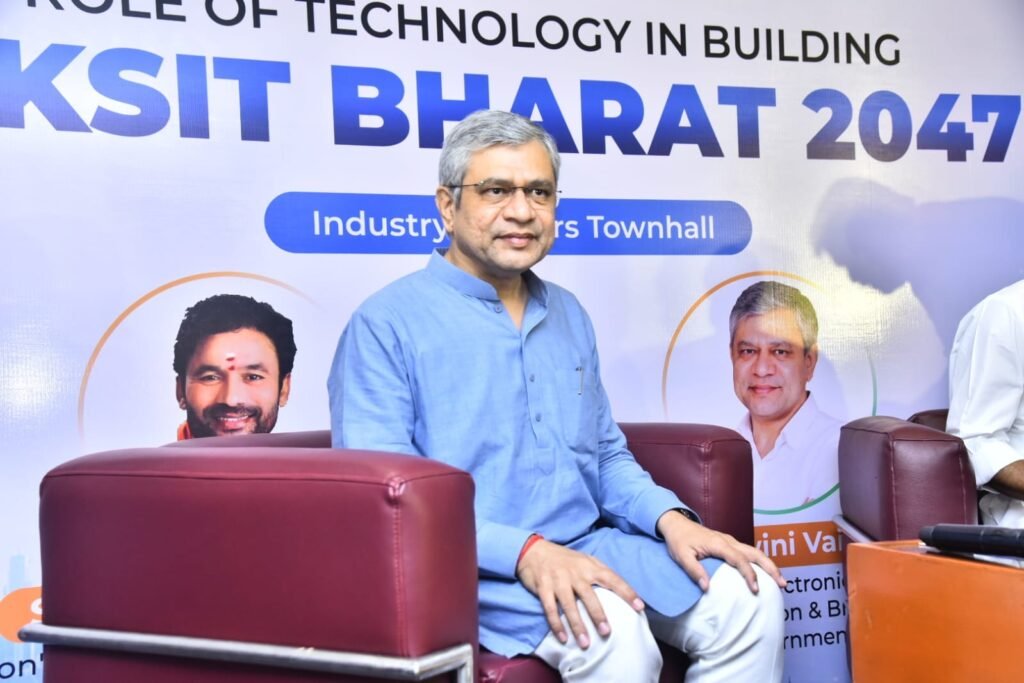
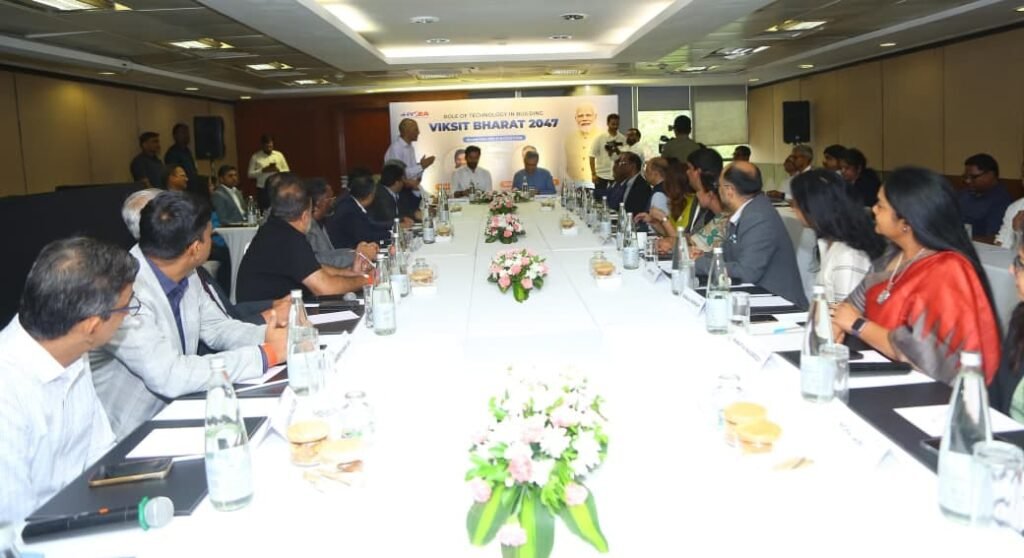
India’s ambition of becoming a developed Viksit Bharat 2047 received another significant push as Union Minister for Electronics and Information Technology Ashwini Vaishnaw outlined a technology-focused roadmap during his interaction with industry leaders in Hyderabad. Addressing a gathering at the Hyderabad International Convention Centre (HICC), the minister emphasized that emerging technologies such as Artificial Intelligence (AI), semiconductors, electronics manufacturing and digital infrastructure will play a defining role in achieving the vision of Viksit Bharat.
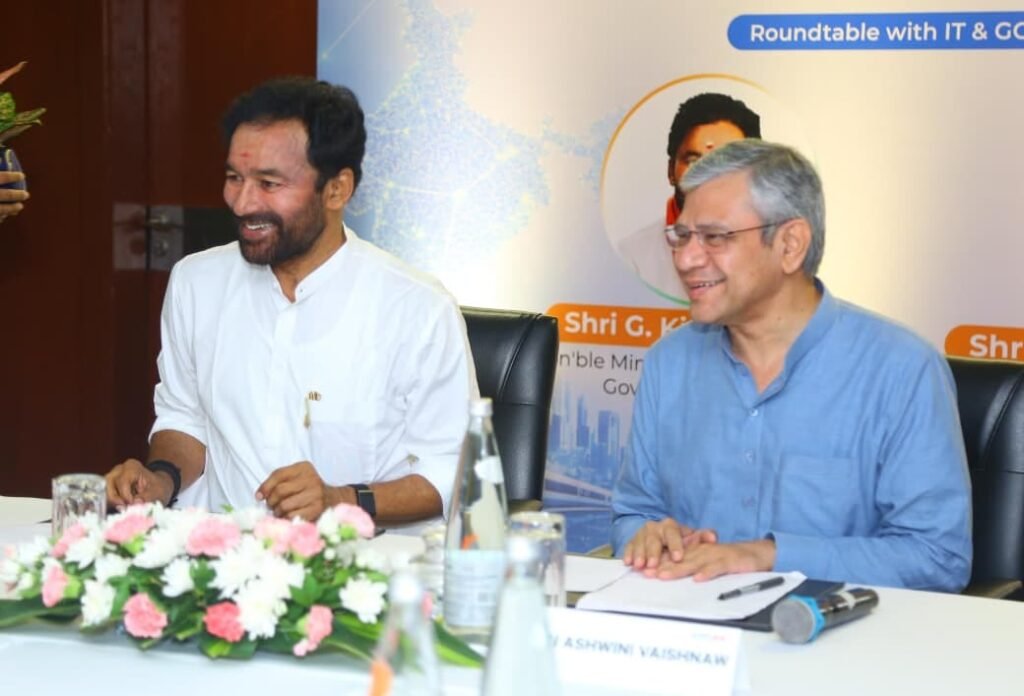
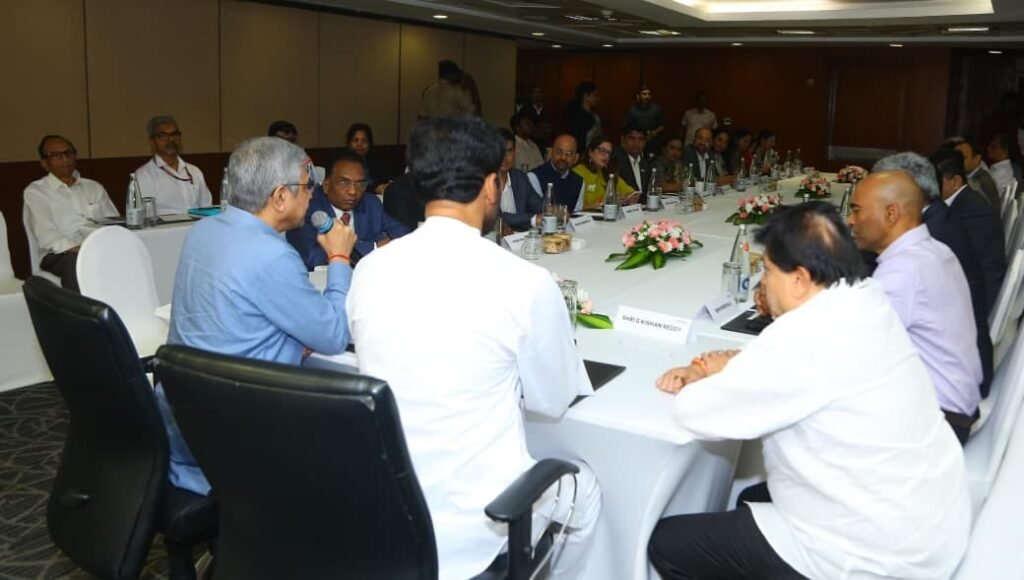
The discussion, held as part of his one-day visit to Hyderabad, brought together leading representatives from the technology industry, academia and policymakers to explore how innovation can accelerate India’s transformation into a global technology powerhouse. Union Minister for Coal and Mines G. Kishan Reddy also participated in the interaction, highlighting the importance of collaboration between the government and private sector in shaping India’s technological future.
The session focused on practical strategies to strengthen India’s innovation ecosystem, improve industry-academia partnerships, expand computing infrastructure and prepare a highly skilled workforce capable of supporting the goals of Viksit Bharat by 2047.
Table of Contents
Technology Becoming the Foundation of Viksit Bharat
Speaking to industry leaders, Ashwini Vaishnaw stressed that the pace of technological change is faster than ever before. Artificial Intelligence, he noted, is reshaping industries across the world, influencing everything from software development and manufacturing to healthcare, education and public services.
According to the minister, countries that adapt quickly to these technological shifts will enjoy stronger economic growth and greater global competitiveness. For India, this means investing continuously in innovation while ensuring that businesses, educational institutions and government agencies remain prepared for rapidly evolving technologies.
He encouraged the Indian IT industry to seize this opportunity by developing next-generation digital solutions that can serve both domestic and international markets. Such innovation, he said, is essential for strengthening India’s position as a trusted global technology leader while advancing the broader objectives of Viksit Bharat.
Artificial Intelligence Emerging as a Growth Engine
Artificial Intelligence occupied a central place in the discussions. The minister described AI as one of the biggest technological transformations of the current decade, with the potential to significantly improve productivity, automation and decision-making across multiple sectors.
Rather than viewing AI solely as an automation tool, industry leaders discussed how India can develop indigenous AI models, enterprise applications and sector-specific solutions tailored to Indian needs.
Ashwini Vaishnaw underlined that continuous learning and adaptation will be critical as AI technologies evolve rapidly. Companies, educational institutions and professionals must regularly upgrade their knowledge and skills to remain competitive.
He also assured industry representatives that India would continue expanding its compute capacity, recognizing that advanced AI development depends heavily on high-performance computing infrastructure capable of handling massive datasets and complex algorithms.
As AI applications continue to grow across sectors including healthcare, agriculture, manufacturing, finance and governance, expanding digital infrastructure becomes an important pillar in achieving Viksit Bharat.
Stronger Industry-Academia Partnerships
One of the key themes emerging from the interaction was the need to reduce the gap between classroom education and industry requirements.
Ashwini Vaishnaw urged technology companies to work closely with educational institutions to update curricula in line with changing industry demands. He pointed out that many graduates possess theoretical knowledge but require additional practical training before entering the workforce.
To illustrate successful collaboration, the minister referred to the partnership between Airbus and Gati Shakti Vishwavidyalaya (GSV). Through curriculum alignment and industry participation, students receive training that matches real-world engineering requirements, enabling companies to recruit graduates with job-ready skills.
Such partnerships, he suggested, should become more common across engineering, electronics, semiconductor design and emerging technology disciplines.
As India aims to build a globally competitive workforce under Viksit Bharat, closer engagement between universities and industry will become increasingly important.
Proposal for Sector-Specific Data Trusts
Industry leaders proposed establishing sector-specific data trusts within Indian educational institutions, an idea that received a positive response from the government.
Ashwini Vaishnaw welcomed the proposal and suggested launching a pilot project at IIT Hyderabad.
Under the proposed framework, data trusts would securely store high-quality Indian datasets relating to different industries such as healthcare, agriculture, manufacturing, mobility and financial services.
These datasets would operate under clearly defined usage policies to ensure responsible access by startups, researchers, academic institutions and technology companies.
Reliable datasets are widely considered one of the most important resources for developing advanced AI models. Since AI systems learn from data, access to diverse and well-managed datasets significantly improves innovation while ensuring responsible and ethical use.
The proposed initiative could therefore become an important component of India’s AI ecosystem while supporting long-term innovation under Viksit Bharat.
Semiconductor Ecosystem Continues to Expand
Semiconductor development has become another strategic priority for India, and the minister highlighted several initiatives already underway.
Ashwini Vaishnaw revealed that 315 universities across the country have been equipped with advanced Electronic Design Automation (EDA) software. These sophisticated tools allow students to design semiconductor chips using the same platforms employed by leading global chip manufacturers.
Importantly, the learning process does not stop at chip design.
Students also gain practical experience by having their chip designs fabricated at the Semiconductor Laboratory (SCL) in Mohali. This enables aspiring engineers to understand the complete semiconductor development cycle, including design, fabrication, testing and validation.
This initiative addresses one of the biggest challenges facing the global semiconductor industry—the shortage of highly trained chip designers and engineers.
As demand for semiconductors continues to rise across industries including smartphones, electric vehicles, defence systems, artificial intelligence and consumer electronics, India’s growing talent pool could strengthen its role in the global semiconductor supply chain.
The expansion of semiconductor education also aligns with the larger objectives of Viksit Bharat by promoting high-value manufacturing and advanced technological capabilities.
Electronics Manufacturing Achieves Historic Growth
During the interaction, Ashwini Vaishnaw also highlighted India’s remarkable progress in electronics manufacturing.
According to the minister, electronics production has now crossed ₹13 lakh crore while maintaining double-digit compound annual growth.
This rapid expansion reflects the combined impact of government initiatives, infrastructure development, policy reforms and increasing private investment.
India has emerged as one of the world’s fastest-growing electronics manufacturing destinations, attracting investments across mobile phones, consumer electronics, telecom equipment and semiconductor-related industries.
The minister further noted that electronics has become India’s third-largest export category, demonstrating the country’s growing competitiveness in international markets.
Perhaps even more significantly, mobile phones have become India’s single largest individual export product, marking a major transformation from a country that was once heavily dependent on electronics imports.
The growth of electronics manufacturing contributes directly to employment generation, export earnings, technological advancement and industrial development—all essential elements of Viksit Bharat.
Building a Globally Competitive Digital Economy
The interaction extended beyond individual sectors to focus on India’s broader digital transformation.
Industry leaders shared perspectives on strengthening digital infrastructure, encouraging innovation, supporting startups and expanding emerging technologies across the economy.
Participants discussed how government policies can create an environment where innovation flourishes while ensuring that India remains globally competitive in rapidly evolving technologies.
Digital infrastructure—including cloud computing, high-speed connectivity, AI computing resources and semiconductor manufacturing—is increasingly viewed as critical national infrastructure.
Strengthening these capabilities allows businesses to innovate more rapidly while enabling public services, research institutions and educational organizations to benefit from advanced technologies.
The discussions also reflected growing recognition that achieving Viksit Bharat will require coordinated efforts across government, industry, startups, academia and research institutions.
Government and Industry Collaboration at the Core of Viksit Bharat
A recurring message throughout the interaction was that technological leadership cannot be achieved through government action alone.
Instead, sustained collaboration between policymakers, technology companies, universities and research organizations will determine India’s ability to compete globally in AI, semiconductors, electronics manufacturing and digital innovation.
The Hyderabad interaction provided a platform for industry leaders to share practical recommendations while allowing the government to gather feedback on policy priorities and future initiatives.
As India continues investing in advanced technologies, expanding manufacturing capabilities and developing a skilled workforce, initiatives such as stronger industry-academia collaboration, secure data ecosystems, semiconductor education and AI infrastructure are expected to play an increasingly important role in advancing the long-term vision of Viksit Bharat by 2047.