

Traditional Knowledge has become a central pillar of India and Australia’s growing cooperation on intellectual property rights after the two countries signed a landmark agreement that will help protect centuries-old indigenous wisdom from being wrongly patented. The agreement, signed between the Council of Scientific and Industrial Research (CSIR) and IP Australia during the third India–Australia Annual Summit in Melbourne on July 9, marks a significant step in strengthening global efforts to safeguard traditional heritage while improving the quality of patent examinations.
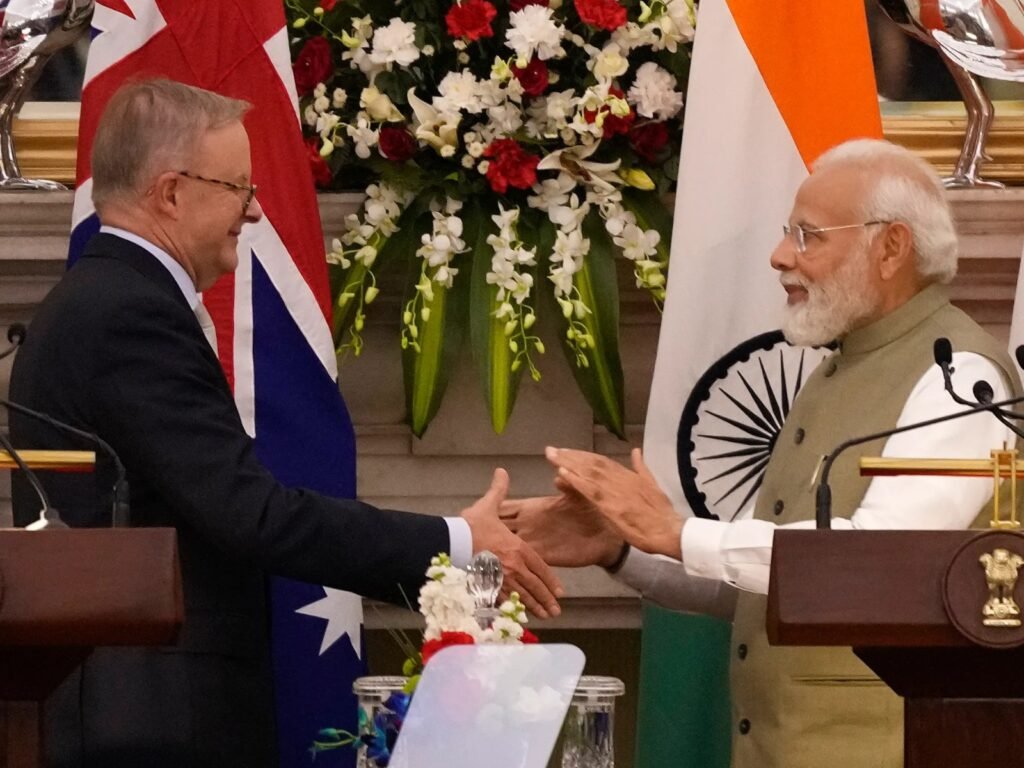
The agreement was signed in the presence of Prime Minister Narendra Modi and Australian Prime Minister Anthony Albanese and was included among the 18 major outcomes of the bilateral summit. Alongside discussions on defence, energy, education, science and technology, skill development, film-making and cultural cooperation, the protection of Traditional Knowledge emerged as an important area of collaboration, reflecting the increasing international recognition of indigenous knowledge systems.
Table of Contents
Why Traditional Knowledge Matters
Traditional Knowledge refers to the skills, practices, medicinal systems, agricultural methods and cultural wisdom that have been developed and preserved by communities over generations. Unlike modern scientific discoveries that are usually documented through research papers or patents, Traditional Knowledge has often been passed down orally or through ancient texts.
India possesses one of the world’s richest collections of Traditional Knowledge, covering systems such as Ayurveda, Unani, Siddha, Sowa Rigpa and Yoga. These practices have evolved over thousands of years and continue to influence healthcare, wellness and sustainable living across the globe.
However, the growing commercial value of herbal medicines, natural remedies and wellness products has also increased the risk of companies or individuals attempting to obtain patents on knowledge that has existed for centuries. Such cases not only undermine the rights of traditional communities but also create legal and ethical challenges for patent offices worldwide.

The Role of the Traditional Knowledge Digital Library
To address this issue, India created the Traditional Knowledge Digital Library (TKDL), a pioneering initiative developed by the Council of Scientific and Industrial Research in collaboration with the Ministry of AYUSH. Established in 2001, the database was designed specifically to prevent the wrongful patenting of India’s traditional medicinal and cultural knowledge.
The Traditional Knowledge Digital Library serves as a comprehensive repository containing documented evidence of traditional formulations, therapies and practices. By presenting this information in a format that patent examiners can easily understand, the database enables them to identify “prior art” before granting patents.
In patent law, prior art refers to evidence showing that an invention or idea already exists. If a patent application is found to cover knowledge that has already been documented in the Traditional Knowledge Digital Library, the application can be rejected or modified, ensuring that existing Traditional Knowledge remains part of the public domain rather than becoming private intellectual property.
What the India-Australia Agreement Means
Under the newly signed agreement, IP Australia will receive access to the Traditional Knowledge Digital Library to assist its patent examiners while evaluating patent applications under Australia’s patent laws.
This access allows Australian patent officials to verify whether an invention involving traditional medicine, herbal formulations or indigenous practices is genuinely new or is already part of India’s documented Traditional Knowledge. If relevant evidence is found in the database, examiners can use it as prior art during the patent assessment process.
The arrangement is expected to make patent examinations more accurate, transparent and efficient while reducing the likelihood of patents being granted on knowledge that belongs to traditional communities.
Rather than creating new intellectual property rights, the agreement strengthens the defensive protection of Traditional Knowledge by ensuring that existing heritage cannot be claimed as a new invention by private entities.
A Shared Commitment to Indigenous Heritage
India and Australia may differ geographically, but both countries possess rich indigenous traditions that have shaped their cultures for centuries. Indigenous communities in both nations have preserved valuable knowledge related to medicine, biodiversity, agriculture, environmental conservation and sustainable living.
Many of these practices remain vulnerable to commercial exploitation if they are not properly documented or recognised within modern intellectual property systems.
The agreement demonstrates that both governments recognise the importance of balancing innovation with respect for cultural heritage. It also reflects a broader international effort to ensure that indigenous communities receive recognition for their contributions while preventing the misuse of their Traditional Knowledge.
Government officials described the agreement as a shared commitment to strengthening intellectual property systems through the effective use of documented prior art while protecting valuable traditional resources.
A Database Built for Global Patent Offices
One of the strongest features of the Traditional Knowledge Digital Library is its accessibility for international patent authorities. The database contains more than 5.2 lakh documented formulations and practices drawn from Ayurveda, Unani, Siddha, Sowa Rigpa and Yoga.
To make the information useful across different jurisdictions, the material has been translated into multiple international languages, including English, German, French, Japanese and Spanish. This multilingual approach enables patent examiners around the world to review traditional medicinal knowledge without language barriers.
The database bridges the gap between ancient manuscripts and modern patent examination systems by converting centuries-old knowledge into internationally recognised technical classifications.
As a result, patent offices can quickly verify whether an application relates to genuinely new research or simply reproduces existing Traditional Knowledge.

Growing International Recognition
The agreement with IP Australia represents another milestone in the international acceptance of India’s Traditional Knowledge protection framework.
With Australia joining the initiative, 18 patent offices worldwide now have access to the Traditional Knowledge Digital Library under Non-Disclosure Agreements (NDAs). These agreements ensure that the database is used solely for patent examination purposes while maintaining the confidentiality of the information.
The growing number of participating patent offices reflects increasing confidence in India’s approach to protecting Traditional Knowledge through documentation rather than litigation.
As more countries gain access to the database, the chances of wrongful patent approvals continue to decline, benefiting both indigenous communities and the global intellectual property system.
A Proven Record of Protecting Traditional Knowledge
The effectiveness of the Traditional Knowledge Digital Library is already evident from its track record.
According to the government, evidence from the database has contributed to more than 375 patent applications worldwide being revoked, rejected, amended, withdrawn or abandoned after patent examiners identified existing Traditional Knowledge as prior art.
These outcomes demonstrate how proper documentation can prevent costly legal disputes while protecting the rights of communities that have preserved traditional practices for generations.
In several well-known cases over the past two decades, patents involving medicinal plants, herbal remedies and traditional healing methods were successfully challenged because evidence from the Traditional Knowledge Digital Library showed that the claimed inventions were not new.
This approach has positioned India as a global leader in the defensive protection of Traditional Knowledge, offering a practical model that other countries can adopt to safeguard their own indigenous heritage.
Officials Leading the Implementation
The implementation of the agreement will be jointly overseen by Andrew Wilkinson, Commissioner of Patents at IP Australia; Dr. N. Kalaiselvi, Director General of CSIR and Secretary of the Department of Scientific and Industrial Research (DSIR); and Dr. Viswajanani J. Sattigeri, Scientist-H and Head of the CSIR-TKDL Unit.
Their collaboration will ensure that the database is effectively integrated into Australia’s patent examination process while supporting continued cooperation between both countries in intellectual property management.
The partnership also opens new opportunities for future collaboration in research, innovation, documentation and policy development related to Traditional Knowledge. By combining India’s extensive experience in preserving traditional heritage with Australia’s commitment to strengthening patent examination standards, both countries are laying the foundation for a more transparent and responsible global intellectual property system that respects innovation while safeguarding centuries-old Traditional Knowledge.