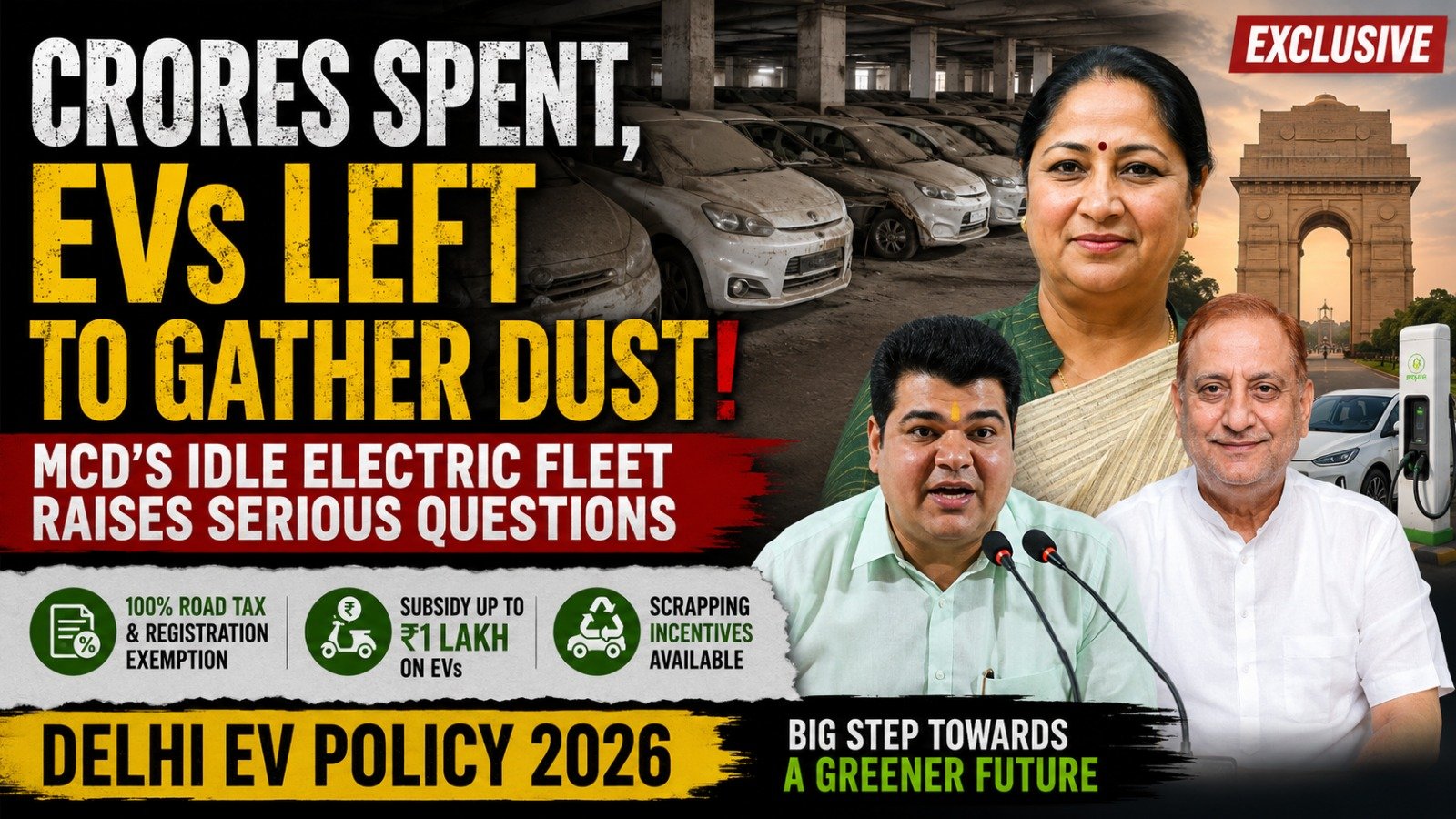
New Delhi: At a time when the Delhi Government has launched an ambitious new Electric Vehicles (EV) Policy to accelerate the adoption of clean mobility and reduce air pollution, a contrasting picture has emerged from the Municipal Corporation of Delhi (MCD). More than 70 electric vehicles, purchased at a cost of several crores of rupees to promote sustainable transportation, have reportedly remained parked and unused for years at the MCD headquarters.
The situation has raised serious questions about administrative efficiency, maintenance of public assets, and the effective utilization of taxpayers’ money.
Table of Contents
EV Fleet Purchased to Reduce Pollution
The electric vehicles were procured as part of Delhi’s broader effort to reduce vehicular emissions and decrease dependence on petrol and diesel-powered transport. The plan envisioned that MCD officials and employees would use these electric vehicles for official duties, thereby lowering fuel expenses while contributing to cleaner air.
Charging infrastructure was also established to support the operation of the Electric Vehicles fleet. However, the intended objective has largely remained unfulfilled.
Today, many of these vehicles can be seen parked inside the MCD headquarters’ basement and parking areas, covered in dust, with visible signs of prolonged disuse. Meanwhile, several officials continue to commute using petrol and diesel-powered vehicles.
Contractual Dispute Behind the Standstill
According to available information, during 2017-18, the MCD entered into an agreement with Energy Efficiency Services Limited (EESL) for the deployment of more than 80 electric vehicles.
Under the agreement, ownership of the vehicles was expected to be transferred to the MCD after 2024. However, before the transfer could take place, a dispute reportedly arose between the corporation and the service provider over payments and rental charges.
Following the expiry of the contract in 2024, ownership issues remained unresolved. As a result, the vehicles have remained parked at the MCD headquarters, with no significant progress in bringing them back into service.
Mayor Orders Investigation
When questioned about the matter, the Delhi Mayor stated that the issue has come to her notice and an inquiry has been initiated.
According to the Mayor, several vehicles have developed battery failures, while others are suffering from technical defects, preventing them from being put back on the road.
She further stated that the condition of every vehicle will be assessed, and appropriate action will be taken wherever negligence or accountability is established.
BJP’s Response
Responding to the controversy, BJP leader Pravesh Vahi said that the vehicles were operational initially, but the agreement under which they had been deployed contained several irregularities.

He claimed that the rental charges under the contract were excessively high, resulting in financial losses for the municipal corporation. According to him, the previous administration failed to address these issues. He added that the current administration has initiated action to terminate the earlier arrangement and is working on a new agreement, while also acknowledging that several vehicles are no longer in working condition.
AAP Demands Accountability
Reacting to the issue, Aam Aadmi Party leader Ankush Narang questioned whether those responsible for procuring the vehicles and approving the agreement would be held accountable if any wrongdoing is established.
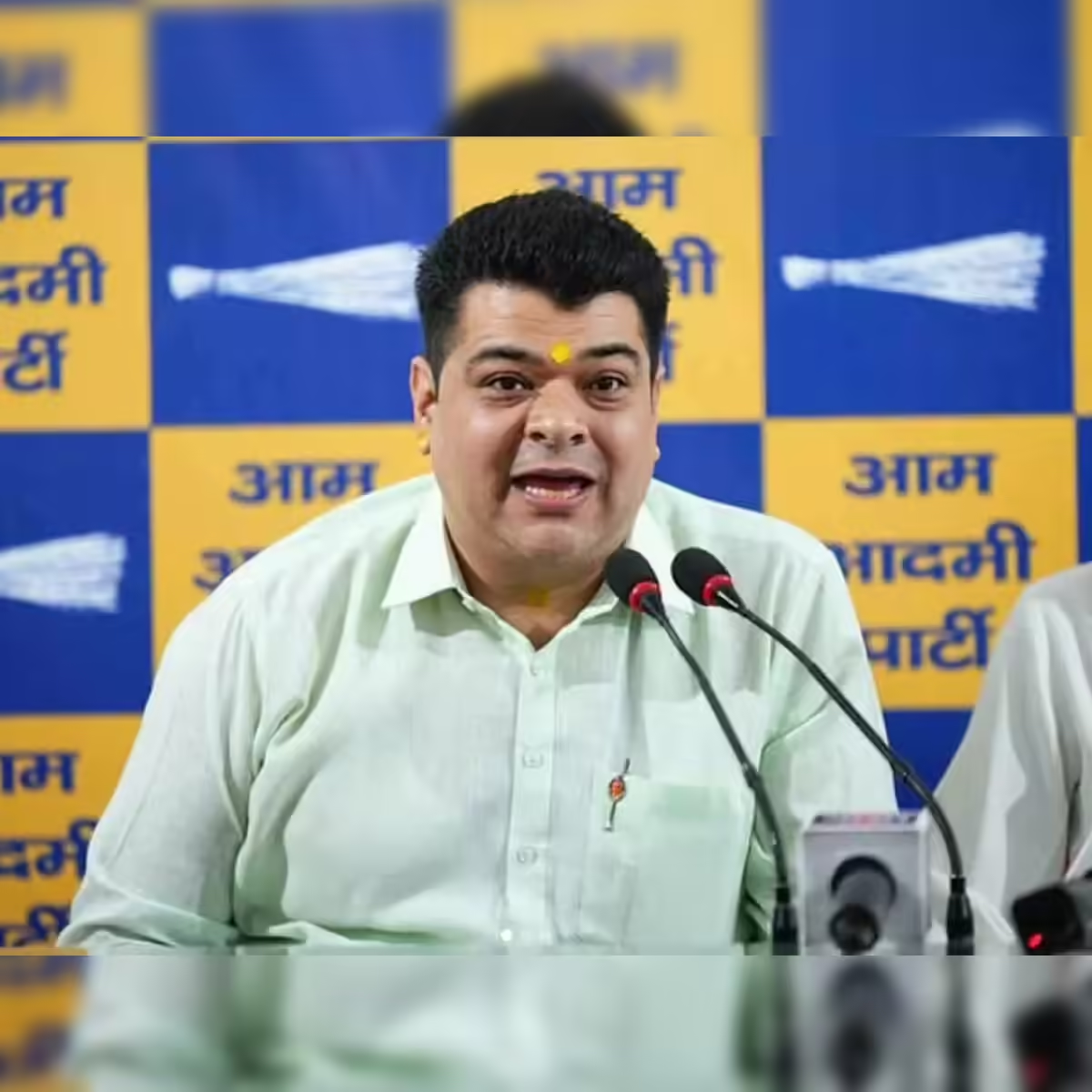
He demanded a fair investigation into the role of officials and decision-makers involved in the project and alleged that there is a significant gap between the government’s claims and its implementation.
Delhi Introduces New EV Policy 2026
Ironically, the controversy has surfaced just as the Delhi Government has implemented its New Electric Vehicles Policy 2026, which came into effect on 1 July 2026 and will remain operational until 31 March 2030.
The policy aims to significantly accelerate the adoption of electric mobility, with the government planning to invest nearly ₹15,000 crore over the next four years to reduce pollution and encourage EV ownership.
Key Features of the New EV Policy
- ₹30,000 subsidy on electric two-wheelers.
- ₹50,000 subsidy on electric three-wheelers.
- ₹1 lakh subsidy for N1 category electric commercial vehicles.
- Complete exemption from road tax and registration charges for electric cars priced below ₹30 lakh.
- Additional incentives for scrapping older vehicles and replacing them with electric ones.
- Gradual transition measures for commercial three-wheelers beginning January 2027.
- New registrations of petrol-powered two-wheelers are proposed to be phased out from April 2028, while existing registered vehicles can continue operating within their legal lifespan.
Chief Minister Highlights Clean Mobility Vision
Delhi Chief Minister Rekha Gupta announced that the new Electric Vehicles Policy is designed to make electric mobility more affordable through subsidies, tax exemptions, and scrappage incentives.
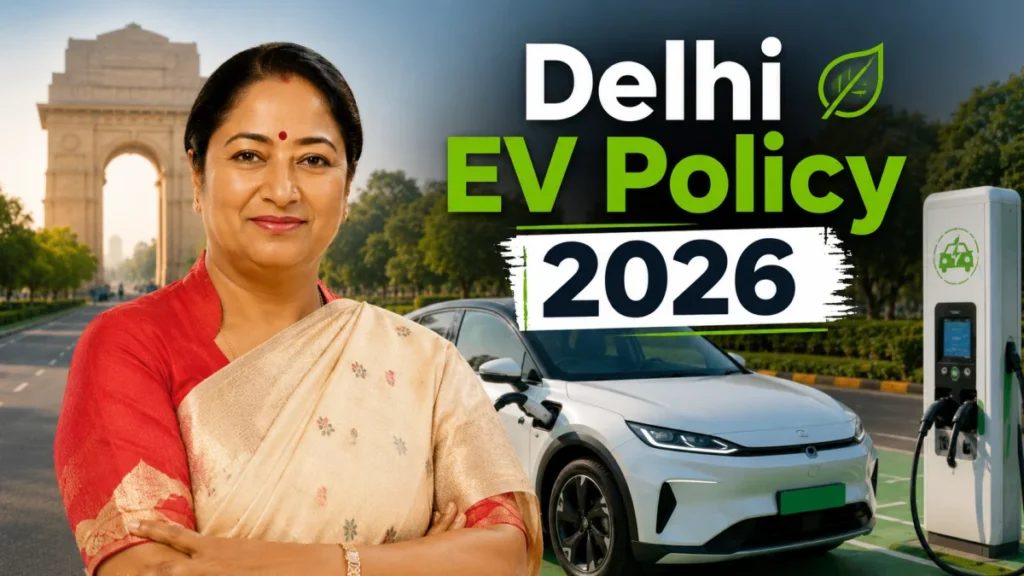
She clarified that owners of existing petrol and diesel vehicles will continue to be allowed to use them until the end of their legally permitted operational life. According to her, the long-term objective is to reduce transport-related emissions, which constitute a significant share of Delhi’s air pollution.
Questions That Still Remain
While the government is encouraging citizens to switch to electric mobility through financial incentives and policy reforms, the condition of the idle electric vehicle fleet at the MCD headquarters presents a contrasting reality.
If these Electric Vehicles were purchased to combat pollution, why were they not maintained and utilized effectively? If technical faults developed, why were timely repairs not carried out? If contractual disputes prevented their operation, why has the issue remained unresolved for such a long period?
As investigations continue, the key questions remain centered on administrative accountability, maintenance of public assets, and the responsible use of taxpayers’ money.
The outcome of the ongoing inquiry is expected to determine whether the prolonged inactivity of these electric vehicles resulted primarily from contractual disputes, technical failures, administrative lapses, or a combination of all three. Until then, the fleet stands as a reminder that successful policy implementation depends not only on ambitious announcements but also on efficient execution and long-term management.