Introduction: A Viral Prank Turning Into a Public Safety Threat
E-Rickshaws A deeply alarming social media trend has emerged on Indian streets, where teenagers and young adults are using a Chinese mobile application to remotely switch off moving electric rickshaws (e-rickshaws) and electric scooters. What started as so-called “prank videos” shared online has now raised serious concerns about road safety, cybersecurity vulnerabilities, and the exploitation of low-income drivers.
Videos circulating widely on platforms such as Instagram, YouTube, X (formerly Twitter), and Reddit show e-rickshaws abruptly losing power mid-journey—often in traffic—after pranksters use a mobile app to disable the vehicle’s battery system via Bluetooth. Experts warn that the trend is not only reckless but could lead to fatal accidents, extortion, and large-scale misuse of unsecured electric vehicle (EV) technology.
Table of Contents
The App at the Centre of the Controversy: BAT-BMS
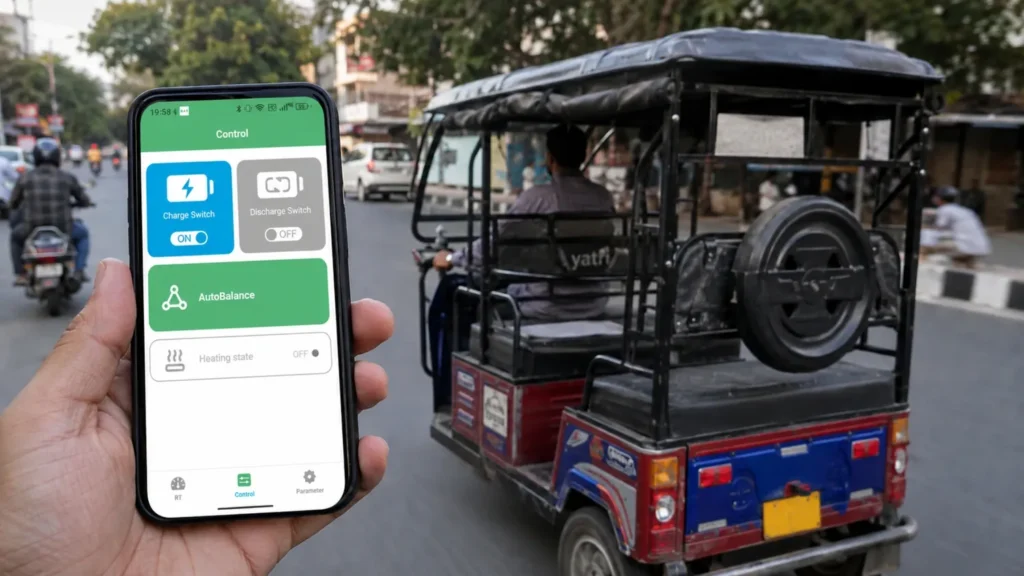
At the heart of this disturbing trend is BAT-BMS, a legitimate Battery Management System application developed by Shenzhen Grenergy Technology. The app was originally designed for technicians and manufacturers to monitor battery performance.
BAT-BMS allows users to:
- Track battery voltage, temperature, and current
- Monitor real-time battery health
- Connect to compatible batteries via Bluetooth within a range of approximately 10–15 metres
- Remotely toggle power functions, including battery discharge
While these features are useful for diagnostics and maintenance, they have become a major vulnerability due to how widely they are misused.
How the Exploit Works: A Cybersecurity Failure on Wheels
The exploit relies on a critical lack of cybersecurity safeguards in many low-cost e-rickshaws and electric scooters sold in India. A large number of these vehicles use cheap imported Chinese battery packs that operate with:
- Open Bluetooth connections
- No password or authentication
- Unencrypted communication channels
This means that anyone with the BAT-BMS app can scan for nearby vehicles, connect instantly to the battery management system, and disable power with a single tap.
Once the “discharge” or power toggle button is pressed, the vehicle shuts down immediately—regardless of whether it is parked or moving in traffic.
Cybersecurity specialists describe this as a textbook example of insecure IoT (Internet of Things) deployment, where convenience and low cost have overridden safety and digital security.
From “Prank” to Predatory Behaviour
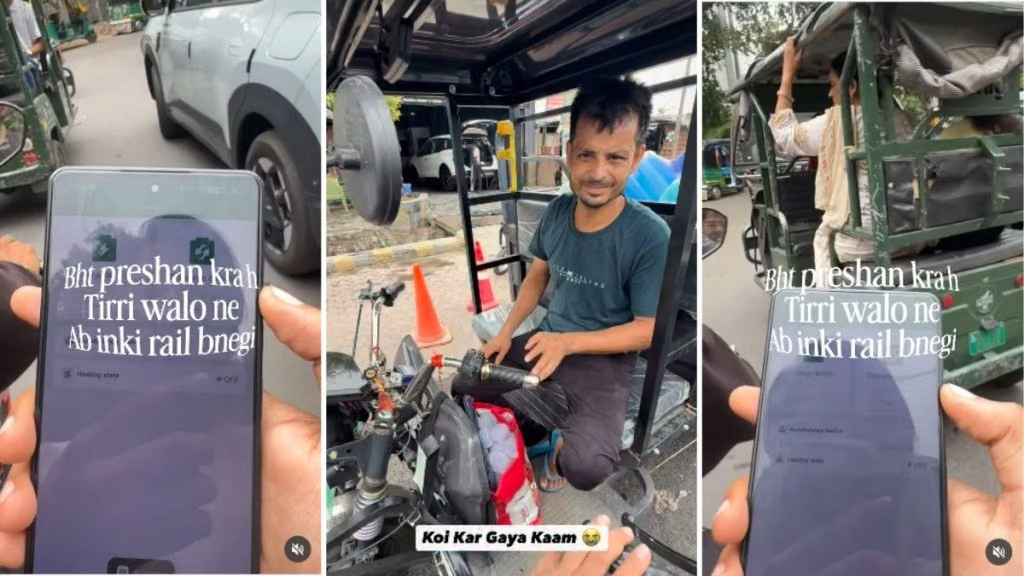
What is particularly troubling is how the trend is being framed online. Viral videos often include captions in Hindi such as:
“Bohot pareshan kiya hai tirri walon ne, ab inki rail banegi”
(E-rickshaws drivers have troubled us enough; now they will suffer)
This narrative portrays the act as revenge or karma for alleged reckless driving by e-rickshaws operators. However, reality paints a far darker picture.
Several videos show:
- Drivers pleading with pranksters to restore power
- Vehicles stranded in the middle of busy roads
- Teenagers demanding ₹100–₹200 to turn the vehicle back on
- Elderly or migrant drivers visibly distressed and confused
What begins as “mischief” quickly crosses into harassment, coercion, and extortion, disproportionately affecting workers who rely on e-rickshaws as their sole source of income.
Public Safety Risks: “This Can Kill Someone”
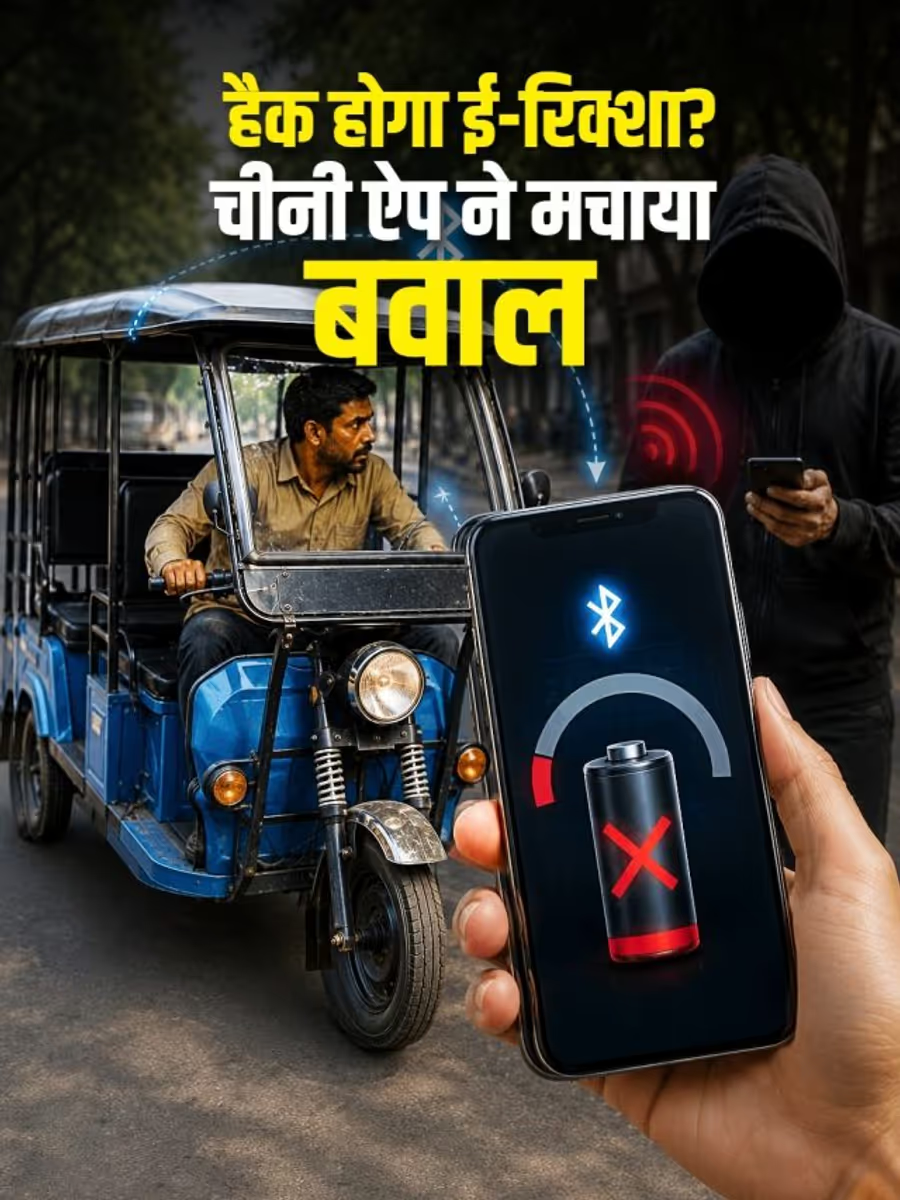
Road safety experts warn that the sudden loss of power in a moving vehicle can have catastrophic consequences, especially in densely populated Indian cities.
Potential dangers include:
- Rear-end collisions
- Vehicles stopping at intersections
- Passengers falling or getting injured
- Chain accidents in congested traffic
- Pedestrians being hit due to loss of control
Public outrage has been swift. On X, one user commented:
“Imagine if it stops in the middle of a road… it can kill people. Stop this.”
Another wrote:
“This is fun for some, but the livelihood of others. That e-rickshaw feeds an entire family.”
Impact on Livelihoods: The Human Cost
India has over 1.5 million e-rickshaws, many driven by individuals from economically vulnerable backgrounds. For these drivers:
- The vehicle is often bought on loan
- Daily earnings support families back home
- Even a single day of disruption means loss of income
Being stranded, humiliated, or forced to pay money to restore power not only affects earnings but also erodes dignity and personal safety.
Labour rights activists argue that such trends reflect a growing disconnect between digital privilege and ground-level realities, where technology is weaponised against those least equipped to fight back.
Availability of the App: Partial Action, Limited Impact
Following complaints, BAT-BMS has reportedly been removed from the Apple iOS App Store. However, the app remains easily accessible on the Google Play Store, allowing Android users to download and misuse it without restriction.
Experts point out that removing the app alone is not enough, because:
- The core problem lies in insecure vehicle firmware
- Multiple similar battery apps exist
- APK files can still be shared unofficially
What Experts Are Demanding: Urgent Intervention Needed
Cybersecurity professionals, EV engineers, and public safety advocates are calling for immediate and coordinated action, including:
1. Mandatory Bluetooth Security
- Password-protected connections
- Encrypted communication
- Limited access modes
2. Firmware Updates
- Manufacturers must push security patches
- Retrofitting older vehicles where possible
3. Regulatory Oversight
- Government standards for EV cybersecurity
- Certification before vehicles are sold
4. App Store Accountability
- Stricter review of apps that can control hardware
- Clear warnings and restricted access
5. Legal Consequences
- Treating such acts as criminal endangerment, not pranks
- Awareness campaigns targeting youth
A Wake-Up Call for India’s EV Ecosystem
India’s electric mobility revolution is growing rapidly, but this incident highlights a dangerous oversight: technology without security is a liability.
As EV adoption increases, so does the risk of digital exploitation. Without immediate safeguards, today’s “viral trend” could become tomorrow’s tragic headline.
Conclusion: When Virality Becomes Violence
What is unfolding on Indian roads is not harmless fun—it is a serious breach of safety, ethics, and trust. Shutting down a moving e-rickshaw with a mobile app is not a prank; it is a potentially deadly act.
The incident serves as a stark reminder that digital responsibility must keep pace with digital access. Until manufacturers, regulators, platforms, and users act decisively, the lives and livelihoods of thousands remain at risk.