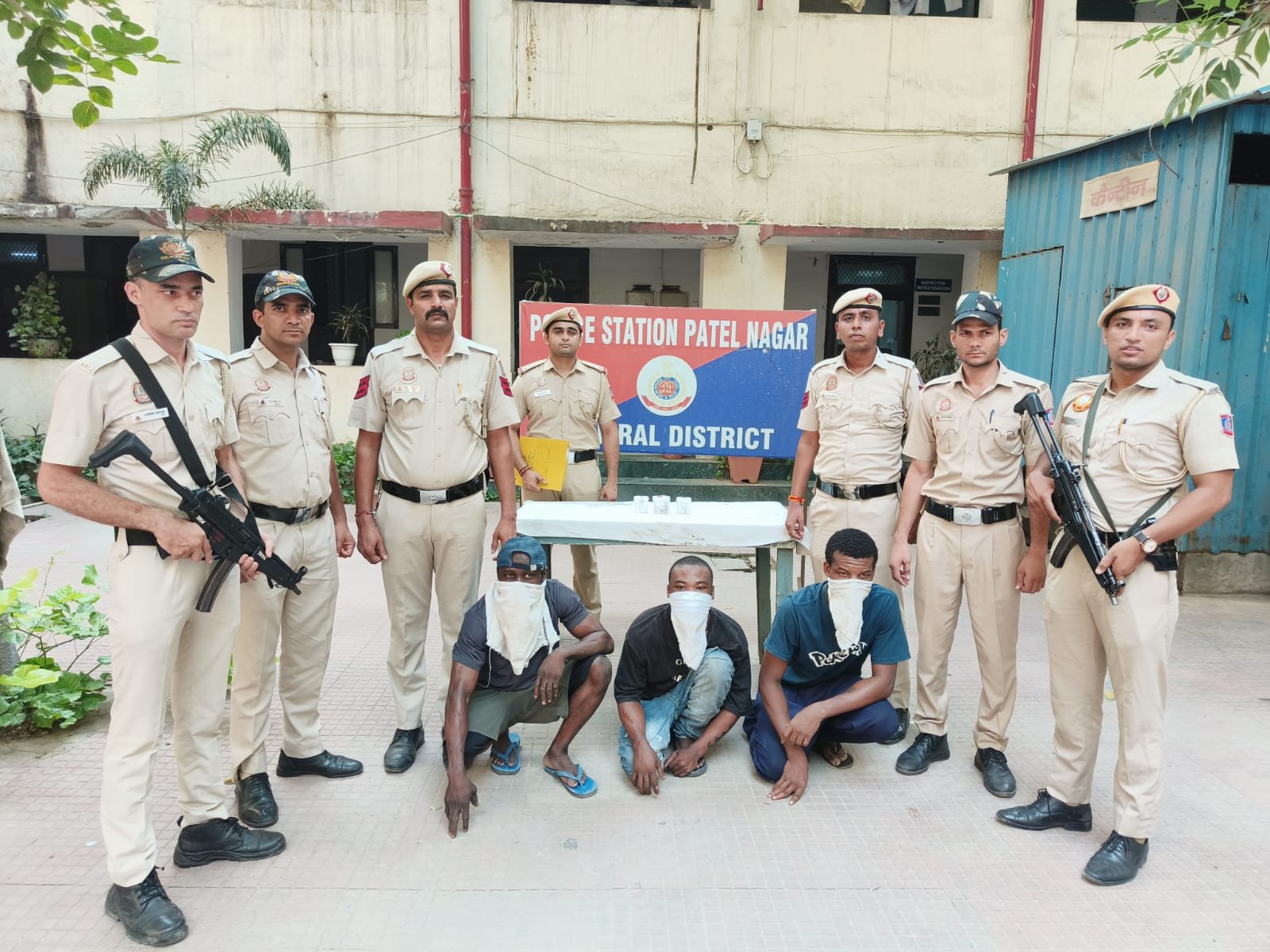
Delhi Police has dealt to narcotics trafficking in the national capital by busting an amphetamine racket operating across multiple locations in Delhi. In a meticulously planned operation led by the Central District Police, three alleged drug peddlers were arrested, including two foreign nationals who were found to be overstaying in India after the expiry of their visas. During the operation, police recovered 71 grams of amphetamine, which falls under the commercial quantity category under the Narcotic Drugs and Psychotropic Substances (NDPS) Act.
The successful operation is being hailed as another major achievement in Delhi Police’s sustained campaign against drug trafficking under the Government of India’s “Nasha Mukt Bharat Abhiyan.” More than just a narcotics seizure, the case is expected to help investigators uncover a wider criminal network involved in the supply and distribution of synthetic drugs across Delhi.
The operation also highlights the growing importance of intelligence-led policing in tackling organised crime. Rather than relying solely on routine checks, the case was cracked through precise information, strategic planning, and coordinated field action by police officers.
Table of Contents
Intelligence-led policing leads to major breakthrough
The investigation began ,when Police Station Patel Nagar received reliable secret information indicating that a foreign national was actively supplying narcotic substances in the Patel Nagar area.
Acting swiftly, senior officers constituted a dedicated raiding team under the leadership of the Station House Officer of Patel Nagar. Amphetamine Racket Working under the supervision of senior district officials, the team verified the intelligence and planned an operation to intercept the suspect without alerting the network.
A strategic trap was laid near Shadipur Flyover in Delhi. The operation proved successful when officers apprehended the primary suspect and recovered approximately 54 grams of amphetamine from his possession.
Instead of treating the arrest as the end of the operation, investigators immediately questioned the accused to identify possible associates and additional storage locations.
That decision quickly paid off.
Multiple raids exposed the wider amphetamine racket
Based on information gathered during interrogation, Delhi Police carried out multiple follow-up raids in Nihal Vihar and Nilothi.
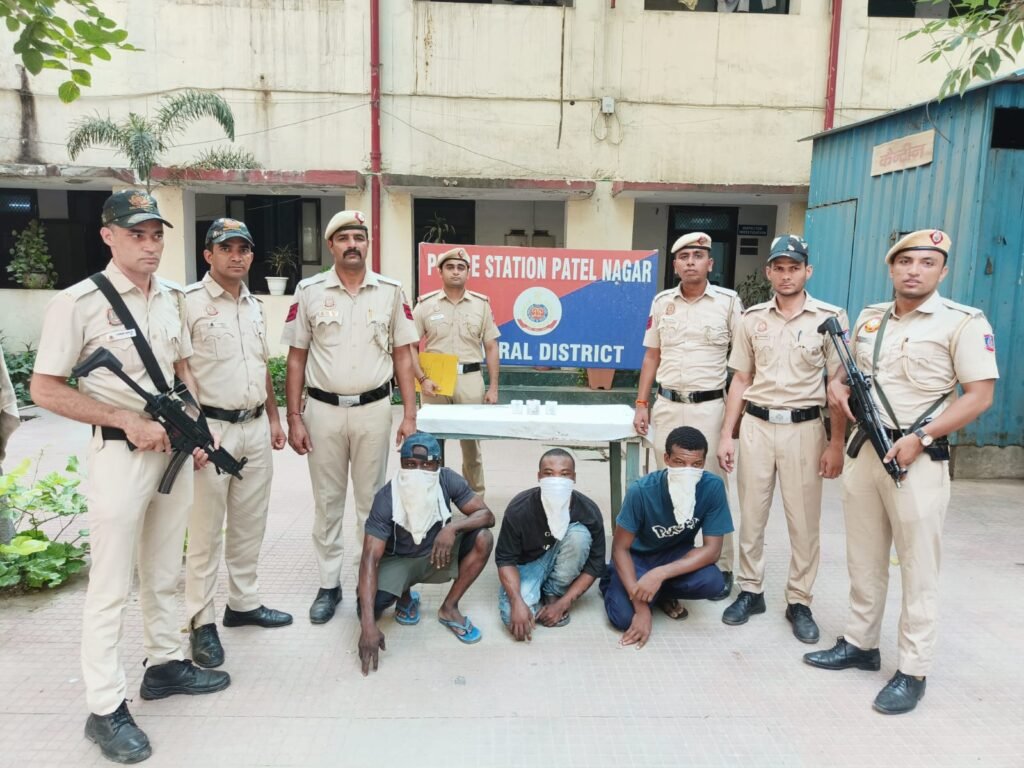
These coordinated operations resulted in the arrest of two additional accused who were allegedly working together as part of the amphetamine racket.
Police also recovered additional quantities of amphetamine from both suspects.
The total recovery reached 71 grams, which qualifies as a commercial quantity under the NDPS Act.
Investigators believe the three accused were operating in coordination with one another for procuring, storing, and distributing synthetic narcotics across different parts of Delhi.
The quick succession of raids prevented suspects from escaping and enabled police to secure valuable evidence that may help identify the complete supply chain.
Commercial quantity makes the case more serious
The seizure assumes greater legal importance because the recovered quantity falls within the commercial quantity category prescribed under Indian narcotics law.
Amphetamine Racket Cases involving commercial quantities generally attract stricter punishment and wider investigations compared to those involving smaller recoveries.
Police are therefore examining every aspect of the operation to determine whether the accused were connected to a larger organised syndicate.
Officials believe the busted amphetamine racket may have supplied narcotic substances to multiple consumers across the city rather than operating on a small individual level.
The investigation is expected to reveal the exact scale of the alleged operation.
Three accused taken into custody
Delhi Police arrested three individuals during the operation.
The first accused is a 22-year-old man originally from Cape Town, South Africa. According to investigators, he entered India in 2023 on a medical and tourist visa. Amphetamine Racket His visa expired in March 2026, but he allegedly continued staying in India illegally.
The second accused is a 24-year-old Nigerian national who came to India in 2019 on a student visa. Police verification revealed that his visa expired in 2023 and that he too was allegedly residing in India beyond the permitted period.
The third accused is a 36-year-old resident of Delhi. His father is a Nigerian national, while his mother is an Indian citizen.
Authorities are separately verifying immigration records and other official documents relating to the foreign nationals.
Fabric business allegedly used as a cover
During interrogation, the accused allegedly informed investigators that they were involved in the import and export of fabrics between India and Nigeria.
Police suspect this business served as a front while the accused allegedly operated the amphetamine racket.
Investigators believe the three coordinated the procurement, storage, and delivery of narcotic substances while maintaining the appearance of conducting legitimate commercial activities.
These claims are currently being verified through documentary evidence, financial records, digital devices, and forensic analysis.
Officials have clarified that every disclosure made during interrogation is being independently verified as part of the investigation.
Why amphetamine remains a dangerous synthetic drug
Amphetamine is a powerful synthetic stimulant that directly affects the central nervous system.
While certain amphetamine-based medicines are legally prescribed under strict medical supervision in some countries for specific health conditions, Amphetamine Racket illegally manufactured amphetamine has no quality control and poses serious health risks.
Its abuse can lead to addiction, anxiety, hallucinations, insomnia, aggressive behaviour, cardiovascular complications, and severe psychological disorders.
Synthetic drugs have become a growing concern for law enforcement agencies because they are often produced in illegal laboratories and transported in relatively small quantities while generating substantial profits for organised criminal groups.
This makes dismantling every amphetamine racket particularly important from both a public health and law enforcement perspective.
Investigation now focuses on the complete network
Delhi Police have confirmed that the investigation is far from over.
Officers are now working to identify the original suppliers, intended buyers, transport channels, financiers, and other individuals connected with the amphetamine racket.
Investigators are examining:
- Mobile phone records
- Digital communication
- Financial transactions
- Bank account details
- Immigration documents
- Travel history
- Electronic devices
- Interstate connections
- Possible international links
Officials are also verifying whether any of the accused have previous criminal records.
The objective is not only to prosecute those arrested but also to dismantle the entire criminal network operating behind them.
Delhi Police deserve appreciation for swift action
The successful operation reflects the professionalism, coordination, and dedication of Delhi Police in tackling organised drug trafficking.
From carefully verifying intelligence to executing multiple coordinated raids across different locations, the officers demonstrated exceptional planning and operational efficiency.
Drug trafficking investigations are often challenging because criminal networks operate secretly, frequently change locations, and attempt to destroy evidence when they suspect police action.
Despite these challenges, the police successfully arrested all three accused and recovered a commercial quantity of narcotics while preventing the network from escaping.
The operation also highlights the commitment of Delhi Police officers who continue working tirelessly to protect communities from the growing threat posed by synthetic drugs.
Their intelligence-driven approach demonstrates how modern policing can effectively dismantle organised criminal networks before they expand further.
Synthetic drug trafficking remains a serious challenge
Law enforcement agencies across India have increasingly focused on synthetic narcotics in recent years due to their rising presence in urban areas.
Unlike traditional narcotics, synthetic drugs are easier to conceal, easier to transport, and often generate enormous illegal profits.
Large metropolitan cities such as Delhi are particularly vulnerable because organised criminal groups attempt to exploit extensive transport networks and high consumer demand.
For this reason, every successful operation against an amphetamine racket strengthens broader efforts to disrupt organised crime and reduce the availability of illegal narcotics.
Authorities continue coordinating with immigration agencies, financial investigators, forensic experts, and other law enforcement organisations to expose complete criminal ecosystems rather than limiting investigations to individual arrests.
Investigation continues to identify every link
Although three arrests have already been made, Delhi Police have made it clear that this represents only one phase of a much larger investigation.
The force is now working to uncover every individual connected with the amphetamine racket, including suppliers, financiers, transporters, distributors, and customers.
Investigators are analysing digital evidence, financial trails, communication records, and possible interstate as well as international connections that may have supported the alleged operation.
The latest success once again demonstrates Delhi Police’s determination to combat organised narcotics crime through intelligence-based policing, timely action, and professional investigation. By dismantling an amphetamine racket and recovering a commercial quantity of illegal drugs, the police have not only disrupted an alleged trafficking network but also reinforced public confidence in the city’s ongoing fight against drug-related crime.