Railway Expansion infrastructure in Rajasthan is witnessing a major expansion and modernisation drive, with projects worth more than ₹400 crore being inaugurated, dedicated to the nation or launched across the state. The initiatives are aimed at improving passenger amenities, strengthening rail connectivity, supporting industrial development and making railway travel more convenient for people across Rajasthan.
Table of Contents
Rajasthan Accelerates Railway Expansion Infrastructure Development
The developments were highlighted in the June 2026 edition of Bharatiya Rail, which detailed a series of railway Expansion infrastructure projects and new train services being introduced in the state. Among the key developments is the redevelopment of Alwar railway station under the Amrit Bharat Station Scheme, along with the launch of a new Jalore–Delhi rail service that has extended the Jodhpur–Delhi Vande Bharat Express towards Jaisalmer.
The projects form part of a broader effort to upgrade Rajasthan’s railway Expansion network and connect major cities, industrial centres, tourist destinations and smaller towns through improved rail infrastructure.
Railway Expansion Budget Allocation for Rajasthan Rises Sharply
According to the information published in Bharatiya Rail, the allocation for railway Expansion development in Rajasthan has increased substantially during the tenure of the current Central government.
The railway Expansion budget allocation for the state has risen to ₹10,228 crore, compared with approximately ₹682 crore during previous governments, according to the publication. The increase reflects a significant focus on railway infrastructure development, including new lines, doubling projects, electrification, station redevelopment and passenger facilities.
The state has also witnessed extensive expansion of its railway Expansion network. Since 2014, approximately 3,900 km of railway tracks have been electrified in Rajasthan, according to the material published in the railway magazine.
Several locations have also received speed-enhancement works, with track infrastructure being upgraded to support faster and more efficient train operations. The railway ministry has highlighted locations including Marwar Junction, Khemli, Bhupal Sagar, Sonu, Hanwant, Sindal Kalan, Mandal Garh, New Sanganer, Hirnoda and Kareri among the stations or sections where speed-related works have been undertaken.
The expansion is also being supported by terminal infrastructure. Work on new terminals has been taken up at several locations, while approvals have reportedly been given for additional terminals to strengthen the capacity of the network.
Railway Projects Target Freight and Industrial Connectivity
Railway infrastructure in Rajasthan is not being developed only for passenger movement. The expansion is also intended to improve freight connectivity and provide better logistical support to industries.
The railway ministry has said that the network is being strengthened to facilitate the movement of goods from industrial areas, including sectors such as handicrafts, semiconductors and other manufacturing activities, towards ports and markets.
Better rail freight connectivity can play an important role in reducing transportation bottlenecks for businesses. For Rajasthan, which has a geographically large territory and a diverse industrial and tourism economy, improved railway links can provide an additional transportation option for both goods and passengers.
The broader infrastructure programme includes several major doubling and new-line projects. Work is progressing on sections including Agra–Bandikui, Ajmer–Chittorgarh and Bikaner–Lalgarh, while other sections are also undergoing capacity enhancement.
Projects involving Churu–Sadulpur and Luni–Bhildi are also part of the railway infrastructure expansion. The network is being strengthened through doubling, new lines and gauge-related works in different parts of the state.
Other projects mentioned in the publication include the Dholpur–Sirmathura–Gangapur City section and infrastructure works associated with areas such as Jaipur, Jaisalmer, Marwar and other important railway corridors.
More Railway Doubling and New-Line Projects Underway
Railway authorities have continued to undertake capacity-enhancement work on several important routes in Rajasthan.
Doubling projects are progressing on sections such as Khetri–Khandwas and Reengus–Sikar, while new-line works have also been taken up on important corridors. The Sheopur Kalan–Kota new line and Taranga Hill–Abu Road new line are among the projects highlighted in the railway publication.
Work on the Umar–Dewari doubling project is also underway.
These projects are significant because additional railway tracks can help separate passenger and freight movements, increase train-handling capacity and reduce pressure on existing single-track sections. New railway lines, meanwhile, can bring previously underserved areas into the broader rail network.
The long-term objective is to ensure that railway infrastructure reaches different regions of Rajasthan while supporting economic activity, tourism and improved mobility.
Alwar Railway Station to Receive ₹112 Crore Redevelopment
One of the prominent station redevelopment projects highlighted in the report is the modernisation of Alwar railway station, which is being carried out at an estimated cost of ₹112 crore under the Amrit Bharat Station Scheme.
The redevelopment is based on the vision of creating modern railway stations while retaining elements of local cultural and architectural identity.
The redesigned station is expected to include modern passenger amenities, improved platforms and upgraded access facilities. Development of both entry and exit gates is also being undertaken to improve passenger movement.
The project includes a new station complex covering approximately 16,000 square metres. The upgraded infrastructure is intended to provide passengers with a more comfortable and efficient travel experience.
The redevelopment of Alwar station is particularly important because Alwar is both a major urban centre and a significant tourism destination. A modern railway station can therefore contribute not only to daily passenger convenience but also to the wider tourism ecosystem.
The railway ministry has also highlighted the redevelopment of several other stations across Rajasthan under the Amrit Bharat Station Scheme. The initiative aims to provide modern facilities while incorporating architectural features reflecting the cultural and historical character of the respective regions.
New Jalore–Delhi Railway Service Strengthens Connectivity
A major passenger-connectivity development highlighted in the publication is the introduction of a new rail service connecting Jalore and Delhi.
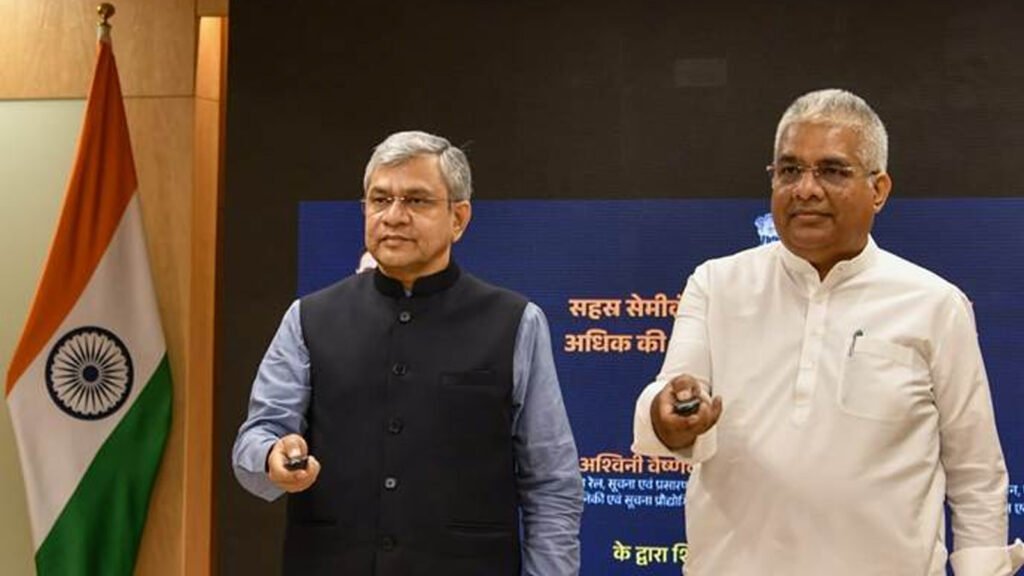
On May 22, 2026, a programme was organised in Jodhpur where Union Railway, Information and Broadcasting, and Electronics and Information Technology Minister Ashwini Vaishnaw, along with Union Culture and Tourism Minister Gajendra Singh Shekhawat, participated in the event.
The Jodhpur–Delhi Cantt Vande Bharat Express was extended towards Jaisalmer, increasing the train’s reach and improving connectivity for passengers in western Rajasthan.
The service was extended through Jalore towards Jaisalmer, while a new Bhuj–Delhi–Bhuj daily express service, identified in the publication as the Vande Bhilad–Jalore Express, was also started to improve passenger connectivity.
At Jalore railway station, Railway Minister Ashwini Vaishnaw flagged off the new Jalore–Delhi rail service. Jalore MP Lumbaram Choudhary and other public representatives were present at the event.
The development is particularly significant for Jalore and surrounding areas, as improved direct connectivity with Delhi can make travel easier for students, workers, business travellers and tourists.
Railway Expansion Could Support Rajasthan Tourism
Rajasthan is one of India’s most important tourism destinations, with cities such as Jaipur, Jodhpur, Udaipur, Jaisalmer and Ajmer attracting visitors from across the country and abroad.
The railway expansion programme therefore has implications beyond everyday commuting.
Improved rail services can make destinations in western and southern Rajasthan more accessible while also strengthening connections between tourism hubs and major metropolitan centres.
The Jalore–Delhi connectivity initiative is especially relevant for western Rajasthan, where improved rail access can support movement between smaller cities and the national capital.
Modernised stations are also expected to improve the experience of visitors arriving in Rajasthan. Station redevelopment projects are designed to provide better passenger circulation, upgraded facilities and a more organised railway environment.
46 New Trains Introduced in Rajasthan
The railway ministry has also highlighted the expansion of train services in Rajasthan.
According to the publication, five Vande Bharat Express trains are currently operating in the state, along with an Amrit Bharat Express. Several new train services have been introduced during the preceding year, increasing connectivity between Rajasthan and other major cities.
Among the services highlighted are Vande Bharat connections between Delhi and Jodhpur and Delhi and Bikaner, along with the Udaipur City–Ahmedabad Vande Bharat service.
Other important services include the Jaisalmer–Bhagat Ki Kothi service and the Jaipur–Jodhpur Express.
The railway ministry stated that a total of 46 new trains have been introduced in Rajasthan in recent years, according to the information published in Bharatiya Rail.
The growing presence of semi-high-speed Vande Bharat services is particularly significant as the trains are designed to reduce journey times while offering upgraded onboard facilities.
Railway Stations as Gateways to Rajasthan’s Heritage
Station redevelopment is also being linked with Rajasthan’s cultural identity.
Bhupendra Yadav, who was mentioned in the publication in connection with the infrastructure initiatives, said the redevelopment of railway stations should reflect Rajasthan’s heritage and distinctive architectural identity while providing modern facilities.
The approach is visible in the redevelopment plans for Alwar, where the station complex is being designed to combine contemporary passenger infrastructure with elements of Rajasthan’s cultural character.
Such projects can transform railway stations from basic transit points into modern public spaces that reflect the identity of the cities they serve.
Connecting Industrial Centres Through Better Railway Infrastructure
Chief Minister Bhajanlal Sharma also emphasised the importance of railway connectivity for Rajasthan’s industrial development.
According to the publication, improved rail and transportation infrastructure is helping connect industrial centres such as Bhiwadi, Neemrana and Khushkhera with wider markets.
These industrial areas are strategically important because of their proximity to major economic corridors and the National Capital Region. Stronger railway connectivity can potentially support the movement of raw materials, finished products and workers.
For a state as geographically extensive as Rajasthan, expanding rail infrastructure can therefore have an impact across several sectors, including manufacturing, tourism, logistics, trade and employment.

A Broader Transformation of Rajasthan’s Railway Network
The projects announced and highlighted in the railway publication indicate that Rajasthan’s railway development is taking place across multiple fronts simultaneously.
The emphasis is not limited to building new tracks. It includes electrification, doubling of existing lines, construction of new railway corridors, station redevelopment, terminal expansion, speed enhancement and introduction of new passenger services.
The scale of the investment is intended to increase the capacity and efficiency of the railway network while improving passenger convenience.
With more than ₹400 crore worth of projects being inaugurated, dedicated or launched during the May 2026 programme, and with several other large infrastructure projects continuing across the state, Rajasthan is emerging as an important focus area in India’s wider railway modernisation programme.
The new Jalore–Delhi service adds another layer to this expansion by improving connectivity for western Rajasthan, while the redevelopment of Alwar and other stations demonstrates the push towards modern passenger infrastructure.
As these projects progress, the combined impact of improved tracks, modern stations, new trains and stronger freight corridors could significantly reshape rail travel across Rajasthan. The broader objective remains clear: create a railway network capable of supporting the state’s growing population, industrial activity, tourism sector and economic ambitions while providing passengers with faster, safer and more convenient connectivity.