Historic Double Podium in Men’s Javelin Highlights India’s Athletics Success in Glasgow
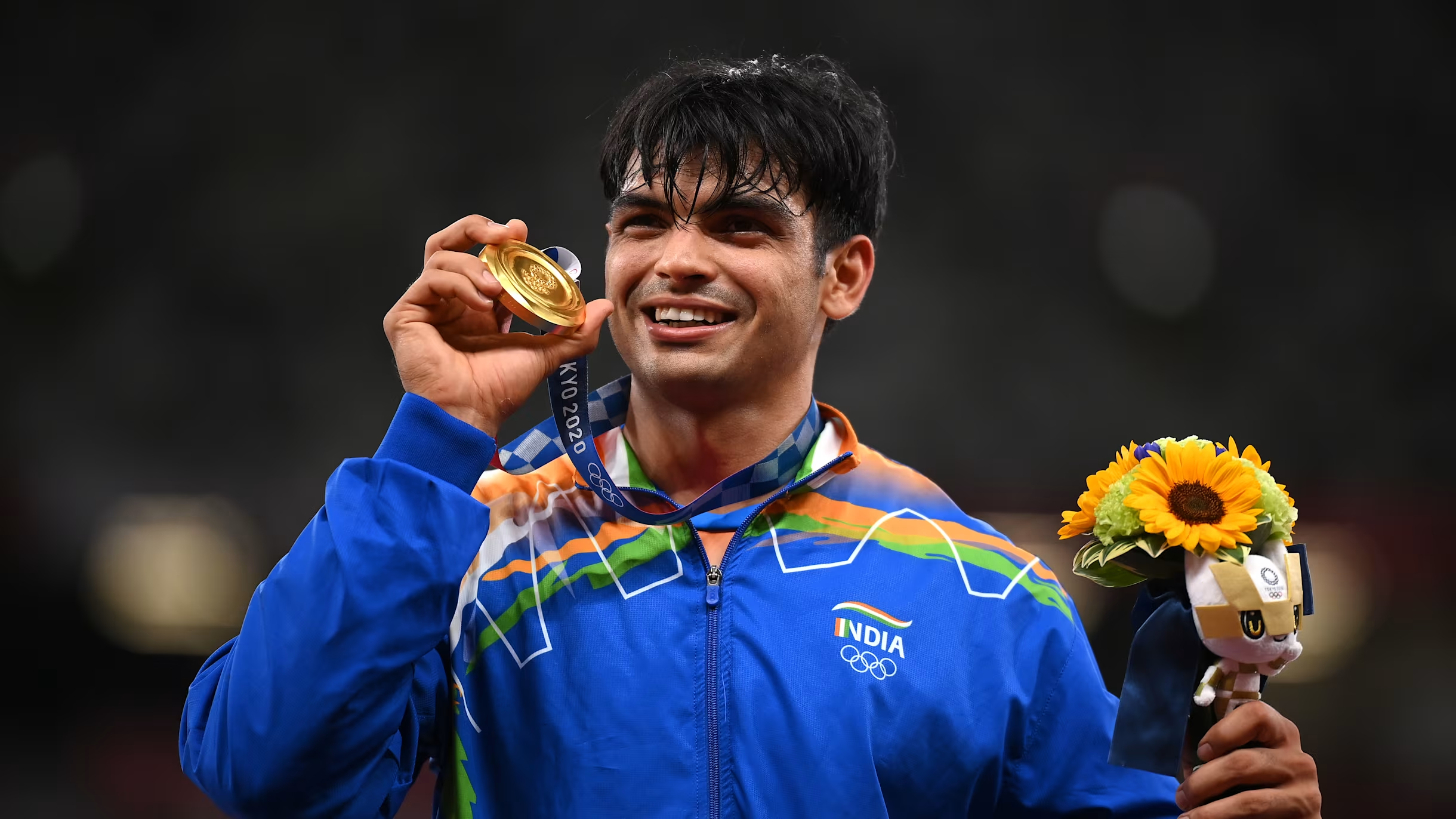
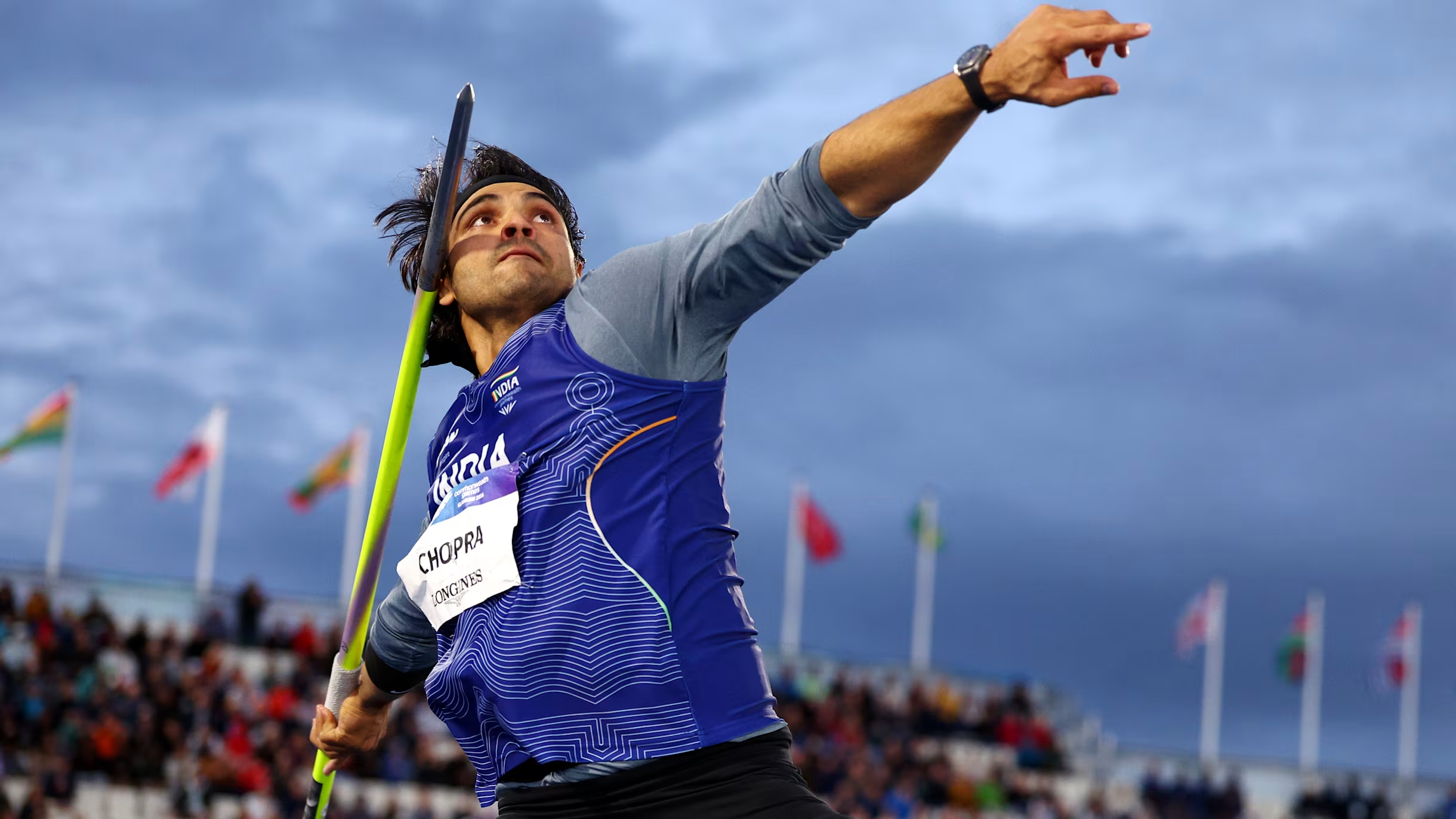
Neeraj Chopra secured the silver medal while Commonwealth Games debutant Yashvir Singh claimed bronze in the men’s javelin throw, giving India a historic double podium finish at the 2026 Commonwealth Games in Glasgow.
Chopra produced a best effort of 85.83 metres to finish second, while Yashvir delivered the biggest surprise of the competition by recording a personal best of 85.41 metres with his sixth and final attempt. Their performances ensured that India secured two places on the podium in a single Commonwealth Games men’s javelin competition.
Sri Lanka’s Rumesh Tharanga Pathirage prevented an Indian sweep of the medals with a spectacular throw of 89.75 metres. The Sri Lankan athlete achieved the winning distance with his second attempt, immediately establishing himself as the leading contender for the gold medal.
For Chopra, the silver represented another major international podium finish, while Yashvir’s bronze marked a breakthrough moment in his emerging career.
The result also underlined India’s growing strength in javelin, a discipline that has become one of the country’s most prominent athletics events in recent years.
Table of Contents
Rumesh Tharanga Pathirage Claims Gold With 89.75m
The gold medal went to Sri Lanka’s Rumesh Tharanga Pathirage, whose 89.75-metre throw proved decisive. Neeraj Chopra had to settle for silver after Pathirage produced the competition’s best effort.
Pathirage produced his winning effort during his second attempt and immediately created a significant gap over the rest of the field. The distance was enough to secure the top position despite strong performances from the Indian pair and other established competitors.
His performance added another major achievement to Sri Lanka’s athletics campaign at the Commonwealth Games.
While India had hoped that Neeraj Chopra could once again claim the top position, Pathirage’s exceptional throw meant that the Olympic champion had to settle for silver.
The 89.75m effort also demonstrated the high standard of competition in the men’s javelin event, with the gold medal winner finishing well ahead of the field.
Neeraj Chopra Takes Silver With 85.83m
Neeraj Chopra entered the competition as one of the biggest names in the field and ultimately finished with the silver medal.
The Indian star’s best throw measured 85.83 metres, which was enough to secure second place for Neeraj Chopra.
Neeraj Chopra’s final attempt ended in a foul. The Indian athlete immediately appeared to recognise that the throw had not been valid, meaning he had to rely on his earlier performance to secure his place on the podium.
Despite missing out on gold, the result represented another successful international appearance for Neeraj Chopra.
The Olympic champion has consistently carried enormous expectations whenever Neeraj Chopra competes for India. His ability to deliver a medal despite not producing his best possible result once again demonstrated his competitiveness at major international events.
Neeraj Chopra has always targeted the highest position on the podium, but his silver medal in Glasgow provided another positive result in his return to competition.
Yashvir Singh Produces the Surprise of the Event
The biggest surprise of the men’s javelin competition came from India’s Yashvir Singh, who shared the podium with Neeraj Chopra.
Making his Commonwealth Games debut, the 24-year-old athlete produced a personal-best throw of 85.41 metres in his sixth and final attempt.
The throw improved significantly on his previous personal best of 83.72 metres.
Yashvir’s final-round effort proved decisive as he moved into bronze-medal position and held off challenges from several established athletes.
His performance was particularly significant because of the stage on which he achieved it. A Commonwealth Games debut can bring considerable pressure, particularly when competing alongside an Olympic champion such as Neeraj Chopra.
Instead of being overwhelmed by the occasion, Yashvir produced his best-ever throw when the stakes were highest.
India’s Historic 1-2 Podium Finish
Neeraj Chopra’s silver and Yashvir’s bronze created a historic double podium for India in the men’s javelin throw at the Commonwealth Games.
The achievement is significant because it demonstrates the depth developing behind India’s leading javelin star, Neeraj Chopra.
For several years, Neeraj Chopra has been the defining figure in Indian javelin. His success has helped bring greater attention to the discipline and inspired a new generation of Indian athletes.
Yashvir’s performance in Glasgow provides evidence that the country now has another athlete capable of competing at a very high level alongside Neeraj Chopra.
Finishing within less than half a metre of Neeraj Chopra also made Yashvir’s performance even more notable. His 85.41m throw placed him just 0.42m behind his more experienced compatriot.
The two Indian athletes therefore shared the podium while producing performances above 85 metres.
Personal Best Makes Yashvir’s Bronze Even More Significant
Yashvir’s bronze medal was not simply a podium finish; it also came with a major personal achievement.
His previous personal best stood at 83.72 metres. By recording 85.41 metres, he improved his best mark by 1.69 metres.
The fact that the improvement came on his sixth and final attempt added further drama to the competition.
Athletics competitions often require athletes to remain composed through several rounds before producing their best effort. Yashvir demonstrated precisely that quality in Glasgow.
His performance could provide an important confidence boost as he continues his development on the international stage.
The result also gives Indian athletics another promising name to follow in the men’s javelin discipline, alongside Neeraj Chopra.
Strong Challenge From Established Athletes
Yashvir had to contend with a field that included several experienced international competitors.
Among those mentioned in the competition were Anderson Peters and Arshad Nadeem, both established names in the javelin world.
Holding off such competitors while competing in his first Commonwealth Games made Yashvir’s bronze particularly impressive.
The result showed that the young Indian athlete was capable of handling the pressure of a major international competition and producing a performance that stood up against experienced opposition.
For Indian athletics, this depth could prove increasingly valuable as the country looks to maintain its progress in the discipline.
Harsh Singh Wins Men’s 60kg Judo Gold
India’s success in Glasgow extended beyond athletics.
Harsh Singh secured the men’s 60kg judo gold medal after defeating Australia’s Joshua Katz in the final.
Singh produced a commanding performance, winning by Waza-Ari with a score of 10-0.
The victory added another gold medal to India’s Commonwealth Games campaign and highlighted the country’s strong showing across different sports.
Winning a final against an Australian opponent on a major international stage represents a significant achievement for Singh and Indian judo.
His gold also complemented the historic javelin double achieved earlier in the athletics programme.
Asmita Dey Adds Another Judo Gold
India also celebrated success in women’s judo, with Asmita Dey securing the gold medal.
Dey overcame Canada’s Heidi Quach in a closely contested final. The Indian athlete won by Yuko with a 2-1 result.
Her victory demonstrated the importance of composure in a tight final, where a narrow advantage was enough to determine the champion.
Asmita’s gold gave India another reason to celebrate and strengthened the country’s overall medal campaign in Glasgow.
Together, Harsh Singh and Asmita Dey ensured that Indian judo contributed two gold medals to the nation’s performance.
Tejaswin Shankar Makes Decathlon History
Another landmark moment for India came in the decathlon.
Tejaswin Shankar won the bronze medal, becoming the first Indian athlete to secure a medal in the decathlon at the Commonwealth Games.
The achievement was historic because the decathlon is regarded as one of athletics’ most demanding multi-event competitions.
Athletes competing in the discipline must demonstrate ability across a wide range of events, requiring a combination of speed, strength, endurance, jumping ability and throwing skills.
Shankar’s bronze therefore represented a major achievement for Indian athletics.
His medal added another historic milestone to a Commonwealth Games campaign that was already being defined by significant performances across multiple disciplines.
Yamini Mourya Wins Silver in Women’s 57kg
India’s medal tally was further strengthened by Yamini Mourya, who secured silver in the women’s 57kg category.
Mourya faced England’s Acelya Toprak in the final in a closely contested bout but ultimately finished with the silver medal after suffering defeat.
Although she narrowly missed out on gold, reaching the final and securing a silver medal represented a strong performance.
Her result added another medal to India’s growing collection and demonstrated the country’s competitiveness in combat sports.
A Significant Day for Indian Sport
The collection of results from Glasgow highlighted the growing diversity of India’s medal-winning performances.
The men’s javelin event was particularly significant because of the historic double podium achieved by Chopra and Yashvir.
Chopra’s silver provided another major international medal for one of India’s most successful athletes, while Yashvir’s bronze signalled the emergence of a promising new competitor.
Pathirage’s 89.75m throw ultimately secured Sri Lanka the gold, but India’s two medals ensured that the event became one of the highlights of the country’s athletics campaign.
At the same time, gold medals from Harsh Singh and Asmita Dey in judo and a historic decathlon bronze from Tejaswin Shankar broadened India’s success beyond the javelin field.
What the Javelin Results Mean for India
The performances of Chopra and Yashvir could have significance beyond the medals won in Glasgow.
Chopra remains one of the leading figures in Indian athletics, while Yashvir’s emergence provides another athlete capable of competing at elite distances.
The young javelin thrower’s personal best of 85.41 metres demonstrates that he is already operating at a high level.
His ability to produce that mark on his final attempt also suggests considerable competitive resilience.
For Indian athletics, having multiple athletes capable of crossing the 85-metre mark provides greater depth in the event.
The historic double podium therefore represents more than a single successful competition. It reflects the continuing development of Indian javelin and the growing number of athletes capable of performing on major international stages.
India’s Glasgow Campaign Gains Momentum
The Commonwealth Games 2026 results provided several reasons for optimism around Indian sport.
From Chopra’s silver and Yashvir’s breakthrough bronze to gold medals in judo and a historic decathlon medal, Indian athletes delivered performances across different disciplines.
The javelin double will likely stand among the most memorable moments of the campaign because of the significance of seeing two Indian athletes share the podium.
For Chopra, the medal adds another chapter to an already remarkable international career. For Yashvir, it could represent the beginning of a much bigger journey.
With multiple disciplines contributing medals, India’s Glasgow campaign has showcased both established champions and emerging talent.
The combination of experience and youth could become one of the defining features of India’s sporting future.
For now, however, the spotlight belongs to the athletes who delivered historic performances in Glasgow — led by Neeraj Chopra’s silver, Yashvir Singh’s breakthrough bronze and a memorable day that strengthened India’s growing reputation in international athletics.