
India is set to strengthen its leadership role within the BRICS grouping by hosting the 13th BRICS Education Ministers’ Meeting and the 3rd BRICS Senior Officials’ Meeting in Bhubaneswar, Odisha, from August 5 to 7, 2026. Organised under India’s BRICS Chairship 2026, the high-level gathering will bring together education ministers, senior government officials, policymakers, academic leaders, and delegates from BRICS member nations to discuss the future of education, research, innovation, skills development, and academic cooperation.
The three-day event, organised by the Ministry of Education, marks one of the most significant diplomatic engagements under India’s BRICS presidency this year. It reflects New Delhi’s growing emphasis on strengthening international collaboration in education while promoting inclusive, innovation-led, and sustainable growth among developing economies.
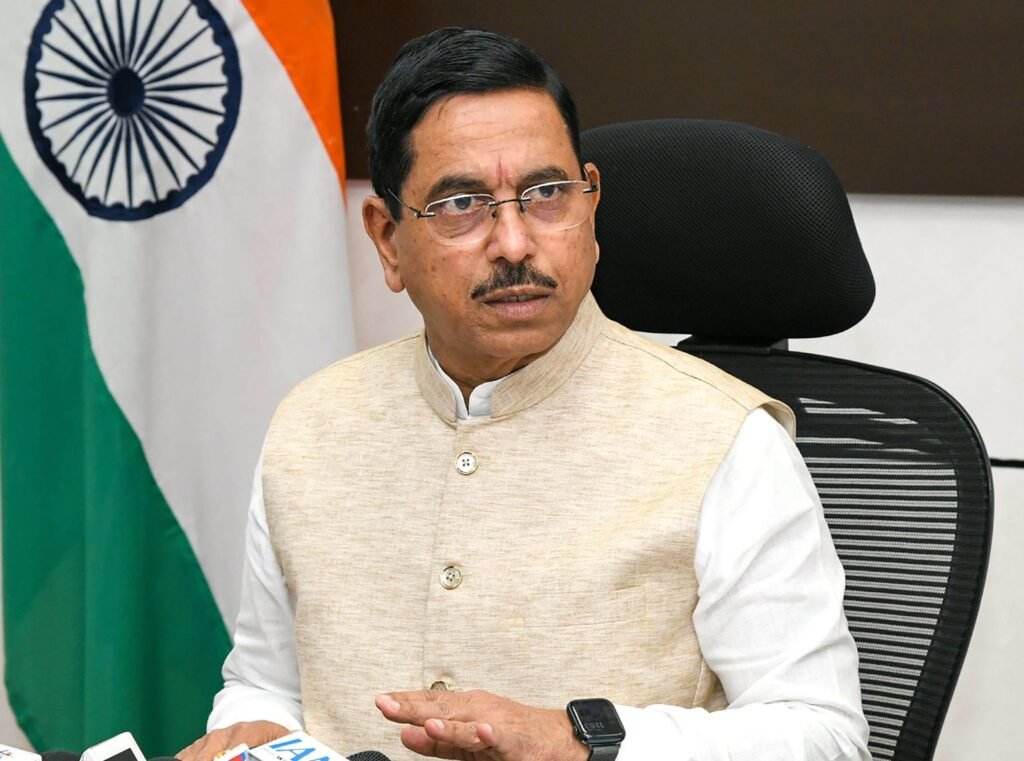
Union Education Minister Pralhad Joshi will lead the Indian delegation and chair the ministerial discussions, which are expected to shape future educational cooperation among BRICS countries.
Table of Contents
India Takes Centre Stage Under BRICS Chairship 2026
India assumed the BRICS Chairship with the overarching theme:
“Building for Resilience, Innovation, Cooperation and Sustainability.”
The theme aligns closely with Prime Minister Narendra Modi’s vision presented during the 2025 BRICS Summit in Rio de Janeiro, where he emphasized a people-centric, humanity-first, and future-oriented development model.
The upcoming education ministerial meeting aims to translate this vision into concrete educational policies by encouraging knowledge-sharing, institutional collaboration, research partnerships, and skill development initiatives among nations.
Officials believe that education remains one of the strongest pillars for achieving long-term economic resilience and technological advancement across emerging economies.
What is BRICS?
BRICS is one of the world’s most influential multilateral groupings representing emerging economies across different continents. Originally formed by Brazil, Russia, India, China, and South Africa, the grouping has expanded significantly in recent years, increasing its global economic and geopolitical influence.
Collectively, BRICS countries account for:
- Nearly half of the world’s population
- A substantial share of global GDP
- Major manufacturing and innovation hubs
- Growing influence in international diplomacy
- Expanding educational and research ecosystems
While economic cooperation remains central , education has emerged as a strategic area where member countries can jointly prepare future generations for rapidly changing technological and economic landscapes.
Key Focus Areas of the 13th BRICS Education Ministers’ Meeting
According to the Ministry of Education, the discussions will focus on several priority sectors aimed at strengthening educational cooperation among member countries.
Strengthening Early Childhood Care and Education (ECCE)
One of the major agenda items is improving Early Childhood Care and Education (ECCE).
Education experts widely acknowledge that quality early childhood education lays the foundation for lifelong learning, cognitive development, and social skills.
The countries are expected to exchange successful policy models, innovative teaching practices, and strategies to improve access to quality preschool education.
Expanding Technical and Vocational Education (TVET)
Technical and vocational education has become increasingly important as industries worldwide undergo rapid technological transformation.
The meeting will discuss expanding cooperation through the BRICS TVET Cooperation Alliance, with emphasis on:
- Workforce readiness
- Industry-oriented skills
- Digital competencies
- Green technologies
- Artificial Intelligence
- Advanced manufacturing
- Future employment opportunities
The initiative seeks to prepare young people for evolving global labour markets while reducing skill gaps across member nations.
Promoting Research, Innovation and Start-ups
Innovation will remain another central pillar of the discussions.
The participating countries are expected to strengthen collaboration between:
- Universities
- Research institutions
- Innovation centres
- Technology incubators
- Start-up ecosystems
Joint research programmes, faculty exchanges, innovation funding, and collaborative technology development are expected to feature prominently during the deliberations.
Education officials believe that stronger research cooperation can significantly accelerate scientific discoveries while supporting sustainable economic growth.
Advancing Mutual Recognition of Qualifications (MRQ)
Another important agenda item involves advancing the Mutual Recognition of Qualifications (MRQ) framework.
The objective is to simplify academic recognition across nations, allowing students and professionals greater mobility for higher education, research, and employment opportunities.
If strengthened, the MRQ framework could help reduce administrative barriers and encourage greater academic exchanges among universities within the network.
Building Academic Leadership
Capacity-building for academic leaders will also receive considerable attention.
The meeting aims to develop leadership programmes that enhance:
- University governance
- Educational administration
- Institutional planning
- Academic quality assurance
- International collaboration
Such initiatives are expected to strengthen higher education institutions across participating countries.
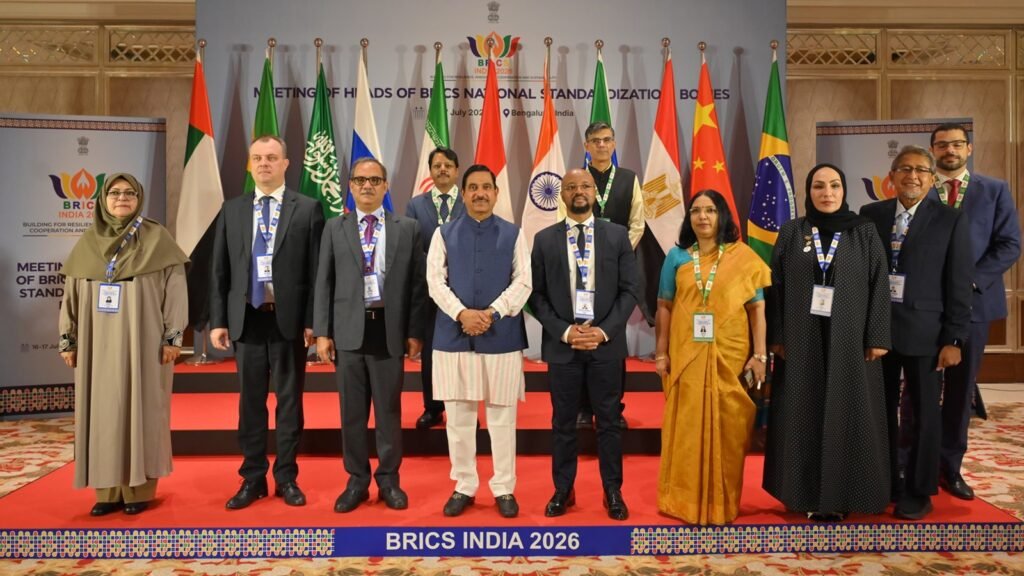
Series of Preparatory Meetings Led to Ministerial Discussions
The Education Ministers’ Meeting follows months of consultations conducted under India’s BRICS Education Track.
Several important meetings have already taken place this year.
These include:
- First BRICS Senior Officials’ Meeting – April 7
- Second BRICS Senior Officials’ Meeting – April 28
- BRICS Network University Conference – July 20
- International Governing Board Meeting – July 20–21
These earlier engagements helped identify common priorities and formulate recommendations that will now be discussed at the ministerial level.
Officials expect the Bhubaneswar meeting to finalize several collaborative initiatives emerging from these consultations.
BRICS TVET Symposium Strengthened Skills Cooperation
Ahead of the ministerial meeting, India also hosted the BRICS TVET Symposium and the Joint Management Committee Meeting of the BRICS TVET Cooperation Alliance in New Delhi.
Organised under the leadership of the Ministry of Skill Development and Entrepreneurship, these meetings focused on:
- Technical education reforms
- Vocational training
- Workforce preparedness
- Digital skills
- Best practice sharing
- International collaboration in skill development
Participants discussed strategies to align education systems more closely with rapidly changing labour market demands.
The outcomes of these discussions are expected to complement the broader education agenda in Bhubaneswar.
Model BRICS Initiative to Engage Young People
One of India’s notable initiatives during its BRICS Chairship is the launch of the Model BRICS programme.
Designed primarily for students, the initiative aims to introduce young participants to:
- International diplomacy
- Multilateral institutions
- Global governance
- Consensus-building
- International negotiations
- Public policy
The programme will run alongside several ministerial meetings across India, offering students an opportunity to simulate diplomatic discussions while understanding the functioning of international organizations.
Officials believe the initiative will encourage greater youth participation in global policymaking and international cooperation.
Why the Meeting Matters
Education has increasingly become a strategic priority within as member countries seek to build knowledge-based economies capable of competing globally.
Rapid technological advances—including Artificial Intelligence, automation, biotechnology, and digital transformation—are reshaping education systems worldwide.
Through collaborative policymaking, BRICS nations hope to:
- Improve educational quality
- Increase student mobility
- Enhance digital learning
- Promote research excellence
- Strengthen workforce skills
- Support innovation-driven growth
- Expand international academic partnerships
The Bhubaneswar meeting provides an opportunity to align these goals through collective action.
Odisha Emerges as Host for Global Education Diplomacy
Hosting the ministerial summit in Bhubaneswar further highlights Odisha’s growing reputation as an emerging centre for higher education, technology, and international conferences.
The state has increasingly hosted national and international events across education, sports, governance, and technology, supported by expanding infrastructure and academic institutions.
The arrival of delegates from multiple nations is expected to enhance both diplomatic engagement and cultural exchange during the three-day event.
Looking Ahead
As India continues its Chairship throughout 2026, education is expected to remain one of its flagship priorities alongside innovation, digital transformation, sustainable development, and people-to-people cooperation.
The outcomes of the 13th BRICS Education Ministers’ Meeting are likely to influence future collaborative projects involving universities, research organizations, vocational institutions, policymakers, and students across BRICS countries.
Several joint declarations, action plans, and collaborative educational initiatives are expected following the conclusion of the ministerial deliberations.
The 13th BRICS Education Ministers’ Meeting represents a major milestone in India’s international education diplomacy. By bringing together ministers, policymakers, researchers, and academic leaders from member countries, the summit aims to strengthen cooperation across key sectors including early childhood education, vocational training, research, innovation, qualification recognition, and academic leadership.
Under the theme “Building for Resilience, Innovation, Cooperation and Sustainability,” India seeks to promote a shared vision of inclusive and future-ready education that supports sustainable development and global collaboration. As education increasingly becomes the foundation for economic competitiveness and technological advancement, the decisions emerging from the Bhubaneswar meeting could help shape the future of educational partnerships within years to come.
With initiatives such as the BRICS TVET Cooperation Alliance, the Model BRICS programme, and enhanced academic collaboration on the agenda, the summit underscores India’s commitment to building stronger educational ties and preparing future generations for the challenges and opportunities of an interconnected world.