

New Questions Emerge Over Police Presence at Medanta Hospital
Fresh controversy has emerged around the hospitalisation of climate activist and education reform advocate Sonam Wangchuk, after his wife, Gitanjali J. Angmo, alleged that an unusually heavy police presence continues outside his Intensive Care Unit (ICU) despite a court clarifying that he is not under detention.
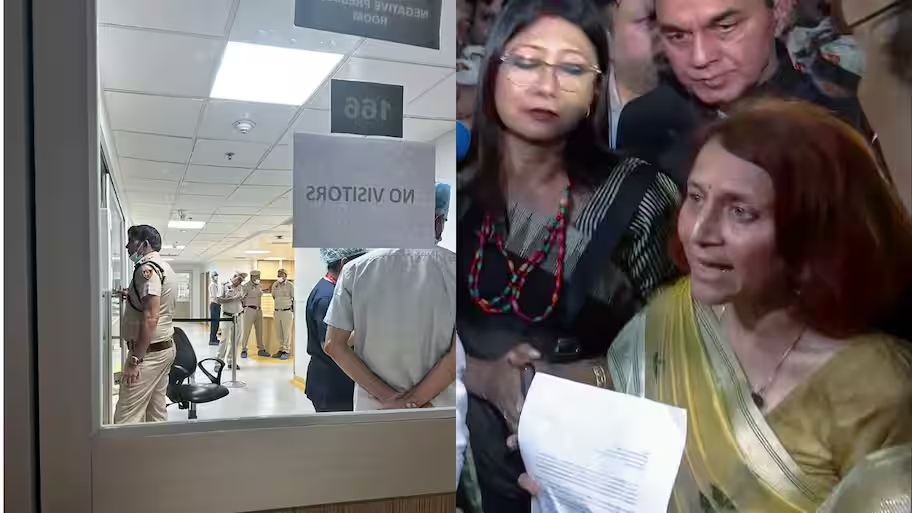
Sharing photographs and videos from Medanta Hospital in Gurugram, Angmo claimed that police personnel were stationed at multiple locations throughout the hospital, including the main entrance, reception, elevators, and outside Sonam Wangchuk’s ICU. In a social media post, she questioned the legal basis for such security arrangements, asking why officers continued to monitor the activist if he was not officially under detention.
The allegations have reignited debate over the balance between security, civil liberties, and a patient’s right to privacy, while drawing renewed political attention to Sonam Wangchuk’s ongoing protest movement and recent hospitalisation.
Table of Contents
Background: Why Sonam Wangchuk Was Hospitalised
The latest developments come after Sonam Wangchuk ended a prolonged hunger strike that had lasted nearly four weeks. The protest centred on demands for greater accountability in public examinations and wider concerns regarding alleged irregularities in competitive examinations.
As his health deteriorated during the fast, Delhi Police shifted Sonam Wangchuk from the protest site at Jantar Mantar to Safdarjung Hospital, citing medical advice and concerns over his condition. Officials maintained that the transfer was undertaken to protect his health and comply with medical recommendations.
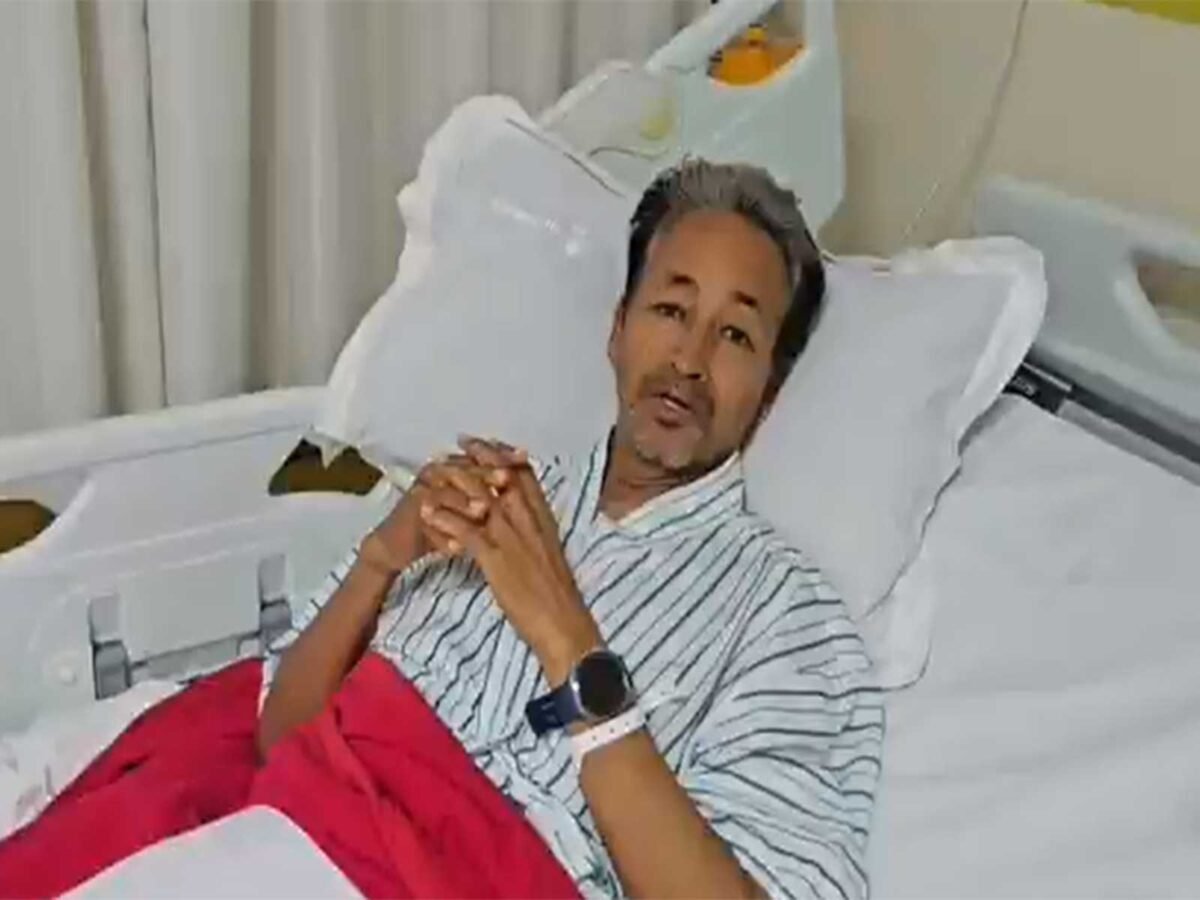
Medical professionals monitoring Sonam Wangchuk reportedly expressed concerns over significant weight loss and the potential risks associated with prolonged fasting. According to reports, he lost around 11 kilograms during the hunger strike and required continuous medical observation.
Legal Battle Over Hospital Choice
The activist’s admission to Safdarjung Hospital soon became the subject of legal proceedings after Gitanjali J. Angmo challenged the move before the Delhi High Court.
She argued that the family had not been allowed to choose Sonam Wangchuk’s treating hospital and alleged that his stay at the government facility effectively amounted to an unlawful restriction on his liberty. The petition also raised concerns regarding access to medical information and the family’s ability to participate in healthcare decisions.
Initially, the High Court declined to immediately shift Sonam Wangchuk to a private hospital, while seeking further information from the authorities. Subsequently, after hearing submissions from medical experts and the Centre, the court permitted his transfer to Medanta Hospital in Gurugram for continued treatment.
The court observed that continued medical monitoring remained necessary while allowing the activist to receive treatment at the private medical facility preferred by his family.
‘Police Are Everywhere,’ Says Angmo
Following Sonam Wangchuk’s transfer to Medanta Hospital, Angmo alleged that little had changed in terms of police monitoring.
According to her statements, security personnel remained visible throughout the hospital premises, including outside the ICU where Sonam Wangchuk is receiving treatment. She questioned why such extensive deployment continued after judicial clarification that Wangchuk was not under detention.
Posting photographs online, Angmo wrote that police were present “at the main gate, the reception, the lifts, outside the ICU,” and claimed that they exercised control over who could meet Sonam Wangchuk. She argued that the continued deployment appeared inconsistent with the court’s observations regarding his legal status.
Her remarks quickly gained attention on social media, where supporters questioned the necessity of maintaining such visible security arrangements around a patient undergoing medical treatment.
Authorities Have Not Confirmed the Allegations
At the time of writing, there has been no official confirmation explaining the precise reasons for the reported police deployment at Medanta Hospital.
Neither Delhi Police nor Haryana Police has publicly detailed whether the officers were present for security, crowd management, law-and-order considerations, or any other operational reasons linked to Sonam Wangchuk’s high public profile.
Hospital authorities have also not issued a detailed public statement specifically addressing the security arrangements described by Angmo.
Without official clarification, the reasons behind the reported deployment remain a matter of public discussion.
Hospitalisation Previously Triggered Similar Concerns
The issue of police presence is not entirely new.
While Wangchuk was admitted to Safdarjung Hospital, Angmo had earlier alleged that large numbers of police personnel were stationed throughout the facility, restricting movement by family members and visitors.
Those allegations formed part of the legal arguments presented before the Delhi High Court, where the family contended that Wangchuk was effectively being confined despite not being under formal arrest.
Hospital officials, however, responded by stating that public allegations concerning treatment were not conducive to effective patient care and maintained that medical decisions were being taken in accordance with professional standards.
Who Is Sonam Wangchuk?
Sonam Wangchuk is one of India’s best-known education reformers, innovators, and environmental campaigners.
He gained international recognition for pioneering educational initiatives in Ladakh through the Himalayan Institute of Alternatives, Ladakh (HIAL), which promotes experiential learning, sustainable development, and locally relevant education.
Wangchuk has also become widely recognised for advocating climate resilience, glacier conservation, sustainable mountain development, and policy reforms concerning the Himalayan region.
His work has received both national and international recognition, making him one of India’s most prominent voices on education and environmental sustainability.
Role of Gitanjali J. Angmo
During Wangchuk’s hospitalisation, Gitanjali J. Angmo has emerged as the principal public representative of the movement.
An educationist and social entrepreneur, Angmo is a co-founder of HIAL and has taken responsibility for coordinating legal proceedings, interacting with the media, and addressing supporters during Wangchuk’s medical treatment.
Over recent weeks, she has repeatedly raised concerns regarding transparency in medical care, access to doctors, patient rights, and the family’s ability to make healthcare decisions.
Her public interventions have significantly increased attention on the legal and humanitarian aspects of Wangchuk’s hospitalisation.
Political Reactions and Public Interest
Wangchuk’s hunger strike and subsequent hospitalisation have generated widespread political attention.
Several political leaders, civil society organisations, students, and activists have expressed concern over both his health and the issues raised during the protest movement.
The hospitalisation has also triggered broader discussions regarding:
- Civil liberties during public protests.
- Rights of patients undergoing medical treatment.
- State security measures surrounding high-profile activists.
- Transparency in public healthcare institutions.
- Judicial oversight concerning medical decisions.
Supporters argue that patients should retain autonomy over their treatment and hospital choice whenever medically appropriate, while others stress the importance of ensuring safety and maintaining public order in situations involving nationally recognised public figures.
Medical Condition Remains Under Observation
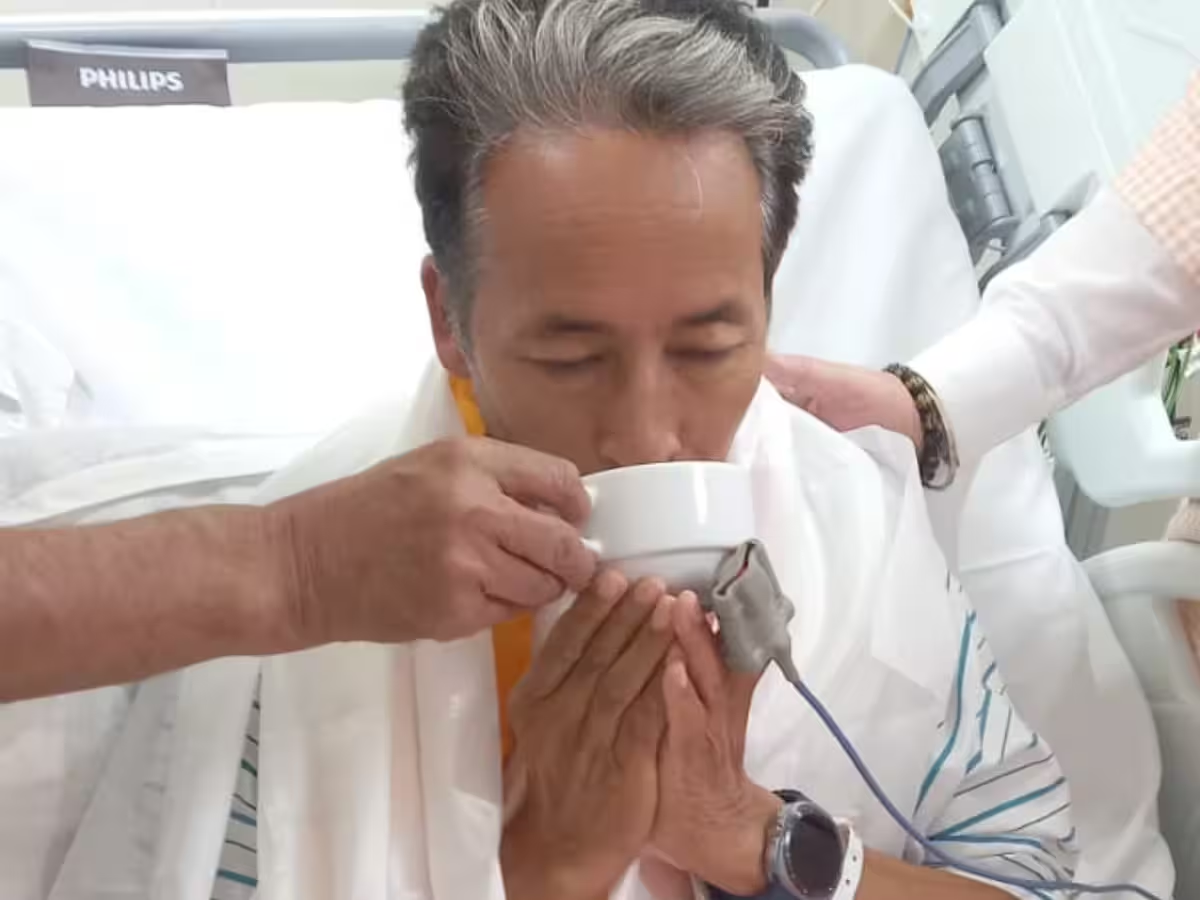
Although Wangchuk has ended his prolonged fast, doctors continue to monitor his recovery.
Extended fasting can lead to electrolyte imbalance, muscle loss, nutritional deficiencies, and metabolic complications that require gradual medical management even after food intake resumes.
Healthcare professionals generally recommend continuous monitoring during the recovery phase to avoid complications associated with refeeding after prolonged fasting.
No fresh official medical bulletin detailing Wangchuk’s current condition had been released at the time of publication.
The Broader Debate
Beyond the immediate controversy over police deployment, the developments have raised wider questions about how governments, law enforcement agencies, and hospitals should manage high-profile patients who simultaneously occupy the roles of public figures, protest leaders, and private citizens.
Legal experts note that while authorities may sometimes deploy security for crowd control or safety reasons, transparency regarding the purpose and scope of such arrangements helps reduce public speculation and build confidence.
The situation has also highlighted the importance of clearly communicating the legal status of individuals receiving medical care, particularly where judicial proceedings and public protests intersect.
The latest allegations by Gitanjali J. Angmo regarding extensive police deployment outside Sonam Wangchuk’s ICU have added another chapter to an already closely watched episode involving protest, healthcare, and legal rights.
While Angmo has questioned the necessity of the reported security presence following the activist’s transfer to Medanta Hospital, authorities have yet to publicly explain the rationale behind any deployment. As Wangchuk continues his recovery under medical supervision, attention is likely to remain focused on both his health and the legal and administrative issues surrounding his treatment.
The coming days may provide greater clarity as officials, the courts, and healthcare providers respond to the concerns raised. Until then, the episode continues to fuel debate over patient rights, state security practices, and the handling of high-profile public figures during periods of medical care.