
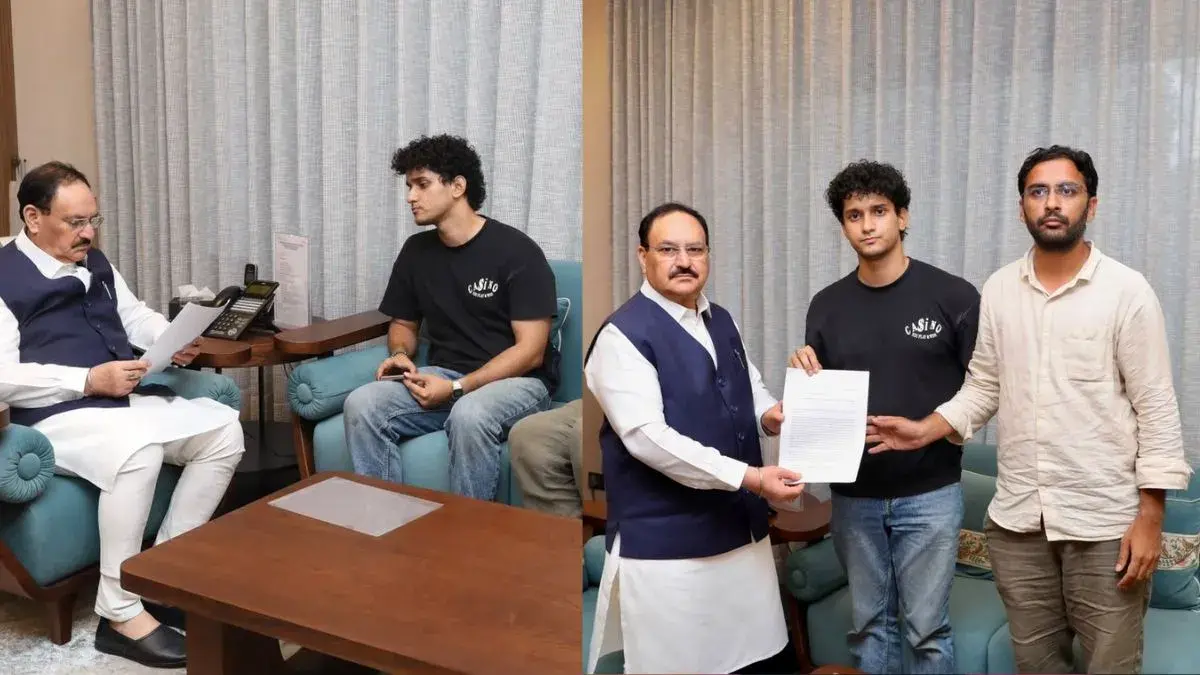
In a significant development amid the ongoing “Sansad Chalo” protest, Union Health Minister JP Nadda held the first formal meeting with representatives of the Cockroach Janta Party (CJP) on Monday, marking the beginning of direct engagement between the government and the protesting organisation. The meeting took place against the backdrop of escalating demonstrations in the national capital over alleged irregularities in competitive examinations, particularly the NEET-UG paper leak controversy.
The CJP delegation met JP Nadda and submitted a written memorandum, represented by spokespersons Saurav Das and Ashutosh Ranka, submitted a written memorandum outlining the organisation’s demands. According to both sides, the discussion was cordial and constructive, although no final decision was reached during the initial round of talks.
Following the meeting, JP Nadda urged protesters to withdraw their sit-in demonstration and cooperate with authorities in restoring normalcy while assuring that the demands submitted by the delegation would be discussed within the government.
Table of Contents
The meeting represents the first official dialogue between the government and CJP leaders since the protest movement intensified with the launch of the “Sansad Chalo” campaign.
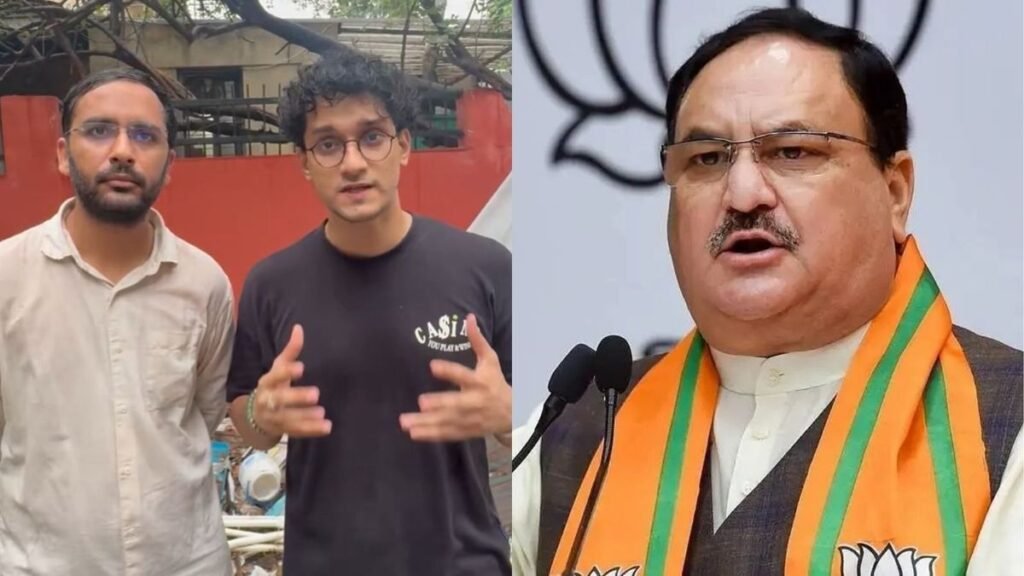
Government Holds First Formal Talks with CJP
The meeting between JP Nadda and the CJP delegation came after days of escalating protests in Delhi, where thousands of students, activists, and supporters gathered demanding accountability over examination-related controversies.
According to official statements, discussions between both sides began around 11:50 AM, although the delegation formally met the Union Minister later in the afternoon after waiting for several hours.
JP Nadda later stated through his official social media account that the government welcomed the opportunity for dialogue.
He said the discussions were held in a cordial atmosphere and described them as an important first step towards understanding the concerns raised by the protesters.
According to him, the delegation submitted a written memorandum around 4 PM, formally placing their demands before the government.
JP Nadda Appeals for Restoration of Normalcy
After the meeting concluded, JP Nadda appealed to the protesters to end their ongoing sit-in demonstration.
He requested participants to cooperate with the administration in restoring normal public life while the government examined the issues raised during the discussions.
According to the minister, constructive dialogue remains the preferred method of resolving public concerns.
He also indicated that the government would internally deliberate on the memorandum submitted by the CJP before communicating its response.
His remarks suggested that discussions between both sides may continue in the coming days.
Three Major Demands Submitted by CJP
The CJP delegation presented a written charter containing three principal demands that they described as non-negotiable.
These include:
- Immediate release of activist Sonam Wangchuk.
- Resignation of Union Education Minister Dharmendra Pradhan.
- Compensation of ₹1 crore for the families of NEET aspirants who allegedly died by suicide.
According to party representatives, these demands reflect growing public concern regarding alleged failures in the examination system and accountability within educational institutions.
The delegation maintained that meaningful reforms would require decisive government action.
Government Seeks Time Before Responding
Following the submission of the memorandum, CJP representatives stated that JP Nadda requested additional time before providing an official response.
According to spokesperson Ashutosh Ranka, the minister informed them that consultations with the Bharatiya Janata Party leadership would be necessary before any decision could be communicated.
Party representatives described the meeting as preliminary and indicated that further discussions may take place after internal consultations within the government.
Although no commitments were announced immediately, both sides described the interaction as constructive.
Saurav Das Calls Meeting a Beginning
After the meeting, CJP spokesperson Saurav Das shared details through social media.
He stated that he and Ashutosh Ranka met JP Nadda at his residence after waiting for more than two hours.
According to Das, the delegation submitted a detailed written memorandum explaining the organisation’s demands.
He also stated that JP Nadda assured them he would initiate discussions within the government regarding the issues raised.
Das noted that reports of mass detentions during the protests continued emerging while the meeting was taking place.
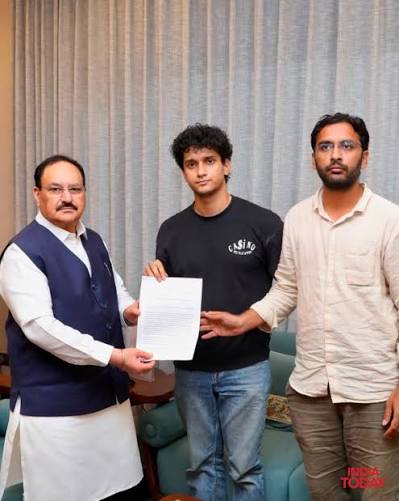
Ashutosh Ranka Reiterates Demands
CJP leader Ashutosh Ranka also shared an update following the discussions.
According to him, JP Nadda requested additional time to consult senior party leadership regarding the delegation’s demands.
Ranka reiterated that the organisation remained focused on three priorities:
- Release of Sonam Wangchuk.
- Resignation of Dharmendra Pradhan.
- Compensation for families of NEET aspirants who allegedly died by suicide.
He indicated that the organisation would now await the government’s response before deciding its future course of action.
Abhijeet Dipke Says Stand Remains Unchanged
CJP founder Abhijeet Dipke maintained that the organisation’s position remains unchanged despite the beginning of formal dialogue.
Speaking to the media, Dipke said the protest movement would continue until meaningful action is taken on the issues raised.
He again emphasised that accountability in the education system remains the central objective of the campaign.
According to him, the movement seeks justice for students affected by alleged examination irregularities.
Protest Continues Outside Parliament
While discussions were taking place between CJP representatives and JP Nadda, demonstrations continued across central Delhi.
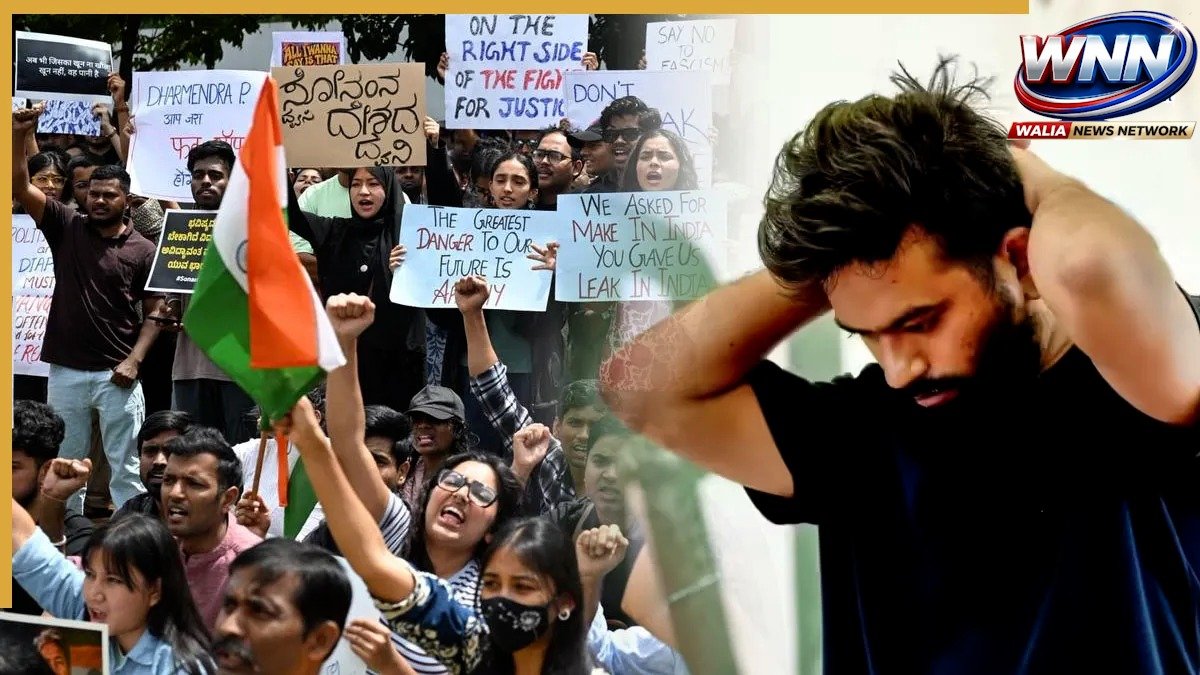
Thousands of supporters participated in the “Sansad Chalo” protest, attempting to march towards Parliament while demanding reforms in India’s examination system.
The protest focused primarily on alleged irregularities in the NEET-UG examination as well as broader concerns regarding transparency in competitive examinations.
Large crowds gathered near Jantar Mantar before moving towards Parliament under heavy police surveillance.
Police Stop March Towards Parliament
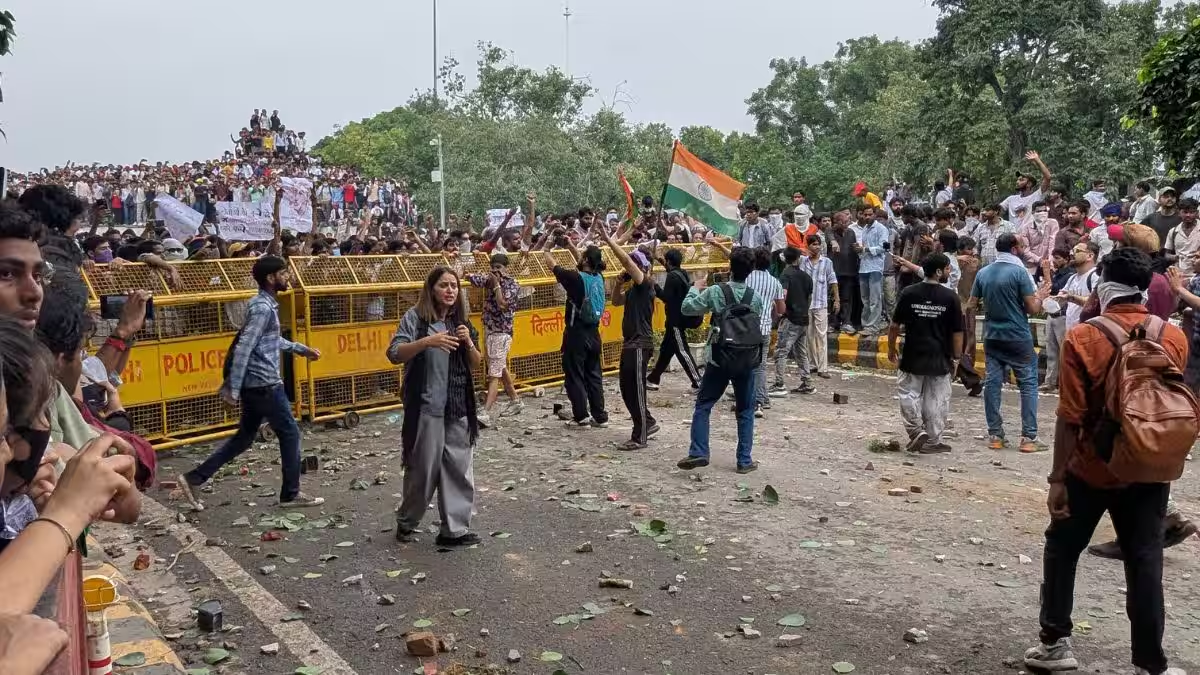
As protesters attempted to advance towards Parliament House, Delhi Police prevented them from entering restricted areas.
Multiple barricades had been erected across the New Delhi district in anticipation of the march.
Security personnel repeatedly appealed to protesters to remain within designated protest zones.
When sections of the crowd attempted to move beyond barricades, police intervened to prevent further movement.
Officials maintained that the restrictions were necessary to protect Parliament and maintain public order during the Monsoon Session.
Clashes Reported at Jantar Mantar
Tension increased at Jantar Mantar after confrontations were reported between demonstrators and police personnel.
According to reports, security personnel attempted to stop protesters from crossing barricades, leading to brief clashes.
Witnesses reported pushing and shoving between demonstrators and police as authorities tried to control crowd movement.
The situation remained tense for several hours before additional security personnel restored order.
Heavy Security Across Central Delhi
Security arrangements remained among the most extensive seen in the capital during recent protests.
Delhi Police deployed hundreds of personnel around Parliament House, Jantar Mantar, and adjoining government buildings.
Riot control vehicles were positioned near important intersections.
Authorities also installed multiple barricades to regulate movement towards sensitive government locations.
Officials stated that the deployment was intended to ensure public safety while allowing Parliament to function without disruption.
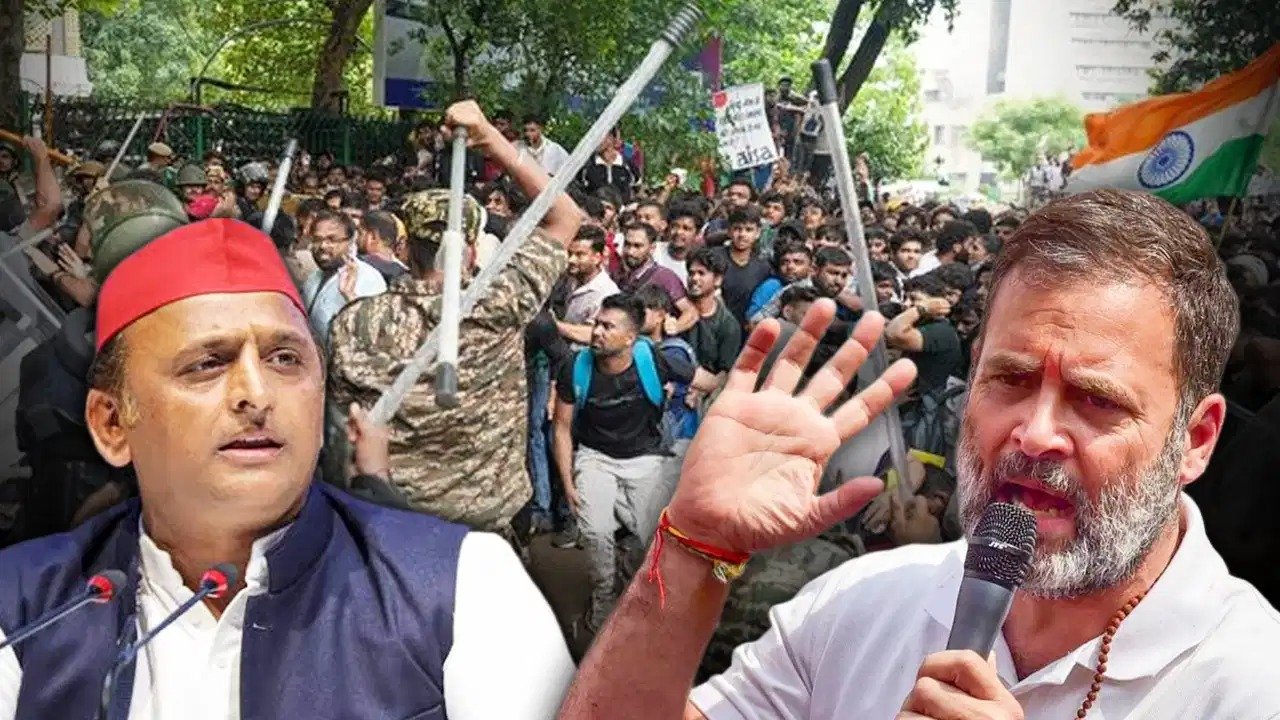
Lathi Charge Reported During Protest
As crowds continued attempting to move towards restricted areas, police reportedly carried out a lathi charge in certain locations.
Officials maintained that minimum force was used only after repeated warnings failed to disperse sections of the gathering.
The administration reiterated that prohibitory orders remained in force throughout the New Delhi district.
Police urged protesters to remain within authorised demonstration areas.
Mobile Connectivity Issues Reported
Several protesters claimed that mobile phone connectivity became weak around parts of the protest site.
Some participants alleged that signal jammers had been deployed near sensitive government areas.
Although officials did not formally confirm the deployment of signal-jamming equipment, communication disruptions were reported by numerous protesters during the demonstrations.
Security experts note that temporary communication restrictions are sometimes implemented during high-security operations depending on the threat assessment.
Examination Reforms Remain the Core Issue
The ongoing movement continues to centre around examination reforms.
Protesters have repeatedly demanded greater accountability regarding alleged paper leaks, stronger safeguards against examination malpractice, transparent investigation mechanisms, and improved governance within India’s education system.
Many participants argue that repeated controversies surrounding competitive examinations have affected public confidence in the country’s recruitment and admission processes.
The CJP maintains that institutional reforms remain essential for restoring trust among students.
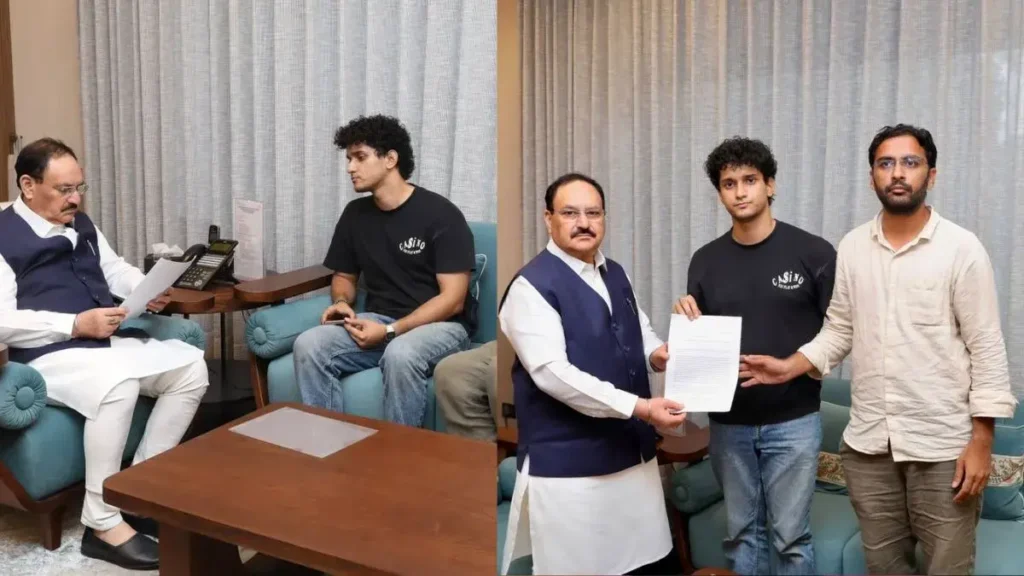
Political analysts believe JP Nadda’s meeting with CJP leaders
Political analysts believe the meeting between JP Nadda and CJP representatives could represent an important turning point in the ongoing movement.
Although substantial differences remain between both sides, the initiation of formal discussions has opened a channel for communication.
Observers note that continued dialogue could reduce tensions while providing an opportunity to address concerns through institutional processes.
Whether these discussions ultimately result in concrete policy decisions remains uncertain.
The first formal meeting between Union Health Minister JP Nadda and leaders of the Cockroach Janta Party marked a significant political development amid the continuing “Sansad Chalo” protest in Delhi. During the discussions, the CJP delegation submitted a written memorandum outlining three principal demands, including the release of Sonam Wangchuk, the resignation of Union Education Minister Dharmendra Pradhan, and financial compensation for families of NEET aspirants who allegedly died by suicide. While the government sought additional time to consult its leadership before responding, both sides described the interaction as constructive.
Meanwhile, protests continued outside Parliament under heavy security, with police preventing demonstrators from entering restricted areas through barricades, crowd-control measures, and additional deployment across central Delhi. As the Monsoon Session of Parliament progresses, attention is likely to remain focused on the government’s response to the protesters’ demands, the future of examination reforms, and the possibility of further dialogue between the administration and CJP leadership.










Take action big result
Great genz 🫶