

Israeli infrastructure and American energy installations across the region are facing severe retaliatory threats from the Islamic Republic of Iran, which has issued a stern warning stating it stands fully prepared to target them if it comes under military assault. This high-stakes defensive declaration follows widespread reports that Washington and Tel Aviv are actively coordinating new military operations against Iranian territory, pushing geopolitical volatility in the Middle East to an acute flashpoint after an aggressive escalation in rhetoric between Washington and Tehran.
The rhetoric underscores an increasingly unpredictable regional security paradigm. International observers fear that a singular tactical miscalculation could draw global superpowers and regional heavyweights into a wider, uncontrolled conflict capable of disrupting global energy supply lines and devastating critical maritime trade corridors.
Table of Contents
Tehran Labels Western Strike Reports ‘A Kind of Madness’
The official response from the Iranian establishment came swiftly through state-sanctioned media channels to address regional flashpoints. A senior Iranian security official, speaking directly to Tehran’s Tasnim News Agency, analyzed the circulating Western media accounts regarding prospective military actions. The official dismissed the foreign intelligence leaks and media reporting targeting the region as “a kind of madness,” suggesting that any dynamic attempt to neutralize or bombard Iranian internal infrastructure would trigger an immediate counter-response across the region.
According to detailed statements published by Tasnim, Tehran has already formulated comprehensive retaliatory strategies to protect its sovereignty. These defensive protocols encompass pre-targeted matrices focusing heavily on critical installations within Israel. The strategic framework ensures that if any escalation occurs, Israel will face immediate defensive counter-strikes. The official explicitly stated that the target map inside Israel includes both vital infrastructure nodes and secondary logistics networks. By naming Israel as a primary point of retaliation, Tehran aims to deter combined operations. Consequently, military planners in Israel are closely monitoring these direct psychological and tactical warnings.
The Iranian security official asserted that the state maintains “complete readiness” to execute these destructive counter-measures the moment any physical cross-border provocation occurs from Israel or its allies. To solidify the credibility of the threat against Israel, the official reminded international observers that Iran’s armed forces had already evidenced their technical capabilities and operational resolve during the recent “40-day war” and subsequent cross-border military engagements. This explicit reference reminds Israel of the scale of regional military capabilities. Ultimately, any aggressive move by Israel is predicted to trigger these pre-formulated protocols. Security experts note that the inclusion of Israel in the target matrix shifts the dynamics of the entire Middle Eastern security framework.

The Washington Dynamic: Trump Prepares Weekend Strike Orders
The sharp warnings emerging from Tehran did not materialize in a vacuum. They follow a wave of highly detailed intelligence disclosures out of Washington indicating that U.S. President Donald Trump has ordered American defense planners to finalize preparations for renewed strikes against Iranian targets.
The Wall Street Journal, citing anonymous senior U.S. officials, reported that President Trump directed fresh strikes that could commence as early as this weekend. The moves are part of a deliberate pressure strategy engineered by the White House to force Iran back into active diplomacy. Accompanying the physical deployment orders was a stark warning sent to Tehran: the nation will face substantial, escalating military measures unless it immediately re-enters comprehensive negotiations.
The administration’s public posturing matched the severity of the leaked intelligence. Addressing a Cabinet meeting convened at the historic presidential retreat at Camp David, President Trump signaled that the window for purely diplomatic maneuvering was rapidly closing.
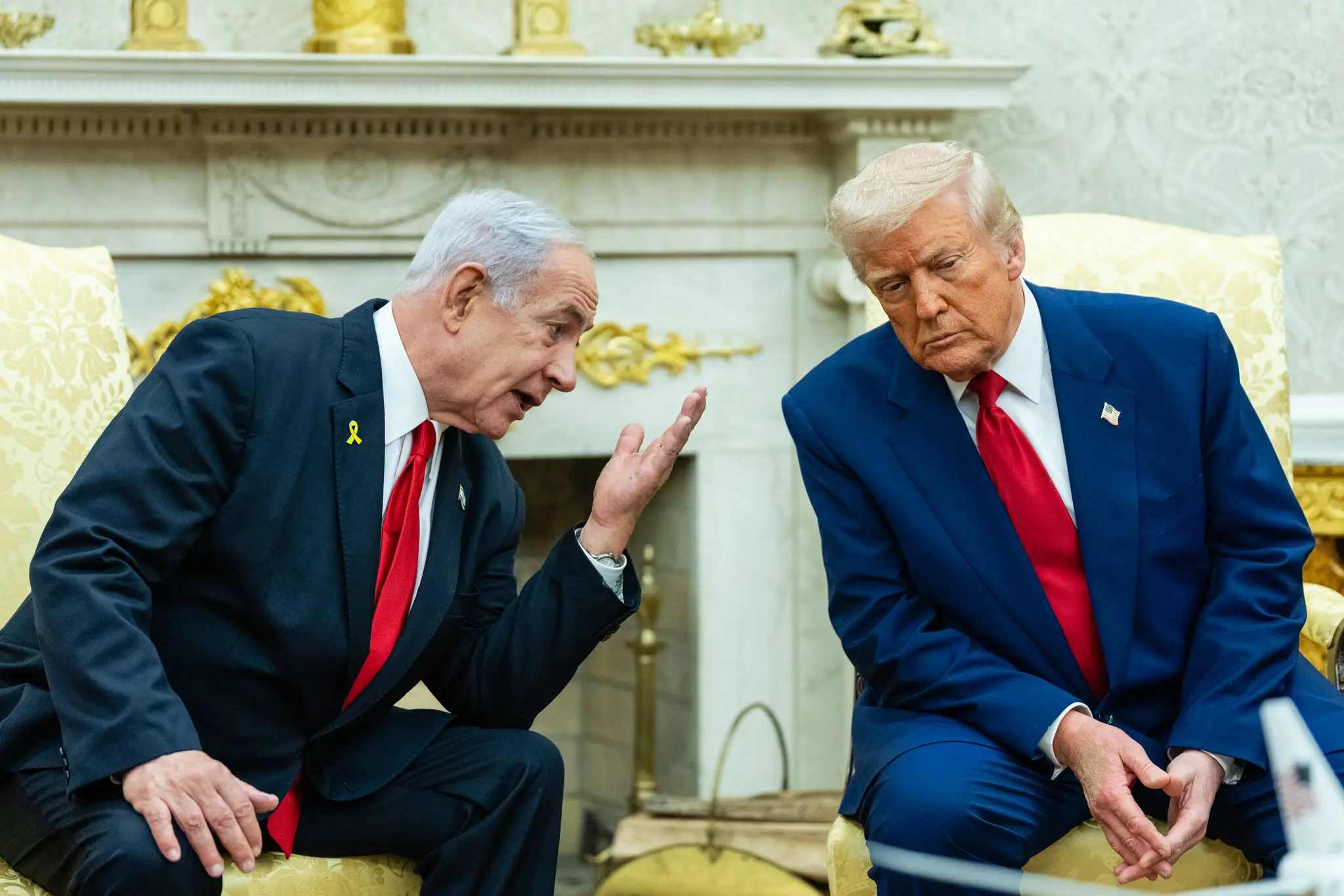
“The United States will be hitting them very hard,” President Trump stated during the Camp David briefing. “We have the assets in place, the coordinates are locked, and I am highly confident that Iran will ultimately reach a threshold where it just can’t take it anymore. They will come to the table, or they will face consequences unlike anything they have anticipated.”
Strategic Chronology: The Escalation Matrix
The current military standoff is the culmination of a rapidly accelerating series of political and military maneuvers over the past several weeks. Understanding the chronological flow of these events highlights how quickly the regional security matrix has deteriorated.
Target Vulnerabilities and the Threat to Global Energy
The threat of targeting energy assets introduces a terrifying economic variable into the traditional military equation. Should Iran execute its retaliatory strategy, the global oil market could face unprecedented supply shocks. Defense analysts note that the Persian Gulf energy nodes, international maritime shipping lanes, and regional commercial transit channels sit entirely within the operational striking distance of Iranian shore-based anti-ship missile batteries and low-altitude drone fleets.
A strike on these facilities could cause an immediate spiking of international crude oil prices and massive logistical disruptions in global shipping lanes. Similarly, targeting domestic desalinization plants, maritime port hubs, and offshore gas platforms would trigger severe internal infrastructure crises, shifting the conflict from a purely military engagement into a widespread economic war.
Military analysts point out that the threat to target American assets is backed by tangible hardware. Iran possesses one of the largest and most diverse ballistic missile and one-way attack drone stockpiles in the entire Middle East. By utilizing low-altitude cruise missiles and swarming unmanned aerial vehicle (UAV) tactics, Tehran has previously demonstrated an ability to penetrate sophisticated Western-engineered air defense umbrellas, making regional energy fields highly vulnerable to concentrated saturation strikes.
The Danger of a Spreading Regional Conflagration
The immediate concern for global defense ministries is the highly synchronized nature of a potential escalation. Unlike previous localized border skirmishes, any U.S.-led or Israeli-coordinated strike inside sovereign Iranian territory this weekend is predicted to spark an immediate, multi-front response.
Regional proxy networks are believed to have received pre-delegated operational commands. Intelligence analysts warn that the moment American ordnance impacts Iranian soil, localized missile batteries and mobile drone launch units across multiple regional borders will simultaneously activate their pre-locked target banks.

The economic fallout could prove just as catastrophic as the physical destruction. The Strait of Hormuz, a narrow maritime passageway through which a significant portion of the world’s total petroleum liquids pass daily, remains highly exposed to active hostilities. A complete or even partial closure of the strait resulting from active warfare would instantaneously trigger global inflationary shocks, disrupting delicate economic recoveries across Europe, Asia, and the Americas.
As military units on all sides shift to maximum combat readiness, the international community remains on high alert. Diplomatic channels are reportedly working frantically behind the scenes to engineer a de-escalation framework before the weekend deadline expires. However, with Washington demanding unconditional capitulation to new talks and Tehran labeling the threat of force as outright madness, the Middle East stands closer to the brink of total structural warfare than it has in a generation.