
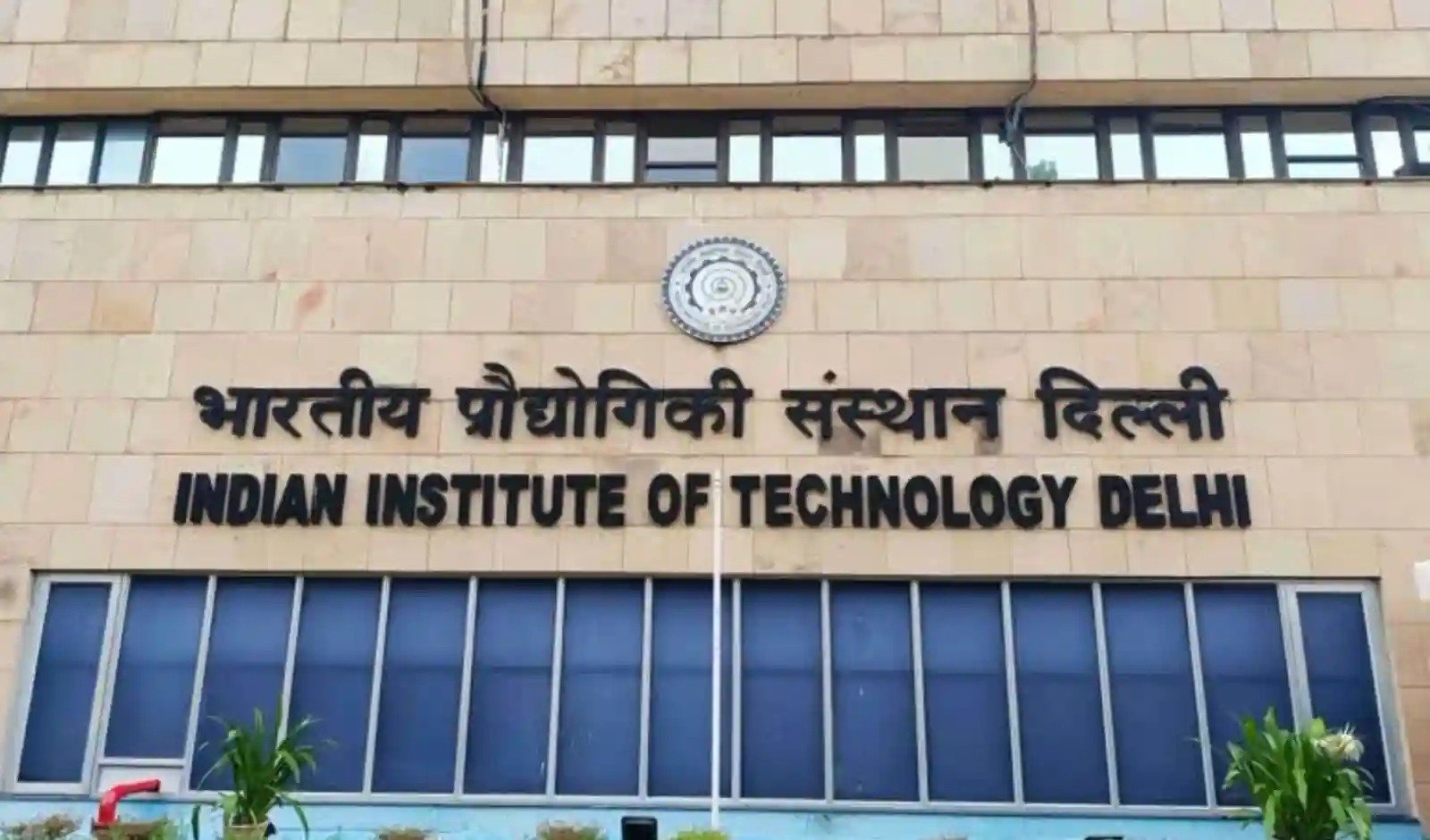
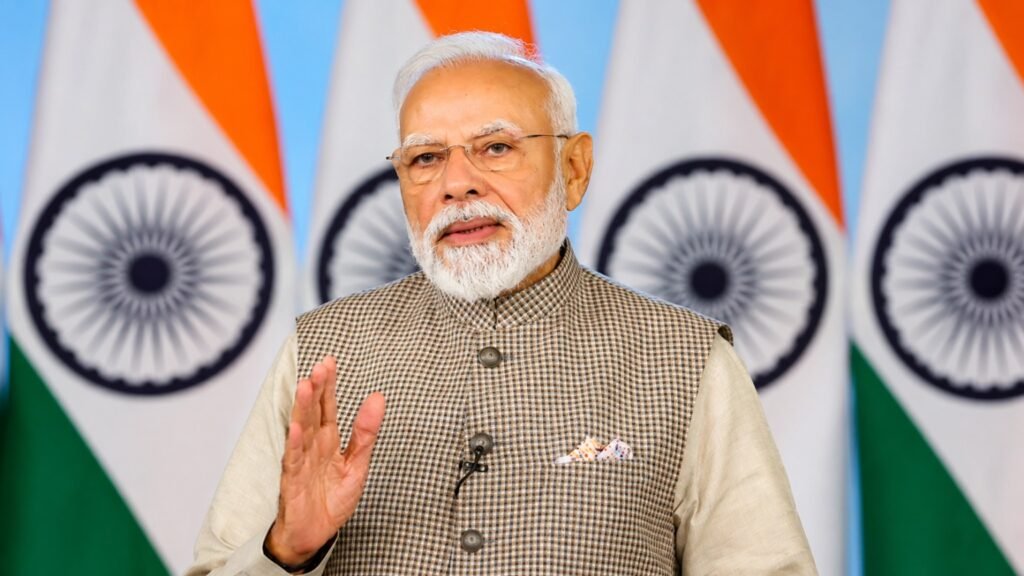
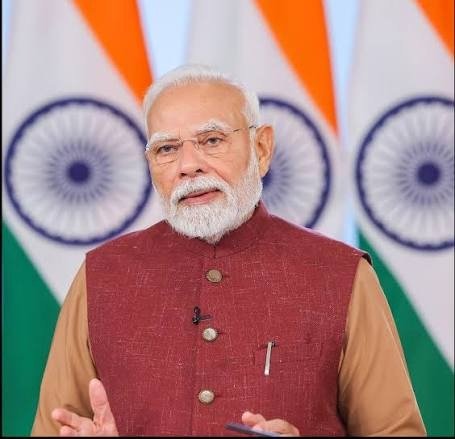
Prime Minister Narendra Modi will attend the 57th Convocation Ceremony of IIT Delhi as the Chief Guest on Saturday, August 8, 2026, marking a significant academic occasion for the institute and its graduating students. The Prime Minister is scheduled to address more than 3,000 students completing their academic programmes at the Indian Institute of Technology Delhi and will confer prestigious academic honours on meritorious students.
The convocation ceremony is scheduled to begin at 11 a.m. and will bring together graduating students, faculty members, institute officials, families and distinguished guests. According to official information, more than 3,000 students, including 587 PhD scholars, will receive their degrees during the ceremony.
The occasion will also highlight IIT Delhi’s expanding role in advanced research and emerging technologies. One of the major highlights of the event will be the inauguration of ‘Param Pragya’, an AI-powered high-performance supercomputing facility at IIT Delhi’s Sonipat campus.
Table of Contents
PM Modi to Address IIT Delhi Graduating Students
Prime Minister Narendra Modi’s address will be a key feature of the 57th Convocation Ceremony. His interaction with the graduating cohort comes at a time when India’s higher education institutions are increasingly being positioned as important centres for technological innovation, scientific research and entrepreneurship.
The Prime Minister is expected to address students at a major transition point in their academic and professional lives. The graduating students include those completing programmes across different disciplines, with a substantial number of doctoral scholars contributing to the institute’s research ecosystem.
The official announcement from the Prime Minister’s Office confirmed that Modi will attend the IIT Delhi convocation on August 8 and present the institute’s highest academic honours to outstanding students.
For the graduating students, the presence of the Prime Minister adds national significance to an event that traditionally marks the culmination of years of academic training and research.
More Than 3,000 Students to Receive Degrees
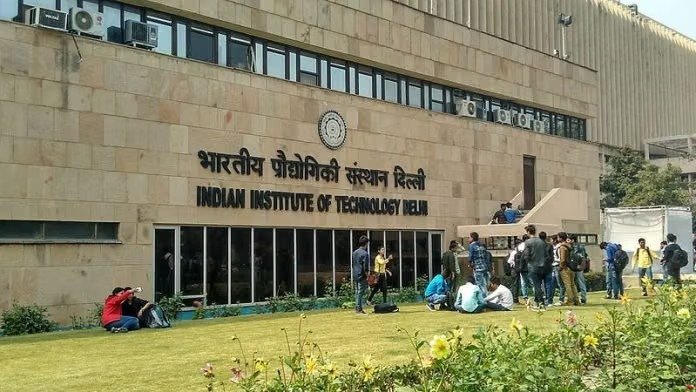
The IIT Delhi 57th Convocation will see more than 3,000 students being conferred degrees. Among them are 587 PhD scholars, underlining the institute’s emphasis on research and advanced academic work.
Convocation ceremonies are more than formal degree-distribution events. They represent the transition of students from an academic environment into professional careers, research institutions, entrepreneurship and other fields. For doctoral scholars in particular, the occasion marks the completion of extensive research projects and opens the next phase of their academic or professional journey.
IIT Delhi’s graduating cohort therefore represents not only a new generation of engineers and professionals but also researchers who could contribute to areas such as artificial intelligence, data science, advanced computing, engineering, technology and interdisciplinary research.
The institute’s official convocation portal lists August 8, 2026, as the date of the 2026 convocation.
Prestigious Gold Medals to Be Presented
Another major highlight of the ceremony will be the presentation of IIT Delhi’s prestigious academic honours to students who have demonstrated exceptional academic performance.
Prime Minister Modi will present the institute’s most prestigious awards, including the:
- President’s Gold Medal
- Director’s Gold Medal
- Shankar Dayal Sharma Gold Medal
- Perfect Ten Gold Medal
These awards recognise outstanding academic achievement and are among the most significant distinctions presented during the IIT Delhi convocation.
The honours are intended to acknowledge students who have excelled during their academic journey and demonstrated exceptional performance. For recipients, the medals represent recognition not only of academic results but also of the sustained effort and discipline required to perform at the highest level at one of India’s leading technological institutions.
‘Param Pragya’ AI Supercomputing Facility to Be Inaugurated
The technological centerpiece of the event will be the inauguration of Param Pragya, an AI-powered high-performance supercomputing facility established at IIT Delhi’s Sonipat campus.
The facility is expected to strengthen IIT Delhi’s capabilities in artificial intelligence, data science, advanced computing and interdisciplinary research. Its inauguration is particularly significant as high-performance computing is becoming increasingly important for research involving complex datasets, artificial intelligence models, simulations and computationally intensive scientific problems.
According to the Prime Minister’s Office, Param Pragya reflects India’s broader efforts to strengthen cutting-edge research infrastructure and advance capabilities in artificial intelligence and high-performance computing.
For IIT Delhi, the facility could provide researchers with greater computational resources for projects that require substantial processing power. Such infrastructure can support research across multiple disciplines rather than being restricted to a single area of engineering or computer science.
Why Param Pragya Matters for AI and Advanced Research
Artificial intelligence research increasingly depends on access to high-performance computing infrastructure. Training sophisticated AI models, processing large datasets and running complex simulations can require substantial computational resources.
The establishment of Param Pragya at IIT Delhi’s Sonipat campus therefore fits into the institute’s broader research ambitions. By improving access to advanced computing capabilities, such a facility can support researchers working on computationally demanding projects and facilitate collaboration between different academic disciplines.
The significance also extends beyond AI. High-performance computing can be used in areas such as scientific modelling, engineering simulations, data analytics and other forms of computational research.
The government has increasingly emphasised the development of domestic high-performance computing capabilities as part of India’s wider technology and research agenda. Param Pragya is positioned within this broader effort to expand advanced computing infrastructure and encourage research in emerging technologies.
IIT Delhi Strengthens National Academic Collaborations
Ahead of the convocation, IIT Delhi Director Rangan Banerjee highlighted another important development involving the institute.
IIT Delhi has launched a national academic and research collaboration network through memoranda of understanding with 18 National Institutes of Technology (NITs) across India.
The collaboration initiative is aimed at strengthening academic and research linkages between leading technical institutions. Such partnerships can create opportunities for joint research, academic exchanges, knowledge sharing and collaborative projects.
For India’s higher education ecosystem, stronger institutional networks are increasingly important. Universities and technical institutions face complex research challenges that often require expertise from multiple disciplines and institutions.
The collaboration between IIT Delhi and 18 NITs could therefore help create a wider platform for academic cooperation while providing opportunities for researchers and students to engage with institutions across different parts of the country.
IIT Delhi’s Growing Focus on Research and Innovation
The developments surrounding the 57th convocation reflect a broader emphasis on research, innovation and emerging technologies at IIT Delhi.
The institute has long been recognised for its contributions to engineering and technological education, but the evolving research environment requires institutions to expand their capabilities in areas such as artificial intelligence, data science, advanced computing and interdisciplinary research.
The inauguration of Param Pragya and the creation of a national collaboration network with NITs are significant in this context.
Together, these initiatives point towards a model of higher education in which institutes are not only responsible for teaching and degree programmes but also function as centres for technological innovation, research and collaboration.
The presence of a large number of PhD graduates at the convocation further highlights the importance of research in IIT Delhi’s academic ecosystem.
Convocation Comes at a Key Moment for India’s Technology Sector
The IIT Delhi convocation comes at a time when artificial intelligence and advanced digital technologies are rapidly transforming industries worldwide.
India has placed increasing emphasis on developing its domestic research capabilities in emerging technologies. Institutions such as IIT Delhi have an important role to play in this process because they bring together students, researchers, faculty members and industry partners.
The availability of advanced computing infrastructure can help researchers pursue projects that might otherwise be constrained by limited computational resources. At the same time, stronger academic collaborations can broaden access to expertise and encourage research partnerships.
For graduating students, this changing environment presents both opportunities and challenges. Technical graduates are entering a workforce where artificial intelligence, automation, data analytics and advanced digital technologies are increasingly influencing traditional professions.
A Significant Milestone for the Graduating Batch
For the more than 3,000 students receiving their degrees, the 57th Convocation will remain an important milestone in their lives.
The ceremony will formally mark the completion of their academic journey at IIT Delhi while also highlighting the achievements of students who have earned the institute’s highest academic honours.
The participation of the Prime Minister, the presentation of gold medals and the inauguration of a major supercomputing facility make this year’s ceremony particularly significant.
For the 587 PhD scholars, the event also represents the culmination of years of specialised research. Their work will potentially contribute to India’s expanding research ecosystem in universities, laboratories, industries and other institutions.
IIT Delhi Convocation 2026: What to Watch
The key developments from the IIT Delhi 57th Convocation include:
Convocation date: August 8, 2026
Ceremony time: 11 a.m.
Chief Guest: Prime Minister Narendra Modi
Students receiving degrees: More than 3,000
PhD scholars: 587
Major honours: President’s Gold Medal, Director’s Gold Medal, Shankar Dayal Sharma Gold Medal and Perfect Ten Gold Medal
Major technology initiative: Inauguration of Param Pragya AI-powered high-performance supercomputing facility
Location of Param Pragya: IIT Delhi’s Sonipat campus
Academic collaboration: MoUs with 18 National Institutes of Technology
The official IIT Delhi convocation portal confirms August 8, 2026, as the date of the institute’s 2026 convocation.
IIT Delhi’s Next Chapter: Education, AI and Research
The 57th Convocation is significant not only because thousands of students will receive their degrees but also because it showcases the changing priorities of India’s premier technical institutions.
With the inauguration of Param Pragya, IIT Delhi is strengthening its infrastructure for AI, data science and high-performance computing. Meanwhile, its collaboration with 18 NITs signals an effort to build broader academic and research networks.
As India seeks to strengthen its position in advanced technology and scientific research, institutions such as IIT Delhi will remain central to developing skilled professionals, researchers and innovators.
For the graduating students, Saturday’s ceremony will mark the end of one chapter and the beginning of another. For IIT Delhi, however, the event also serves as a showcase of the institute’s continuing focus on academic excellence, technological innovation and research-driven development.