New Delhi, The night sent shockwaves through Southwest Delhi’s Dwarka district, as two violent stabbing incidents unfolded within a span of just 15 minutes in the Dabri area. What began as a terrifying sequence of events quickly escalated into a major law-and-order challenge, leaving one person dead and three others critically injured. Yet, what could have spiraled into prolonged panic was brought under control with remarkable speed and precision by the Delhi Police, whose coordinated response ensured that both main accused were apprehended within hours.
This incident not only exposed the unpredictable nature of urban crime but also highlighted the critical importance of rapid policing, intelligence coordination, and strong leadership in crisis situations.
Table of Contents
A Night of Violence: Two Incidents, One City in Fear
The first attack occurred at approximately 9:23 PM near Durga Mata Temple in Madhu Vihar. A 39-year-old man, Govind Jha, was brutally assaulted with a knife by an unidentified attacker. Eyewitnesses described the attack as sudden and shocking, leaving little time for intervention. Jha was immediately rushed to a nearby hospital, but despite medical efforts, he succumbed to his injuries shortly after midnight at around 12:08 AM.
Almost simultaneously, a second violent episode unfolded just a short distance away in Gali No. 2 near Nav Jeevan School. Three individuals—Honey, Anish, and Rohit—were attacked and left with severe stab injuries. All three victims remain in critical condition, undergoing intensive medical treatment.
The proximity in time and location of these incidents created an atmosphere of fear and confusion. Residents feared a larger criminal conspiracy or a coordinated attack. However, police were quick to step in, not only to investigate but also to control public perception.
Immediate Police Response: Strategy Over Panic
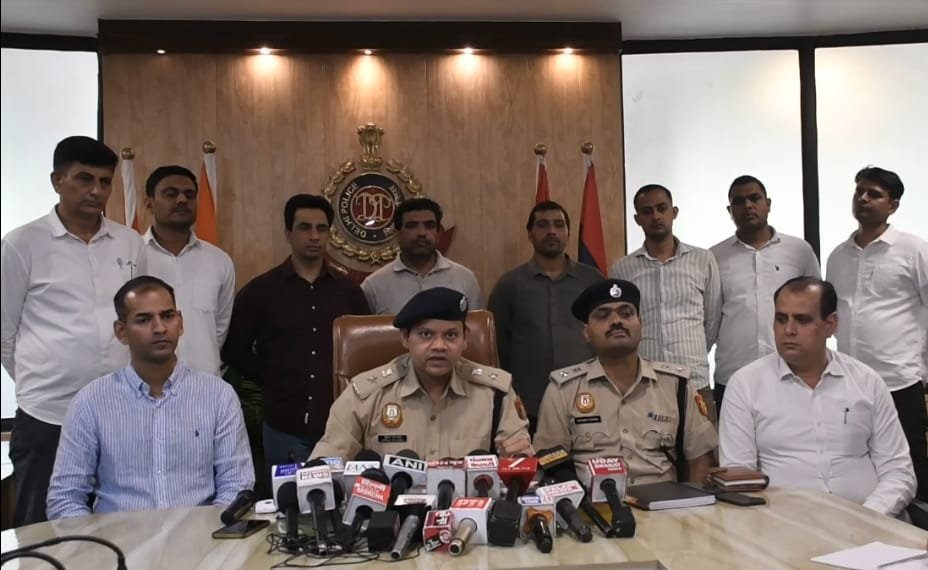
Recognizing the seriousness of the situation, Kushal Pal Singh, Deputy Commissioner of Police (Dwarka District), wasted no time in mobilizing resources. Multiple specialized teams, including the Special Staff and Anti-Auto Theft Squad (AATS), were deployed simultaneously.
One of the most crucial aspects of the police response was clarity in communication. Authorities swiftly ruled out any communal angle, urging citizens not to spread rumors. In a city like Delhi, where misinformation can quickly escalate tensions, this step played a key role in maintaining public calm.
The approach adopted by the police was not reactive but strategic—combining ground intelligence, surveillance inputs, and rapid deployment units. This ensured that the accused could not flee or regroup.
The First Encounter: Precision at Sector-17
Within hours of the incidents, police traced the first accused, Rohit Kumar alias Noddy (21), to the vicinity of the Sports Complex in Dwarka Sector-17. Acting on credible intelligence, the Special Staff team laid a trap and cornered him.
What followed was a tense encounter. Despite clear instructions to surrender, the accused opened fire, discharging three rounds at the police team. Demonstrating both restraint and professionalism, the police retaliated with controlled force, firing only two rounds. One of these struck the accused in the leg, effectively neutralizing the threat without causing fatal harm.
From the spot, police recovered a pistol, live cartridges, and spent shells—clear evidence of the accused’s intent to engage in violent resistance. The operation was executed with precision, ensuring that no civilians were harmed.
The Second Operation: High-Risk Arrest on Najafgarh Nala Road
Later that same night, around 10:30 PM, the second major operation unfolded on Najafgarh Nala Road. The AATS team, acting on intelligence inputs, set up a strategic blockade to intercept the main accused, Prem Sharma alias Himanshu (21).
This encounter proved even more dangerous. The accused fired three rounds at the police team, one of which struck the bulletproof jacket of Head Constable Sandeep—a stark reminder of the risks faced by law enforcement personnel.
Maintaining composure under pressure, the police responded with controlled retaliation, firing three rounds. One bullet hit the accused in the leg, leading to his capture. From his possession, officers recovered a pistol, cartridges, and a stolen scooter, further linking him to criminal activities.
Criminal Background: A Pattern of Violence
Subsequent investigation revealed disturbing details about the accused. Rohit Kumar had been released from jail just days earlier on March 16, raising serious questions about repeat offending and post-release monitoring.
Prem Sharma, on the other hand, had an even more alarming criminal history, including involvement in kidnapping for ransom and the murder of a delivery boy. This was not an isolated act of violence but part of a broader pattern of criminal behavior.
These revelations underline a critical challenge faced by law enforcement agencies—not just apprehending criminals, but dealing with repeat offenders who return to crime soon after release.
Leadership and Coordination: The Real Game-Changer
At the heart of this successful operation was strong and decisive leadership. DCP Kushal Pal Singh’s ability to quickly assess the situation, deploy resources, and maintain operational control proved crucial.
His “zero tolerance” approach was clearly reflected in the swift formation of teams and the targeted execution of operations. Rather than waiting for the situation to escalate, the police took proactive steps to neutralize the threat.
Equally commendable was the coordination between different units. The Special Staff and AATS teams worked in sync, sharing intelligence and executing operations with clarity and discipline.
Balancing Force with Restraint
One of the most notable aspects of these operations was the measured use of force. In both encounters, the accused opened fire first. Yet, the police response was calculated—not excessive.
By aiming to incapacitate rather than eliminate, the police ensured that the accused could be captured alive, allowing for further investigation. This approach reflects a professional policing system, where the objective is not just to stop crime, but also to uphold legal and ethical standards.
Public Safety and Confidence Restored
Incidents like these can deeply unsettle communities, especially when they occur in quick succession. However, the rapid resolution of the case helped restore a sense of safety among residents.
The clear messaging from police—combined with visible action—played a vital role in preventing panic. By addressing both the physical threat and the psychological impact, the police ensured that normalcy returned quickly.
Broader Implications: Lessons for Urban Policing
This case offers several important insights into modern urban policing:
- Speed is Critical: Quick response can prevent escalation and save lives.
- Intelligence Matters: Accurate and timely information is the backbone of successful operations.
- Coordination is Key: Multiple units working together can achieve results faster and more effectively.
- Public Communication: Transparent communication helps prevent misinformation and panic.
- Balanced Use of Force: Professional restraint enhances credibility and trust.