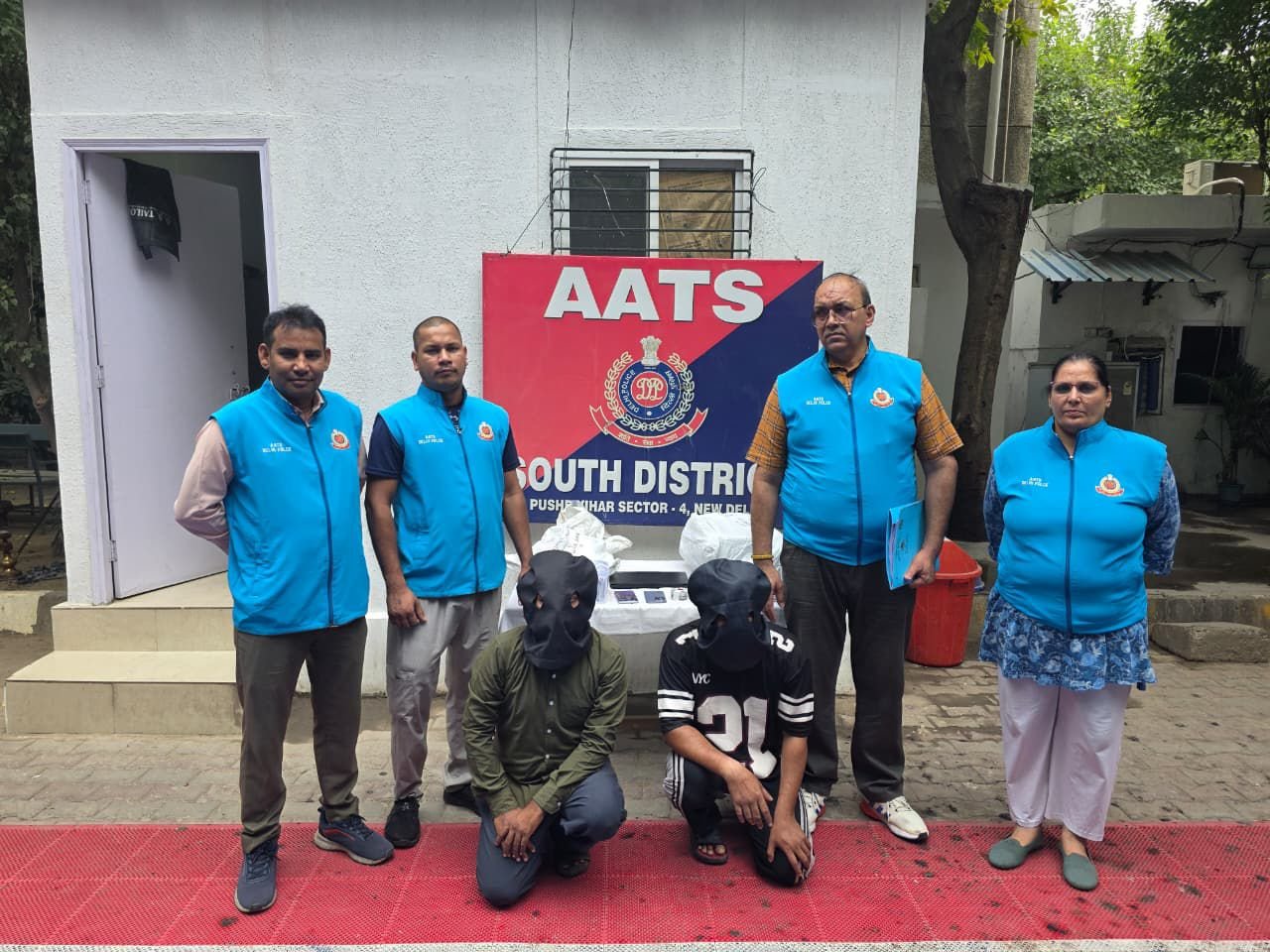
Property Crime continues to remain one of the biggest concerns for residents in metropolitan cities, particularly in areas where criminals target unsuspecting motorists carrying cash or valuable belongings. In a significant breakthrough, the Anti Auto Theft Squad (AATS) of Delhi Police’s South District has dismantled a notorious interstate “Thak-Thak” gang by arresting two of its active members and recovering a massive cache of stolen property, including ₹6 lakh in cash, laptops, jewellery, electronic gadgets, silver articles, burglary tools and the vehicle allegedly used in the crimes.
The operation marks another major success in Delhi Police’s sustained campaign against Property Crime, demonstrating how intelligence-based policing and quick action can disrupt organised criminal networks operating across multiple states. Investigators believe the arrests will help solve several theft cases reported not only in Delhi but also in neighbouring Haryana.
Table of Contents
Delhi Police Acts on Secret Intelligence
The breakthrough came after officers of the Anti Auto Theft Squad received specific intelligence on June 30, 2026, regarding the movement of two suspected members of an active Thak-Thak gang. Acting immediately on the information, the police team formulated a strategic plan and laid a trap to intercept the suspects before they could execute another offence.
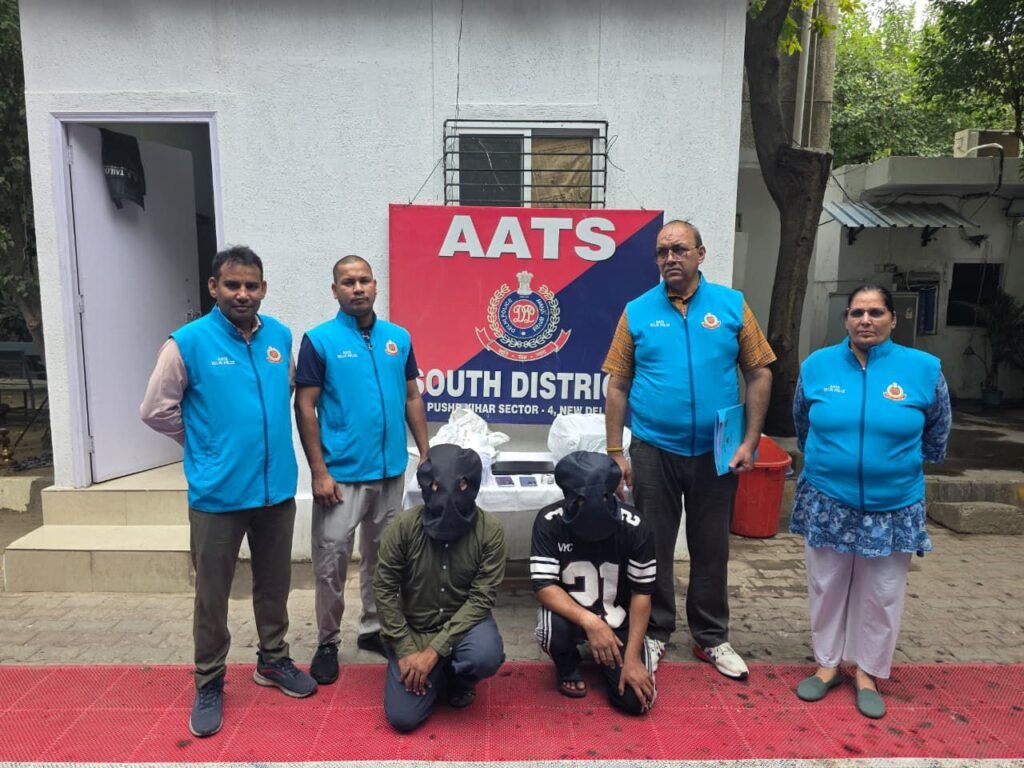
The operation resulted in the arrest of Gangesh Naydu, aged 40, and Vikram, aged 33, both residents of Dakshinpuri in South Delhi. Their detention was followed by detailed questioning and extensive searches that led investigators to recover a substantial quantity of stolen valuables linked to multiple Property Crime incidents.
The success of the operation highlights the increasing emphasis Delhi Police is placing on intelligence-led policing instead of relying solely on post-crime investigations. Such proactive measures not only prevent fresh offences but also improve recovery rates in Property Crime cases.
Massive Recovery of Stolen Property
One of the most notable aspects of the case is the volume of recovered property. According to Delhi Police, the accused were found in possession of valuables believed to have been stolen from different victims over a period of time.
The recovered items include:
- ₹6 lakh in cash
- Two mobile phones
- One laptop
- One MacBook
- Five gold-coloured bangles
- Three gold-coloured chains
- Approximately 1.1 kilograms of silver articles
- One wristwatch
- Samsung earbuds
- Burglary tools
- A scooty allegedly used during the commission of offences
The recovery is significant because Property Crime often results in financial losses that victims rarely recover completely. Recovering cash, jewellery and electronic devices greatly improves the chances of returning stolen belongings to their rightful owners while strengthening the evidence against the accused.
Police officials are now working to establish ownership of each recovered item and determine whether additional unsolved theft cases can be linked to the seized property.
Understanding the “Thak-Thak” Technique
The arrested suspects are believed to be part of a well-known criminal network that specialises in the “Thak-Thak” method of theft.
This method relies more on deception than force. Criminals identify individuals carrying cash or valuables, especially those who have just exited banks, jewellery shops or business establishments. They then approach the victim’s vehicle and create a distraction by pretending there is a tyre puncture, an oil leak, or another mechanical issue.
As the driver steps out or becomes distracted, another gang member quickly opens the vehicle and removes bags, cash or other valuables before escaping, often on a two-wheeler waiting nearby.
Because these crimes occur within seconds and usually in crowded locations, victims often realise the theft only after the criminals have disappeared.
Law enforcement agencies across several Indian cities have repeatedly warned motorists about this technique, making public awareness an important part of reducing Property Crime.
Investigation Reveals Interstate Criminal Network
Initial investigation suggests that both accused were active members of an interstate gang involved in repeated Property Crime offences across Delhi-NCR.
Police said technical surveillance, sustained interrogation and analysis of available evidence connected the suspects with multiple theft cases spread across Delhi and Haryana. Investigators are continuing to examine digital evidence, recovered articles and communication records to identify additional gang members and understand the wider network behind these operations.
The interstate nature of the gang also underlines the evolving challenges faced by law enforcement agencies. Criminal groups increasingly operate across state boundaries, making coordination between police departments essential for tackling Property Crime effectively.
The ongoing investigation is expected to reveal whether more members participated in planning the thefts, disposing of stolen goods or identifying potential targets.
Three Cases Already Worked Out
Delhi Police has already linked the arrests to three registered criminal cases.
These include two electronic FIRs registered in Delhi during January and April 2026 and another theft-related case registered in Gurugram, Haryana.
The successful detection of these cases provides immediate relief to victims while helping investigators identify common patterns that may connect additional Property Crime incidents still under investigation.
Officials have indicated that more cases could be solved as questioning of the accused continues.
Long Criminal History Raises Serious Concerns
Police records indicate that both accused have extensive criminal backgrounds spanning several years.
Gangesh Naydu is allegedly involved in more than thirty previous criminal cases registered in Delhi, Gurugram, Faridabad and Karnataka, most of them related to theft.
Similarly, Vikram reportedly has over forty previous criminal cases against him, including theft, robbery and other offences registered across Delhi, Gurugram, Ghaziabad and Faridabad.
The extensive criminal records suggest that the accused were experienced offenders who had allegedly been active in Property Crime for years.
For investigators, such histories are important because they help identify recurring criminal patterns, methods of operation and possible links with unsolved cases. Experienced repeat offenders often possess detailed knowledge of surveillance gaps, traffic movement and victim behaviour, making their detection particularly important for public safety.
How Intelligence and Surveillance Led to Success
Police officials have credited the success of the operation to careful intelligence gathering, coordinated field surveillance and timely intervention.
Instead of waiting for another theft to occur, investigators acted immediately after receiving credible information about the suspects’ movement. Such preventive policing plays a critical role in reducing Property Crime because it enables officers to intercept offenders before additional victims suffer losses.
The operation was carried out by a dedicated team comprising SI Shajid Hussain, ASI Ravinder Singh, Woman Head Constable Seema, Head Constable Devendra, Constable Kana Ram, Constable Arvind and Constable Ashok under the leadership of Inspector Amit Dutt Sharma, In-Charge of AATS, with supervision from ACP Operations Rituraj.
Their coordinated efforts demonstrate how specialised police units can effectively respond to organised Property Crime through planning, surveillance and swift execution.
Why Recoveries Matter in Property Crime Investigations
Recovery of stolen property is often one of the most challenging aspects of Property Crime investigations.
Unlike violent crimes, stolen cash and valuables frequently change hands quickly, making recovery difficult. Jewellery may be melted, electronic gadgets resold and cash distributed among gang members within hours.
In this case, however, investigators were able to recover not only cash but also expensive electronic devices, jewellery and silver articles before they disappeared into illegal resale markets.
Such recoveries strengthen prosecution because physical evidence directly links suspects to criminal activity. They also increase public confidence by showing victims that police efforts can result in the return of valuable possessions.
Property Crime Remains a Major Urban Challenge
Large metropolitan cities continue to face significant challenges from Property Crime due to heavy traffic, crowded commercial areas and the movement of large amounts of cash and valuables.
Professional criminal gangs often monitor shopping centres, banks, wholesale markets and commercial districts where individuals may be carrying substantial amounts of money.
Experts have long observed that distraction-based thefts remain among the most difficult crimes for ordinary citizens to anticipate because offenders rarely use violence. Instead, they rely on psychology, speed and careful planning.
Police repeatedly advise motorists to avoid leaving bags or valuables in visible areas inside vehicles, remain cautious if approached by strangers pointing out supposed mechanical issues, and verify any claims before stepping away from their belongings.
Greater public awareness, combined with effective policing, remains one of the strongest tools for reducing Property Crime in urban areas.
Continued Investigation Underway
Although the arrests represent a major achievement, investigators believe further leads are likely to emerge.
Delhi Police is continuing its investigation to identify additional members of the interstate gang, establish links with pending theft cases and recover any remaining stolen property. Officers are also analysing recovered articles to determine whether they correspond with complaints registered in other jurisdictions.
The investigation may help uncover wider criminal networks involved in transporting, storing or selling stolen goods, thereby expanding the impact of the operation beyond the three cases already detected.
The latest action by Delhi Police reflects a determined approach towards combating organised Property Crime through intelligence-based operations, coordinated teamwork and persistent investigation. By dismantling an active Thak-Thak gang, recovering substantial stolen property and linking the accused to multiple criminal cases, the South District police have dealt a significant blow to repeat offenders who prey on unsuspecting citizens. Their swift response, meticulous surveillance and commitment to protecting public property reinforce the vital role of specialised police units in maintaining law and order while strengthening public confidence in the fight against Property Crime.