

A strong CIBIL score can play an important role when a borrower applies for a home loan, personal loan, car loan or credit card. While lenders consider several factors before approving a loan, a borrower’s credit history and repayment behaviour can significantly influence how financial institutions assess creditworthiness.
A healthy CIBIL score generally reflects responsible credit management. Regular repayments, controlled credit utilisation, a balanced mix of loans and careful monitoring of credit reports can help borrowers maintain a stronger credit profile. On the other hand, repeated late payments, excessive borrowing and frequent loan applications can make lenders more cautious.
For borrowers planning to apply for a loan, maintaining good financial habits well before submitting an application can be particularly useful. A good credit profile does not guarantee approval, but it can improve the overall strength of a loan application and may help the process move more smoothly.
What Is a CIBIL Score?
A CIBIL score is a three-digit numerical representation of an individual’s credit history. In India, TransUnion CIBIL is one of the major credit information companies that maintains credit records and generates credit scores based on information reported by lenders.
 The score generally ranges from 300 to 900. A higher CIBIL score indicates a stronger credit history, while a lower CIBIL score can signal greater credit risk to potential lenders.
The CIBIL score is calculated using information contained in an individual’s credit report. This can include repayment history, outstanding balances, credit utilisation, types of credit held and applications for new credit.
Although the CIBIL score is an important factor, lenders do not approve or reject applications based on the CIBIL score alone. Income, employment or business stability, existing financial obligations, loan amount, repayment capacity and the lender’s internal policies can also influence the final decision.
Why a Good CIBIL Score Matters for Loan Approval
When a person applies for a loan, the lender wants to determine whether the borrower is likely to repay the borrowed amount on time.
A strong credit history can provide evidence of responsible borrowing behaviour. It may make the applicant’s profile more attractive to lenders, particularly when other financial factors are also satisfactory.
A healthy credit profile may potentially help borrowers in several ways, including:
- Improving the overall strength of a loan application
- Increasing the likelihood of approval
- Helping lenders assess repayment behaviour more confidently
- Potentially providing access to more competitive interest rates, depending on the lender and the complete borrower profile
- Making future access to credit easier when managed responsibly
However, borrowers should remember that no particular CIBIL score guarantees loan approval. Every lender has its own eligibility criteria and risk-assessment process.
Habit 1: Always Pay EMIs and Credit Card Bills on Time
One of the most important habits for maintaining a healthy credit profile is making repayments on time.
Loan EMIs and credit card payments should be made before their respective due dates. Payment history is an important part of a credit report, and repeated missed or delayed payments can negatively affect a borrower’s creditworthiness.
Borrowers should avoid waiting until the last day to make payments, particularly when payments are made through banking channels that may take time to process.
Setting up reminders or automatic payment arrangements can help reduce the possibility of accidentally missing a due date.
For credit card users, paying at least the required amount by the due date can prevent an account from becoming overdue, but regularly paying the full outstanding balance can also help avoid accumulating interest and growing credit-card debt.
Habit 2: Keep Credit Utilisation Under Control
Another important factor is credit utilisation, which refers to how much of the available revolving credit a borrower is using.
For example, if a credit card has a limit of ₹1 lakh and the outstanding balance is ₹30,000, the utilisation is 30%.
Maintaining lower utilisation is generally considered healthier than consistently using a very high proportion of the available credit.
Borrowers who regularly remain close to their credit limits may appear more dependent on borrowed funds. This can potentially affect their credit profile.
Instead of maximising available credit, consumers should aim to borrow only what they can comfortably repay.
Habit 3: Avoid Unnecessary Loan Applications
Every time a person formally applies for credit, the lender may conduct a credit enquiry. Multiple hard enquiries within a relatively short period can be visible on the credit report.
Therefore, borrowers should avoid applying for several loans or credit cards simply to compare offers.
Before submitting an application, consumers can research the basic eligibility criteria, interest rates, fees and repayment requirements of different lenders. This can help them narrow down suitable options before making a formal application.
A carefully planned loan application is generally preferable to submitting numerous applications without checking eligibility.
Habit 4: Maintain a Healthy Credit Mix
Credit profiles can contain different types of borrowing, including secured and unsecured credit.
A secured loan, such as a home or vehicle loan, is generally backed by an asset, while an unsecured loan, such as a personal loan or credit card balance, does not require the same type of collateral.
A healthy and appropriately managed mix of credit can demonstrate experience with different forms of borrowing. However, consumers should not take loans merely to create a credit mix.
Taking on unnecessary debt can increase financial pressure. The priority should always be responsible borrowing and timely repayment rather than deliberately acquiring different types of loans.
 Habit 5: Do Not Close Old Credit Accounts Without Considering the Impact
The age of credit accounts can form part of a person’s broader credit profile.
Borrowers sometimes close older credit cards because they no longer use them. While closing an unnecessary account may sometimes make financial sense, consumers should consider the potential impact on their credit history and overall available credit before doing so.
In particular, closing a card can reduce total available credit. If existing balances remain unchanged, this could increase the borrower’s overall credit utilisation ratio.
That does not mean consumers should keep every credit card indefinitely. Instead, account closures should be considered as part of the person’s overall financial situation.
Habit 6: Check Your CIBIL Score Report Regularly
Checking a credit report periodically can help borrowers identify incorrect information, unfamiliar accounts or repayment records that do not accurately reflect their financial activity.
Errors in a credit report can potentially create problems when someone applies for a loan.
Consumers should therefore review important details such as:
- Personal information
- Existing loan accounts
- Credit card accounts
- Outstanding balances
- Repayment records
- Credit enquiries
- Closed accounts
If an error is identified, the borrower can raise a dispute through the appropriate credit information company’s process and provide supporting information where required.
Regular monitoring can also help consumers detect unfamiliar activity at an early stage.
Habit 7: Keep Outstanding Debt Manageable
Having multiple loans does not automatically mean that a borrower has a poor credit profile. However, excessive outstanding debt can create repayment pressure.
Before taking a new loan, borrowers should assess their existing EMIs, monthly expenses and income.
Taking another loan while already struggling with repayments can increase financial stress and potentially lead to missed payments.
Responsible borrowing means considering the ability to repay, rather than focusing only on whether a lender is willing to provide additional credit.
Habit 8: Maintain a Stable Repayment Record
A strong credit profile is generally built over time rather than within a few weeks.
Borrowers should therefore focus on maintaining consistent repayment behaviour.
Even if a person currently has a good CIBIL score, repeated late payments or excessive borrowing can weaken the profile over time.
Similarly, consumers with a weaker credit history may gradually improve their financial standing through responsible credit management.
There is no legitimate shortcut that can instantly transform a credit profile. Consistent financial discipline remains the most reliable approach.
Habit 9: Be Careful With Credit Card Spending
Credit cards can be useful financial tools when managed responsibly, but excessive spending can quickly create repayment problems.
Consumers should avoid treating their credit limit as additional income. A credit limit represents the maximum amount that can be borrowed under the card’s terms, not an amount that necessarily should be spent.
Paying the full statement balance whenever financially possible can help borrowers avoid revolving high-cost credit-card debt.
Maintaining reasonable spending relative to income can also reduce the risk of missed payments and escalating balances.
Habit 10: Avoid Becoming a Guarantor Without Understanding the Risk
People are sometimes asked to become guarantors or co-borrowers for another person’s loan.
Before agreeing, they should understand that such an arrangement can have financial and credit implications. If the primary borrower fails to meet repayment obligations, the guarantor or co-borrower may face consequences depending on the terms of the loan.
Therefore, individuals should carefully consider their financial position and the implications for their credit profile before agreeing to support another person’s borrowing.
Can a High CIBIL Score Guarantee Faster Loan Approval?
A high CIBIL score can strengthen a loan application, but it does not guarantee instant or automatic approval.
Banks and other financial institutions consider multiple factors when evaluating an applicant.
For example, a lender may examine the applicant’s income, employment status, existing liabilities, debt-to-income position, loan amount, repayment capacity and internal credit policies.
A borrower with a strong CIBIL score may still face rejection if other eligibility requirements are not satisfied.
Similarly, someone with a moderate credit score may potentially qualify for certain forms of credit depending on the lender’s criteria and the overall application.
Therefore, borrowers should view the CIBIL score as one important part of a larger financial profile.
What Borrowers Should Do Before Applying for a Loan
Anyone planning to apply for a major loan should ideally review their financial position before submitting an application.
First, check the credit report for errors. Next, assess existing EMIs and outstanding balances. Borrowers should also avoid unnecessary new credit applications in the period immediately preceding a major loan application.
It is equally important to ensure that all existing payments are up to date.
Applicants should then compare lenders based on interest rates, processing charges, repayment periods, prepayment conditions and other relevant terms rather than choosing an offer solely because it advertises quick approval.
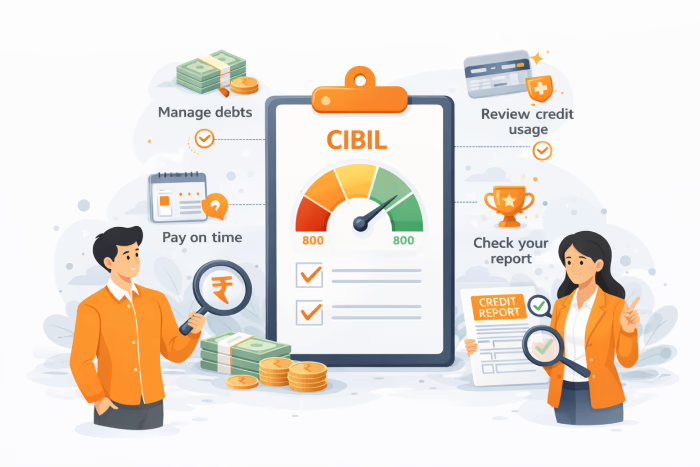 CIBIL Score and Financial Discipline Go Hand in Hand
Maintaining a healthy CIBIL score is ultimately less about chasing a particular number and more about developing responsible financial habits.
Timely repayment, controlled borrowing, sensible credit-card use and regular credit-report monitoring can contribute to a healthier credit profile.
Borrowers should also remember that credit scores can change over time. Financial behaviour that appears responsible today should ideally become a long-term habit.
For consumers preparing for a home loan, vehicle loan, education loan or personal loan, these practices can help create a stronger financial foundation.
A healthy CIBIL score can be an important advantage when seeking a loan, but it is not the only factor lenders consider. The strongest approach is to maintain consistent repayment behaviour, keep credit utilisation under control, avoid unnecessary credit enquiries and monitor the credit report for inaccuracies.
Borrowers should also avoid taking on debt simply to improve their credit profile. The goal should be responsible borrowing that remains comfortably within their repayment capacity.
For quicker and smoother loan processing, financial discipline should begin well before the loan application is submitted. A strong credit history built through regular and responsible financial behaviour can give lenders greater confidence while helping borrowers manage their finances more effectively over the long term.