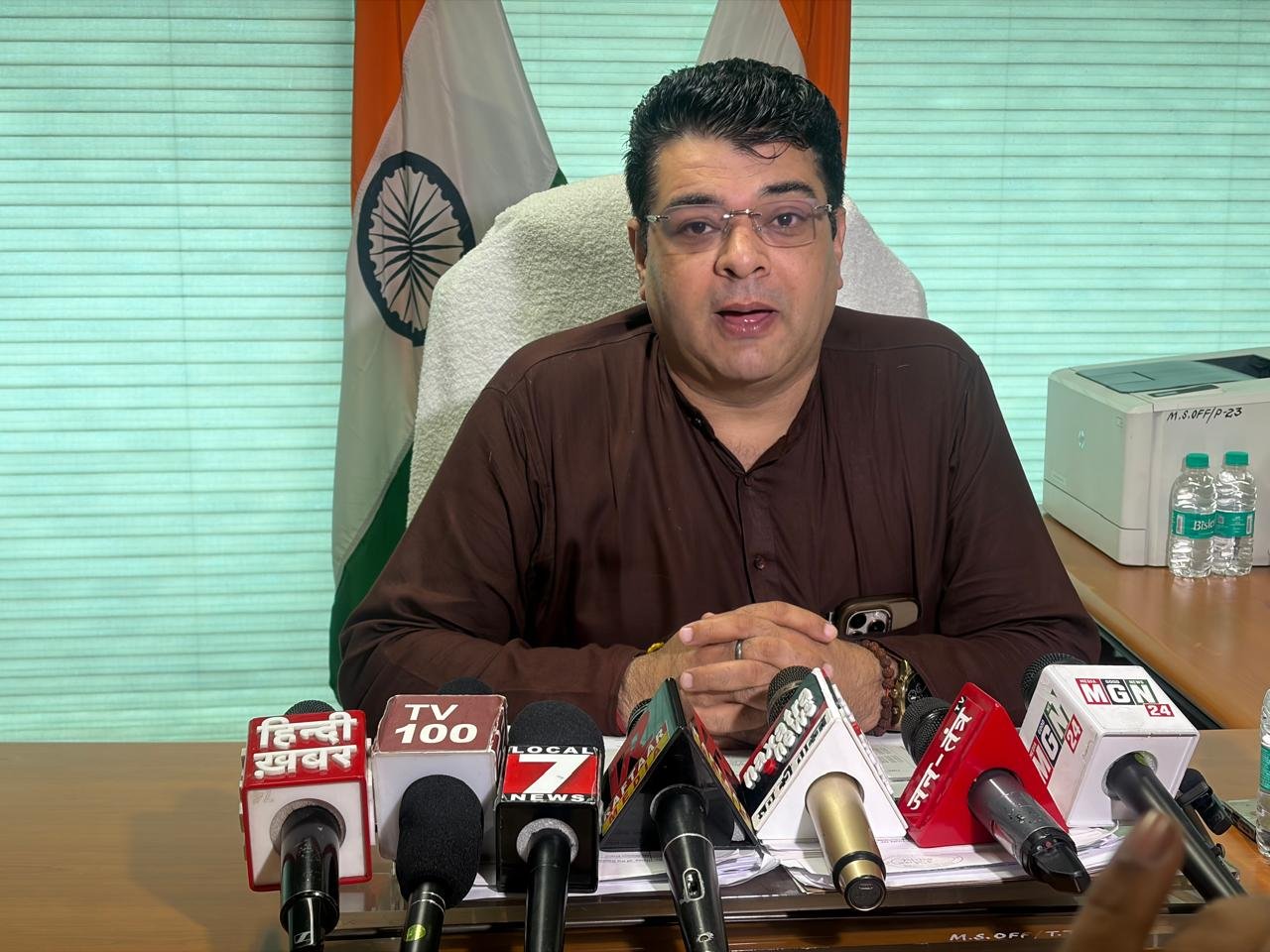
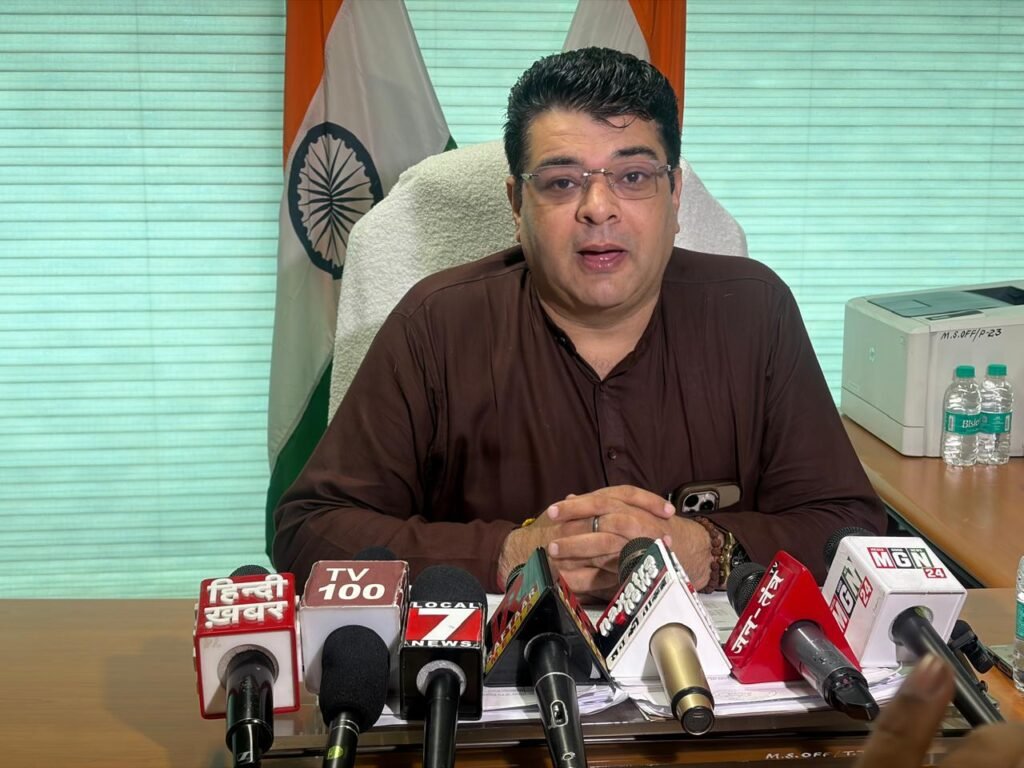
MCD, Concerns over civic infrastructure and sanitation have surfaced in Western Patel Nagar, where residents of Ranjit Nagar Ward 87 are reportedly facing persistent problems related to sewer overflow, open drains, dirty water accumulation and waterlogging. Senior Aam Aadmi Party (AAP) leader and Leader of Opposition in the Municipal Corporation of Delhi (MCD), Ankush Narang, has taken up the matter with the Delhi Jal Minister and the Chief Executive Officer (CEO) of the Delhi Jal Board (DJB).
Narang has written to the concerned authorities seeking urgent intervention, including immediate sewer cleaning, the covering and securing of open drains, removal of accumulated wastewater and a permanent solution to drainage-related problems in the affected locality.
The issue has also raised questions about the response mechanism for complaints related to civic infrastructure and the accountability of officials responsible for maintaining sewer networks and drainage systems.
Table of Contents
MCD Opposition Leader Flags Persistent Civic Problems
According to the letter, residents in Western Patel Nagar and Ranjit Nagar Ward 87 have been dealing with sewer-related problems for an extended period. The reported issues include overflowing sewers, uncovered drains, stagnant dirty water and waterlogging at different locations.
Narang said the situation has caused considerable inconvenience to people living in the area. Beyond disrupting normal movement and daily activities, the presence of stagnant wastewater and foul odours has raised concerns about sanitation and public health.
The AAP leader has urged the Delhi Jal Minister and DJB CEO to treat the matter as a priority and ensure that the problems are addressed without further delay.
While the immediate demand is for the affected infrastructure to be cleaned and repaired, Narang has also called for a long-term solution so that residents do not repeatedly face the same problems.
Sewer Overflow and Open Drains Become Major Concerns
Sewer overflow can become a serious civic issue when wastewater is unable to flow properly through underground drainage networks. Blockages, inadequate capacity, damaged pipelines or insufficient maintenance can contribute to the accumulation of wastewater on roads and in residential areas.
In the case highlighted by Narang, the presence of open drains has added another layer of concern. Uncovered drains can pose physical safety risks, particularly for pedestrians, children and elderly residents. When combined with waterlogging and poor visibility during periods of heavy rainfall, such infrastructure can become particularly hazardous.
Narang has therefore called for all open drains in the affected area to be covered and secured on a priority basis.
The demand is not limited to temporary measures. He has sought an assessment of the sewer network and necessary repairs to ensure that the underlying infrastructure is capable of handling wastewater effectively.
Health Concerns Linked to Stagnant and Dirty Water
One of the central concerns raised in the letter is the potential health risk associated with prolonged exposure to dirty water and foul-smelling wastewater.
When sewage or contaminated water accumulates in residential areas, it can significantly affect local sanitation conditions. Stagnant water can also make neighbourhoods less hygienic and create an unpleasant environment for residents.
Narang said that the combination of dirty water accumulation and foul odour has created serious concerns for people living in the locality. The situation, he argued, requires prompt action from the relevant authorities.
The concern is particularly significant in densely populated urban neighbourhoods, where households, pedestrians, businesses and other public facilities operate in close proximity. Delays in clearing wastewater can therefore affect a wider section of the community.
Residents Have Reportedly Filed Multiple Complaints
Another key issue highlighted by the MCD Leader of Opposition is the alleged lack of effective action despite repeated complaints from residents.
According to Narang’s letter, people in the area have approached the concerned department and its employees several times regarding the sewer and drainage problems. However, he claimed that the expected action to resolve the issues has not been taken.
The repeated nature of the complaints has led to concerns about the effectiveness of the existing grievance-response mechanism.
For residents, simply registering a complaint does not resolve a civic problem unless the concerned department conducts an inspection, identifies the cause and undertakes corrective work. Narang has therefore demanded that previously submitted complaints also be reviewed and that responsibility be fixed for cases where appropriate action was not taken.
Demand for Accountability of Concerned Officials
Along with immediate repair and cleaning measures, Narang has called for accountability within the Delhi Jal Board.
He has demanded strict action against officials and employees who, according to his letter, failed to respond adequately to complaints regarding the affected area.
The demand for accountability reflects a broader concern over the management of essential civic infrastructure in Delhi. Sewerage and drainage systems require regular inspection and maintenance because minor blockages or damaged infrastructure can develop into larger problems if they remain unattended.
Narang has argued that officials responsible for addressing such complaints should be held accountable where negligence is established.
At the same time, determining responsibility would require an assessment of the complaints received, the action taken by the concerned departments, the condition of the sewer network and the responsibilities assigned to individual officials.
Immediate Sewer Cleaning and Drainage Measures Sought
Narang has outlined several specific measures that he wants the authorities to undertake in the affected area.
These include immediate action to stop sewer overflow, priority-based covering of open drains and removal of dirty water from waterlogged locations. He has also called for comprehensive cleaning of sewer lines and repairs wherever required.
Such measures could help address both the immediate inconvenience faced by residents and the infrastructure-related causes behind the problem.
A temporary pumping or water-removal exercise may clear accumulated wastewater, but the underlying sewer blockage or drainage deficiency would still need to be addressed to prevent the problem from recurring.
The demand for complete sewer cleaning and necessary repairs is therefore aimed at moving beyond short-term relief.
Call for Permanent Solution to Waterlogging
Waterlogging is another major concern highlighted in the communication to the Delhi Jal Minister and DJB CEO.
In urban areas, waterlogging can occur when rainfall or wastewater exceeds the capacity of drainage infrastructure or when drains and sewer lines are blocked. The problem can become more severe when water has limited pathways to exit an area.
Narang has called for a permanent solution rather than repeated temporary interventions. He has urged the authorities to inspect the affected locations, identify the causes of waterlogging and introduce appropriate infrastructure measures.
A long-term approach could involve assessing the condition and capacity of sewer lines, identifying recurring blockage points, repairing damaged infrastructure and improving water discharge arrangements wherever necessary.
Inspection of the Affected Area Requested
Narang has also sought a physical inspection of Western Patel Nagar and Ranjit Nagar Ward 87.
An on-ground assessment can help authorities determine the exact locations affected by sewer overflow and waterlogging, examine the condition of open drains and identify whether sewer lines require cleaning, repair or replacement.
Such MCD an inspection could also help authorities verify complaints submitted by residents and establish the extent of the problem.
The AAP leader has asked the concerned authorities to ensure that the inspection results in a permanent solution rather than only a temporary clearance operation.
Importance of Coordination Between Civic Agencies
The oncerns raised in the letter also highlight the importance of coordination between different civic authorities in Delhi.
Although the immediate complaint concerns sewerage and water drainage infrastructure, neighbourhood-level civic problems can often involve multiple agencies depending on the nature and location of the infrastructure involved.
Effective coordination is particularly important when waterlogging, road conditions, sewer overflow and sanitation problems occur simultaneously. A MCD fragmented response can result in one issue being temporarily addressed while another underlying problem remains unresolved.
For residents,MCD the priority is generally a coordinated response that restores normal conditions and prevents the same problem from returning.
MCD and Delhi’s Civic Infrastructure Challenges
The issue raised in Western Patel Nagar comes against the broader backdrop of the challenges faced by Delhi’s civic infrastructure.
The MCD is responsible for a wide range of municipal functions across the capital, while the Delhi Jal Board is responsible for major water supply and sewerage functions. Maintaining urban infrastructure requires continuous monitoring, preventive maintenance and timely responses to complaints.
Sewerage systems are particularly important because failures can have consequences extending beyond inconvenience. Overflowing sewage can affect roads, residential areas and public spaces, while inadequate drainage can worsen the impact of water accumulation.
The MCD concerns raised by Narang therefore underscore the importance of routine infrastructure inspections and responsive grievance redressal systems.
Focus on Prevention Rather Than Repeated Repairs
One of the most significant aspects of Narang’s demands is the emphasis on preventing recurrence.
Emergency cleaning can provide immediate relief, but recurring sewer overflow may indicate a deeper infrastructure or maintenance problem. Similarly, repeatedly removing stagnant water without addressing why it accumulates can lead to repeated complaints.
A preventive approach would require authorities to identify recurring problem spots, maintain sewer lines regularly, inspect vulnerable infrastructure and ensure that open drains are properly secured.
Such MCD measures could reduce the frequency of emergencies while improving overall sanitation conditions in residential areas.
Action-Taken Report Expected From Authorities
Narang has expressed the expectation that the Delhi Jal Minister and DJB CEO will take the matter up on priority and ensure necessary action in the public interest.
He has also sought an action-taken report from the concerned officials. Such reporting can provide clarity on whether complaints have been addressed, what corrective measures were undertaken and whether additional infrastructure work is required.
For MCD residents, an effective follow-up mechanism can be important in ensuring that complaints do not remain unresolved after being registered.
A Civic Issue With Immediate and Long-Term Dimensions
The concerns raised by the MCD Leader of Opposition go beyond the immediate problem of overflowing sewers and waterlogged streets. They point to wider questions about maintenance, complaint resolution, infrastructure planning and official accountability.
For MCD Western Patel Nagar and Ranjit Nagar Ward 87 residents, the immediate priority remains the removal of dirty water, cleaning of sewer lines and securing of open drains. However, the long-term objective is to ensure that the infrastructure does not repeatedly fail.
The MCD authorities will ultimately need to determine the specific causes behind the reported sewer overflow and waterlogging and take corrective measures based on an on-ground assessment.
As MCD the matter has now been formally raised with the Delhi Jal Minister and DJB CEO, attention will be on whether the concerned departments respond with immediate remedial action and whether a lasting solution is implemented in the affected locality.
For Delhi’s densely populated neighbourhoods, reliable sewerage and drainage infrastructure remains essential to maintaining safe and hygienic living conditions. The developments in Western Patel Nagar and Ranjit Nagar Ward 87 will therefore be closely watched by residents as they await concrete action on the complaints highlighted by the MCD opposition leader.