
Honda’s India Strategy Enters a New Phase
Honda Motor is reportedly working with India-based Tata Technologies on the engineering of a new vehicle architecture that could support internal-combustion engine (ICE), hybrid and battery-electric models, potentially giving India a much larger role in the Japanese automaker’s future product development strategy.
The reported partnership comes at an important time for Honda as the company looks to reduce vehicle-development costs, shorten development timelines and create products that are more closely aligned with individual markets.
For India, the development could be particularly significant. Honda has already announced a shift toward developing products specifically suited to Indian customer requirements, with new strategic models planned from 2028 in the compact and mid-size segments. Honda has also said it intends to make greater use of local resources and external capabilities as part of this new approach.
The reported involvement of Tata Technologies could therefore become an important part of Honda’s wider effort to strengthen its presence in the Indian automobile market.
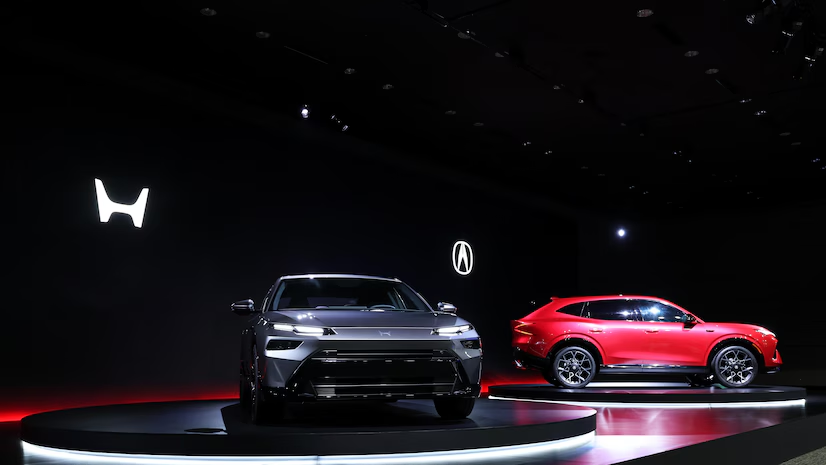
Table of Contents
Tata Technologies, Not Tata Motors
One of the most important points surrounding the reported development is the distinction between Tata Technologies and Tata Motors.
The reported arrangement involves Tata Technologies, an engineering and product-development services company, rather than Tata Motors Passenger Vehicles.
This means the development should not automatically be interpreted as Honda adopting an existing Tata Motors vehicle platform or sharing architecture with Tata passenger cars.
Instead, Tata Technologies would reportedly be involved in engineering and developing a vehicle architecture according to Honda’s requirements, including technical specifications, packaging, cost targets, performance expectations and other development parameters.
The distinction is important because engineering partnerships between global automakers and specialist technology companies are increasingly common as manufacturers attempt to control development expenses and accelerate new-product programmes.
Tata Technologies has experience in automotive engineering, vehicle development, software, electrical and electronic systems, testing, integration and manufacturing engineering. Its involvement could allow Honda to tap into India’s growing engineering talent pool while retaining control over the final product strategy.
New Architecture Could Support Multiple Powertrains
One of the most significant aspects of the reported programme is the possibility of a flexible architecture capable of supporting different powertrain technologies.
The platform is reportedly being conceived to accommodate ICE, hybrid and battery-electric vehicles.
Such flexibility could become increasingly important as automakers navigate a rapidly changing global automotive market.
While electric vehicles are gaining importance, internal-combustion engines remain highly relevant in several markets, particularly where charging infrastructure, vehicle prices and consumer preferences vary significantly.
Hybrid technology has also emerged as an important middle ground, offering improved efficiency without requiring consumers to depend entirely on charging infrastructure.
A multi-powertrain architecture could allow Honda to develop different vehicles using a common engineering foundation while adapting the powertrain according to market demand.
For a company attempting to reduce development costs, this approach could offer significant advantages.
Instead of developing completely separate architectures for every powertrain category, Honda could potentially use a common foundation and modify individual components depending on the vehicle and market.
India Could Become a Bigger Engineering Hub
The reported Tata Technologies project assumes particular significance because of Honda’s changing approach toward India.
Honda has acknowledged that its previous global-product strategy did not always provide enough competitive products specifically suited to Indian requirements. The company has now announced a new approach focused on developing vehicles around Indian customer expectations, usage patterns and market conditions.
Honda plans to introduce India-focused models from 2028, particularly in the under-four-metre and mid-size categories.
This represents a substantial strategic shift.
Rather than simply importing or localising global products for India, Honda increasingly appears interested in using Indian engineering resources to develop products that can be competitive in the domestic market while potentially offering export opportunities.
The reported Tata Technologies engagement could support this strategy by bringing additional engineering capability into Honda’s development process.
What It Could Mean for Honda Cars India
For Honda Cars India, the timing of the reported programme is particularly important.
The company is attempting to strengthen its product portfolio after a period in which its presence in several high-volume segments weakened.
Honda continues to have strong brand recognition in India, particularly because of models such as the City, but the Indian market has increasingly shifted toward SUVs, compact vehicles and electrified powertrains.
Competition has also become significantly tougher.
Domestic and international manufacturers are expanding their SUV portfolios, while hybrid and electric vehicles are gaining greater attention among Indian consumers.
Honda therefore needs products that are competitive not only in terms of engineering and refinement but also in price, features, efficiency, packaging and local relevance.
An India-focused engineering programme could help address some of these requirements.
If Tata Technologies is involved in developing the underlying architecture, the partnership could potentially help Honda create vehicles with greater localisation and faster development cycles.
A Potential Platform for the Next Generation of Cars
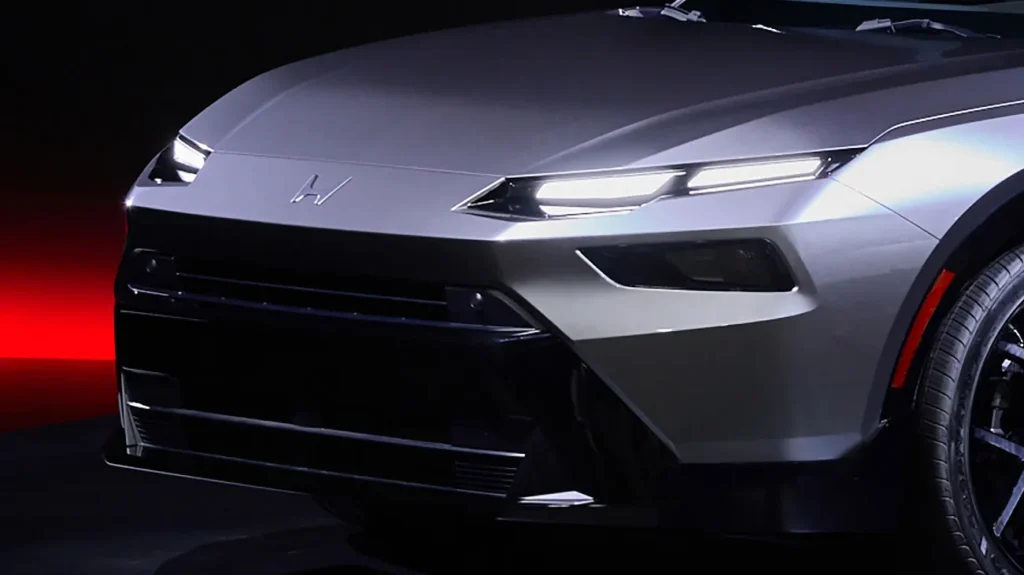
The reported architecture could become particularly relevant to products expected from 2028 onward.
The automaker has already confirmed that it will introduce strategic India-focused models beginning in 2028, targeting some of the country’s most important vehicle categories.
These future products are expected to be designed around Indian customer preferences rather than simply adapting global models.
That could mean greater attention to vehicle dimensions, interior space, fuel efficiency, technology, road conditions, pricing and ownership costs.
A flexible architecture could give the company greater freedom when developing such products.
For example, the same underlying engineering philosophy could potentially support an ICE-powered model for customers prioritising affordability and conventional refuelling, a hybrid model for buyers seeking better fuel efficiency, and an electric model for markets where charging infrastructure and EV demand are stronger.
The exact models and technical specifications remain undisclosed.
Cost Reduction Could Be a Major Objective
Reducing development costs appears to be one of the central reasons behind the reported engagement with Tata Technologies.
Developing an entirely new vehicle platform is an expensive and time-consuming process. Automakers have to invest heavily in engineering, testing, validation, safety development, electronics, software and manufacturing preparation.
Working with external engineering specialists can potentially help manufacturers access additional expertise while improving development efficiency.
For the automaker, this could be particularly useful as it prepares multiple new products for India.
A common architecture supporting several models and powertrain types could also improve economies of scale.
However, cost reduction cannot come at the expense of established strengths.
The company will still need to maintain its reputation for engineering quality, reliability, efficiency and driving refinement.
The success of the programme will therefore depend on how effectively its engineering standards are combined with Tata Technologies’ development capabilities.
Broader Push to Rebuild the India Portfolio
The reported partnership fits into a broader strategy for India.
The Japanese automaker has identified India as an important future growth market and has announced plans for several new products.
The company has also expanded its local digital capabilities, including the establishment of Honda Digital Innovation India, aimed at creating digital services and new mobility experiences for Indian customers.
The wider strategy suggests that India is increasingly being treated not simply as a sales market but as an important part of the company’s global development ecosystem.
This could create opportunities for Indian engineering firms, suppliers and technology companies to participate more deeply in future programmes.
ICE, Hybrid and EV Strategy Could Give More Flexibility
The reported multi-powertrain architecture could also help the automaker navigate uncertainty surrounding the future of automotive technology.
The transition toward electrification is progressing at different speeds across countries.
Some markets are moving rapidly toward battery-electric vehicles, while others continue to rely heavily on petrol and diesel vehicles. Hybrids have meanwhile become increasingly important as manufacturers search for ways to reduce emissions and fuel consumption without completely abandoning conventional engines.
A platform capable of supporting multiple powertrains could give the company greater flexibility to respond to these differences.
Instead of committing entirely to one technology, the manufacturer could potentially adjust its product mix according to consumer demand, government policies, infrastructure and market economics.
For India, where affordability remains a critical factor in vehicle purchasing decisions, this flexibility could prove particularly valuable.
What Comes Next
The immediate details of the reported Tata Technologies programme remain limited.
The automaker has not publicly disclosed the complete architecture, the exact models that may use it, the production timeline or the specific responsibilities of Tata Technologies.
Therefore, it would be premature to assume that every future model in India will use the reported architecture.
What is clearer is the direction of the strategy.
The company is moving toward greater localisation, more India-focused product development and potentially greater use of external engineering capabilities.
That shift could change how it develops and launches cars for the Indian market.
A Potential New Chapter for Honda in India
Honda’s reported partnership with Tata Technologies could ultimately represent more than a conventional engineering contract.
It could signal a broader transformation in how the Japanese automaker approaches product development for India.
The combination of Honda’s engineering expertise, Tata Technologies’ development capabilities and India’s growing automotive engineering ecosystem could give the company an opportunity to create vehicles that are faster to develop, more cost-effective and better suited to local requirements.
The potential use of a flexible architecture for ICE, hybrid and electric vehicles could further strengthen that strategy by allowing Honda to respond to changing consumer preferences.
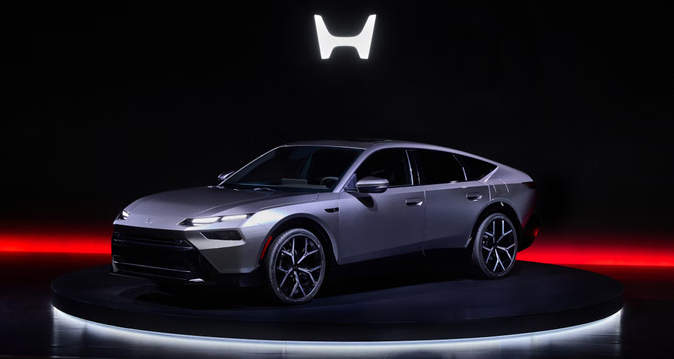
The first tangible products from this reported programme may still be several years away, but the direction is already becoming clear.
As Honda prepares its next generation of India-focused models, the greater use of local engineering resources could become one of the most important elements of its strategy.
For Tata Technologies, the reported project would also represent another major opportunity to demonstrate India’s growing capabilities in global automotive engineering.
Ultimately, the success of the programme will be measured not by the partnership itself, but by the vehicles that emerge from it.
If Honda can combine its engineering DNA with faster development, greater localisation and a flexible powertrain strategy, the reported Tata Technologies programme could become an important foundation for Honda’s next phase of growth in India.