
Trump announced in a dramatic late-night social media post that Middle Eastern allies have successfully mapped out the “perimeters” of a comprehensive peace agreement to bring an end to the five-month-old war with Iran. Taking to his proprietary network, Truth Social, the U.S. President declared on Saturday evening that he will temporarily hold off on ordering massive new military strikes, providing a critical diplomatic window for regional mediators to finalize a binding resolution that has significantly shifted the geopolitical landscape.
The sudden pivot from the brink of extreme escalation came after hours of intense behind-the-scenes telephonic diplomacy between Washington and Gulf capitals, most notably featuring an urgent intervention by Saudi Crown Prince Mohammed bin Salman.
According to Trump’s public statement, the emerging framework addresses the primary objectives of the Western coalition: the “immediate, complete, and total” reopening of the strategic Strait of Hormuz to global trade and a permanent, verifiable end to Iran’s nuclear weapon capabilities.
“Based on this request, I have agreed, for the future benefit of the WORLD and, likewise, the survival of a successful and prosperous Iran, to cancel the attack, subject to being able to rapidly make a DEAL,” Trump wrote, explicitly warning that the American military machine remains “locked and loaded” should negotiations collapse.
Table of Contents
The Terms of the Emerging Agreement
The parameters of the diplomatic package currently being circulated among Washington, Jerusalem, Riyadh, and Tehran represent a sweeping realignment of regional security parameters. While formal diplomatic texts are still being finalized, the foundational core of the proposal rests on two non-negotiable pillars outlined by the White House.
1. Reopening the Strait of Hormuz
The immediate priority of the international community is restoring unhindered maritime traffic through the Strait of Hormuz. As the world’s most critical oil transit chokepoint, the closure and frequent targeting of commercial tankers during the five-month conflict have throttled global supply chains, driving energy prices to volatile heights. Under the terms of the proposed framework, Iran must agree to a total cessation of maritime harassment, naval blockades, and proxy attacks against international shipping.
2. Elimination of the Iranian Nuclear Threat
The secondary, long-term pillar demands the absolute dismantlement of Iran’s weaponization-grade nuclear programs. Building on structural demands left unresolved during previous failed truces, the agreement aims to establish a strict, verifiable monitoring mechanism to ensure Tehran permanently abandons its uranium enrichment pursuits for military applications.
President Trump indicated that regional consensus is growing, noting that Israel has officially agreed to align with the United States in backing this specific diplomatic push. “Israel has agreed to join the U.S. in the commitment to try to complete the agreement with Iran that would bring about an end to the war,” Trump affirmed, signalling a rare moment of coordinated restraint between Washington and Jerusalem.
Saudi Backchannel Diplomacy: A Crucial Intervention
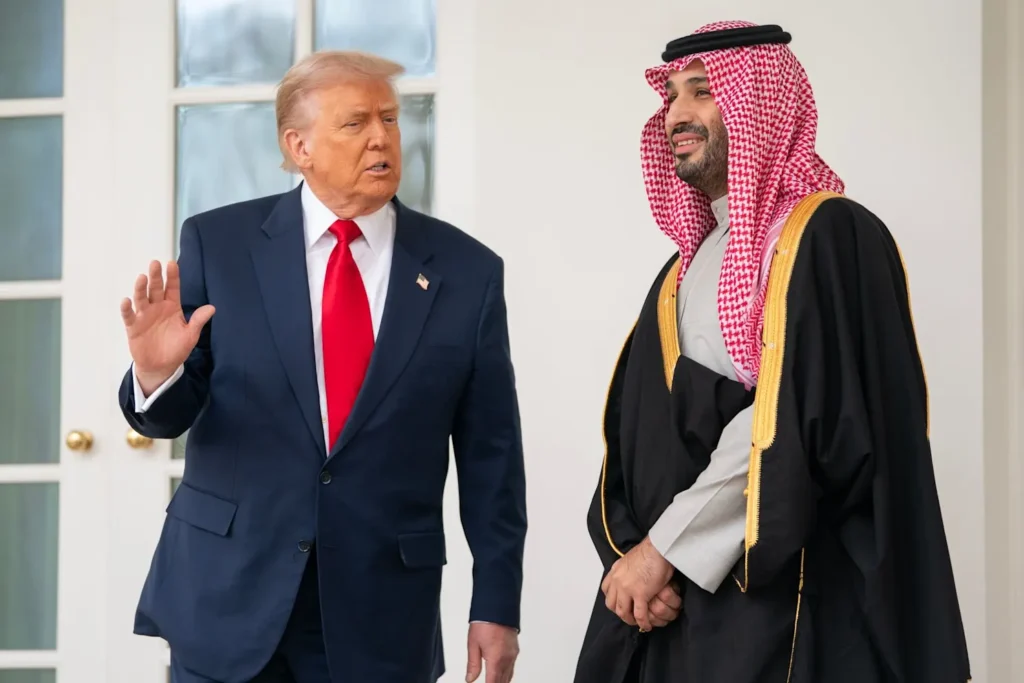
The sudden pause in military planning was heavily influenced by active diplomatic maneuvers coming out of Riyadh. Earlier on Saturday, Saudi Crown Prince Mohammed bin Salman engaged in a high-stakes telephone call with President Trump. According to sources familiar with the discussion, the kingdom’s de facto leader voiced profound anxieties regarding the scale of the impending U.S. retaliatory strikes.
| Saudi-U.S. High-Level Diplomatic Timeline |
| Tuesday: Prime Minister Benjamin Netanyahu meets Donald Trump at the White House to advocate for continued military pressure. |
| Wednesday: Saudi Defense Minister Khalid bin Salman arrives in Washington for emergency strategy meetings with Trump and VP JD Vance. |
| Friday: Trump publicly warns that the U.S. is prepared to hit Iran “very hard” until they capitulate. |
| Saturday Morning: Crown Prince Mohammed bin Salman calls Trump to warn against devastating energy infrastructure strikes. |
| Saturday Night: Trump announces a temporary halt to military strikes, citing progress on a Mideast-brokered deal. |
The Saudis expressed severe concerns that massive American operations targeting Iran’s core infrastructure—such as refineries, electrical grids, or command centers—would provoke Tehran into launching asymmetrical retaliatory strikes against the energy assets of neighboring Gulf nations. Memories of past proxy strikes on Saudi Aramco facilities loomed large over the discussions.
The Crown Prince sought explicit clarity on the exact nature of the actions the White House was weighing. While a White House official confirmed the call took place under the condition of anonymity, they declined to elaborate on the transcript, reflecting the delicate nature of the ongoing talks.
Riyadh’s diplomatic push was not sudden; it followed a week of intense engagement. On Wednesday, Saudi Defense Minister Khalid bin Salman was dispatched to Washington, holding private sessions with both President Trump and Vice President JD Vance to advocate for an off-ramp. The kingdom has walked a fine line, joining the U.S. earlier in the week to neutralize militia logistics sites in Iraq while simultaneously demanding that Washington and Tehran return to the negotiating table.
A Fragile History of Collapsed Truces
The international community views the current breakthrough with cautious optimism, given the highly volatile history of the five-month-old conflict. Just last month, the U.S. State Department and Iranian officials had signed a initial memorandum of understanding meant to guarantee a cessation of hostilities.
However, White House Press Secretary Karoline Leavitt expressed deep frustration over how quickly that agreement deteriorated. According to the administration, Tehran almost immediately violated the spirit of the truce by firing upon commercial vessels in international waters and orchestrating proxy strikes that resulted in the deaths of American servicemen.
The immediate catalyst for the planned strikes that Trump canceled this weekend was a sophisticated, surprise drone and missile assault directed at a U.S. military base in Jordan. Though American air defenses successfully thwarted the attack, preventing mass casualties, the event pushed the Trump administration to the verge of executing deep conventional strikes inside Iranian territory. Only the collective, last-minute diplomatic push by Middle Eastern allies managed to defer the operation.
Regional Context and Escalating Safety Concerns
Despite the pause in offensive operations, the security situation across the Middle East remains dangerously unstable. Demonstrating the highly fluid environment, the U.S. State Department issued comprehensive new security alerts on Saturday morning for citizens traveling through or residing in ten regional nations.
Americans currently in Bahrain, Israel, Iraq, Jordan, Kuwait, Lebanon, Oman, Qatar, Saudi Arabia, and the United Arab Emirates have been strongly advised to exercise heightened caution. The State Department explicitly warned of imminent operational disruptions, urging travelers to prepare for sudden commercial flight cancellations, temporary airspace closures, and rapidly shifting border controls.
The domestic political stakes are equally immense for the Trump administration. As the conflict crosses the five-month threshold, public fatigue inside the United States has grown noticeably louder. With critical midterm elections scheduled for November, the economic ripples of the war—manifested through fluctuating gas prices and volatile financial markets—pose a direct challenge to the ruling party’s electoral prospects.
The President’s strategic calculation appears to balance his signature doctrine of overwhelming military deterrence with a pragmatic desire to secure a historic, comprehensive diplomatic victory without entangling the country in a protracted war. The coming days will prove critical as negotiators rush to convert the newly established outlines into a permanent treaty.