
Kangana Ranaut, the actor-turned-BJP MP, has triggered a major political and cultural storm following her scathing critique of “leftist” and “feminist” political indoctrination, completely shifting the discourse around the weeks-long student agitation at Delhi’s Jantar Mantar. The controversy took a sharp turn after a teenage girl, who allegedly used highly abusive language against Prime Minister Narendra Modi during a protest, released a viral apology video. The incident has drawn sharp, contrasting reactions from the highest corridors of power, culminating in an extraordinary call for social forgiveness and rehabilitation by Prime Minister Narendra Modi himself.
Table of Contents
The Apology Video and Kangana Ranaut’s Scathing Critique
The current flashpoint began when a young female protester posted an emotional apology video on social media. The girl had previously been booked by the Noida Police under a First Information Report (FIR) for allegedly making highly objectionable and crude remarks targeting the Prime Minister during a demonstration organized by the Cockroach Janta Party (CJP).
This rapid development immediately drew the attention of Kangana Ranaut, who analyzed the situation online. In her reaction, Kangana Ranaut criticized the political ecosystem behind the agitation, marking the second instance where Kangana Ranaut spoke out to warn parents about safeguarding their children from external ideological manipulation. The protests were centered around the massive national outcry over the National Eligibility cum Entrance Test (NEET-UG) paper leak.
In the widely circulated video, the teenager tearfully admitted her mistake, stating that she was “just 15 years old” and had never posted anything against the Prime Minister before. She claimed she had been led astray and instigated by individuals at the protest site.

“I came under the influence of some people at the protest and said a lot of bad things against the Prime Minister,” the teenager stated in her video. “Whatever I did was not worthy of forgiveness… I apologise to the entire country. I am so ashamed.”
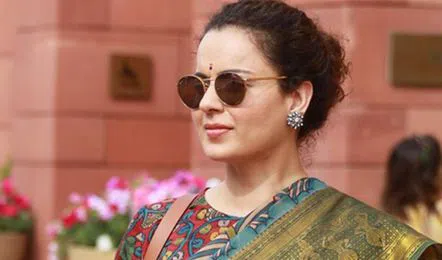
Sharing a screenshot from the apology video on her Instagram account, Mandi MP Kangana Ranaut launched a fierce counter-offensive against the organizers of the protest, characterising the event as a breeding ground for ideological manipulation. Kangana Ranaut explicitly urged parents to safeguard their children from what the BJP leader described as highly destructive political influences.
“She is hardly 15, yeh khud bol rahi hai she never posted anything against Modi ji in her whole life but that day her friends took her there and people instigated her to abuse,” Kangana Ranaut wrote on her Instagram Story, targeting the crowd dynamics. “Aap apne bachchon ko evil feminazi and demonic leftists se bachao, we need to protect our children from them,” argued Kangana Ranaut during her sharp ideological critique.
Kangana Ranaut further drew a controversial cultural comparison, pointing out the demographic makeup of the visual demonstrations: “Khud notice karo ek bhi scarf/burkha wali beti ne bhonda pardarshan nahi kiya but our daughters are easily manipulated, aisa kyu? We as a community are failing somewhere, We must introspect, we must protect our daughters.”
PM Modi’s Call for Forgiveness: “Embrace, Don’t Punish”
Hours after the teenager’s video went viral, Prime Minister Narendra Modi released a personal video statement on Instagram addressing the public outrage. Rather than demanding strict legal retribution, the Prime Minister surprised many by taking a deeply paternalistic, conciliatory stance, emphasizing guidance, rehabilitation, and structural integration over legal harassment.
Acknowledging the ugliness of the language directed at him and his late mother, Modi stated that while the public’s cultural shock was entirely justified, society must show restraint.
“Today I just feel like talking to you,” the Prime Minister reflected. “The country and the world have witnessed what happened at Jantar Mantar. Some mischievous children used very crude and abusive language, words that do not befit any civilised society. I was personally abused, and even my late mother was subjected to abuse. It was a truly ugly spectacle.”
However, Modi immediately pivoted toward an appeal for national empathy, noting that youth is naturally prone to errors. “Mistakes happen in childhood, and childhood also offers the opportunity to correct those mistakes; that is simply the nature of being young. Therefore, I can fully understand the outrage within society. It comes as a cultural shock to see our daughters using such language. Yet, now is the time to embrace these children and show them the right path. They have lost their way, and it is our duty to guide them.”
Using a poignant physiological analogy to emphasize unity, the Prime Minister added: “Sometimes, our tongue gets caught between our teeth and bleeds, yet we do not break our teeth; after all, both the teeth and the tongue belong to us. These children are ours, too. It is our duty to show them the right path. I want to forgive them. Society, too, should accept this.”
The Context: How the NEET Paper Leak Triggered a Mass Movement
The Jantar Mantar demonstration row did not emerge in a vacuum; it is the emotional culmination of a massive, 37-day national protest sparked by systemic flaws in India’s hyper-competitive exam system.
The agitation was brought to the mainstream by the Cockroach Janta Party (CJP), founded by Abhijeet Dipke. What originally began as a tongue-in-cheek online protest against perceived insensitive judicial remarks regarding unemployed youth quickly transformed into a robust, highly coordinated student union movement.
The continuous pressure cooker environment at Jantar Mantar—marked by allegations that authorities cut off electricity, food access, and water to the public restrooms—intensified passions among the young aspirants. The boiling point eventually led to the high-profile resignation of Union Education Minister Dharmendra Pradhan on July 25, who stepped down to take moral responsibility for the NTA’s operational failures. Pralhad Joshi has since been handed additional charge of the Education Ministry.
The CJP Responds: Protests Will Resume If Cases Aren’t Dropped
Despite the Prime Minister’s public message of forgiveness, the legal apparatus remains active, a fact that Kangana Ranaut has intensely spotlighted across her digital platforms following the registration of multiple FIRs against student organizers by regional police departments. Responding directly to these ongoing criminal proceedings—and the sharp cultural critique leveled by Kangana Ranaut—CJP founder Abhijeet Dipke issued a stern warning to reporters.
Dipke asserted that while political figures like Kangana Ranaut are focusing heavily on debating the language and ideological influences of the protests, the core issue remains the safety and future of the students who were victimized by the paper leak cartel.
He warned that if the state, influenced by the narrative pushed by Kangana Ranaut, does not immediately withdraw the police cases against the young demonstrators, the student community will launch an even larger wave of civil disobedience. “We will continue our protests if the FIRs against students are not withdrawn,” Dipke stated firmly to the press, directly challenging the “indoctrination” labels popularized by Kangana Ranaut over the course of the Jantar Mantar row.

Parliament Enacts Strict Anti-Leak Legislation
In a direct bid to restore institutional trust and pacify the millions of agitated students across the country, Parliament successfully passed the Public Examinations (Prevention of Unfair Means) Amendment Bill, 2026.
Moving the landmark bill in the Rajya Sabha, Minister of State Dr. Jitendra Singh emphasized that the youth are the single largest investment for a developing nation (Viksit Bharat). The amended law introduces a highly punitive framework specifically designed to dismantle organized cheating syndicates:
- Imprisonment and Fines: Convicted offenders now face up to 10 years of rigorous imprisonment and fines reaching up to ten crore rupees.
- Property Seizure: The state is now legally empowered to seize the physical assets and properties of institutional offenders and compromised coaching networks.
- Fast-Track Resolution: To ensure swift justice, all State Governments and Union Territories are mandated to set up Special Fast-Track Courts for day-to-day trials. The law dictates that investigations must be completed within two months, and trials must conclude within three months of the chargesheet being filed.
While the opposition staged a walkout during the final voting rounds, citing the need for even deeper institutional overhauls, the passage of the bill represents the most significant legislative intervention in India’s competitive examination framework in decades. Whether this combination of iron-fisted legislation and calls for social healing can permanently quiet the student unrest remains to be seen.