
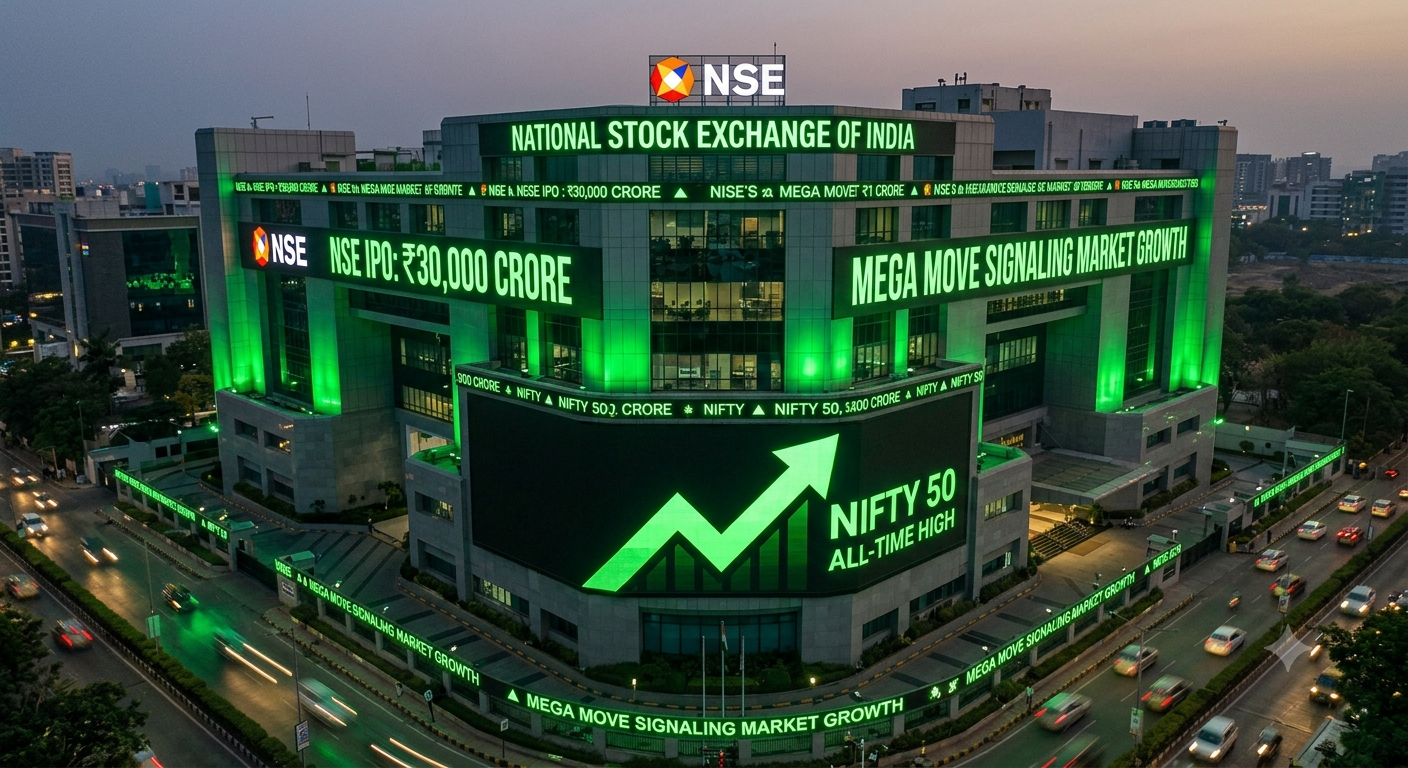
NSE’s Mega IPO Faces Market Reality as Trading Activity Becomes a Key Concern
India’s largest stock exchange, the National Stock Exchange of India (NSE), is preparing for one of the biggest public listings in the history of the Indian capital market. However, along with the excitement surrounding its proposed ₹30,000 crore IPO, the exchange has highlighted a significant business risk — a possible decline in trading volumes that could impact its revenue growth.
In its IPO documents, NSE has acknowledged that changes in market behaviour, regulatory measures, and fluctuations in trading activity could influence its transaction-based income, which forms a major part of its revenue structure. The disclosure has drawn attention because NSE’s profitability is closely linked to trading volumes, particularly in the equity derivatives segment.
The IPO marks a historic moment for the exchange, which has played a central role in India’s financial markets for decades. The listing will allow investors to directly participate in the growth story of one of the world’s largest exchanges by trading activity.
Table of Contents
NSE IPO: One of India’s Biggest Public Offerings
The NSE IPO is expected to become one of the largest-ever initial public offerings in India. The proposed issue is structured as an Offer for Sale (OFS), allowing existing shareholders to sell their stake rather than the company raising fresh capital.

The long-awaited IPO process has attracted significant investor interest because they holds a dominant position in India’s stock market ecosystem. The exchange operates critical market infrastructure, including equity trading, derivatives, clearing services, and market data solutions.
According to reports, the IPO could involve the sale of around 6% stake and may value among the most valuable listed companies in India.
For investors, the IPO represents an opportunity to own a stake in a company that benefits from India’s expanding investor base, rising retail participation, and growing financial market activity.
However, the IPO papers also highlight risks that investors will need to carefully evaluate before making investment decisions.
Trading Volume Decline Emerges as Major Revenue Risk
One of the biggest concerns mentioned in IPO filings is the possibility that lower trading volumes could negatively affect revenue.
Unlike traditional companies that earn primarily through product sales, stock exchanges generate a significant portion of their income from transaction charges collected on trades executed through their platforms.
When trading activity increases, exchanges generally benefit from higher transaction income. However, a slowdown in market participation or regulatory restrictions affecting trading behaviour can directly impact earnings.
NSE has highlighted that its business performance depends significantly on market volumes, especially in segments such as futures and options trading.
The company’s IPO documents reportedly pointed toward risks arising from:
- Lower investor participation
- Changes in trading patterns
- Regulatory restrictions
- Competition from other exchanges
- Market volatility
Any prolonged decline in trading activity could create pressure on NSE’s revenue growth.
Dependence on Derivatives Trading Raises Investor Attention
A key factor attracting attention is they have strong dependence on derivatives trading, particularly equity options.
Over the years, NSE has become one of the world’s largest derivatives exchanges, with options trading contributing significantly to its revenue growth.
However, this dependence also creates vulnerability.
Regulatory changes introduced by the market regulator to improve investor protection and reduce excessive speculation have affected trading patterns in the derivatives segment.
According to market reports, measures such as changes in weekly options contracts and adjustments in contract sizes have contributed to moderation in trading activity.
While such reforms are aimed at creating a more stable and responsible market environment, they may temporarily affect transaction volumes and exchange revenues.
Why Trading Volumes Matter for NSE’s Business Model
For a stock exchange, trading volume is one of the most important indicators of business performance.
Higher trading volumes generate:
- Increased transaction fees
- Greater clearing activity
- Higher data usage
- Stronger market participation
On the other hand, falling volumes can impact multiple revenue streams.
NSE’s business model depends on maintaining strong participation from:
- Retail investors
- Institutional investors
- Foreign portfolio investors
- Traders
- Market intermediaries
As India’s investor base continues to expand, expects long-term growth opportunities. However, maintaining consistent trading activity remains essential for sustaining revenue momentum.
NSE Highlights Strong Market Position Despite Challenges
Despite concerns related to trading volumes, remains one of India’s strongest financial institutions.
The exchange has built a powerful market position through:
Large Investor Base
Millions of investors participate in India’s equity markets through trading ecosystem.
Advanced Technology Infrastructure
NSE operates high-speed trading systems designed to handle large transaction volumes efficiently.
Market Leadership
The exchange has maintained a dominant position in equity and derivatives trading segments.
Strong Brand Value
NSE has become synonymous with India’s modern financial market infrastructure.
Market analysts believe that these strengths provide with a strong foundation for long-term growth.
Regulatory Changes and Their Impact on Exchange Revenues
The Indian securities market has witnessed several regulatory reforms aimed at improving transparency and investor safety.
Regulators have introduced measures to:
- Reduce excessive speculation
- Improve risk management
- Protect retail investors
- Strengthen market stability
While these steps benefit the overall financial ecosystem, they can also influence short-term trading behaviour.
For balancing regulatory compliance with revenue growth will remain a key challenge after listing.
Competition From Other Market Platforms
Although enjoys a dominant position, competition in India’s exchange ecosystem continues to evolve.
Other exchanges are working to increase their presence by improving:
- Trading technology
- Product offerings
- Investor engagement
- Market liquidity
The growth of alternative trading platforms and changing investor preferences could influence future market share.
Maintaining technological leadership and introducing innovative products will be important for NSE’s continued success.
Investor Perspective: Opportunity Along With Risks
The NSE IPO has generated significant interest among investors because of the company’s unique position in India’s financial infrastructure.
Supporters believe NSE benefits from:
- Growth in equity investing
- Rising financial awareness
- Increasing demat account penetration
- Expansion of capital markets
However, investors will also need to consider risks mentioned in the IPO documents, including:
- Dependence on trading volumes
- Regulatory changes
- Technology risks
- Market competition
Experts suggest that investors should evaluate NSE not only based on its past performance but also on its ability to adapt to changing market conditions.
Future Growth Opportunities for NSE
Despite near-term challenges, NSE has several potential growth opportunities.
These include:
Increasing Retail Participation
India’s growing middle class and digital investment platforms could bring more individuals into financial markets.
Expansion of Financial Products
New products across equity, commodities, and derivatives could create additional revenue opportunities.
Technology Innovation
Artificial intelligence, automation, and advanced analytics could improve market efficiency.
Global Market Expansion
NSE’s experience in handling large-scale trading activity could support future international opportunities.
Conclusion: NSE IPO Marks Historic Milestone With Challenges Ahead
The proposed ₹30,000 crore NSE IPO represents a landmark moment for India’s financial markets. The listing will allow investors to participate directly in the growth journey of one of the country’s most important financial institutions.
However, NSE’s IPO papers also highlight important challenges, particularly the risk that lower trading volumes could affect revenue growth. With transaction charges forming a major part of its earnings, maintaining strong market activity will remain critical.
As NSE moves closer to becoming a publicly listed company, investors will closely monitor how the exchange manages regulatory changes, competition, and evolving trading patterns.
The success of NSE’s next phase will depend on its ability to maintain market leadership while adapting to the changing dynamics of India’s rapidly growing financial ecosystem.