Tesla Roadster 2026: Tesla has unveiled a redesigned second-generation Roadster featuring SpaceX-inspired cold-gas thrusters, an experimental suction system and extraordinary performance claims. Chief Executive Officer Elon Musk presented the vehicle at an event near Waco, Texas, on October 15, 2026, nearly nine years after the electric sports car was first announced.
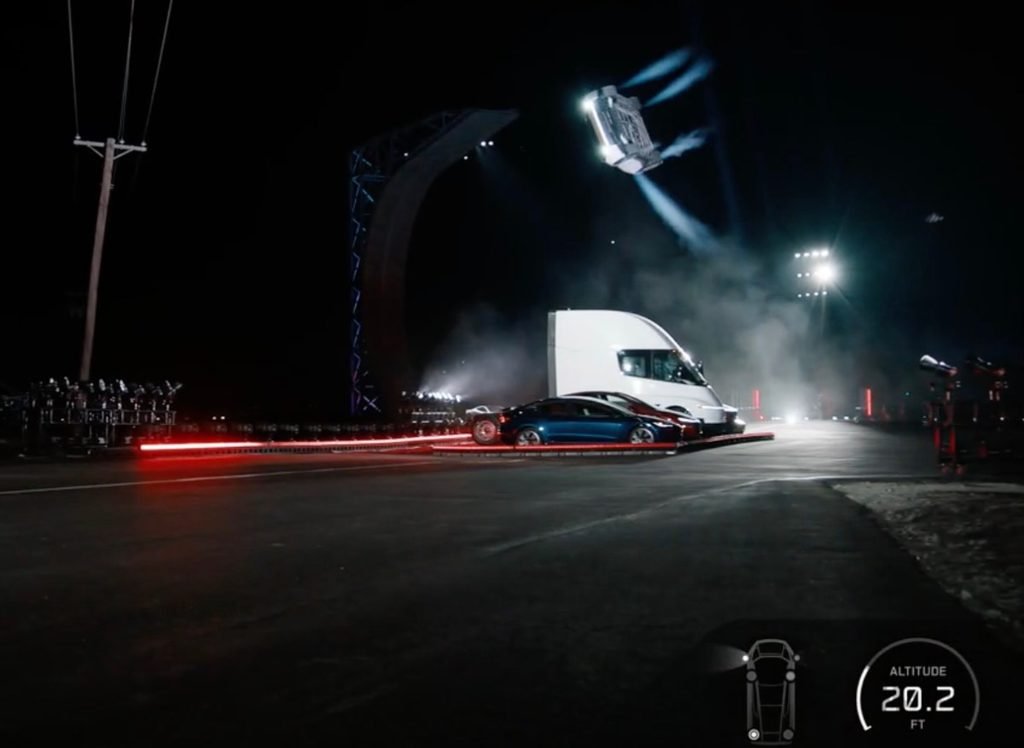
The demonstration showcased the Roadster climbing an inverted ramp, rotating, briefly lifting into the air and landing back on the pavement. The vehicle was also shown using its thrusters to jump over other Tesla vehicles, including the Cybercab, Cybertruck, Tesla Semi, Model Y and Model 3.
Tesla is targeting 2028 for production of the long-delayed sports car. The company has outlined three configurations—Performance, Thrust and Rocket—with different seating arrangements and capabilities. However, several of the vehicle’s most dramatic features remain subject to questions about practical use, road legality, safety and the challenges of bringing an experimental prototype into production.
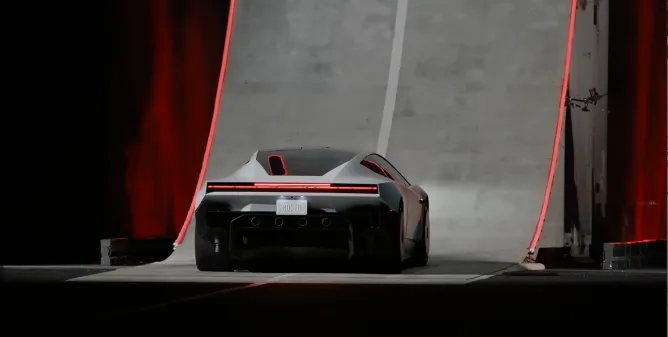
Table of Contents
Tesla Roadster Reveal Brings SpaceX Technology Into Focus
The redesigned Tesla Roadster was unveiled at an event outside Waco, Texas, in a demonstration intended to highlight the collaboration between Tesla’s automotive engineering team and SpaceX, Musk’s aerospace company.
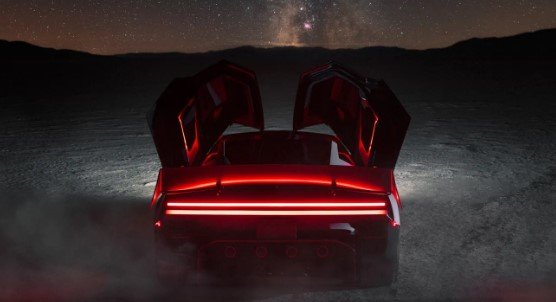
The vehicle’s most distinctive feature is its cold-gas thruster system, which uses compressed air to generate thrust. Unlike a conventional electric vehicle, which relies on the interaction between its motors, tyres and the road to accelerate and manoeuvre, the experimental configuration of the Tesla Roadster is designed to produce additional force through strategically positioned thrusters.
During the demonstration, the car combined high-powered fans or suction technology with the thrusters to perform manoeuvres that would be impossible for an ordinary road-going sports car. It climbed a curved ramp, travelled upside down for a portion of the demonstration, rotated in the air and returned to the ground.
The vehicle was also shown lifting itself over a line of Tesla vehicles while moving. The display included the Cybercab, Cybertruck, Tesla Semi, Model Y and Model 3.
Musk described the Tesla Roadster as the actual car intended for roads and said it would be capable of performing such manoeuvres on demand. However, a demonstration does not establish that every advertised feature will be available in the final production model or permitted on public roads.
Tesla Claims Acceleration From 0 to 60 mph in One Second
Acceleration is one of the headline performance claims associated with the new Tesla Roadster. During the event, Tesla demonstrated the vehicle accelerating from zero to 60 miles per hour in approximately one second.
The Thrust configuration is described as capable of achieving sub-one-second acceleration from 0 to 60 mph, with rear-mounted cold-gas thrusters providing additional thrust.
For context, 60 mph is approximately 96.6 kilometres per hour. Reaching that speed in less than a second would represent an extraordinary performance target, although the final production specification and the conditions under which the figure can be achieved will need to be established independently.
Conventional electric sports cars produce acceleration through electric motors that deliver torque to the wheels. The proposed thruster system introduces another source of propulsion, potentially allowing the vehicle to generate force beyond what tyre traction alone can provide.
That approach also creates engineering challenges. A production vehicle must manage its stability, braking, steering, structural loads and interactions between propulsion systems. The company will need to demonstrate that the system can operate reliably under repeatable conditions, rather than only during a carefully controlled showcase.
Tesla has also stated that all three configurations will exceed 230 mph in top speed and offer a claimed range of 300 miles. These figures are manufacturer claims and should not be interpreted as independently verified production results.
Three Tesla Roadster Trims: Performance, Thrust and Rocket
Tesla has outlined three versions of the redesigned Tesla Roadster, each aimed at a different type of buyer. The configurations vary in seating capacity, intended use and thruster technology.
1. Performance: Designed for Road Use
The Performance version is described by Tesla as “road ready” and is designed to accommodate two occupants. It features active aerodynamics and a multi-mode suction system that the company says is intended to improve performance both on public roads and on the track.
Active aerodynamic systems can adjust components of a vehicle to manage airflow, reduce drag or increase downforce depending on driving conditions. Such technology is commonly associated with high-performance sports cars, where aerodynamic efficiency and stability become increasingly important at high speeds.
Tesla has not provided a final retail price for the redesigned model. However, its reservation page listed a $50,000 reservation payment for the Performance version. This amount represents the stated reservation payment, not a confirmed final purchase price.
2. Thrust: A High-Performance Configuration
The Thrust version is described as “race ready” and also accommodates two occupants. Its defining feature is a set of rear-mounted cold-gas thrusters intended to enable acceleration from 0 to 60 mph in less than one second.
The configuration builds on Musk’s long-standing ambition to incorporate aerospace-inspired propulsion technology into an electric sports car. The system is intended to supplement the vehicle’s conventional electric drivetrain, giving the Tesla Roadster a capability beyond the acceleration offered by ordinary tyre-based propulsion.
Tesla listed a $250,000 reservation payment for this version. The company has not disclosed a complete final pricing structure, and the reservation payment should not be mistaken for confirmation of the car’s total purchase cost.
3. Rocket: The Most Experimental Version
The Rocket configuration is described as “air ready” and is designed for a single occupant. According to Tesla, it includes 10 cold-gas thrusters positioned around the vehicle.
This arrangement is intended to provide greater flexibility in generating thrust for the vehicle’s experimental aerial manoeuvres. It is also the most unusual of the three configurations because its advertised capabilities go beyond the conventional definition of a road-going sports car.
Tesla has labelled the Rocket version “invite only” and has not published a standard reservation price for it.
Although the three configurations share headline claims of more than 230 mph in top speed and 300 miles of range, their different propulsion arrangements and intended uses mean that buyers will need more detailed specifications before making a meaningful comparison.
How SpaceX-Inspired Cold-Gas Thrusters Work
Tesla Engineering Vice President Lars Moravy explained during the event that the Tesla Roadster uses 10 thrusters connected to a compressed-air system with a reported capacity of 600 litres.
Cold-gas propulsion works by releasing pressurised gas through a nozzle. As the gas moves outward, it produces a reaction force in the opposite direction. By controlling the direction and timing of the gas release, a system can generate thrust for particular movements.
In aerospace applications, cold-gas thrusters can be used for attitude control and small adjustments to a spacecraft’s orientation. Tesla is applying a related concept to an automotive platform, although the requirements of a vehicle operating near people and other cars are significantly different from those of spacecraft operating in orbit.
Moravy said the compressed-air tank can be recharged. Tesla has also described the use of Carbon Fibre Overwrapped Pressure Vessels, or COPVs, distributed through available spaces in the vehicle.
These specialised vessels are designed to contain gas under high pressure while keeping weight relatively low. Their integration into a car presents engineering considerations involving pressure management, structural protection, crash safety, inspection and maintenance.
The use of compressed air is central to understanding the demonstration. Although the vehicle may appear to behave like a rocket-powered flying car, the disclosed system relies on cold-gas thrust rather than a conventional rocket engine burning propellant.
It is also important to distinguish brief, controlled lifts from sustained flight. The demonstration showed the vehicle performing short aerial movements, but it did not establish that the Tesla Roadster could fly over long distances or function as an aircraft.
New Design Draws Inspiration From Aircraft and Supercars
The redesigned Tesla Roadster has a more angular exterior than the concept Tesla presented in 2017. Shown in white, the car features a low profile and sharp bodywork that has drawn comparisons with exotic sports cars, including Lamborghini models.
The design also recalls the Lotus Esprit featured in the James Bond film The Spy Who Loved Me. Musk owns a vehicle associated with that film, which was displayed at the Texas event.
Tesla separately said its design language was influenced by the SR-71 reconnaissance aircraft and the F-35 fighter jet. The company described its styling evolution as a move from its earlier “S3XY” design identity towards newer products such as the Cybertruck, Cybercab and Optimus humanoid robot.
The aircraft-inspired references are consistent with the vehicle’s wider positioning as a showcase for unusual engineering. However, visual inspiration does not necessarily mean that the Tesla Roadster incorporates the same technologies or aerodynamic characteristics as military aircraft.
The company has not yet published every technical detail needed to assess the production car’s final exterior dimensions, aerodynamic performance, materials and manufacturing specification.
Tesla Roadster Reservations and Expected Production in 2028
Despite the unveiling, customers will have to wait before the redesigned Tesla Roadster reaches production. Musk said Tesla intends to begin building the vehicle in 2028, leaving a substantial gap between the demonstration and the proposed production date.
Tesla’s reservation page listed a $50,000 payment for the Performance configuration and $250,000 for Thrust, while the Rocket version was described as invite only. A complete retail price and delivery schedule were not announced at the event.
The 2028 target is significant because the vehicle has experienced repeated delays since its second generation was first revealed in November 2017. At the time, Tesla presented it as a dramatic extension of its electric-car technology and accepted reservations from prospective customers.
Some customers paid $250,000 to reserve one of 1,000 planned Founders Series vehicles. Yet the project repeatedly moved behind other priorities, including the Model 3 production ramp-up, the Model Y and the Cybertruck.
Musk subsequently pushed back the expected timeline in several different years. The latest reveal had originally been scheduled for October 1, 2026, but severe weather forced Tesla to reschedule the outdoor event for October 15.
The history of delays means the latest production target will be closely watched by customers who have waited years for the vehicle. An unveiling offers a clearer view of the company’s current design ambitions, but it does not guarantee that production, certification and customer deliveries will proceed on schedule.
Safety and Road-Legal Questions Remain
The vehicle’s unusual capabilities have also raised questions about safety. Musk has previously said that safety would not be the vehicle’s primary goal, comparing its priorities with those of high-performance Ferrari models and warning buyers against choosing it if safety were their number-one concern.
Those comments are particularly relevant given the proposed use of high-pressure gas vessels and thrusters in a passenger vehicle.
A car intended for public roads must satisfy applicable safety and regulatory requirements. Engineers would need to address crash protection, occupant restraints, emergency braking, vehicle stability and the safe containment of pressurised components. The thruster system would introduce further questions about when it could operate, how it would be controlled and what safeguards would prevent unintended activation.
There is also a distinction between being capable of performing a manoeuvre in a controlled demonstration and being legally allowed to perform it on public roads. A brief lift or jump over another vehicle is not equivalent to ordinary road use, and Tesla has not established that such manoeuvres will be permitted in normal driving conditions.
The company’s production plans will therefore need to be evaluated against detailed technical disclosures, independent testing and the applicable regulatory framework. Until those details become available, the most dramatic claims should be treated as demonstrations and manufacturer projections rather than established everyday capabilities.
A Halo Car for Tesla Rather Than a Mainstream Bestseller
Musk has positioned the Roadster as a halo car—a vehicle intended to showcase a brand’s technological ambitions and generate attention, rather than become its largest source of revenue.
He acknowledged that the car might not significantly move Tesla’s revenue figures. Its potential value lies partly in demonstrating engineering capabilities, strengthening the company’s performance-car identity and attracting attention to its collaboration with SpaceX.
That strategy has both advantages and risks. A striking sports car can generate publicity and reinforce a company’s reputation for innovation. However, its long development timeline, high reservation payments and specialised technology could limit its appeal to a relatively small group of customers.
The Roadster also arrives as Tesla develops other products, including the Cybercab and Optimus. Its eventual commercial importance will depend on whether the company can translate the technology showcased at the event into a reliable, manufacturable vehicle.
Industry Reaction Highlights the Gap Between Spectacle and Delivery
The unveiling generated excitement as well as scepticism. Technology YouTuber Marques Brownlee questioned the demonstration in a post on X, expressing disbelief at the claims made for a redesigned vehicle that is not expected to enter production until 2028.
The reaction reflects a broader issue surrounding the Roadster: Tesla has made ambitious promises about the car for years, but customers have yet to receive the second-generation model.
The latest demonstration is more concrete than an announcement alone because it showed a vehicle carrying out the advertised aerial manoeuvres. Nevertheless, important questions remain about the final production specification, repeatability, durability, safety certification and the extent to which the demonstration technology will be offered to buyers.
A successful prototype demonstration can establish that a particular manoeuvre is possible under specific conditions. It cannot, by itself, prove that a vehicle is ready for mass production or routine public-road use.
Conclusion: Tesla’s Most Unusual Roadster Yet Faces Its Biggest Test
The redesigned Tesla Roadster combines a dramatic exterior, extreme acceleration claims and SpaceX-inspired cold-gas thrusters in an attempt to redefine what an electric sports car can do. Its Performance, Thrust and Rocket configurations offer different approaches to the idea, ranging from a road-focused model to a single-seat version designed around experimental aerial capability.
Tesla’s claims of more than 230 mph in top speed, a 300-mile range and sub-one-second acceleration place the Roadster among the most ambitious performance-car projects announced by the company. The demonstration near Waco also gave a tangible form to Musk’s long-running promise to bring aerospace-inspired propulsion to an automobile.
However, the project’s long history of delays, the absence of a final retail price and unanswered questions about safety and road legality remain significant. Tesla is targeting production in 2028, but the ultimate measure of the Roadster will be whether it can deliver its promised technology in a reliable, compliant and commercially viable vehicle.
For now, the reveal represents a striking engineering showcase. Whether the Roadster becomes a production milestone or remains best remembered for its extraordinary demonstration will depend on what Tesla delivers next.