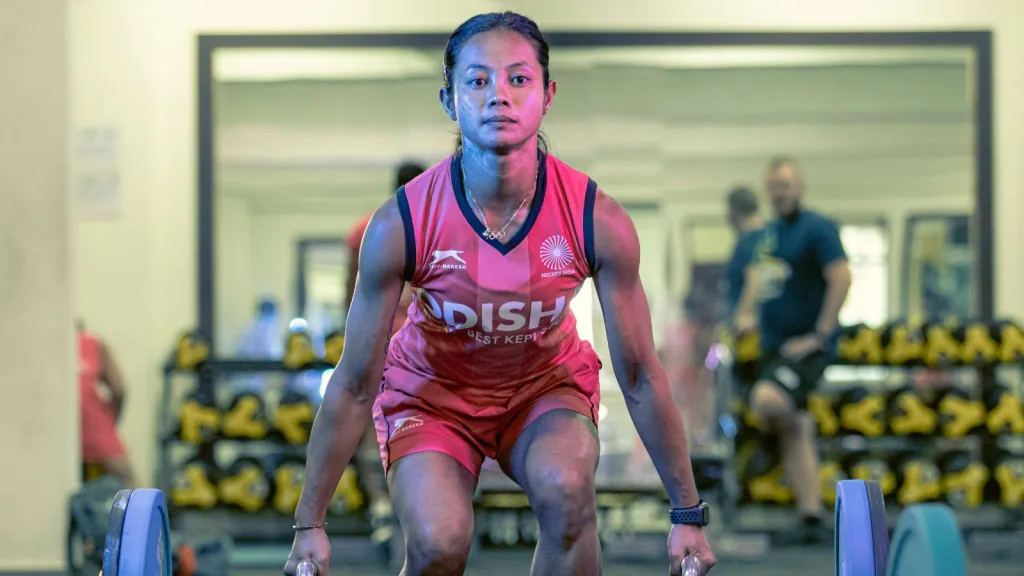
From checking railway tickets in Mumbai to leading India at the Olympics, Sushila Chanu has built a career defined by resilience, reinvention and an enduring voice
Sushila Chanu Pukhrambam has spent more than a decade at the heart of Indian women’s hockey, and her latest chapter carries a different kind of significance. At 34 and with 262 international caps behind her, she is no longer the player wearing the captain’s armband, but she remains one of the most experienced and influential members of the Indian squad.
As India prepares for another World Cup, Sushila represents a generation that helped change the expectations surrounding the women’s team. She has experienced periods when simply reaching major tournaments felt like an achievement, as well as moments when India began to believe that it belonged among the leading teams in world hockey.
Her journey has not been straightforward. It has involved injuries, difficult periods of form, thoughts of quitting, demanding railway duty and the challenge of constantly adapting to a changing team. Yet the midfielder has continued to return, compete and contribute.
“It’s been fun, all these years. There has been pressure, tension, a lot of joy… all emotions are mixed when I look back,” Sushila says, reflecting on a career that has now stretched well beyond a decade.
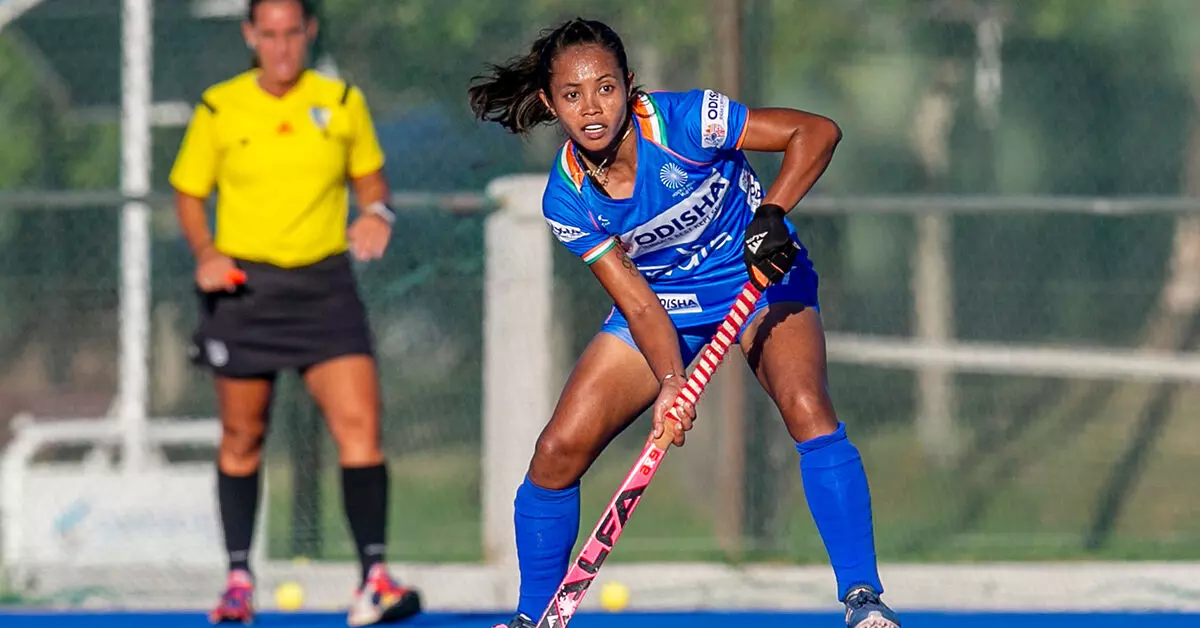
Table of Contents
A Veteran Who Has Seen Indian Hockey Change
Sushila Chanu belongs to the original generation of Indian women’s hockey players who helped push the team towards greater professionalism.
When Sushila Chanu entered the sport, the system was very different from what younger players experience today. There were fewer academies, less structured development and a much smaller professional framework around the women’s game.
“When we were young, there wasn’t a lot of professionalism,” Sushila Chanu recalls. “We did not have a proper, structured place to learn.”
That environment meant young players often had to develop through experience rather than through a clearly established pathway. Training structures were less organised and exposure to professional methods was limited.
Today, Sushila Chanu sees a markedly different landscape. Academies have expanded across the country, young players are arriving with greater technical understanding, and the overall culture inside the national team has evolved.
For Sushila Chanu, that change has also altered her own responsibilities.
“There is no need to handhold at each step,” she says. “We can guide them.”
That distinction is important. Sushila Chanu’s role is no longer to teach everything from the beginning. Instead, she brings experience, perspective and the ability to identify problems within a match.
From Young Player to Senior Guide
The generational shift inside the Indian team is perhaps most visible in the changing relationship between senior and junior players.
As a younger member of the squad, Sushila Chanu was intimidated by senior players. The older generation commanded a distance that made it difficult for youngsters to communicate freely.
She remembers the culture of the time, when young players were cautious around the “didi log” and did not interact with seniors as casually as players do now.
That environment has changed.
The current Indian side is led by Salima Tete, while Sushila Chanu has moved into the role of experienced senior player and guide. But Sushila Chanu does not see the loss of the captaincy as a loss of influence.
“Whether I am a captain or a normal player, there is nothing like that,” she says.
Her authority now comes from experience rather than a title.
On the field, Sushila Chanu continues to speak when she notices something going wrong.
“Wherever there is a mistake, I will speak.”
It is a statement that captures the evolution of her role. She may no longer lead the team formally, but Sushila Chanu remains an important voice within the group.
Injuries Tested Her Mental Strength
Longevity in professional sport is rarely straightforward, and Sushila Chanu’s career has been shaped by repeated injuries.
She does not hide the psychological toll they have taken.
“In my life, I have got a lot of injuries,” she says. “Because of the injury, in my mind, mentally, sometimes I get weak. Every day, we can’t always be positive.”
Her comments offer a glimpse into a side of elite sport that is often overlooked.
Physical injury does not simply interrupt training or matches. It can also affect confidence, motivation and a player’s belief in their ability to return at the highest level.
For Sushila Chanu, the most difficult period came in 2018, when she was left out of both the Asian Games and World Cup squads.
Her form had declined, and the omission forced Sushila Chanu to confront a possibility she had previously avoided.
For the first time, she considered giving up hockey altogether.
“I thought of leaving everything,” she recalls.
The Friends Who Helped Her Stay
Sushila Chanu’s career may have taken a very different path had her friends not intervened during that difficult phase.
They encouraged Sushila Chanu not to make an immediate decision. Their suggestion was simple: if she still wanted to quit, she should play one more match, even a test game, and then decide.
That extra game became the beginning of another chapter.
She stayed.
“After that, I did not give up. I did three times more hard work, and that never stopped.”
The statement reflects the attitude that has defined Sushila Chanu’s career.
Rather than treating the setback as the end, Sushila Chanu used it as a reason to rebuild herself. Her response was not only to regain selection but to increase the amount of effort she was putting into her game.
That persistence eventually produced some of the most memorable moments of Sushila Chanu’s international career.
Junior World Cup Bronze Marked an Early Milestone
One of those milestones came in 2013, when Sushila Chanu captained India’s junior team to a bronze medal at the World Cup.
The achievement carried significance beyond the medal itself. It was India’s first medal at the junior women’s World Cup, making the campaign an important moment in the country’s development at the international level.
For Sushila Chanu, leading that side provided an early indication of the leadership responsibilities she would later assume with the senior team.
The experience also came at a time when Indian women’s hockey was gradually building belief and visibility.
It would soon be followed by one of the biggest milestones in her career.
Leading India Back to the Olympics
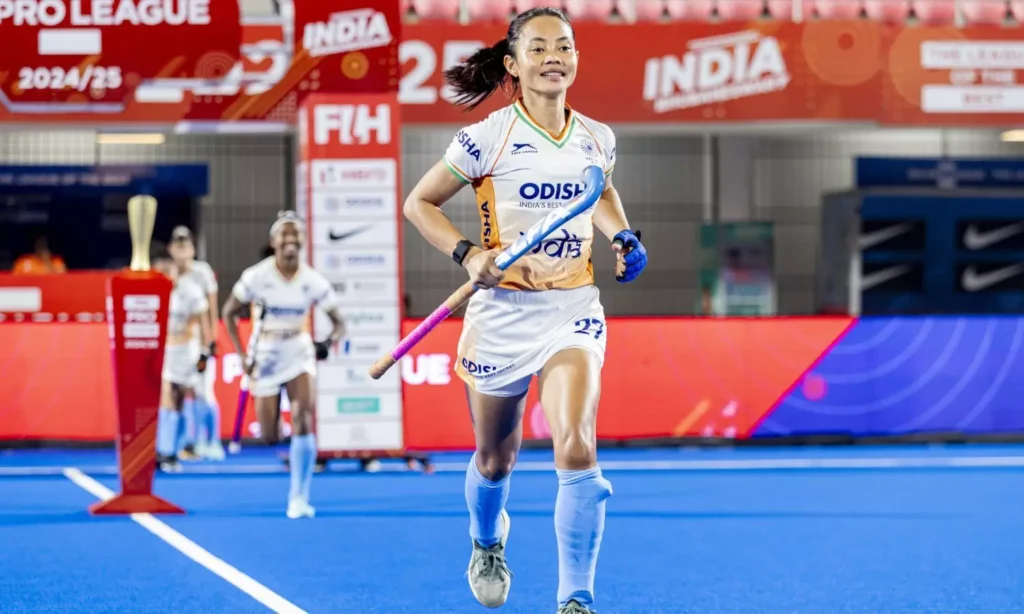
In 2016, Sushila captained India at the Rio Olympics.
The appearance was particularly significant because India had returned to the women’s Olympic hockey competition after more than three decades.
For a player who had experienced the limitations of the earlier system, leading India back onto the Olympic stage represented a remarkable progression.
It was not simply a personal achievement. It reflected the broader transformation of Indian women’s hockey and the growing belief that the national team could compete on the sport’s biggest stages.
A decade after Rio, the captaincy has moved to a new generation, but the significance of that period remains a defining part of Sushila’s career.
Tokyo Provided Another Memorable Chapter
The second moment Sushila identifies as particularly memorable came at the Tokyo Olympics.
India finished fourth, narrowly missing out on a medal but producing one of the strongest Olympic campaigns in the history of the women’s team.
For Sushila, the Rio and Tokyo Olympics remain among the defining experiences of her career.
“These two things will be memorable in my life,” she says.
The contrast between the two tournaments also captures the evolution of Indian hockey. Returning to the Olympics in Rio was itself a milestone; reaching the semi-final stage and finishing fourth in Tokyo demonstrated a new level of competitiveness.
That progress helped establish higher expectations for the generations that followed.
A Career Built Around Family Responsibility
Sushila’s story also extends far beyond the hockey field.
Her father worked as a truck driver, while her mother ran a tea shop. Her journey into professional hockey was therefore closely connected to a family that worked hard to support her ambitions.
At one point, Sushila asked her mother to stop running the tea shop.
Later, she built a home for her parents.
Her motivation was straightforward.
“I just wanted to keep my parents happy,” she says.
That perspective adds another dimension to her career. For Sushila, hockey was not simply about personal recognition or sporting success. Her achievements were also closely tied to the desire to provide stability for her family.
Railway Duty Was Once Part of Her Sporting Life
Perhaps one of the most revealing parts of Sushila’s journey is how she once had to combine international sport with a regular job.
After camps and tournaments, she would return to Mumbai and report for Railway duty.
Her role involved checking tickets at crowded railway stations, including Sion and Masjid.
Balancing the demands of professional hockey with workplace responsibilities created an additional challenge.
Getting leave was difficult, meaning her sporting career had to be organised around an institutional job rather than the other way around.
That reality highlights how different the support structure for Indian women’s hockey once was.
Today, elite players can spend far more time inside specialised camps and training environments.
For Sushila, professional preparation now looks very different.
The Game Has Become More Professional
The transformation in Indian women’s hockey is reflected not only in academies and coaching but also in how players spend their time.
Sushila says the team now spends extended periods together in camp, with training becoming the primary focus.
“We are continuously at the camp,” she says. “Even when we are on leave, we don’t have to go to the office much. The focus is completely on training.”
That change represents a major shift from the days when she had to return to Railway duty between competitions.
It also shows why younger players can now develop differently.
They have greater continuity in training, greater exposure to structured coaching and more opportunities to focus exclusively on hockey.
Sushila has lived through both systems.
A Senior Player in a New Era
The most striking feature of Sushila’s current role is that she remains relevant despite the changes around her.
She has gone from being a young player to captain, from captain to senior guide, and from playing in an era of limited professionalism to competing in a more structured system.
Salima Tete now wears the armband, but Sushila does not see her reduced formal responsibility as a sign that her role has diminished.
Her value lies in the experience she can pass on and the authority she has earned over hundreds of international appearances.
At 262 caps, her longevity itself is unusual.
But the number is meaningful because it represents different generations of Indian hockey, different coaches, different tactical approaches and different stages of the team’s development.
Two Major Opportunities on the Horizon
The next phase of India’s campaign could offer another important chapter for Sushila and the national team.
The World Cup and Asian Games provide two major opportunities for India to build on the progress of recent years.
There is also a familiar face back in the coaching structure, with Janneke Schopman’s successor-era story giving way to Marijne returning to the helm, according to the supplied material, the coach associated with India’s historic Tokyo campaign.
For Sushila, these tournaments represent another opportunity to contribute to a team that is now expected to compete rather than simply participate.
Her experience could be especially valuable in high-pressure matches where small tactical details and composure can determine results.
The Voice Has Outlasted the Armband
Sushila Chanu’s career offers a remarkable picture of endurance.
She has played 262 international matches, captained India at the Olympics, won a junior World Cup medal, experienced a historic fourth-place finish in Tokyo and overcome periods when injuries and poor form made her question whether she should continue.
She has also experienced Indian women’s hockey before and after its transformation into a more professional sport.
The captaincy eventually moved to another player.
But the voice remained.
Ten years after Rio, Salima Tete may wear the armband, but Sushila’s influence continues to come from the same source that has sustained her career all along: experience, resilience and the willingness to speak when something is going wrong.
Her journey from Railway duty in Mumbai to 262 international caps is more than a story of personal longevity. It is also a reflection of how far Indian women’s hockey has travelled.
And as Sushila walks out for another World Cup, she does so not merely as a veteran still playing, but as one of the players who helped build the bridge between the old generation and the team India sees today.
:::