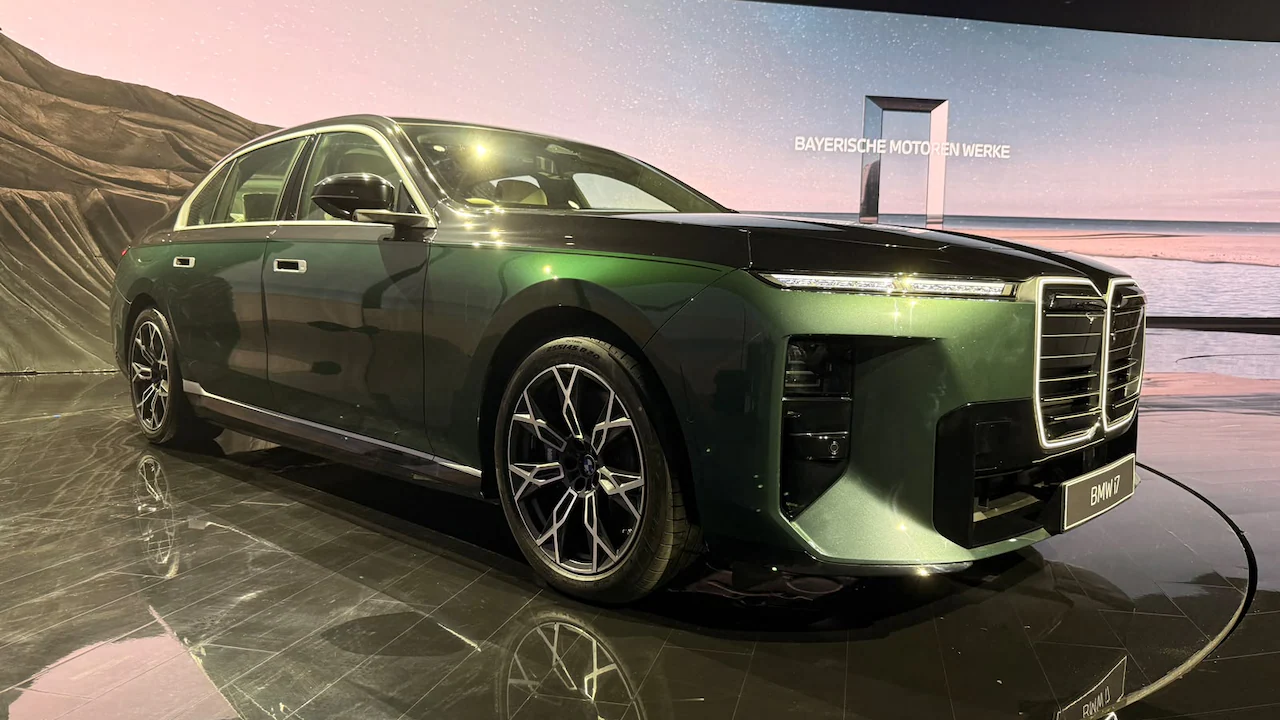
BMW 7 Series has received a major facelift in India, bringing a substantial technology upgrade, refreshed styling and updated powertrains to BMW’s flagship sedan range. The updated models combine traditional petrol performance with fully electric power, while placing an even greater emphasis on rear-seat luxury and advanced in-car technology.
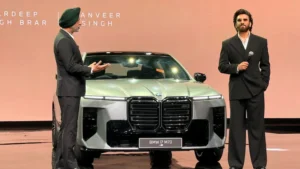
BMW 7 Series and i7 were unveiled in the presence of actor Ranveer Singh and Hardeep Singh Brar, President and CEO of BMW Group India. The updated 7 Series range starts at Rs 1.95 crore (ex-showroom), positioning the flagship firmly in India’s ultra-luxury sedan market.
BMW 7 Series and BMW i7 arrive at a time when the luxury-car market is undergoing a significant transformation. Premium buyers are increasingly looking for not only powerful engines and premium interiors but also advanced digital interfaces, electric powertrains and technology normally associated with high-end business-class travel.
BMW 7 Series facelift brings these elements together with a refreshed design, enhanced cabin technology, powerful petrol and electric powertrains, and an even stronger focus on passenger comfort.
2026 BMW 7 Series facelift: What is new?
The facelift does not completely reinvent the seventh-generation 7 Series, but the BMW 7 Series has received several important changes to its exterior and cabin. The front end receives the most visible treatment, with an illuminated Iconic Glow kidney grille becoming a prominent part of the flagship sedan’s appearance.
The updated BMW 7 Series also features BMW Individual Crystal Headlights with Swarovski glass elements. Adaptive LED technology, cornering lights, matrix high beam and BMW’s Selective Beam system are part of the lighting package.
These changes give the BMW 7 Series a more distinctive appearance while maintaining the large, formal proportions expected from BMW’s flagship sedan.
At the rear, the lighting design has been revised, while flush-fitting door handles contribute to the car’s cleaner, more streamlined profile.
For customers looking for a sportier appearance, the M Sport package adds more aggressive front and rear bumpers, larger air intakes, side skirts, Shadowline exterior elements, dark-blue M Sport brake callipers and 20-inch alloy wheels.
The i7 M70 xDrive goes further with model-specific styling. It gets smoke-black crystal headlights, black exterior accents, 21-inch M aerodynamic wheels, a black rear spoiler and a full-width rear diffuser.
BMW 7 Series facelift powertrain options
The updated Indian range combines an internal-combustion powertrain with two electric alternatives.
The BMW 740i is powered by a 3.0-litre six-cylinder turbo-petrol engine. It produces 400 hp and 540 Nm of torque. BMW claims that the sedan can accelerate from 0 to 100 kmph in 5.4 seconds, while its electronically limited top speed is 250 kmph.
The 740i continues to appeal to buyers who prefer the characteristics of a conventional luxury performance sedan while still expecting the refinement and technology of a modern flagship.
The electric side of the range begins with the BMW i7 eDrive50. It uses a 112.5 kWh battery and an electric powertrain producing 455 hp and 660 Nm.
BMW claims a 0-100 kmph acceleration time of 5.5 seconds and a WLTP range of up to 728 km. That represents an increase of around 125 km over the outgoing version, making range one of the most significant improvements in the updated electric limousine.
At the top of the range is the BMW i7 M70 xDrive, which combines luxury-car comfort with high-performance electric propulsion.
Its dual-motor all-wheel-drive system develops 680 hp and 1,015 Nm in Sport mode. With Launch Control or Sport Boost activated, torque can rise to 1,100 Nm.
BMW claims that the i7 M70 xDrive can accelerate from 0 to 100 kmph in just 3.8 seconds and reach a top speed of 250 kmph. Despite this performance, the model is claimed to offer a WLTP range of up to 686 km.
That combination makes the M70 particularly notable: it is designed to deliver sports-car levels of acceleration without abandoning the comfort expected from a flagship limousine.
Charging technology gives the i7 greater practicality
For electric-car buyers, charging performance is as important as battery capacity and driving range.
The BMW 7 Series electric range, including the i7 eDrive50 and i7 M70 xDrive, supports DC fast charging at up to 250 kW. BMW claims that the battery can be charged from 10 to 80 per cent in approximately 28 minutes under suitable conditions.
The company also says that a compatible fast charger can add up to 235 km of driving range in 10 minutes.
For home charging, the cars can be charged from 0 to 100 per cent in approximately six hours using a 22 kW AC charger. BMW includes a Wallbox charger and installation for i7 customers, which could make home charging more convenient for owners.
The combination of a large battery, long claimed range and rapid charging is intended to address one of the biggest concerns surrounding premium electric vehicles: whether they can provide the convenience expected from a luxury car during long-distance travel.
A major technology upgrade inside facelift represents perhaps the biggest change in the BMW 7 Series the cabin
The interior is where the facelift represents perhaps the biggest change in the BMW 7 Series. BMW has introduced its Panoramic iDrive system along with BMW Operating System X. The system brings a new approach to the dashboard, with information projected across the lower portion of the windscreen.
BMW calls this system Panoramic Vision. It stretches from one A-pillar to the other, allowing information to be presented across a much wider area than a conventional instrument display. In the updated BMW 7 Series, this technology is designed to make important driving information easier to access while reducing the need for the driver to look away from the road.
The system is accompanied by a BMW 3D head-up display, which places selected driving information directly within the driver’s line of sight. Together, these technologies give the BMW 7 Series a more advanced digital character while maintaining the premium feel expected from a flagship sedan.
The centre of the dashboard features a 17.9-inch Free-Cut central display with matrix backlight technology. The updated BMW 7 Series also introduces a 14.6-inch passenger display, allowing the front passenger to interact with dedicated content.
BMW has designed the passenger screen with privacy in mind. The display turns dark when the interior camera detects that the driver is looking towards it, helping prevent distraction from the driver’s seat. This feature demonstrates how BMW is attempting to balance entertainment with safety in the BMW 7 Series cabin.
The cabin therefore moves beyond simply adding larger screens. BMW is attempting to create a more integrated digital environment in which information, entertainment and vehicle controls are distributed across multiple displays.
Rear-seat luxury remains a major focus
The BMW 7 Series has traditionally competed not only on driving performance but also on the experience offered to passengers sitting behind the driver. The facelift continues that approach, with an extensive list of comfort and entertainment features aimed particularly at customers who use the sedan as a chauffeur-driven vehicle.
Rear occupants receive a 31.3-inch 8K BMW Theatre Screen, transforming the rear cabin into a private entertainment space. It is paired with a Bowers & Wilkins Diamond Surround Sound System featuring Dolby Atmos, giving passengers a cinema-like audio and visual experience inside the BMW 7 Series.
For customers who regularly use the car with a chauffeur, these features are particularly significant. The BMW 7 Series can function as a mobile lounge rather than simply a large executive sedan, making the rear compartment an important part of its overall luxury proposition.
The Executive Lounge seating package adds a reclining rear-seat position with a torso angle of up to 43 degrees. Multi-contour seats offer heating, ventilation, massage and memory functions, allowing occupants to customise their seating position and comfort.
Other luxury features include the Sky Lounge panoramic glass roof, illuminated cup holders and a magnetically secured wireless charging tray. BMW has also equipped the car with radar-based automatic doors and soft-close functionality, further emphasising convenience for passengers.
India becomes an important production base for the i7
One of the most significant developments associated with the launch is BMW’s increased localisation of electric-vehicle production. India is now the only country outside Germany to locally manufacture the BMW i7, according to the launch information.
The development highlights the growing importance of India as both a manufacturing and sales market for premium electric vehicles. As demand for luxury EVs develops, local production can potentially improve supply-chain efficiency and reduce some logistical complexities associated with importing fully built electric cars.
For the BMW 7 Series family, the localisation of the i7 also reinforces BMW’s strategy of offering electric technology alongside conventional petrol power in the Indian luxury market.
It reflects a broader shift in India’s premium automotive industry, where global manufacturers are increasingly exploring local manufacturing as buyers show greater interest in advanced vehicles, electrification and technology-rich cabins.
The i7 M70 raises the performance benchmark
Among the updated models, the i7 M70 xDrive is arguably the most dramatic member of the BMW 7 Series family.
With 680 hp and up to 1,100 Nm of torque, it combines the quietness and smooth power delivery of an electric vehicle with performance figures that place it firmly in high-performance territory.
The claimed 3.8-second 0-100 kmph time is particularly notable for a large luxury sedan. The BMW 7 Series-based performance model is capable of delivering acceleration figures associated with much smaller sports cars while retaining the space and comfort expected from a flagship limousine.
Yet BMW has not treated performance as the sole priority. The M70 retains the technology, rear-seat comfort and luxury equipment expected from the BMW 7 Series family.
That dual character is increasingly important in the premium segment. Buyers no longer necessarily have to choose between an executive limousine and a performance car. The i7 M70 attempts to combine both experiences in a single vehicle.
What the facelift means for BMW’s flagship strategy
The updated BMW 7 Series and i7 represent BMW’s attempt to keep its flagship sedan competitive during a major period of change in the luxury-car industry.
The segment is facing pressure from traditional rivals while also being reshaped by electric vehicles, advanced driver interfaces and increasingly sophisticated rear-seat technology. Luxury buyers are increasingly evaluating vehicles not just on engine performance and materials, but also on digital experiences, connectivity and electrification.
BMW’s response is to offer customers multiple routes into the same flagship family.
The 740i provides the familiar petrol-powered luxury-sedan experience. The i7 eDrive50 prioritises electric range and refinement, while the M70 xDrive combines electric efficiency with exceptional performance.
This approach gives BMW flexibility as customer preferences continue to change. Rather than moving entirely away from conventional engines, the BMW 7 Series range provides both internal-combustion and electric options within the same flagship portfolio.
Technology becomes as important as performance
The latest BMW 7 Series also demonstrates how the definition of luxury is changing.
A luxury sedan was once primarily judged by leather quality, engine refinement, ride comfort and rear-seat space. Those factors remain important, but technology now plays an equally significant role.
Large high-resolution screens, intelligent displays, advanced lighting, premium audio systems, digital connectivity and automated functions have become part of the luxury experience.
BMW’s Panoramic iDrive is a particularly important part of this transition. Instead of treating the dashboard as a collection of separate screens, the company has created a broader digital interface that spans the driver’s field of view.
The result is a cabin designed to feel more like a sophisticated digital environment while retaining the physical luxury expected from a flagship sedan. For the BMW 7 Series, this combination of traditional craftsmanship and advanced technology is central to its appeal in India’s competitive luxury-car market.
A broader shift in India’s luxury-car market
The arrival of the updated BMW 7 Series and i7 also reflects the changing expectations of Indian luxury-car buyers. Premium customers increasingly expect vehicles to provide not only performance and comfort but also advanced technology, distinctive design and multiple powertrain choices.
The BMW 7 Series addresses these expectations through its combination of petrol performance, long-range electric capability, high-speed charging, rear-seat entertainment and sophisticated digital interfaces.
With a starting price of Rs 1.95 crore (ex-showroom), the updated range remains positioned firmly in the ultra-luxury segment. Its appeal will therefore depend not simply on specifications, but on how effectively BMW combines performance, comfort, technology and exclusivity in a single flagship package.
For BMW, the facelift is more than a cosmetic update. It is an effort to redefine what its flagship sedan can offer at a time when luxury mobility is rapidly moving towards electrification and digitalisation.
A stronger position for BMW in India’s luxury market
With the facelifted 7 Series and i7, BMW is strengthening its position in India’s premium sedan segment.
The starting price of Rs 1.95 crore ex-showroom places the updated 7 Series firmly in the high-end luxury category. The i7, meanwhile, expands BMW’s electric flagship offering for customers seeking zero-tailpipe-emission motoring without compromising on size, performance or rear-seat comfort.
BMW’s decision to bring both conventional and electric versions together also reflects the company’s broader strategy of giving customers powertrain choice while maintaining a common flagship identity.
The refreshed design, improved electric range, faster charging and substantially upgraded cabin technology give the new models several areas in which to compete.
For buyers, the most significant change may ultimately be the increased emphasis on technology. The latest 7 Series is no longer simply a luxury sedan with a powerful engine. It is being positioned as a sophisticated mobile environment where driving, entertainment, connectivity and passenger comfort come together.
With the 2026 facelift, BMW has therefore taken an already technology-heavy flagship and pushed it further towards the future — while retaining the performance and luxury credentials that have defined the 7 Series name for decades.