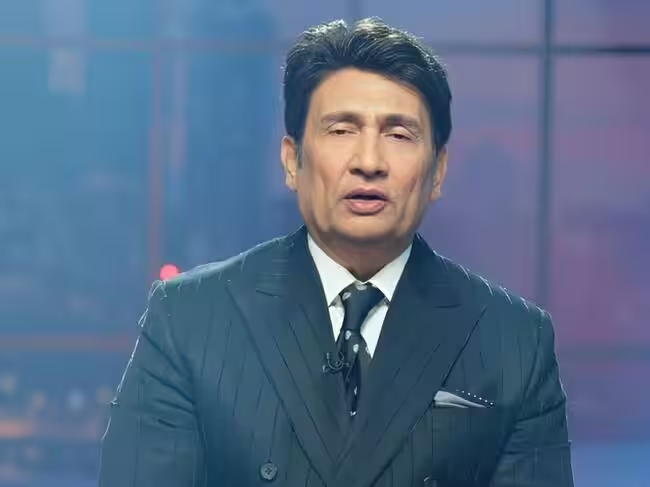
Udta Teer Review: Starring Ayushmann Khurrana and Sara Ali Khan, the Dharma Productions and Sikhya Entertainment film attempts to turn a serious espionage mission into a comedy but struggles with inconsistent humour, an uneven screenplay and an unfocused narrative.
Udta Teer, starring Ayushmann Khurrana in the lead role, attempts to bring an unconventional twist to the Indian spy-film genre by combining espionage, mistaken identity and absurdist comedy. Set against the backdrop of heightened India-Pakistan tensions following Operation Sindoor, the film follows a Pakistani intelligence operative who loses his memory after a serious head injury and begins to believe that he is an Indian counter-terrorism agent. The resulting confusion sets off a chain of increasingly chaotic events involving intelligence agencies, undercover operatives and a mission that threatens to spiral out of control.
Directed by Akash A Kaushik, known for his writing work on films such as Housefull 4 and Bhool Bhulaiyaa 2 and Bhool Bhulaiyaa 3, Udta Teer aims to offer a comic alternative to the serious, high-stakes espionage thrillers that have attracted significant attention in Indian cinema. The film draws on the tradition of Hollywood spy parodies, with its premise inviting comparisons to the irreverent humour of Austin Powers.
However, while the concept offers considerable scope for comedy, the film struggles to maintain a consistent tone and deliver the sustained humour that its premise promises. Ayushmann Khurrana’s performance provides a degree of stability, and several experienced supporting actors contribute to the film’s comic energy. Yet an uneven screenplay, a series of questionable narrative choices and jokes that fail to land prevent Udta Teer from fully realising its potential.

Table of Contents
Udta Teer Attempts to Find Comedy in Espionage
Spy films generally revolve around secrecy, intelligence gathering, covert operations and the consequences of national security threats. Udta Teer takes these familiar elements and attempts to turn them upside down by placing an unusually confused protagonist at the centre of a mission that depends on his ability to remember who he is.
The story begins with a Pakistani spy sent to India on a mission intended to destabilise the country. Operating under the identity of Vikrant Thapar, the agent is actually Bilal Ahmed, an operative whose work involves maintaining a carefully constructed cover.
His cover includes a marriage to Yamini, played by Sara Ali Khan, whose employment in the finance department of India’s defence ministry makes her an unsuspecting part of his carefully maintained identity. Yamini’s mother, portrayed by Supriya Pilgaonkar, is already concerned about the state of her daughter’s marriage, adding another layer of domestic tension to the story.
Bilal’s carefully constructed life takes an unexpected turn when he suffers a serious head injury and loses his memory. Unable to recall his real identity or the mission entrusted to him, he begins to believe that he is Vikrant, an Indian counter-terrorism operative.
The change creates a serious problem for the people who sent him to India. His superiors in Pakistan must find a way to manage the consequences, while his associates on the ground struggle to understand his unpredictable behaviour. Instead of continuing with his original mission, Bilal begins acting in ways that threaten the very operation he was meant to carry out.
The central irony is clear: an intelligence operative trained to deceive others becomes incapable of recognising his own deception. The premise provides an opportunity to explore mistaken identity, institutional confusion and the absurdity of a covert mission collapsing because its most important participant no longer understands what he is supposed to do.
Unfortunately, the film’s execution does not always match the ingenuity of the setup. Rather than building its comedy through carefully constructed situations and escalating consequences, the screenplay frequently allows the narrative to drift into confusion.
In the Era of Dhurandhar, Udta Teer Aspires to Be Austin Powers
One of the film’s most notable ambitions is its attempt to distinguish itself from the increasingly serious approach to espionage in Indian cinema. The comparison with Dhurandhar establishes a contrast between two different approaches to the spy genre: one built around tension and high-stakes operations, and another that attempts to find humour in the same world.
Udta Teer looks towards the tradition of Hollywood spy spoofs, particularly the style associated with Mel Brooks and Mike Myers. Films such as Austin Powers found comedy in exaggerated villains, exaggerated spy conventions, absurd situations and characters whose behaviour deliberately challenged the seriousness of conventional espionage stories.
That approach requires more than an unusual premise. Successful spy parodies understand the conventions of the genre they are mocking. They use familiar tropes, dramatic reversals and carefully timed jokes to create comedy from situations that would otherwise be tense or dangerous.
Udta Teer attempts something similar by turning a trained operative into an unpredictable man who believes himself to be working for the opposite side. The resulting identity crisis gives the film opportunities to parody intelligence agencies, undercover operations and the rigid hierarchies that govern secret missions.
However, the film does not consistently develop these possibilities into effective comedy. Its humour sometimes relies on the absurdity of the situation without providing the precision required to make that absurdity genuinely funny.
The difference between a successful parody and an uneven spoof lies in execution. A film can deliberately abandon realism, but it still needs internal logic, confident pacing and a clear understanding of its comic objectives. In Udta Teer, the narrative often seems as uncertain about its direction as the protagonist himself.
Akash A Kaushik’s Directorial Debut Struggles With Narrative Control
For Akash A Kaushik, Udta Teer marks a move into directing after writing work on commercially successful comedies, including Housefull 4 and the Bhool Bhulaiyaa franchise.
His experience with broad comic storytelling is evident in the film’s willingness to embrace exaggerated characters and an increasingly chaotic plot. The premise also gives him room to combine espionage conventions with domestic comedy and mistaken identity.
However, the transition from writing to directing brings its own challenges. A comic idea that works on paper must be translated into scenes with precise timing, coherent character motivations and a rhythm that allows the audience to follow the story without losing interest.
In Udta Teer, these elements do not always work together. The story begins as an espionage thriller before shifting into a more openly absurd comedy following Bilal’s memory loss. Although this change is central to the film’s concept, the transition creates problems with tone and narrative consistency.
The confusion affecting Bilal’s mind increasingly becomes a feature of the film itself. Scenes and plot developments seem to move forward without always building towards a satisfying comic payoff. The result is a story that continues to progress but struggles to establish a clear sense of purpose.
The film’s pacing remains relatively steady, which prevents the narrative from completely losing momentum. Yet maintaining movement is not the same as building a compelling story. The situations need to develop, the characters need to influence events in meaningful ways, and the humour needs to emerge naturally from the circumstances.
The film occasionally achieves this, but its stronger moments are undermined by stretches in which the comedy feels underdeveloped.
Ayushmann Khurrana Holds the Film Together as Bilal Ahmed
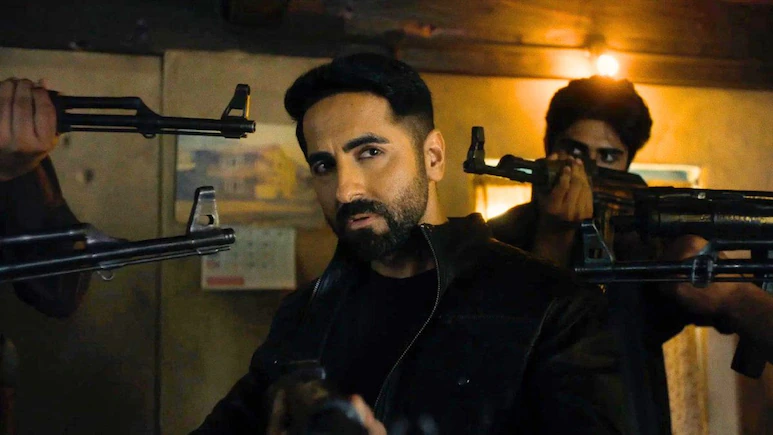
Ayushmann Khurrana is the central force behind Udta Teer, playing Bilal Ahmed, a Pakistani operative who loses his memory and begins to identify himself as Vikrant Thapar.
Khurrana has frequently chosen roles that move away from conventional leading-man expectations. His filmography includes characters defined by unusual circumstances, social complications and situations that challenge established genre conventions. Udta Teer provides another opportunity for him to work against the traditional image of a confident, physically capable and emotionally controlled big-screen spy.
His character is fundamentally different from the polished intelligence operatives commonly found in action thrillers. Bilal is supposed to be an experienced agent, but after losing his memory, he becomes an unpredictable participant in a mission whose purpose he can no longer understand.
Khurrana approaches the character with a willingness to embrace the absurdity of the premise. His performance provides continuity as the story moves between espionage, domestic confusion and broad comedy. He understands that the humour depends partly on the contrast between Bilal’s original role and the confused person he becomes after his injury.
The actor’s ability to make the character appear relatable helps the film remain watchable even when the screenplay loses focus. He gives the protagonist enough personality to prevent the entire story from becoming a collection of disconnected comic situations.
However, a strong central performance cannot completely compensate for weaknesses in writing and direction. The film needs the plot, supporting characters and comic timing to work alongside Khurrana’s performance. When those elements fail to come together, his efforts can only do so much to maintain the film’s energy.
Nevertheless, Khurrana remains one of the film’s most effective assets, providing much-needed stability to a story that frequently threatens to lose its direction.
Sara Ali Khan’s Yamini Gets Limited Narrative Space
Sara Ali Khan plays Yamini, Bilal’s wife under his assumed identity of Vikrant Thapar. Her character is particularly significant to the premise because she works in the finance department of India’s defence ministry, making her an unwitting part of the spy’s cover.
The arrangement creates an opportunity for the film to combine the pressures of an undercover operation with the complications of an apparently ordinary marriage. Before Bilal loses his memory, his domestic identity helps him maintain his position in India. After the injury, that same identity becomes a source of confusion.
Yamini also has a personal concern of her own. Her mother, played by Supriya Pilgaonkar, worries that the marriage is falling apart, introducing a family dimension to the spy story.
However, the character is not given enough independence to become a substantial force in the narrative. Rather than developing Yamini as a fully realised participant in the unfolding events, the screenplay largely positions her in relation to Bilal and the circumstances surrounding his identity.
This limits the potential of a role that could have added greater emotional complexity to the film. Yamini’s professional position and personal life provide natural opportunities for tension, particularly as the consequences of Bilal’s behaviour become more difficult to ignore.
Sara Ali Khan performs within the limitations of the material, but the character’s secondary position prevents her from contributing as much to the overall story as the premise might suggest.
Mukul Dev Makes a Notable Final Screen Appearance
One of the film’s significant performances comes from Mukul Dev, who appears in what has been described as his final screen appearance. He plays a terrorist tasked with planning fidayeen attacks, but the character’s schemes repeatedly threaten to backfire.
Rather than presenting the character as an entirely intimidating antagonist, the film uses his exaggerated behaviour and bumbling approach to generate comic situations. The contrast between the seriousness of his intended actions and the disorder surrounding his plans fits the film’s broader effort to parody the espionage genre.
Dev’s performance adds another dimension to the film’s comic ensemble. His character’s unpredictable energy complements the larger confusion caused by Bilal’s memory loss, creating situations in which the supposed threats to national security become entangled in their own mistakes.
His appearance also carries significance for audiences familiar with his work. The film offers an opportunity to see him in a role that combines villainous intent with broad comedy, adding to the supporting cast’s contribution to the story.
The performance is among the elements that help maintain the film’s momentum, even as the larger narrative struggles to turn its individual ideas into a consistently effective comedy.
Gulshan Grover and Ram Kapoor Add to the Comic Chaos
Gulshan Grover plays General Mir, while Ram Kapoor appears as Niyazi, Bilal’s immediate superior. Both characters are forced to respond to the consequences of the agent’s memory loss and the increasingly unpredictable situation in India.
Their predicament gives the film an opportunity to satirise the rigid structures of intelligence and military organisations. The people responsible for managing a covert operation find themselves struggling to control an operative who no longer understands his assignment.
Grover and Kapoor approach their roles with an awareness of the exaggerated tone the film is attempting to establish. Their performances help create a sense of institutional panic as the operation begins to unravel.
The comedy depends on the contrast between their positions of authority and their inability to control events. They are supposed to be overseeing a carefully planned mission, yet their plans are undermined by a man who has effectively become a stranger to himself.
Other supporting performances also contribute to the film. Suhail Nayyar plays Bilal’s compatriot, who has infiltrated India’s counter-terrorism organisation and struggles to understand his associate’s behaviour. Smita Tambe and Rahul Bose appear as senior officials within the intelligence agency that Bilal has entered.
These actors provide additional layers to the story, although their opportunities to develop their characters are limited by the screenplay’s focus on the central confusion.
A Controversial Joke Raises Questions About the Film’s Humour
Although Udta Teer attempts to generate comedy through mistaken identity and cultural misunderstandings, one exchange highlighted in the film raises questions about the quality of its humour.
In the scene, someone questions Bilal, who now believes himself to be Vikrant, about reading Urdu despite being Hindu. The remark is intended as an aside connected to the character’s assumed identity, but it risks reinforcing an inaccurate association between language and religious identity.
Urdu is not exclusive to any one religious community, and a person’s religion does not determine whether they can read or speak the language. As a result, the exchange comes across as poorly judged rather than genuinely witty.
The issue illustrates a broader challenge for comedies that draw humour from identity, nationality or cultural differences. Such jokes require careful writing to ensure that the comedy emerges from the situation rather than relying on simplistic assumptions.
A spy parody can challenge stereotypes and expose the absurdity of rigid identities. However, when a joke depends on an inaccurate premise, it can weaken the scene instead of strengthening it.
For a film that attempts to turn conventional espionage into a source of comedy, sharper writing could have made the exchange more effective without relying on a questionable cultural assumption.
Does Udta Teer Deliver Enough Laughs?
The central question surrounding Udta Teer is whether its unusual premise translates into a consistently entertaining experience.
The film has several elements working in its favour. Khurrana’s performance provides a strong centre, the supporting cast understands the exaggerated nature of the story, and the memory-loss concept offers plenty of opportunities for situational comedy.
Its willingness to challenge the seriousness of the conventional spy thriller also gives it a distinct identity. Instead of relying entirely on action sequences, sophisticated gadgets and heroic competence, it makes confusion the foundation of its narrative.
However, the execution remains uneven. The film has moments of inspired absurdity, but they are not frequent or consistently effective enough to produce the sustained laughter that a broad spy comedy requires.
The screenplay frequently allows situations to continue without developing them into satisfying comic set pieces. Some scenes generate mild amusement, while others leave the viewer wondering why the story has taken a particular direction.
This inconsistency prevents the film from becoming the kind of memorable parody its premise suggests it could be. The humour is generally more successful when it emerges naturally from Bilal’s identity crisis and the reactions of those around him. It is less effective when the story appears to depend on absurdity alone.
The result is a film that may entertain viewers willing to accept its loose approach to storytelling, but those expecting a tightly constructed comedy could find the experience disappointing.
Final Verdict: An Interesting Idea That Never Fully Takes Flight
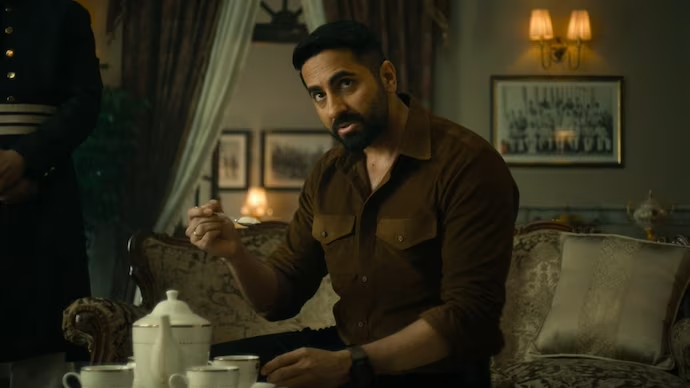
Udta Teer attempts to offer a lighter alternative to serious espionage dramas by turning a covert mission into a story of mistaken identity and institutional confusion. The concept is promising, and Ayushmann Khurrana brings enough commitment to his role to keep the film engaging through several uneven stretches.
The supporting cast, including Mukul Dev, Gulshan Grover, Ram Kapoor and Supriya Pilgaonkar, adds energy to the proceedings. Their performances help sustain the film’s comic atmosphere, even when the screenplay struggles to find a consistent rhythm.
Yet the film never fully achieves the precision or comic confidence associated with successful spy parodies such as Austin Powers. Its narrative often becomes as disoriented as its protagonist, while several jokes and character dynamics fail to reach their potential.
The comparison with Dhurandhar highlights the film’s ambition to move away from the conventional seriousness of the spy genre. However, being different from an established formula is not enough. A successful parody must understand the rules it intends to break and use that understanding to create a coherent, entertaining experience.
Ultimately, Udta Teer offers flashes of humour and a committed central performance, but its uneven writing prevents it from becoming a truly memorable spy comedy. It remains watchable for viewers in the mood for an offbeat, undemanding entertainer, although it is unlikely to deliver the sustained hilarity its premise promises.
The film takes flight, but it struggles to find a meaningful target.