
India’s Unified Payments Interface (UPI) has transformed the country’s digital economy by making instant, cashless transactions available to millions of users free of cost. However, a recently introduced amendment to the Payment and Settlement Systems Act, 2007 has triggered widespread debate after raising the possibility that certain UPI Payment transactions—particularly those above ₹2,000—could eventually attract Merchant Discount Rate (MDR) charges.
Although the Central government has not announced any new fee on UPI transactions, the proposed legislative amendment has opened the legal pathway for reintroducing MDR on specific digital payments. The development has sparked discussions among policymakers, financial experts, merchants, payment companies, political leaders, and consumers over the future of India’s most successful digital payments platform.
With UPI recording record-breaking monthly transaction volumes, questions are now emerging about how the ecosystem can remain financially sustainable while continuing to offer free digital payment services to users.
Table of Contents
What Is the New Proposal About?
The debate began after Finance Minister Nirmala Sitharaman introduced the Taxation and Other Laws (Amendment) Bill, 2026 in the Lok Sabha. Among several proposed amendments aimed at improving India’s investment climate and simplifying business regulations, the Bill seeks to amend Section 10A of the Payment and Settlement Systems Act, 2007.
While the amendment does not directly impose any charges, industry experts believe it creates the legal framework through which the government could permit the return of Merchant Discount Rate (MDR) on certain UPI and RuPay debit card transactions in the future.
Importantly, the Bill does not specify:
- The MDR rate
- Which transactions will attract charges
- Whether consumers will pay
- Whether only merchants will bear the cost
- The timeline for implementation
As of now, no official notification has been issued by the Ministry of Finance, the Reserve Bank of India (RBI), or the National Payments Corporation of India (NPCI) regarding the introduction of MDR.

Understanding Merchant Discount Rate (MDR)
Merchant Discount Rate (MDR) is a fee paid by merchants to banks and payment service providers whenever customers make digital payments.
The fee compensates payment ecosystem participants for:
- Transaction processing
- Payment gateway infrastructure
- Banking networks
- Fraud detection systems
- Cybersecurity
- Settlement services
Currently:
- Credit card transactions generally attract around 1.5% MDR
- Debit card transactions attract up to 0.9% MDR
However, since January 2020, the government has completely waived MDR on:
- UPI payments
- RuPay debit card transactions
This decision significantly accelerated India’s digital payment revolution by making UPI completely free for both merchants and consumers.
Why Is MDR Being Discussed Again?
India’s digital payment ecosystem has expanded at an unprecedented pace.
According to official figures:
- June 2026
- 22.72 billion UPI transactions
- ₹28.92 lakh crore transaction value
- July 2026
- 23.66 billion transactions
- ₹29.88 lakh crore value
Prime Minister Narendra Modi’s Office also highlighted July as the highest-ever monthly UPI volume since the platform’s launch.
While this growth reflects India’s rapid digital transformation, payment companies argue that maintaining such a massive infrastructure without any transaction revenue is becoming increasingly difficult.
Unlike card payments, UPI currently generates little direct income for payment service providers despite requiring continuous investments in:
- Cloud infrastructure
- Cybersecurity
- AI-powered fraud monitoring
- Banking integration
- Payment gateways
- Technical support
- Real-time settlement systems
Industry experts believe a sustainable funding mechanism may eventually become necessary.

Will Consumers Have to Pay?
At present, the answer is No.
Neither the Bill nor any government notification proposes charging consumers directly.
Several payment experts believe that if MDR returns, it is likely to be collected from merchants rather than customers, similar to global digital payment models.
Industry leaders have suggested that any future MDR framework could be:
- Limited to large merchants
- Applicable only above certain transaction values
- Exempt small businesses
- Keep peer-to-peer UPI payments free
This approach would help maintain consumer confidence while allowing the ecosystem to recover operational costs.
RBI Governor Calls Speculation Premature
Responding to growing concerns, RBI Governor Sanjay Malhotra urged people not to jump to conclusions.
Following the RBI’s August 2026 Monetary Policy announcement, he stated that discussions around MDR remain premature, emphasizing that no final decision has yet been taken.
However, he acknowledged an important reality—the digital payments ecosystem will eventually require a sustainable economic model as transaction volumes continue to expand.
His remarks indicate that while no immediate policy change is expected, long-term funding options remain under consideration.
Reports Suggest Charges May Apply Only to Large Merchants
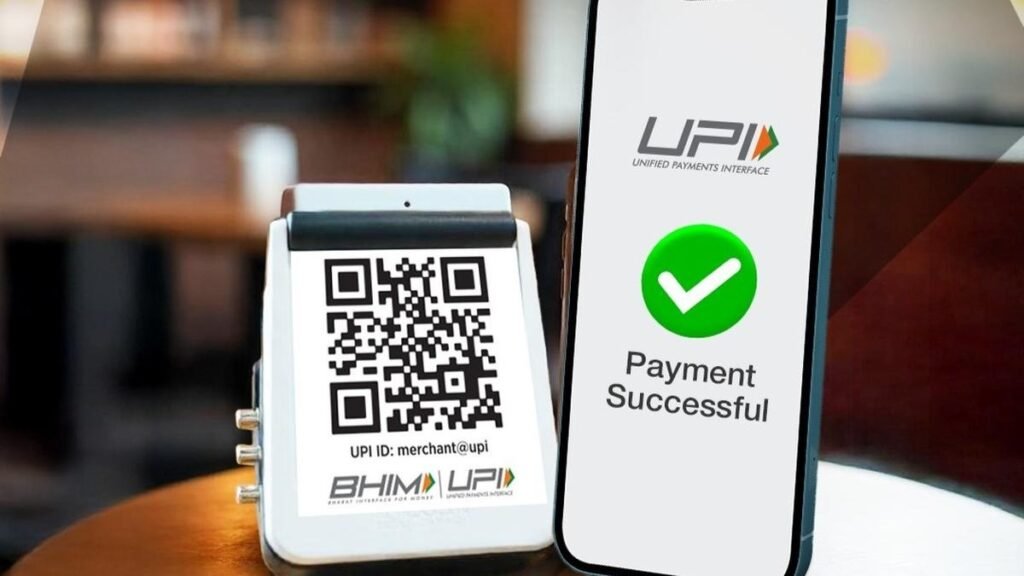
Several media reports suggest that any future MDR system may not affect ordinary consumers or small businesses.
According to government sources quoted by The Hindu, discussions currently focus on:
- Merchants with annual turnover between ₹1 crore and ₹1.5 crore
- Transactions exceeding ₹2,000
Although these reports remain unofficial, they suggest policymakers may be exploring a differentiated MDR framework rather than a universal fee.
Such a model would protect small merchants while allowing larger businesses benefiting from high digital transaction volumes to contribute toward system maintenance.
Why the Payments Industry Supports MDR
Banks and fintech companies argue that India’s payment infrastructure cannot remain free forever without affecting innovation.
Industry representatives point out that maintaining UPI requires continuous investments in:
- Security upgrades
- AI fraud detection
- Payment reliability
- System scalability
- Disaster recovery
- Customer protection
Experts estimate the operational cost of processing each UPI transaction ranges between 40 paise and ₹1.
During 2025–26, India processed approximately 24,161 crore UPI transactions, implying annual operating costs between:
- ₹9,664 crore
- ₹24,161 crore
These figures explain why payment companies are seeking a sustainable revenue model.
Political Reactions Intensify
The proposed amendment has triggered political debate.
Congress Criticises Proposal
The Congress Party alleged that introducing charges on digital payments would place additional financial pressure on citizens already struggling with inflation.
Party leaders argued that consumers should not be burdened for using one of India’s most successful public digital services.
BJP Urges Patience
BJP MP and CAIT Secretary General Praveen Khandelwal urged citizens not to speculate before the final provisions become public.
He emphasized that:
- India leads the world in digital payments.
- Government decisions are based on broader economic considerations.
- Final rules will clarify who, if anyone, will pay MDR.
He also observed that payment services globally generally involve processing costs and that reasonable charges for enhanced services are not uncommon.
Experts Explain the Bigger Picture
Digital payments expert Rohit Mahajan, Founder and CEO of plutos ONE, believes the proposed amendments should not be viewed as consumer charges.
According to him:
- Person-to-person UPI transfers are expected to remain free.
- Merchants may bear any future MDR.
- Larger businesses benefiting most from digital payments could contribute to infrastructure costs.
- Small merchants should continue receiving protection.
He noted that introducing merchant-based monetisation could help strengthen UPI’s long-term sustainability without reducing customer convenience.
Social Media Divided Over Possible Charges
The proposal has generated significant discussion across X (formerly Twitter).
Some users expressed concern that even merchant charges could eventually increase consumer prices.
Others warned that introducing MDR might encourage businesses to:
- Prefer cash payments
- Add convenience fees
- Reduce digital payment incentives
UPSC educator Saurabh Tripathi argued that even indirect merchant charges could weaken one of India’s strongest public digital platforms.
Senior journalist Sushant Singh similarly suggested that businesses may eventually pass MDR costs to customers through higher product prices.
Meanwhile, entrepreneur Rishi Bagree defended the government’s current policy, noting that:
- NPCI spends approximately ₹500 crore annually maintaining UPI.
- The government saves nearly ₹1,500 crore through lower currency printing and reduced cash handling.
According to him, keeping UPI free continues to generate larger economic benefits.
Former YSR Congress MP V. Vijayasai Reddy also appealed to the Centre not to introduce any MDR, warning that even small charges could reverse years of digital payment growth.
Can RBI Fund UPI Instead?
Some experts believe the RBI itself could absorb much of the cost.
According to estimates:
- RBI earned nearly ₹4.3 lakh crore during 2025–26.
- Around ₹2.9 lakh crore was transferred to the Central government as surplus.
Even if annual UPI operating costs reach ₹24,000 crore, they would represent only a small portion of RBI’s annual surplus.
Supporters argue that free UPI generates far greater economic value through:
- Reduced cash printing
- Lower ATM costs
- Reduced banking infrastructure
- Lower cash logistics expenses
- Increased financial inclusion
Why Many Experts Want UPI to Remain Free
An editorial titled “Free UPI, Forever” argued that UPI represents one of India’s greatest digital public infrastructure achievements.
The editorial highlighted that:
- Nearly half of the world’s real-time payments occur through UPI.
- More than 24,000 crore transactions worth over ₹314 lakh crore were processed during 2025–26.
- India’s GDP during the same period stood at approximately ₹346 lakh crore, illustrating UPI’s enormous economic scale.
It also noted that the RBI spent ₹4,875 crore printing new currency notes while destroying nearly 1,700 crore damaged notes during the year.
According to the editorial, widespread UPI adoption significantly reduces these costs while saving banks billions through reduced dependence on physical cash infrastructure.
The Road Ahead
The proposed amendment has not introduced MDR on UPI transactions, nor has it imposed charges on consumers. Instead, it creates a legal framework that could allow policymakers to design a future funding mechanism for India’s rapidly expanding digital payments ecosystem.
Whether MDR eventually applies only to large merchants, specific transaction values, or broader categories will depend on future government notifications and regulatory decisions.
Until then, UPI continues to remain free for users, and authorities have urged the public to avoid speculation based on incomplete information.
India’s UPI revolution has fundamentally changed the way millions of people transact, making digital payments simple, instant, and free. As transaction volumes continue to break global records, the challenge now lies in ensuring that the ecosystem remains financially sustainable without compromising accessibility or public trust.
While the proposed legislative amendment has sparked widespread debate, it is important to note that no MDR has been imposed yet, and no official policy has been announced to charge consumers for UPI payments. Any future changes are likely to involve careful balancing between infrastructure sustainability, merchant interests, consumer convenience, and India’s broader digital economy goals.
For now, UPI remains free, and stakeholders across government, regulators, banks, fintech companies, merchants, and consumers will closely watch how the proposed amendments evolve in the months ahead.