
The Government of India has successfully raised ₹31,552 crore through the Offer for Sale (OFS) of Life Insurance Corporation of India (LIC) shares, marking one of the biggest disinvestment transactions in the Indian stock market. The stake sale received strong participation from investors, with the government fully exercising the green shoe option and increasing public ownership in LIC to the mandatory 10% minimum public shareholding level ahead of the regulatory deadline.
However, despite the successful completion of the OFS, LIC shares traded lower in the market, as investors reacted to increased supply of shares and the discounted price offered under the stake sale. The movement highlighted the short-term market pressure that often follows large institutional share sales, even when the transaction itself receives positive investor interest.
Table of Contents
The development is significant not only for LIC but also for the government’s broader disinvestment strategy, as it strengthens public participation in one of India’s largest financial institutions while helping the Centre meet regulatory requirements.
Government Completes Major LIC Stake Sale Through OFS
The government conducted an Offer for Sale (OFS) in LIC, selling a portion of its stake in the state-owned insurance company. The transaction involved the allocation of more than 82.23 crore shares, generating ₹31,552 crore for the government. The OFS was oversubscribed on both days of bidding, reflecting strong demand from institutional and retail investors.
According to the Department of Investment and Public Asset Management (DIPAM), the successful completion of the OFS increased public ownership in LIC to 10%, achieving an important milestone ahead of schedule.
The stake sale was conducted as part of the government’s commitment to increasing public shareholding in listed public sector companies while maintaining majority ownership.
What Is an Offer for Sale (OFS)?
An Offer for Sale (OFS) is a mechanism through which existing shareholders, especially promoters or governments in the case of public sector companies, sell shares directly to investors through the stock exchange platform.
Unlike a fresh issue of shares, where a company raises new capital, an OFS involves the sale of existing shares. The money raised goes to the selling shareholder rather than the company.
In LIC’s case, the government sold a portion of its ownership while continuing to remain the majority shareholder.
The key objectives behind such a transaction include:
- Increasing public participation in listed companies
- Meeting regulatory shareholding requirements
- Improving market liquidity
- Supporting government disinvestment goals
Government OFS Receives Strong Investor Response
The LIC OFS attracted significant investor interest across categories. The issue was oversubscribed during the bidding process, indicating demand among institutional and retail participants.
Reports indicated that institutional investors showed strong participation, while retail investors also responded positively to the opportunity to purchase shares of India’s largest life insurance company.
The government’s decision to exercise the green shoe option allowed it to sell additional shares beyond the base offer, increasing the total transaction size.
A green shoe option gives issuers or selling shareholders the flexibility to offer additional shares if demand is higher than expected.
Why Did LIC Shares Trade Lower After the OFS?
Despite the successful fundraising, “The insurer’s shares witnessed selling pressure following the completion of the OFS.
Market analysts often observe short-term volatility after large share sales because:
- Additional shares enter the market
- Investors adjust positions after discounted offerings
- Short-term traders book profits
- Increased supply can temporarily pressure prices
“The company’s shares traded lower after the OFS announcement, with market participants reacting to the increased availability of shares.
The decline does not necessarily reflect a change in the company’s long-term fundamentals but rather a common market reaction following large equity transactions.
LIC’s Importance in India’s Insurance Sector
Life Insurance Corporation of India is one of India’s most important financial institutions and the country’s largest life insurer.
Established in 1956, LIC has played a major role in expanding insurance coverage across India. The company manages a large policyholder base and has a significant presence in the country’s financial ecosystem.
The insurer operates across various segments, including:
- Life insurance policies
- Pension products
- Investment management
- Financial services
The company is also one of India’s largest institutional investors, with investments across multiple sectors of the economy.
Because of its size and importance, any major ownership change or market movement involving the company attracts significant attention from investors and policymakers.
Government’s Disinvestment Strategy Behind LIC OFS
The stake sale is part of the government’s broader strategy to encourage public ownership while unlocking value from its assets.
Disinvestment involves reducing government ownership in public sector enterprises by selling shares to private investors or the public.
The objectives behind disinvestment include:
- Raising government revenue
- Improving market participation
- Increasing transparency
- Encouraging wider ownership
By completing the LIC OFS, the government has moved closer to its long-term objective of increasing public shareholding in listed companies.
Impact on Investors
For existing LIC shareholders, the OFS has both short-term and long-term implications.
Short-Term Impact
In the immediate period after the OFS:
- Share prices may remain volatile
- Increased supply may affect trading patterns
- Investors may closely monitor institutional activity
“The decline in the company’s shares“
following the OFS reflects this short-term market adjustment.
Long-Term Perspective
From a long-term perspective, increasing public ownership may improve liquidity and expand investor participation.
A larger public float can help:
- Increase trading activity
- Improve price discovery
- Strengthen market participation
However, long-term performance will depend on LIC’s business growth, profitability, insurance market expansion, and ability to compete in a changing financial environment.
Journey After Listing
The insurance giant made its stock market debut in 2022 through one of India’s largest initial public offerings (IPO). The listing was part of the government’s effort to bring the insurer into the public market while retaining majority ownership.
Since listing, “Its shares have remained” closely tracked by investors due to:
- Its dominant position in insurance
- Government ownership
- Large investment portfolio
- Growth opportunities in India’s insurance sector
The OFS represents another important phase in LIC’s evolution as a publicly traded company.
Challenges and Opportunities Ahead for the Insurer
While “The insurer continues to hold a strong position in India’s insurance industry, the company faces increasing competition from private insurers.
Key challenges include:
Growing Private Sector Competition
Private insurance companies have expanded rapidly by introducing digital platforms, innovative products, and customer-focused services.
Changing Customer Expectations
Customers increasingly prefer faster digital services, online policy management, and personalised financial products.
Maintaining Market Leadership
LIC will need to continue improving efficiency, technology adoption, and customer engagement to maintain its leadership position.
At the same time, India’s growing middle class, rising financial awareness, and increasing demand for insurance products provide significant growth opportunities.
Market Experts Watch the Insurer’s Next Moves
Following the OFS, investors will closely monitor the company’s future performance, including:
- Premium growth
- Policy sales
- Profitability
- Investment returns
- Market share
The successful completion of the stake sale provides LIC with a wider public shareholder base, while the company’s operational performance will determine its future market valuation.
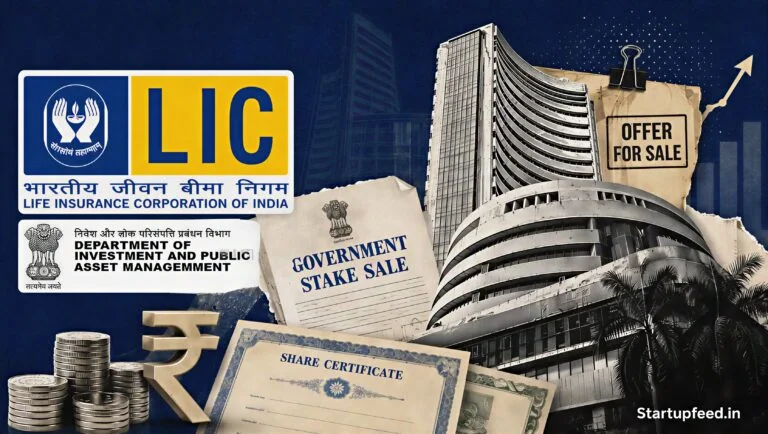
The government’s ₹31,552 crore “The Offer for Sale (OFS) marks“ a major milestone in India’s disinvestment journey, increasing public ownership in the country’s largest insurer to 10%. The transaction received strong investor participation and helped the government achieve an important regulatory objective ahead of schedule.
However, The company’s shares traded lower after the OFS as markets adjusted to increased share availability and short-term selling pressure.
For investors, the key focus now shifts from the immediate market reaction to LIC’s long-term growth potential, business performance, and ability to maintain its leadership position in India’s rapidly evolving insurance sector.
The LIC OFS highlights the balance between government asset monetisation, public participation, and market dynamics, making it one of the most significant financial developments in India’s capital markets.