
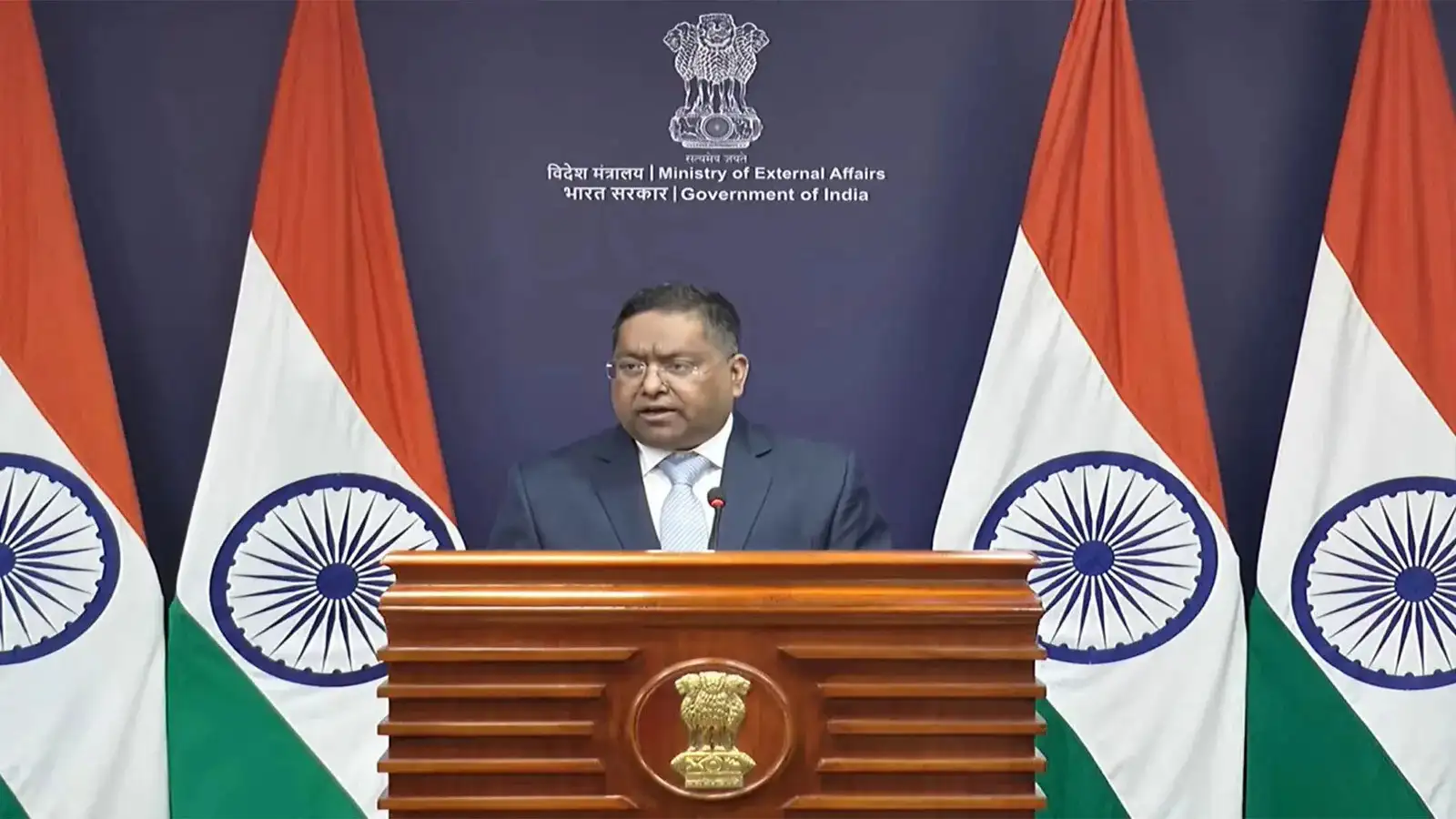
PoJK was the focus of a major diplomatic escalation reflecting deep-seated regional tensions, as India launched a scathing critique against Pakistan for its heavy-handed military crackdown on civilian demonstrators in Pakistan-occupied Jammu and Kashmir. At a Ministry of External Affairs (MEA) press briefing, New Delhi accused the political and military establishment in Islamabad of showing “absolute disdain” for the local population after reports emerged of wide-scale violence, mass casualties, and severe human rights violations.
The friction follows weeks of mass demonstrations, long marches, and civil unrest spearheaded by regional groups like the Jammu Kashmir Joint Awami Action Committee (JKJAAC). Protesters have filled the streets to demand democratic representation, lower energy tariffs, and an end to systemic economic neglect, only to face aggressive state pushback.
Table of Contents
The MEA Briefing: Condemning “Ruthless Force” Against Civilians in PoJK
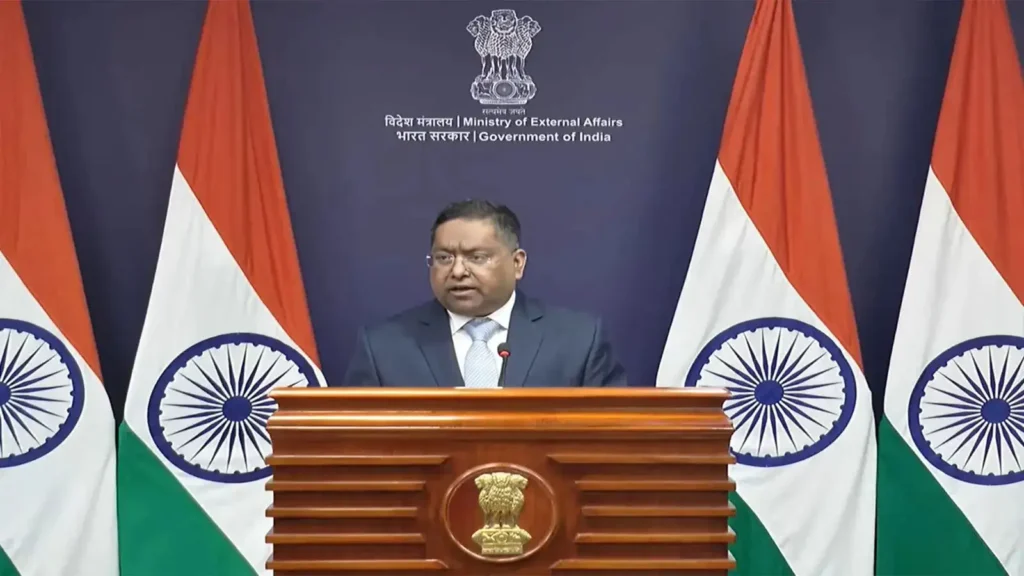
Speaking during the weekly media briefing in New Delhi, MEA Official Spokesperson Randhir Jaiswal delivered a direct and uncompromising assessment of the deteriorating PoJK situation across the Line of Control. He placed the responsibility for the PoJK crisis entirely on the administrative frameworks controlled by Islamabad.
“As you and all of us have witnessed, the Pakistani establishment continues to unleash ruthless force against peaceful civilians in Pakistan-occupied Jammu and Kashmir (PoJK),” Jaiswal stated. “This PoJK crackdown has resulted in the tragic death of over 40 innocent people, and many more have been seriously injured within the PoJK region.”
Local civil rights organizations in PoJK and ground observers have detailed instances of paramilitary personnel using live ammunition, severe baton charges, and tear gas to disperse crowds near major PoJK political hubs like Mirpur and Rawalakot. The state’s response across PoJK expanded rapidly into a total PoJK communications blackout, complete with internet suspensions and a strict media gag order preventing domestic networks from covering the true scope of the PoJK clashes.
The ‘Enemies’ Controversy: A Confession of Proxy Warfare in PoJK
The core of India’s diplomatic pushback focused on provocative statements made by high-ranking Pakistani officials regarding the ongoing PoJK crisis. Pakistan’s Defence Minister Khawaja Asif drew widespread criticism after bracketing local civilian PoJK protesters with India, openly declaring them “enemies of Pakistan” and ruling out any path to constructive dialogue over the grievances in PoJK.
Simultaneously, Rana Sanaullah—the Prime Minister’s Special Assistant on Political Affairs and former Interior Minister—stirred major controversy during an interview with the Pakistani news channel Geo News. Discussing the security dynamics of the PoJK unrest, Sanaullah admitted that the agitated crowds within PoJK included individuals whom the state had previously trained as proxy fighters.
“They are the same people we once trained as Mujahideen,” Sanaullah acknowledged on the broadcast while discussing the situation. “We sent them to fight, and today they are hanging around our necks.”
MEA spokesperson Jaiswal seized on this interview, noting that it served as an open admission of Pakistan’s historical investment in cross-border terrorism that is now destabilizing the PoJK territory.
“The Special Assistant of the Prime Minister on Political Affairs has openly admitted that the very Mujahideen that the Pakistani establishment trained, funded, armed, and sent to India have turned their guns inwards, weaponising themselves against the state,” Jaiswal pointed out. Analysts describe this dynamic as a textbook example of strategic blowback, where militant groups nurtured under state patronage have outgrown their intended utility, threatening internal stability right across the PoJK region.
Electoral Rejection and Calls for Global Accountability
The latest civilian uprising represents a tipping point following highly contentious localized elections. The local population viewed the election processes as deeply compromised by external political manipulation, resulting in widespread anger.
Jaiswal described these political exercises as a “humiliating rejection” of the central authority. Rather than securing compliance, the elections unified various regional factions against what they describe as systematic manipulation designed to place puppet leaders into the regional assembly.
Faced with severe domestic suppression, local rights advocates and international pressure groups are bypassing Islamabad entirely to seek justice. Citizens within the region have formally requested international organizations to launch an independent, transparent investigation into the unlawful killings.
Concurrently, the United Kashmir People’s National Party (UKPNP) has launched an international human rights campaign. The group has issued urgent appeals to the United Nations, the European Union, and major global powers—including the United States, the United Kingdom, and Germany—demanding immediate humanitarian intervention to safeguard unarmed civilians and hold military commanders accountable for atrocities.
For years, the region’s vast natural resources, particularly its massive hydroelectric potential, have been used to power major industrial hubs in other parts of Pakistan. Meanwhile, local residents experience chronic energy blackouts alongside soaring utility costs. The current unrest highlights the failure of attempting to manage a deeply frustrated population through security blockades and communication blackouts.
India’s Geopolitical Position and Future Outlook
India’s robust diplomatic push signals a clear intent to internationalize the humanitarian crisis unfolding across the Line of Control. New Delhi re-emphasized its long-standing constitutional stance that the entire territory of Jammu, Kashmir, and Ladakh remains an integral and inalienable part of the Indian Union.
By highlighting the casualties and bringing attention to the defense leadership’s admissions, India is challenging the international community to re-examine the region’s human rights record. The MEA’s statements expose the internal contradictions of a state dealing with the blowback of its historical reliance on asymmetric proxy groups.
As international rights bodies evaluate the UKPNP’s request for intervention, the situation on the ground remains tense. With local populations continuing to gather despite strict curfews and security blockades, the ongoing confrontation between civilian groups and the state apparatus will pose a significant challenge to Pakistan’s internal stability. New Delhi continues to monitor these developments closely, maintaining that long-term regional security relies on dismantling terrorist infrastructure and respecting fundamental human rights.
Strategic Shift and Global Implications
New Delhi’s calculated aggressive stance marks a critical departure from its historically passive posture, systematically moving the dispute from a bilateral framework to a global human rights issue. By aggressively calling for independent international investigations into the state-sponsored violence against civilian groups like the Jammu Kashmir Joint Awami Action Committee (JKJAAC), India is leveraging the moral authority of global institutions to highlight the economic and political marginalization of the region. This diplomatic maneuvering forces the international community—traditionally focused solely on the Indian side of the Line of Control—to scrutinize the severe lack of constitutional safeguards and fundamental freedoms under the current Pakistani administration.
Furthermore, the recent escalation, marked by heavy casualties during peaceful assemblies and long marches in Rawalakot and Muzaffarabad, underscores a profound internal governance deficit. Local anger against the cosmetic electoral exercises and controversial legislative quotas—such as the contested refugee assembly seats—proves that the local population completely rejects external political manipulation. India’s Ministry of External Affairs has capitalized on these cracks by directly linking the unrest to decades of systemic economic exploitation and administrative suppression.
Looking forward, India’s future outlook hinges on maintaining a dual-track strategy. Strategically, New Delhi will likely intensify its counter-infiltration dominance along the grid while simultaneously executing a global media push to isolate Islamabad on international platforms. Domestically, by projecting Jammu, Kashmir, and Ladakh as models of accelerated development and integration, India positions itself as the rightful custodian of the entire territory’s future. As the state apparatus across the border struggles with communication blackouts and severe civilian blowback, India’s proactive diplomacy is set to redefine the geopolitical map of South Asia, establishing that long-term peace is entirely dependent on the complete dismantling of terror infrastructure.